How do machines learn from data? Why can some systems recognize images, predict patterns, or generate text so accurately? If you’re looking for answers, joining AI summer programs for high school students can offer an early and structured way to explore artificial intelligence while building experiences that strengthen your Ivy League admissions profile.
In this blog, we will break down the best AI summer programs for high school students and what each one provides. These top 10 programs help you build technical skills and present stronger evidence of your potential to Ivy League and other highly selective STEM programs.
- Best AI Summer Programs for High School Students
- AdmissionSight Research Program
- MIT Beaver Works Summer Institute (AI and ML Tracks)
- Stanford Pre-Collegiate Summer Institute: Artificial Intelligence
- Stanford AI4ALL
- Carnegie Mellon AI Scholars
- MIT FutureMakers
- iD Tech AI and Machine Learning Camp
- MIT Jameel Clinic AI & Health Summer Bootcamp
- Research Ignited AI Summer Program
- Columbia DBMI Summer Research Program
- Frequently Asked Questions
- Takeaways
Best AI Summer Programs for High School Students
Participating in AI summer programs for high school students helps you build technical skills and understand the applications of AI. Below, the top options will be reviewed in a table summarizing program name, location, and dates:
| Rank | AI Summer Program | Location | Dates |
| 1 | AdmissionSight Research Program | Online | Year-round (12-week sessions) |
| 2 | MIT Beaver Works Summer Institute (AI and ML Tracks) | Cambridge, Massachusetts | July 6 – August 2, 2026 |
| 3 | Stanford Pre-Collegiate Summer Institute: Artificial Intelligence | Online | June 15 – June 26, 2026 (session 1); July 6 – July 17, 2026 (session 2) |
| 4 | Stanford AI4ALL | Online and Redwood City, California | June 15, 2026 – June 26, 2026 (Online); July 19, 2026 – July 31, 2026 (Residential) |
| 5 | Carnegie Mellon AI Scholars | Pittsburgh, Pennsylvania | June 20 – July 18, 2026 (4-week residential program) |
| 6 | MIT FutureMakers | Online | Summer 2026 |
| 7 | iD Tech AI and Machine Learning Camp | Multiple campuses | May 24 – August 14, 2026 |
| 8 | MIT Jameel Clinic AI & Health Summer Bootcamp | Cambridge, Massachusetts | Mid-July 2026 |
| 9 | Research Ignited AI Summer Program | Online | 10-week program or 2-week intensive (offered several times per year) |
| 10 | Columbia DBMI Summer Research Program | New York, New York | June 29 – August 14, 2026 |
Let’s discuss each program one by one.
1. AdmissionSight Research Program
- Dates: Year-round (12-week sessions)
- Location: Online
- Cost: Tuition-based (shared during consultation)
The AdmissionSight Research Program is a 12-week online research track for high school students who want structured AI and machine learning project development.
The program prepares students for Regeneron ISEF and the Regeneron Science Talent Search by guiding them through research design, model implementation, analysis, and required documentation. Students complete projects aligned with competition and journal standards.
AdmissionSight reports a 100% student recognition rate in competitions or journals, over $25,000 in scholarships earned by standout students, and 10+ placements in respected journals and competitions, including IEEE and arXiv.
The program is open to students in grades 9 to 12 who want to complete an AI-based research project with competitive outcomes.
2. MIT Beaver Works Summer Institute (AI and ML Tracks)
- Dates: July 6 – August 2, 2026
- Location: Cambridge, Massachusetts
- Cost: $2,350 for families earning $150,000+; free for lower-income families
MIT Beaver Works Summer Institute (BWSI) offers AI and machine learning tracks built around prerequisite coursework and a 4-week on-campus session. Students self-register for the online prerequisites, and no nomination form is required.
Eligibility is limited to students who reside in the United States, attend high school in the United States, and can remain in the country for the full duration of the program. Applicants must be in grades 9 to 11; seniors and students below grade 9 are not eligible.
The on-campus program includes daily technical instruction, lab work, and team-based AI projects led by MIT Lincoln Laboratory staff and MIT affiliates.
Learn how students build advanced AI and autonomous systems projects at MIT by checking out our full breakdown of BWSI.
3. Stanford Pre-Collegiate Summer Institute: Artificial Intelligence
- Dates: June 15 – June 26, 2026 (Session 1); July 6 – July 17, 2026 (Session 2)
- Location: Online
- Cost: $3,200 tuition
Stanford’s Artificial Intelligence course is a two-week online program that teaches core machine learning methods like reinforcement learning algorithms and the math needed to apply them.
The program meets live for two hours each weekday, with an additional third hour for online consultation with teachers. Sessions run either 8:00 AM to 11:00 AM PDT (Sessions One and Two) or 4:00 PM to 7:00 PM PDT (Session One). Students are assigned to only one section and time slot. Outside of class, students complete 1 to 2 hours of homework per day.

Instruction is delivered by Stanford-affiliated teachers, and students complete small applied projects to show mastery of safe, efficient, and ethical machine learning workflows. Eligibility is limited to students in grades 10 and 11, and admission is selective. Students must also ideally have beginner proficiency in Python programming, which will be used and built upon throughout the program.
4. Stanford AI4ALL
- Dates: June 15, 2026 – June 26, 2026 (Online); July 19, 2026 – July 31, 2026 (Residential)
- Location: Online and Redwood City, California
- Cost: $4,000 tuition (financial aid available)
Stanford AI4ALL is a three-week program that introduces students to artificial intelligence through a curriculum that covers core AI concepts, basic machine learning methods, and ethical considerations in real-world systems.
The program allows students to explore AI through lectures, live demos with AI companies, team research projects, and career workshops.
Eligibility is restricted to 9th graders or rising 10th graders who are at least 14 years old by the start of the program. Preference is given to students with math or computer science experience. Participants must commit to attending the full daily schedule, and international students are eligible.
5. Carnegie Mellon AI Scholars
- Dates: June 20 – July 18, 2026 (4-week residential program)
- Location: Pittsburgh, Pennsylvania
- Cost: No cost; fully funded
Carnegie Mellon AI Scholars is a four-week residential program that trains students in core AI methods, machine learning workflows, and Python-based model development.
Students complete a required virtual preparation module before arriving on campus. The daily schedule runs from 9 a.m. to 6 p.m. Monday through Friday, with evenings reserved for office hours, project work, and group study.
Eligibility requires that students be 16 years old by June 20, 2026, be U.S. citizens or permanent residents, and be entering their 11th or 12th grade year in summer 2026.
The program encourages applications from students underrepresented in STEM, including those from low-income backgrounds, first-generation college families, schools with low college-going rates, or households where English is a second language.
The application deadline is February 1, with decisions released on April 15.
6. MIT FutureMakers
- Dates: Summer 2026
- Location: Online
- Cost: Free
MIT FutureMakers is a six-week virtual program that teaches AI concepts, technical design, and digital problem-solving through four weeks of structured instruction followed by a two-week capstone project.

Students are placed into one of three skill tracks (mobile app development, deep learning, and data in action). No coding background is required except for the deep learning track, which expects one year of Python.
The program is open to high school juniors, seniors, and first-year undergraduates based in the United States or Puerto Rico. Participants must be able to commit to the weekly workload required by their assigned track, which ranges from roughly 14 to 20 hours per week.
FutureMakers reports strong outcomes: more than 40% of surveyed alumni have enrolled in top 25 universities, over 100 organizations have hired past participants for internships, and a 2021 deep learning team filed a patent and is developing a healthcare startup.
7. iD Tech AI and Machine Learning Camp
- Dates: May 24 – August 14, 2026
- Location: Multiple campuses nationwide
- Cost: Starts at approximately $1,199 per one-week session
The iD Tech AI and Machine Learning Camp is a one-week program hosted at university campuses across the country. Each session includes full-day instruction in small groups led by trained technology instructors, who are recruited from top universities like Caltech and top companies like Google.
Students will progress at their own pace. They can start with learning the basics of Python and then end with neural network training that allows them to create a model that can read hand gestures. They may even learn to use professional datasets like TensorFlow and Kaggle to make advanced detection projects like Pictionary.
The camp is open to students ages 13 to 17. Eligibility is based primarily on age, and enrollment is handled through registration rather than a competitive admissions process. Programs run at more than 75 partner universities nationwide, with both day and overnight options depending on location.
8. MIT Jameel Clinic AI & Health Summer Bootcamp
- Dates: Mid-July 2026
- Location: Cambridge, Massachusetts
- Cost: $2,000 (scholarships available)
The MIT Jameel Clinic AI & Health Summer Bootcamp is a one-week in-person program focused on machine learning applications in medicine. The curriculum covers AI for clinical decision-making, biomedical data analysis, and drug discovery. Students complete a required Python module before the program.
Instruction runs 3 to 4 hours per day, with additional time spent on labs, group work, and hospital or industry site visits. Students visit institutions such as Massachusetts General Hospital and partner biotech labs to observe clinical AI workflows. The program ends with a team hackathon judged by MIT faculty and industry reviewers.
Eligibility is for students entering grades 10 through 12.
9. Research Ignited AI Summer Program
- Dates: 10-week program or 2-week intensive (offered several times per year)
- Location: Online
- Cost: $1,000
The Research Ignited AI Summer Program is a 10-week program that provides high school students with structured training in Python, machine learning fundamentals, and applied AI workflows. You meet once a week for live instruction, while the accelerated two-week option meets daily.
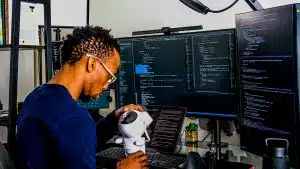
Students complete guided coding exercises and a final project that applies an AI technique to a dataset. Instruction is delivered by PhD-level or industry instructors. A certificate is issued upon completion.
The program is open to high school students in grades 9 through 12. No prior coding experience is required, and enrollment is non-selective.
10. Columbia DBMI Summer Research Program
- Dates: June 29 – August 14, 2026
- Location: New York, New York
- Cost: Free
The Columbia DBMI Summer Research Program is a six-week, full-time research experience in biomedical informatics, where students work on faculty-led projects involving health data, clinical decision-support systems, and AI applications in medicine.
Each student completes an individual or small-group research project and prepares a final poster. Past participants have presented work at professional venues such as AMIA. The program takes place on-site at Columbia University Irving Medical Center.
Eligibility is limited to rising high school seniors who are at least 16 years old and able to be physically present in New York City for the full program.
Frequently Asked Questions
1. What are the best AI summer programs for high school students?
Top programs include AdmissionSight Research Program, MIT Beaver Works, Stanford Pre-Collegiate AI, Stanford AI4ALL, Carnegie Mellon AI Scholars, MIT FutureMakers, iD Tech AI and Machine Learning Camp, MIT Jameel Clinic AI & Health Bootcamp, ResearchIgnited, and Columbia DBMI.
2. Are there free AI summer programs for high school students?
Yes. Programs such as Carnegie Mellon AI Scholars, MIT FutureMakers, and Columbia DBMI are free, and several others provide financial aid.
3. What skills do AI summer programs for high school students develop?
Students learn Python programming, core machine learning methods, and data analysis techniques. Some programs also build early research skills through project-based learning.
4. How do AI summer programs for high school students help with college admissions?
Participation in AI summer programs shows advanced preparation in STEM and can strengthen applications through demonstrated technical ability. Research-heavy programs also give students projects that can be referenced in essays or submitted to competitions.
5. When should I apply for AI summer programs for high school students?
Most applications open in late fall and close between January and March. Early preparation helps you meet deadlines and complete any required prerequisites.
Takeaways
- AI summer programs for high school students give you structured training in Python, machine learning, and applied AI projects that build core technical skills early.
- Top options like MIT Beaver Works, Stanford Pre-Collegiate AI, Carnegie Mellon AI Scholars, MIT FutureMakers, and Columbia DBMI offer rigorous instruction, and several are free or fully funded.
- Mentorship is central to many programs, with students learning directly from university faculty, researchers, and industry practitioners.
- Completing AI summer programs shows strong STEM interest and readiness for advanced coursework, which can strengthen competitive college applications.
- If you want to maximize your AI-focused profile, working with a college admissions consultant can help you align your projects, research, and program choices with your long-term academic goals.