

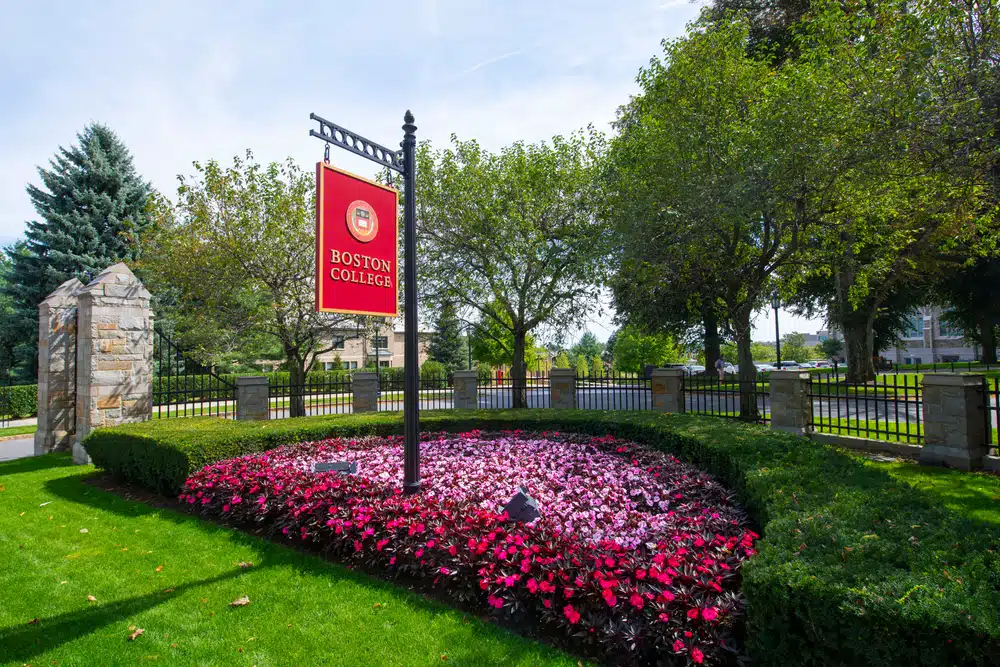
Thinking about Boston College (BC) and curious about how it stacks up against other universities? You’re in the right place. Navigating college rankings can be overwhelming, but don’t worry, we’ll break it down together.
In this blog, we’ll explore Boston College’s national and global rankings, explore its application process, touch on other notable rankings, and answer frequently asked questions. Plus, stick around for some handy application tips to boost your chances.
- How Does Boston College Rank Nationally and Globally?
- Boston College Application Process
- Other Boston College Rankings
- Frequently Asked Questions
- Takeaways
How Does Boston College Rank Nationally and Globally?
Understanding where Boston College stands can give you a clearer picture of its reputation and the quality of education you can expect. Let’s dive into some of the most recognized ranking platforms:
U.S. News & World Report
U.S. News & World Report is a well-respected source for college rankings. It offers insights into various academic programs and overall institutional performance. Here’s how Boston College fares:
| Category | Ranking |
| National Universities | #37 (tie) |
| Best Value Schools | #52 |
| Accounting | #11 |
| Analytics | #9 |
| Entrepreneurship | #10 |
| Finance | #7 |
| Management | #11 |
| Marketing | #10 |
| Nursing | #9 (tie) |
| Economics | #37 (tie) |
| Study Abroad | #18 (tie) |
| Learning Communities | #17 (tie) |
| Undergraduate Research/Creative Projects | #36 (tie) |
| Service Learning | #7 (tie) |
| First-Year Experiences | #9 (tie) |
| Best Undergraduate Teaching | #6 |
| Most Innovative Schools | #19 (tie) |
| Top Performers on Social Mobility | #195 (tie) |
Boston College ranks #52 in Best Value Schools, meaning you get a strong education for your investment. But how much does it actually cost, and how can financial aid help? Let’s break it down.
Here’s what you can expect to pay:
| Expense | Cost |
| Tuition | $69,400 |
| Housing & Food | $17,930 |
| Fees | $2,018 |
| Total Estimated Cost | $89,348 |
On top of that, you’ll need to budget for books, personal expenses, and travel, which can add a few thousand dollars more. It’s a big number, but don’t let that scare you. Boston College offers plenty of financial aid to make it more manageable. Here’s how it works:
- Need-based aid. Your financial aid package is based on your family’s financial situation. This can include grants, scholarships, work-study opportunities, and loans.
- Direct vs. indirect costs. Some expenses (like tuition and housing) appear on your bill, while others (like books and travel) are out-of-pocket but still factored into your aid.
- Health insurance. Massachusetts law requires students to have health insurance. You can waive BC’s $4,281 health insurance fee if you already have coverage.
Boston College also provides a Net Price Calculator to estimate your cost after financial aid. Many students pay significantly less than the sticker price, so it’s worth exploring your options.
Times Higher Education
If you’re looking for a global perspective on college rankings, Times Higher Education (THE) is one of the biggest names out there. They rank universities worldwide based on teaching quality, research, and international reputation.
For 2025, Boston College lands in the 251–300 range in THE’s World University Rankings. Here’s a quick look at how BC performs across different categories:
| Indicator | Score |
| Teaching | 46.3 |
| Research Environment | 32.3 |
| Research Quality | 85.3 |
| Industry | 58.3 |
| International Outlook | 60.5 |
So, what do these numbers actually tell you? BC excels in research quality, meaning you’ll be learning from professors making a real impact in their fields. The international outlook score shows that BC is well-connected globally, so if you’re into study abroad programs or networking with students worldwide, you’ll be in the right place.
Here are a few ways BC helps students like you get ahead:
- Generative AI. If you’re into AI, Boston College is staying ahead of the game with cutting-edge Generative AI (GenAI) tools. You’ll have access to tools like Copilot, Gemini, and NotebookLM, giving you a head start on AI-powered research, projects, or streamlining your workflow.
- Study abroad. At BC, nearly half of all students go abroad, with programs in over 170 locations across six continents. You could spend a semester in Spain, research in Japan, or intern in London. Plus, 93% of students who’ve studied abroad say they’d recommend it so you know it’s a game-changing experience.
- Shea Center. Named after venture capitalist Edmund H. Shea Jr., the center gives you access to real-world entrepreneurial experience, mentorship, and funding opportunities. So if you want to launch a startup, work at an emerging company, or bring an entrepreneurial mindset to any career, the Shea Center has you covered.
QS World University Rankings
The QS World University Rankings assess universities globally, focusing on academic reputation and employment outcomes. Boston College is ranked in the 631–640 range in the QS World University Rankings 2025. Here’s a closer look at its scores:
| Indicator | Score |
| Academic Reputation | 21.3 |
| Citations per Faculty | 16.6 |
| Employment Outcomes | 42.2 |
| Employer Reputation | 16.2 |
| Faculty Student Ratio | 21.2 |
| International Faculty Ratio | 12.5 |
| International Research Network | 50.8 |
| International Student Ratio | 18.8 |
| Sustainability | 7.1 |
With a 10:1 student-to-faculty ratio and nearly half of all classes having fewer than 20 students, you’ll get the kind of personal attention that helps you grow and succeed. Plus, BC’s strong international research network means you can connect with scholars worldwide and be part of groundbreaking projects.
For example:
- Employment outcomes. BC grads do well after college. 90% of the Class of 2023 landed jobs right after graduation, and nearly all full-time MBA students had job offers within three months.
- International research network. Through the Center for International Higher Education, you’ll have the chance to engage in global research that shapes higher education policies worldwide.
Boston College Application Process
So, you’re thinking about applying to Boston College? That’s great! Let’s break it all down, so you can stay on top of deadlines and make your application shine.
Application deadlines
First things first, when do you need to apply? That depends on which admission plan you choose. Here’s a quick breakdown:
| Admission Plan | Application Deadline | Decision Notification |
| Early Decision I | November 1 | December 15 |
| Early Decision II | January 2 | February 15 |
| Regular Decision | January 2 | April 1 |
| Spring Freshmen | November 1 | December 15 |
Here are the key things to keep in mind about the admission plans:
- Early Decision I & II. These are binding admissions, meaning if you get in, you’re committing to BC. ED I is for students who are 100% sure BC is their top choice. If you need more time to decide, ED II gives you an extra couple of months to submit your application.
- Regular Decision. This is non-binding, so you can apply to multiple schools and decide later. Most students apply through Regular Decision.
- Spring Freshmen. If you’re planning a gap semester or a late start, BC offers spring admission but not for students applying to Nursing or Human-Centered Engineering programs.
How to apply
Boston College uses the Common Application for all undergraduate admissions. Make sure to fill it out online and indicate whether you’re applying Early Decision or Regular Decision.
- Boston College Writing Supplement. Along with the Common App essay, you’ll need to complete BC’s Writing Supplement. These are a great way to show BC what makes you unique. Check out our guide for tips on how to make your writing stand out!
- Standardized testing. BC is test-optional. You don’t have to submit SAT or ACT scores, but you can send them in if you think they’ll help your application. Here are the target ranges for competitive applicants: 1450-1520 on the SAT, 33-34 on the ACT.
- Supporting materials. In addition to your application, you’ll also need to submit a few extra materials to complete your file:
- Your transcript. This gives us a full picture of your academic performance.
- School report & counselor recommendation. Your high school counselor will take care of this for you.
- Two teacher evaluations. Choose teachers who know you well, preferably from core subjects like English, Math, Science, Social Studies, or Foreign Language.
- Mid-year grade report. If you’re applying Regular Decision or got deferred from Early Decision, you’ll need to send this in once your first semester grades are available.
- Application fee. The application fee is $80. If paying the fee would be a financial hardship, you can request a waiver through the Common App.
- Optional arts portfolio. Are you an artist, musician, or actor? If you plan to major in Studio Art, you can submit a portfolio through SlideRoom. You can still showcase your talents even if you’re not majoring in the arts.
If you’re an international applicant, you must also submit TOEFL, IELTS, or Duolingo English Test scores if English isn’t your first language. If you’re from China, BC encourages you to schedule an interview with InitialView to showcase your English skills.
Other Boston College Rankings

Boston College is where you’ll push your limits, make lifelong friends, and create unforgettable memories. On top of its national and international recognition, BC also ranks highly in these key categories:
#3 in Boston
Boston is a city built for students, and BC ranks #3 among its world-class universities. You start your morning studying in a cozy café on Newbury Street, spend your afternoon walking the Freedom Trail with friends, and wrap up the day at TD Garden watching the Celtics play. With top internships, historic sites, and endless things to do, the city is part of your college experience.
#7 in Massachusetts
Massachusetts is home to some of the best universities in the country, and BC holds its own, ranked #7 in the state. One day, you might be working on a breakthrough research project, and the next, you’re networking with a BC alum at a top company.
Among the top 25 in football
BC football is back in the Top 25 for the first time since 2018! The Eagles are making a statement after taking down No. 10 Florida State and shutting out Duquesne. They rank 7th in rushing defense, 9th in rushing offense, and 10th in scoring defense.
Frequently Asked Questions
1. How hard is it to get into Boston College?
Boston College is highly selective, with an acceptance rate of 15.9%. You’ll need strong academics, impressive extracurriculars, and compelling essays to stand out. If BC is your top choice, applying Early Decision may give you a slight edge!
2. Should I submit SAT or ACT scores to Boston College?
Nope! BC is test-optional, so you don’t have to submit SAT or ACT scores. But if you’ve got strong scores, it’s definitely worth sending them in since BC superscores both tests, meaning they take your best section scores across multiple test dates. Most admitted students score between 1450–1520 on the SAT or 33–35 on the ACT. If your scores fall in that range (or higher), submitting them could boost your application!
3. How much does it actually cost to go to Boston College?
Before financial aid, the total estimated cost is about $89,348 per year, including tuition, housing, and fees. But BC offers generous financial aid, and many students pay less than the sticker price. You can use their Net Price Calculator to estimate what you’d actually pay.
4. Is Boston College a good school?
Absolutely! At BC, you’ll get a tight-knit campus with big-time school spirit and all the perks of being near Boston. With more than 300 student organizations, Division I sports, and cool opportunities like study abroad and the Shea Center for Entrepreneurship, there’s always something happening.
5. Is Boston College better than Boston University?
It depends on what you’re looking for! Boston College (BC) and Boston University (BU) are both top-tier schools, but they have different strengths. BC is a smaller, Jesuit liberal arts college known for its strong business, education, and theology programs, along with a more traditional campus feel in Chestnut Hill. BU, on the other hand, is a larger, urban research university with a wider range of programs and a more city-centric experience.
If you prefer a tight-knit, suburban campus with a strong focus on undergraduate education, BC might be the better fit. If you want a bustling city environment with diverse academic options, BU could be the way to go.
Takeaways
- Boston College ranks #37 among National Universities and ranks highly in business programs, nursing, and undergraduate teaching.
- On a worldwide scale, BC is ranked 251–300 by Times Higher Education and 631–640 in the QS World University Rankings.
- BC is a top-ranked school (#3 in Boston, #7 in Massachusetts) with a vibrant campus and plenty of opportunities to get involved. With a Top 25 football team and an enthusiastic crowd, game days bring great energy to campus.
- BC is competitive, with an acceptance rate of around 15.9%, so a strong application is key.
- Want to boost your chances? A college admissions expert can help craft a standout application and give you an edge in the competitive admissions process.










