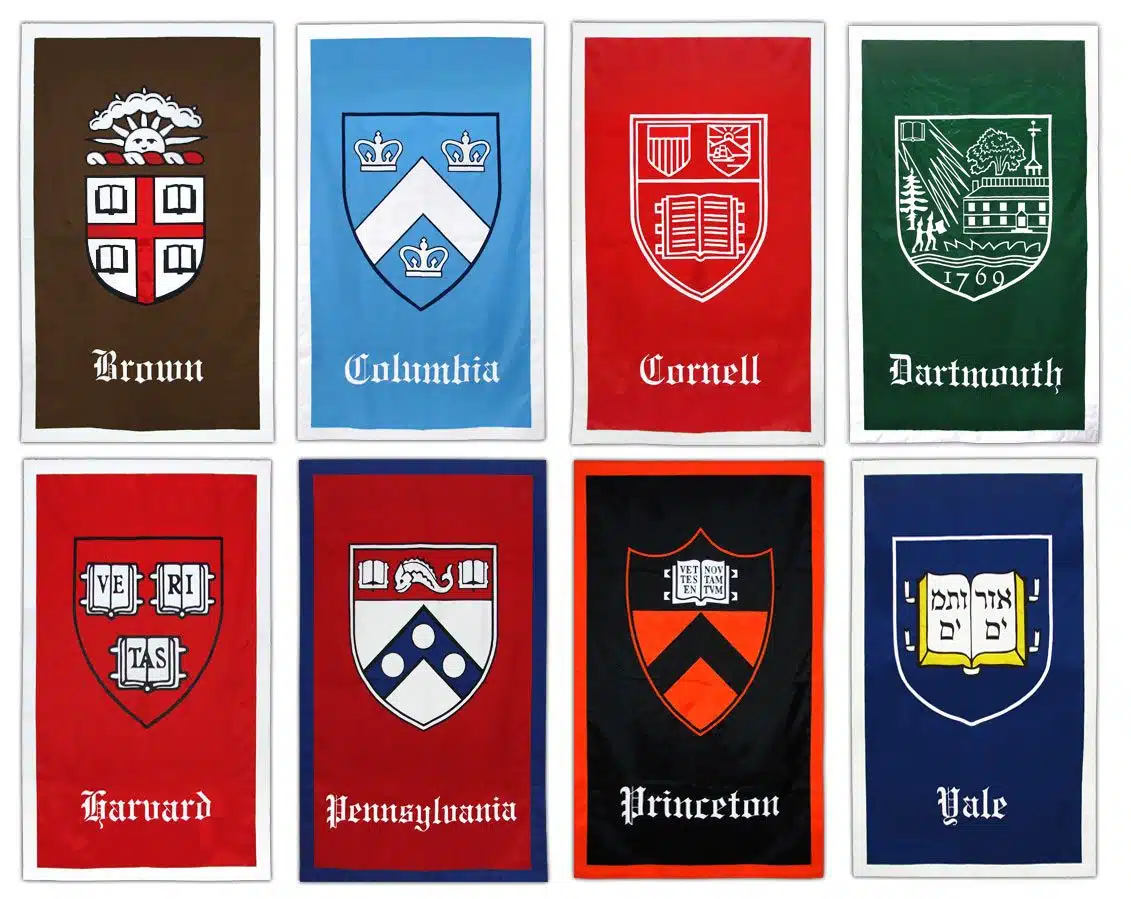
The Ivy League rankings for 2026 show how these eight elite universities continue to shape higher education across the United States and the world. According to major ranking systems, Ivy League schools like Harvard, Princeton, and Yale remain among the most competitive globally.
If you’re aiming for an Ivy League school, understanding these 2026 rankings will give you a clearer picture of how each university performs in different areas. Here, we’ll look at how these rankings were determined, break down where each Ivy League institution stands, and explain what sets their results apart.
- Ivy League Rankings 2026
- U.S. News & World Report Ivy League Rankings
- Times Higher Education World University Ivy League Rankings
- QS World University Ivy League Rankings
- Do Ivy League Rankings Matter?
- Frequently Asked Questions
- Takeaways
Ivy League Rankings 2026
These 2026 Ivy League rankings come from three respected sources: U.S. News & World Report Best National Universities Rankings, Times Higher Education (THE) World University Rankings, and QS World University Rankings: Top Global Universities. Here’s a clear look at where each Ivy League school ranks in these three systems for 2026:
|
Ivy League School |
U.S. News & World Report Best National Universities Rankings | Times Higher Education (THE) World University Rankings |
QS World University Rankings: Top Global Universities |
|
Princeton University |
1 | 3 | 25 |
| Harvard University | 3 | 5 |
5 |
|
Yale University |
4 (tie) | 10 | 21 |
| University of Pennsylvania | 7 (tie) | 14 |
15 |
|
Cornell University |
12 | 18 | 16 |
| Brown University | 13 (tie) | 65 |
69 |
|
Dartmouth College |
13 (tie) | 180 | 247 |
| Columbia University | 15 (tie) | 20 |
38 |
Looking at these rankings, Princeton leads in the U.S. News list as the top-ranked school nationally. Harvard ranks highest globally in THE and QS, thanks to its strong international reputation and research impact. Yale also performs steadily across all rankings.
Some schools like Dartmouth experience bigger differences, especially globally, which may be because of how much weight these rankings give to factors like international student numbers and research citations.
Each ranking highlights different parts of university life. U.S. News focuses more on U.S.-based measures like graduation rates and faculty quality, THE emphasizes global research and teaching, and QS weighs reputation both academically and with employers worldwide.
U.S. News & World Report Ivy League Rankings
Here is the 2026 U.S. News & World Report ranking for each Ivy League school:
|
Ivy League School |
U.S. News 2026 Rank |
|
Princeton University |
|
| Harvard University | |
|
Yale University |
4 (tie) |
| University of Pennsylvania | |
|
Cornell University |
12 |
| Brown University | |
|
Dartmouth College |
13 (tie) |
| Columbia University |
Princeton University ranks highest among the Ivy League schools and all national universities. Its success is driven by a high graduation rate (75%), strong faculty resources demonstrated by a low student-faculty ratio (5:1), and excellent peer reputation. These factors show Princeton’s ability to provide a supportive, high-quality academic environment while maintaining strong respect from other institutions.
On the other hand, Columbia University ranks lowest among the Ivies in the U.S. News listing. This placement is influenced by its higher student-faculty ratio (6:1) and slightly less favorable selectivity metrics, such as acceptance rates (4%) and test scores, compared to other Ivies.
Ranking methodology
U.S. News & World Report compiles its national university rankings by evaluating schools that offer a wide range of majors, graduate programs, and strong research opportunities.
The 2026 rankings focus mainly on student outcomes and reputation. U.S. News looks at graduation rates (16%), first-year retention (5%), and how schools support Pell Grant students, along with peer reputation, which carries a large 20% weight. It also considers real-world results, like graduate earnings (5%) and student debt levels (5%).
The rankings also measure the learning environment, including financial resources per student (8%), faculty salaries (6%), full-time professors (2%), and student-faculty ratio (3%). Standardized test scores (5%) and smaller research metrics are included too. Together, these ranking factors add up to 100% and give a broad picture of how well each university supports students and delivers strong academics.
Times Higher Education World University Ivy League Rankings
Here’s how Ivy League universities placed in the 2026 THE World University Rankings:
|
Ivy League School |
THE Global 2026 Rank |
|
Princeton University |
3 (tie) |
| Harvard University | |
|
Yale University |
10 |
| University of Pennsylvania | |
|
Cornell University |
18 (tie) |
| Columbia University | |
|
Brown University |
65 |
| Dartmouth College |
Princeton University ranks highest among the Ivy League schools in the Times Higher Education World Rankings, supported by its strong research reputation and global impact, including ties to more than 40 Nobel laureates. Its high scores help explain this position, with 98.2 in teaching, 97.3 in research environment, and an almost perfect 99 in research quality, showing consistent strength across THE’s main metrics.
On the other hand, Dartmouth College ranks lowest among the Ivies in THE’s global list, likely because it’s smaller, with roughly 4,000 undergraduates, and places a stronger emphasis on undergraduate teaching rather than large-scale research output. Its scores reflect this difference, with 56.3 in teaching, 38.5 in research environment, and 81.8 in research quality.
Ranking methodology
The Times Higher Education (THE) methodology takes a global approach, looking at how universities perform in teaching, research, and international collaboration.
Teaching (29.5%) measures the learning environment, including academic reputation and how well schools support advanced study and doctoral programs. Research environment (29%) looks at a university’s reputation for research excellence, while research quality (30%) focuses on how often a school’s work is cited by scholars around the world, showing its global impact.
THE also considers how connected a university is internationally and professionally. International outlook (7.5%) measures global partnerships and research with international co-authors, while industry income (4%) reflects how well universities work with businesses and attract commercial research funding.
QS World University Ivy League Rankings
Here’s how Ivy League schools ranked in the 2026 QS World University Rankings:
|
Ivy League School |
QS World 2026 Rank |
|
Harvard University |
5 |
| University of Pennsylvania | |
|
Cornell University |
16 |
| Yale University | |
|
Princeton University |
25 (tie) |
| Columbia University | |
|
Brown University |
69 |
| Dartmouth College |
Harvard ranks highest among the Ivy League schools in the QS World University Rankings, supported by a perfect 100 in employer reputation, academic reputation, and employment outcomes. These scores show that Harvard is widely respected by both universities and employers, and that its graduates are highly competitive in the job market.
On the other hand, Dartmouth College ranks lowest among the Ivies in QS, typically because of its smaller size, fewer international partnerships, and less global name recognition. Its scores include 54.3 in employer reputation and 30.7 in academic reputation, though its 87.7 employment outcomes score still shows that graduates do well after college.
Ranking methodology
The QS World University Rankings methodology looks at universities through several weighted areas that focus on research, career outcomes, and global reach.
The biggest factor is research and discovery (50%), which measures research volume, citation impact, and academic reputation within the global research community. Employability and outcomes (20%) evaluates how well schools prepare students for careers, including employer reputation, industry partnerships, and graduate success after college.
QS also considers the student experience and international connections. Learning experience (10%) looks at faculty resources and the level of academic support available to students. Global engagement (15%) measures international diversity, while sustainability (5%) reflects how universities address environmental and social responsibility.
Do Ivy League Rankings Matter?
Ivy League rankings carry a lot of prestige and can shape how schools are perceived. They do have an influence on admissions and employer interest. However, they also have limits.
Rankings focus on measurable factors like reputation and research output, which don’t fully capture what makes each school unique. For example, they tend to emphasize academic reputation, research output, and global outreach, which can sometimes favor large research universities with extensive international partnerships.
Every Ivy League school delivers world-class education and impressive opportunities. Instead of relying only on rankings, it’s better to think about what fits you. Consider your academic goals, your interests, and what campus culture feels right to you.
For instance, in the U.S. News rankings, Princeton ranks highest in computer science among the Ivies at #5, but Cornell follows closely at #7, even though it may rank lower overall among the Ivy League schools. In addition, Harvard ranks #1 in psychology while Princeton is #2, even though Princeton ranks higher than Harvard across major ranking systems. This shows that a school’s overall ranking doesn’t always reflect how competitive it is in a specific major.
Choosing the best fit for you will help you succeed and enjoy your college years far more than just picking the highest-ranked school. So rankings can be a helpful reference, but they shouldn’t be your only guide.

Frequently Asked Questions
1. Which Ivy League school ranks highest overall in 2026?
Princeton University ranked highest overall in 2026 according to U.S. News & World Report. Princeton also performed strongly in the Times Higher Education and QS rankings, making it the top-ranked Ivy.
2. Which Ivy League has the strongest global reputation?
Harvard University leads in global reputation. It consistently ranks near the top in THE Global Rankings and QS World University Rankings due to its extensive research output, international partnerships, and employer reputation.
3. What factors most affect Ivy League university rankings?
Key factors include academic reputation, research impact and quality, faculty resources, and financial resources. Rankings also consider student outcomes like graduation rates, as well as international outlook and employer reputation.
4. Do Ivy League rankings change significantly from year to year?
Rankings can show some shifts each year based on changes in data, methodology updates, and emerging strengths or weaknesses. However, Ivy League schools generally remain near the top due to consistent performance and reputation.
5. Are Ivy League schools always in the top 10 globally?
Not all Ivy League schools are always in the global top 10. While Harvard and Princeton often place in the top tier, other Ivies like Brown or Dartmouth may rank lower due to THE and QS’s emphasis on global research presence and international outlook.
Takeaways
- The 2026 Ivy League rankings from U.S. News & World Report, Times Higher Education, and QS World University Rankings show how schools like Princeton, Harvard, and Yale continue to lead in academics, research, and global reputation.
- Each ranking system emphasizes different strengths. U.S. News focuses more on national graduation rates and faculty resources, THE highlights global research and teaching, and QS weighs academic and employer reputation along with international diversity.
- Schools like Dartmouth and Brown rank lower in some global rankings due to smaller research programs and less international visibility, but all Ivy League institutions offer high-quality education and unique opportunities.
- Ivy League rankings can guide your understanding but should not be the only factor when choosing a school. Personal fit, academic goals, campus culture, and career support matter just as much.
- For personalized advice on strengthening your application and increasing your chances of acceptance at Ivy League schools, consider scheduling a private consultation with an admissions expert. They can guide you through the process with tailored strategies to highlight your strengths.