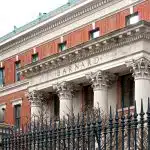
When it comes to producing American leaders, no university rivals Harvard. Eight U.S. presidents, more than any other college in the country, studied at Harvard before going on to shape the nation. The list spans more than two centuries, from John Adams in the 1750s to Barack Obama in the early 1990s. Looking at which presidents attended Harvard, what they studied, and how their time in Cambridge influenced their political paths offers a clearer picture of the qualities the university has long cultivated and rewarded.
In this guide, we’ll explore the eight Harvard-educated presidents, the schools and degrees that connected them to Harvard, and the academic experiences that helped launch them to the White House. We’ll also examine what their stories reveal about the kind of student Harvard continues to value today.
- Which US Presidents Went to Harvard?
- John Adams
- John Quincy Adams
- Rutherford B. Hayes
- Theodore Roosevelt
- Franklin D. Roosevelt
- John F. Kennedy
- George W. Bush
- Barack Obama
- Want to Get into Harvard?
- Frequently Asked Questions
- Takeaways
Which US Presidents Went to Harvard?
Before diving into the list, it’s important to clear up a common misconception: “going to Harvard” can mean very different things. Harvard University includes Harvard College as well as graduate and professional schools such as Harvard Law School and Harvard Business School. The eight presidents connected to Harvard did not all follow the same path; some attended as undergraduates, while others enrolled later for law or business school after studying elsewhere.
Here’s a quick overview of the eight U.S. presidents who attended Harvard:
| President | Harvard School | Degree Earned | Years Attended |
| John Adams | Harvard College | Bachelor of Arts (A.B.); later Master of Arts (A.M., 1758) | 1751–1755 |
| John Quincy Adams | Harvard College | CollegeBachelor of Arts (A.B.) | 1785–1787 |
| Rutherford B. Hayes | Harvard Law School | Bachelor of Laws (LL.B.) | 1843–1845 |
| Theodore Roosevelt | Harvard College | Bachelor of Arts (A.B.), magna cum laude | 1876–1880 |
| Franklin D. Roosevelt | Harvard College | Bachelor of Arts (A.B.) in History | 1900–1903 (plus graduate year, 1903–1904) |
| John F. Kennedy | Harvard College | Bachelor of Arts (A.B.) in Government, cum laude | 1936–1940 |
| George W. Bush | Harvard Business School | Master of Business Administration (M.B.A.) | 1973–1975 |
| Barack Obama | Harvard Law School | Juris Doctor (J.D.), magna cum laude | 1988–1991 |
The sections below break down each president’s Harvard experience and career path in more detail.
John Adams
The first Harvard-educated president set the standard for those who followed. Born in 1735 in Braintree, Massachusetts, John Adams entered Harvard College in 1751 at age 15 after additional preparation for the entrance exam. He studied mathematics, classical history, science, philosophy, and Latin and Greek, graduating near the top of his class in 1755 with a Bachelor of Arts.
Although his father hoped he would enter the ministry, Adams pursued law instead. After teaching in Worcester for three years, he apprenticed under attorney James Putnam and later returned to Harvard to earn a Master of Arts in 1758. Adams went on to help draft the Declaration of Independence, serve as the first U.S. vice president under George Washington, and become the nation’s second president in 1797.
John Quincy Adams
John Quincy Adams had one of the most unconventional educations of any future president. Beginning at age ten, he traveled across Europe with his diplomat father, studying in Paris and at the Leiden University. At 14, he served as secretary to the American envoy in Saint Petersburg, Russia. By the time he returned to the United States in 1785, he was fluent in several languages and deeply familiar with international diplomacy.
Like his father, Adams enrolled at Harvard College, graduating second in a class of 51 in 1787 with a Bachelor of Arts. After passing the Massachusetts bar in 1790, he practiced law in Boston before entering politics. He later served as secretary of state under James Monroe, helping shape what became the Monroe Doctrine, and went on to serve as the sixth president of the United States from 1825 to 1829.
After leaving the White House, he spent nine terms in the U.S. House of Representatives, where he became one of the country’s leading anti-slavery voices.
Rutherford B. Hayes
Rutherford B. Hayes may be one of Harvard’s least-discussed presidents, but he had one of its strongest academic records. Born in Delaware, Ohio, in 1822 shortly after his father’s death, Hayes was raised by his mother and uncle, Sardis Birchard. He graduated as valedictorian from Kenyon College in 1842 before enrolling at Harvard Law School in 1843.
Hayes earned his LL.B. in 1845, becoming the first Harvard Law alumnus to reach the presidency. At Harvard, he studied under Supreme Court Justice Joseph Story and kept detailed notes on constitutional law lectures.
Back in Ohio, he built a successful legal career in Cincinnati, where he frequently defended escaped enslaved people. Hayes later served as a Union officer during the Civil War, governor of Ohio, and eventually the 19th president of the United States following the disputed election of 1876.

Theodore Roosevelt
Theodore Roosevelt approached Harvard much like he approached life: intensely and unconventionally. A sickly, asthmatic child educated by private tutors, Roosevelt entered Harvard College in 1876 intending to become a naturalist. His dorm room reportedly contained stuffed birds, live snakes, and a tortoise that once wandered into his landlady’s kitchen. Although he excelled in natural history, he also developed strong interests in history, philosophy, and rhetoric.
Over time, Roosevelt grew disillusioned with Harvard’s laboratory-heavy approach to biology and shifted toward writing and public life. He graduated magna cum laude and Phi Beta Kappa in 1880, ranking 21st in his class.
Before leaving Cambridge, he had already begun writing The Naval War of 1812, a historical study published two years later. After briefly attending Columbia Law School, Roosevelt left law for politics and won election to the New York State Assembly.
He later served as the 26th president from 1901 to 1909 and received the Nobel Peace Prize in 1906 for helping negotiate the end of the Russo-Japanese War.
Franklin D. Roosevelt
A fifth cousin of Theodore Roosevelt, Franklin D. Roosevelt followed his relative to Harvard College but had a very different college experience. After graduating from Groton School, Roosevelt entered Harvard in 1900. His father died only weeks into his freshman year, yet FDR immersed himself in campus life, joining the Social Service Society, Political Club, and Yacht Club while serving as a football usher and cheerleader.
His greatest interest, however, was The Harvard Crimson. Roosevelt earned his A.B. in history in 1903 but stayed an additional year to become the paper’s president. He later credited the Crimson with giving him his newspaper training, a skill that shaped his famously effective fireside chats.
After a brief stint at Columbia Law School, Roosevelt entered politics and eventually became the 32nd president of the United States, the only president elected to four terms, leading the nation through the Great Depression and World War II.
John F. Kennedy
After an unhappy semester at Princeton University, John F. Kennedy transferred to Harvard in 1936. Living in Winthrop House, he studied government with a focus on international affairs, worked on the editorial board of The Harvard Crimson, and traveled widely in Europe as fascism spread across the continent.
His senior thesis, originally titled Appeasement at Munich, examined Britain’s failure to prepare for war with Nazi Germany. Drawing on resources from the U.S. Embassy in London, where his father Joseph P. Kennedy Sr. served as ambassador, Kennedy produced an unusually sophisticated undergraduate thesis.
He graduated cum laude in 1940, and the thesis was later published as Why England Slept, which became a bestseller. After serving in the U.S. Navy during World War II, Kennedy was elected the youngest U.S. president in 1960 and became the nation’s 35th president.

George W. Bush
George W. Bush followed a different path to Harvard than most presidential alumni. He earned his undergraduate degree in history from Yale University in 1968, then served as an F-102 fighter pilot in the Texas Air National Guard. After being rejected from the University of Texas School of Law, Bush enrolled at Harvard Business School in 1973.
He graduated in 1975 with an M.B.A., becoming the only U.S. president to hold the degree. After returning to Midland, Texas, Bush worked in the oil industry and founded Arbusto Energy before later co-owning the Texas Rangers.
He went on to serve two terms as governor of Texas and was elected the 43rd president of the United States in 2000. His presidency, which lasted from 2001 to 2009, was defined largely by the September 11 attacks and the wars in Afghanistan and Iraq.
Barack Obama
Barack Obama took a different path to Harvard than most future presidents. Born in Honolulu in 1961, he earned a political science degree from Columbia University in 1983 and spent several years working as a community organizer in Chicago before enrolling at Harvard Law School in 1988 at age 27.
Obama quickly distinguished himself academically. After his first year, he was selected as an editor of the Harvard Law Review, and in 1990 he became its first Black president. He also worked as a research assistant to constitutional scholar Laurence Tribe.
Obama graduated magna cum laude with a J.D. in 1991, returned to Chicago to teach constitutional law at the University of Chicago Law School, and later entered politics. In 2008, he became the 44th president of the United States and the nation’s first Black president.
Want to Get into Harvard?
A clear pattern emerges across these eight presidents. They were deeply curious, intellectually ambitious, and willing to go beyond what was required. John Adams abandoned the ministry for law. Theodore Roosevelt began publishing serious historical research before graduation. John F. Kennedy turned a senior thesis into a bestselling book. Barack Obama arrived at law school after years of community organizing and went on to lead the Harvard Law Review. None simply followed a checklist.
That remains the kind of student Harvard looks for today, though the competition is steeper than ever. Recent acceptance rates have hovered around 3% to 4%, with the Class of 2026 admitted at 3.2% and the Class of 2029 at 4.2%. Successful applicants typically present near-perfect academic records, including top GPAs (4.21 weighted) and standardized test scores in the highest percentiles (1510-1580).
But strong academics alone are not enough. Harvard’s admissions process is famously holistic, emphasizing intellectual curiosity, sustained leadership, meaningful impact, and a compelling personal story alongside grades and test scores. For a deeper breakdown of admissions requirements and strategy, explore our How to Get Into Harvard Guide.
If Harvard is one of your target schools, AdmissionSight offers comprehensive college counseling covering academic planning, extracurricular strategy, essay development, and application positioning. Our team has helped students gain admission to every Ivy League school and other highly selective universities by helping applicants build clear, memorable narratives.
Ready to take the next step? You can schedule a free consultation through our Standard College Counseling program to start building your admissions strategy.
Frequently Asked Questions
1. How many U.S. presidents went to Harvard?
Eight U.S. presidents went to Harvard.
2. Which president was the first to attend Harvard?
John Adams. He enrolled in 1751 and graduated in 1755.
3. Did Obama go to Harvard for law school or undergraduate?
Obama attended Harvard Law School (1988–1991) and earned his J.D. magna cum laude.
4. Did George Bush go to Harvard or Yale?
Both. George W. Bush went to Yale for undergrad (B.A. in History, 1968), then Harvard Business School for his M.B.A. (1975).
5. Did JFK go to Harvard?
Yes, he graduated from Harvard College in 1940 with a B.A. in Government.

Takeaways
- Harvard has produced more U.S. presidents than any other school. Eight presidents, from John Adams to Barack Obama, earned degrees at Harvard, spanning over 200 years of American leadership.
- Not all eight presidents attended Harvard College. George W. Bush went to Harvard Business School, while Rutherford B. Hayes and Barack Obama attended Harvard Law School.
- Their Harvard years shaped how they led. JFK’s senior thesis became a bestselling book on foreign policy. FDR’s time running the Harvard Crimson sharpened the communication skills behind his famous fireside chats. Obama’s presidency of the Harvard Law Review previewed the bridge-building leadership style that would define his political career.
- Academic excellence alone wasn’t enough, even for future presidents. FDR was an average student. George W. Bush was rejected from law school before pivoting to HBS. What ultimately set these men apart was curiosity, drive, and a willingness to go beyond the classroom.
- If Harvard is on your list, start building your strategy now. The same intellectual ambition that defined these eight presidents is what Harvard’s admissions team looks for today, in a process that admits fewer than 4% of applicants. AdmissionSight’s private consulting program gives you personalized, expert guidance on academics, essays, extracurriculars, and application strategy to help you put your best foot forward.