

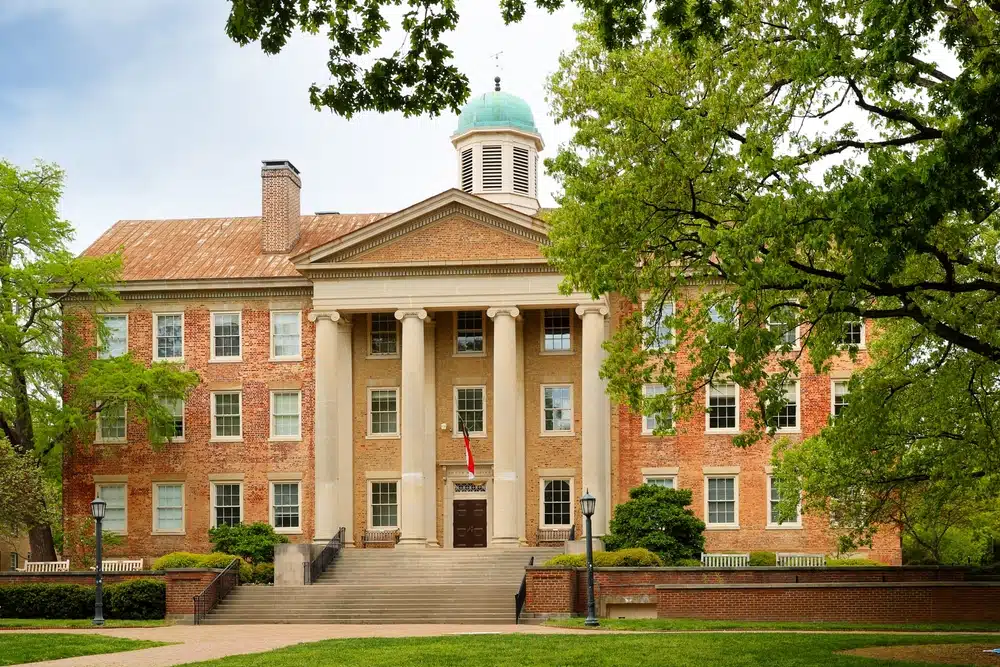
UNC Chapel Hill admitted 12,752 students out of 76,248 applicants for the Class of 2029, resulting in a 16.73% acceptance rate.
For the Class of 2030, UNC has released Early Action results for in-state applicants: of 14,931 North Carolina residents who applied EA, 5,903 were admitted, reflecting a 39.54% in-state EA acceptance rate. Out-of-state EA figures have not yet been disclosed.
In this blog, we’ll walk through UNC Chapel Hill’s latest overall, early, regular, waitlist, and transfer acceptance rates and examine how selectivity has evolved over time.
- UNC Chapel Hill Acceptance Rates
- UNC Chapel Hill Early Action Acceptance Rate
- UNC Chapel Hill Regular Decision Acceptance Rate
- UNC Chapel Hill Transfer Acceptance Rate
- UNC Chapel Hill Waitlist Acceptance Rate
- Frequently Asked Questions
- Takeaways
UNC Chapel Hill Acceptance Rates
UNC Chapel Hill admitted 12,752 students out of 76,248 applicants for the Class of 2029, resulting in a 16.73% acceptance rate, up from 15.34% for the Class of 2028. Application volume has grown significantly over the past decade, while the number of admitted students has stayed relatively stable around 9,500 to 10,900 per year.
Over the past decade, UNC’s acceptance rate has trended downward as applicant numbers increased. Here’s the full trend:
| UNC Chapel Hill Class | Applicants | Admitted | Overall Acceptance Rate |
| 2030 | TBA | TBA | TBA |
| 2029 | 76,248 | 12,752 | 16.73% |
| 2028 | 66,535 | 10,209 | 15.34% |
| 2027 | 57,902 | 10,852 | 18.74% |
| 2026 | 57,221 | 9,640 | 16.85% |
| 2025 | 53,776 | 10,347 | 19.24% |
| 2024 | 44,382 | 10,446 | 23.54% |
| 2023 | 42,466 | 9,608 | 22.63% |
| 2022 | 43,473 | 9,524 | 21.91% |
| 2021 | 40,918 | 9,709 | 23.73% |
Note: All data has been compiled from UNC Chapel Hill’s Common Data Set and official news releases.
Applications to UNC Chapel Hill grew from 40,918 for the Class of 2021 to 76,248 for the Class of 2029, more than doubling over nine years. The number of admitted students, however, rose for the Class of 2029, reaching 12,752 compared to the 9,500 to 10,900 range seen in prior cycles.
Because UNC’s freshman class size is constrained in part by a state-mandated requirement that at least 82% of enrolled students must be North Carolina residents, rising application volumes have pushed acceptance rates steadily lower, falling from 23.73% for the Class of 2021 to 16.73% for the Class of 2029.
UNC Chapel Hill Early Action Acceptance Rate
The most recent cycle with available Early Action data for in-state applicants is the Class of 2030, when UNC admitted 5,903 students out of 14,931 North Carolina residents, resulting in a 39.54% in-state EA acceptance rate. Out-of-state EA figures for the Class of 2030 have not been released.
UNC does not regularly publish a combined EA acceptance rate across all applicants. The university has withheld EA breakdown data for most cycles between Class of 2023 and Class of 2029, and has stopped disclosing out-of-state EA numbers entirely in recent years. The only other available data point is from the Class of 2022, when in-state EA applicants were admitted at a 19.81% rate and out-of-state EA applicants at 10.60%.
UNC Chapel Hill Early Action acceptance rate trends
The available data below shows how EA selectivity has evolved over time:
|
UNC Chapel Hill Class |
In-State Applicants | In-State Admitted | In-State EA Rate | Out-of-State Admitted | Out-of-State EA Rate |
| 2030 | 14,931 | 5,903 | 39.54% | TBA |
TBA |
|
2022 |
25,867 | 5,125 | 19.81% | 2,742 |
Note: Early Action data is compiled from UNC Chapel Hill’s official admissions releases.
The 39.54% in-state EA rate for the Class of 2030 is notably higher than the 19.81% recorded for the Class of 2022, though the figures are not directly comparable since out-of-state applicant counts are missing from the 2030 data, making it impossible to calculate a combined EA rate. UNC’s state mandate requiring at least 82% of enrolled students to be North Carolina residents means in-state applicants consistently see significantly higher acceptance rates than out-of-state applicants across all rounds.
UNC Chapel Hill Regular Decision Acceptance Rate
The most recent publicly available Regular Decision data for UNC Chapel Hill comes from the Class of 2022, when the university admitted 4,399 students from 17,606 applicants, resulting in a 24.99% RD acceptance rate. UNC has not released round-specific RD statistics for the Class of 2023 through Class of 2030, so newer RD acceptance rates remain undisclosed.
UNC Chapel Hill Regular Decision acceptance rate trends
The figures below for available years are estimates derived from the difference between UNC’s overall admissions totals and its Early Action numbers:
|
UNC Chapel Hill Class |
Applicants | Admitted | Regular Decision Acceptance Rate |
| 2030 | TBA | TBA |
TBA |
|
2022 |
17,606 | 4,399 |
24.99% |
Note: RD figures are estimated from the difference between UNC’s publicly released overall admissions statistics and its EA numbers.
The Class of 2022 RD rate of 24.99% is higher than the 21.91% overall acceptance rate recorded for the same year, which reflects how heavily UNC’s in-state EA round absorbs a large portion of the admitted class each year, leaving fewer spots and lower odds in the RD pool.
UNC Chapel Hill Transfer Acceptance Rate
The most recent available UNC Chapel Hill transfer data comes from Fall 2024, when the university had a 36.51% transfer acceptance rate. Here’s the breakdown:
| Applicants | Admitted | Transfer Acceptance Rate |
| 4,692 | 1,713 | 36.51% |
Note: Fall 2024 transfer data is from UNC Chapel Hill’s Common Data Set for 2024-2025, the same reporting year that includes Class of 2028 first-year admissions data.
UNC Chapel Hill’s transfer acceptance rate of 36.51% is substantially higher than its 15.34% overall first-year acceptance rate for the Class of 2028, making transfer admission considerably more accessible than first-year admission at UNC.
UNC Chapel Hill Waitlist Acceptance Rate
The most recent available waitlist data comes from the Class of 2028, when UNC admitted 7.22% of students who confirmed their waitlist spots. Here’s the breakdown:
|
Waitlisted |
Confirmed | Admitted | Waitlist Acceptance Rate |
| 6,120 | 4,084 | 295 |
7.22% |
Note: Waitlist data is sourced from UNC Chapel Hill’s Common Data Set for the corresponding admissions cycle.
UNC’s waitlist movement varies considerably year to year depending on yield. The 7.22% rate for the Class of 2028 represents a significant uptick from the Class of 2027, when only 36 students were admitted off the waitlist for a 0.59% waitlist acceptance rate. The gap between those two cycles illustrates how unpredictable waitlist outcomes are at UNC.
Frequently Asked Questions
1. What is UNC Chapel Hill’s current acceptance rate?
The most recent confirmed acceptance rate is 16.73% for the Class of 2029. UNC received 76,248 applications and admitted 12,752 students.
2. Is it easier to get into UNC Chapel Hill through Early Action or Regular Decision?
Based on available data, in-state applicants fare significantly better in the EA round. For the Class of 2030, UNC admitted 39.54% of in-state EA applicants. The only available RD rate, from the Class of 2022, was 24.99%. Out-of-state EA and RD figures for recent cycles have not been disclosed.
3. How hard is it to transfer to UNC Chapel Hill?
Transfer admission is considerably more accessible than first-year admission. For Fall 2025, UNC admitted 1,962 transfer students out of 5,310 applicants, resulting in a 36.95% transfer acceptance rate, more than double the 16.73% overall first-year acceptance rate for the Class of 2029, which covers the same reporting year.
4. What are the chances of getting off UNC Chapel Hill’s waitlist?
Waitlist outcomes are unpredictable and vary significantly by year. For the Class of 2028, UNC admitted 295 students from 4,084 confirmed waitlist spots, a 7.22% waitlist acceptance rate. For the Class of 2027, only 36 students were admitted off the waitlist, a rate of 0.59%.
5. Why has UNC Chapel Hill’s acceptance rate been declining?
UNC Chapel Hill’s acceptance rate has trended downward over the past decade, falling from 23.73% for the Class of 2021 to 16.73% for the Class of 2029, as application volume more than doubled from 40,918 to 76,248. Because UNC is required by state mandate to enroll at least 82% North Carolina residents, rising application volumes have consistently outpaced growth in the admitted class, pushing acceptance rates lower over time.
Takeaways
- UNC Chapel Hill’s overall acceptance rate fell from 23.73% for the Class of 2021 to 16.73% for the Class of 2029, as application volume more than doubled.
- In-state applicants have a significant advantage: the Class of 2030 in-state EA acceptance rate was 39.54%, more than double the 16.73% overall rate.
- UNC has withheld round-specific admissions data for most cycles between Class of 2023 and Class of 2029, leaving EA and RD breakdowns largely undisclosed.
- Waitlist outcomes are highly unpredictable, ranging from 0.59% for the Class of 2027 to 7.22% for the Class of 2028.
- With UNC Chapel Hill’s increasingly selective admissions process, guidance from a college admissions expert can help you refine your application strategy, strengthen your profile, and present a more competitive candidacy.










