The University of Michigan (UMich) is a public research university founded in 1817. Although it was originally established in Detroit, the university moved to its current home in Ann Arbor in 1837. Today, its main campus is located at 1109 Geddes Avenue in Ann Arbor, a walkable college town about 45 minutes west of Detroit.
The University of Michigan’s campus blends historic academic buildings, major research facilities, Big Ten sports culture, and busy student neighborhoods. Ann Arbor itself is known for its bookstores, coffee shops, restaurants, and strong student presence, giving the area a classic college-town atmosphere while still offering access to larger cities nearby.
In this guide, we’ll cover where the University of Michigan is located, what its different campus areas are like, how students and visitors typically get there, and what it’s like to live in Ann Arbor as a UMich student.
- University of Michigan Campus Location
- Getting to University of Michigan
- Living Near University of Michigan
- Why You Should Visit University of Michigan
- Frequently Asked Questions
- Takeaways
University of Michigan Campus Location
The University of Michigan spans 3,200 acres across Ann Arbor and includes academic buildings, residence halls, medical facilities, athletic complexes, research centers, and public spaces. While the university has several campus areas, Central Campus serves as the main hub for academics, student life, and campus traditions.
Central Campus has a highly walkable layout with brick walkways, green spaces, libraries, student centers, and academic buildings closely connected to downtown Ann Arbor. Many of UMich’s undergraduate programs are based here, including the College of Literature, Science, and the Arts (LSA), the Ross School of Business, and the Marsal Family School of Education.
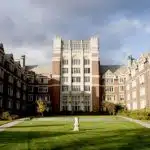
The campus features buildings designed by influential architects such as Albert Kahn and Gunnar Birkerts, along with historic areas like the Law Quadrangle, which reflects the Collegiate Gothic style often associated with traditional universities. This mix of historic architecture, open green spaces, and tree-lined walkways has placed UMich on Condé Nast Traveler’s list of the most beautiful college campuses in the United States.
UMich’s presence extends well beyond its classrooms. The university manages 23 residence halls, apartments, hospitals, athletic facilities, and research properties throughout Ann Arbor, giving the school a major influence on the city’s layout and daily activity. Many nearby neighborhoods are heavily shaped by student life, with bookstores, coffee shops, restaurants, and apartment buildings surrounding campus.
The university is also planning future growth through Campus Plan 2050, a long-term initiative focused on how the Ann Arbor campus may evolve over the next several decades. The plan includes future considerations for housing, dining, instructional spaces, research facilities, sustainability, and other parts of campus life as the university continues to expand.
Main campus landmarks
One of the best-known outdoor spaces is the Diag, a large open area at the center of campus where students walk between classes, study outdoors, attend campus events, and meet with student organizations. The Diag connects many major academic buildings and serves as one of the busiest gathering spaces at UMich.
Another major campus landmark is the Michigan Union, which originally opened as a center for men on campus before welcoming all students in 1956. Today, it serves as one of UMich’s main student centers, with dining areas, study spaces, meeting rooms, and event spaces. Nearby is the Harlan Hatcher Graduate Library, the university’s largest and most historic library building.
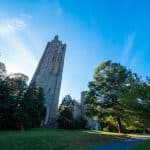
The Law Quad is one of the most architecturally distinctive areas on campus. Its arched walkways and enclosed courtyards make it one of the most photographed parts of UMich, alongside the Burton Memorial Tower, known for its carillon bells and clock face.
Beyond Central Campus, athletics play a major role in student life. Michigan Stadium, known as “The Big House,” is the largest college stadium in the United States and becomes a major gathering point during football season. Other nearby athletic facilities include the Crisler Center, home to Michigan basketball, and Yost Ice Arena, which hosts the university’s hockey teams.
Together, these landmarks reflect the mix of historic tradition, student life, and Big Ten culture that defines the University of Michigan experience.
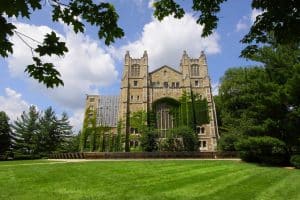
North Campus
North Campus is located a few miles northeast of Central Campus and has a noticeably different atmosphere from the university’s main academic hub. The area is more spacious and residential, with modern academic buildings, research facilities, residence halls, and larger green spaces spread throughout the campus.
Several major UMich programs are based on North Campus, including the College of Engineering, the Stamps School of Art & Design, the School of Music, Theatre & Dance, and the Taubman College of Architecture and Urban Planning. Because of this, many engineering, architecture, music, and art students spend much of their time on North Campus.
Although the campus is farther from downtown Ann Arbor, students can travel easily between North Campus and Central Campus through the university’s free Blue Bus system. Many students also live on North Campus, especially in university residence halls and nearby apartment communities.
University of Michigan’s other campuses
The University of Michigan system also includes University of Michigan-Dearborn (UMich Dearborn) and University of Michigan-Flint (UMich Flint). While all three campuses are connected through the University of Michigan system, each operates as its own institution with different academic priorities, student populations, and campus environments.
Located near Detroit, UM-Dearborn offers a smaller, more regional campus environment compared to Ann Arbor. The campus serves many commuter and local students and has recently prioritized diversity and inclusion, faculty and staff excellence, and long-term financial stability through its Comprehensive Campus Plan (CCP).
UM-Dearborn is especially known for programs in business, engineering, education, and computer science. Tuition is also lower than at the Ann Arbor campus, making it more accessible to many students across the region.
Meanwhile, UM-Flint is located in downtown Flint and focuses heavily on regional education, accessibility, and workforce development. The campus introduced Project 2020, a strategic action plan that included the creation of the College of Innovation and Technology along with additional diversity and inclusion initiatives.
Beyond technology and innovation programs, UM-Flint offers programs in healthcare, business, education, and psychology. Like UM-Dearborn, the campus also has lower tuition than Ann Arbor and serves many students from nearby Michigan communities.
While the Ann Arbor campus operates as the university’s flagship research institution and is classified as a “very high research activity” doctoral university, UM-Dearborn and UM-Flint serve as regional institutions focused on their surrounding communities and local student populations.
Getting to the University of Michigan
The University of Michigan is relatively easy to reach for both students and visitors, especially because Ann Arbor is connected to major highways, regional transit routes, and nearby airports. Most people traveling to campus arrive by car, train, bus, or through Detroit Metropolitan Airport, depending on where they’re coming from.
Once in Ann Arbor, students can usually get around campus using university buses, local public transportation, or by walking between the university’s main campus areas.
Below, we’ll cover public transportation options, driving and parking information, and how students typically get around campus once they arrive.
Public transportation options
Getting around Ann Arbor is relatively easy for students, especially because the city has a well-connected public transportation system serving the Michigan campus areas. Many students rely on buses instead of bringing a car to campus.
The main public transit system in Ann Arbor is TheRide, operated by the Ann Arbor Area Transportation Authority (AATA). Most city bus routes connect through the Blake Transit Center in downtown Ann Arbor, while many also stop at the Central Campus Transit Center near the heart of campus. Students can ride Ann Arbor city buses for free by swiping their valid MCard (UMich student ID). Otherwise, regular fares cost $1.50 per ride.
The university also operates the Blue Bus system, which students can use at no cost. Blue Buses travel between Central Campus, North Campus, residence halls, Michigan Medicine facilities, and commuter parking lots throughout Ann Arbor. The buses are easy to identify because they have “University of Michigan” written in large letters along the side.
For students whose schedules don’t line up with bus routes, rideshare services like Uber and Lyft are also widely available throughout Ann Arbor and near campus.
Getting there by car or other means
Many students and visitors reach the University of Michigan by car, especially because Ann Arbor is connected to major highways like I-94 and US-23. The city is about 45 minutes west of Detroit under normal driving conditions, although travel times can increase during football weekends and busy travel periods.
For out-of-state and international students, the nearest major airport is Detroit Metropolitan Wayne County Airport (DTW), which serves as a hub for major airlines. Students traveling to and from DTW are generally advised to arrive at least two hours before their flights.
Several transportation services also help students travel between campus and the airport. AirRide offers year-round transportation between Ann Arbor and DTW with frequent departures throughout the day. During major academic breaks, the university’s Central Student Government also operates AirBus, which provides transportation between campus and the airport before Fall Break, Thanksgiving, Winter Break, and Spring Break.
Parking is available throughout Ann Arbor and near campus, although spaces can be harder to find during busy periods. Metered parking and parking structures are available near Central Campus, while some areas also offer free parking after 6:00 p.m., on Sundays, and during federal holidays.

Living Near University of Michigan
Life at Michigan is closely tied to Ann Arbor’s college-town atmosphere. The area around campus blends student life with local businesses, residential neighborhoods, restaurants, bookstores, coffee shops, music venues, and public parks, giving students plenty to do outside the classroom.
Many students spend most of their time near Central Campus and downtown Ann Arbor because the area is highly walkable and filled with places to study, eat, shop, and socialize. Popular student areas include South University Avenue, Main Street, and Kerrytown, where students can find cafés, restaurants, local shops, and weekend events throughout the year.
Student life also extends into many of the university’s shared campus spaces. The University Unions system, which includes the Michigan League, Michigan Union, and Pierpont Commons, serves as the “living room” of the campus community, offering study areas, dining spaces, lounges, and student event spaces across different campus areas.
Food is also a major part of life at Michigan. Award-winning Michigan Dining operates seven dining halls and 17 markets and cafés across campus, giving students access to a wide variety of dining options throughout the day.
Although Ann Arbor is strongly shaped by the University of Michigan, the city also has its own identity beyond campus, with a mix of students, faculty, longtime residents, researchers, and professionals that keeps the area active year-round. This balance between campus life and the local community helped Ann Arbor rank No. 2 on WalletHub’s 2025 list of the best college towns in America.
Places to check out near University of Michigan
One of the most popular outdoor areas near campus is the Huron River, which runs through Ann Arbor and connects to several parks, trails, and recreation areas. Students also frequently visit Nichols Arboretum, often called “The Arb,” for walking trails, river views, picnics, and outdoor study sessions during warmer months.
Students interested in arts and culture can visit places like the University of Michigan Museum of Art (UMMA) and the Kelsey Museum of Archaeology, both located near Central Campus. Entertainment venues such as the historic Michigan Theater also host films, concerts, lectures, and live performances throughout the year.
Students also spend time at well-known Ann Arbor spots like Zingerman’s Delicatessen and Literati Bookstore, both popular gathering places near campus. During football season, Michigan Stadium becomes one of the busiest parts of the city, with tailgates, alumni gatherings, and game-day events drawing thousands of students and visitors to Ann Arbor.
Although Ann Arbor has a strong college-town identity, students are also relatively close to larger city attractions in Detroit. Museums, professional sports venues, concert arenas, and major cultural events in downtown Detroit are generally less than an hour away by car or bus.
Why You Should Visit University of Michigan’s Campus
The University of Michigan feels very different once you experience it in person. Seeing the scale of the campus, walking through the Diag, riding between Central and North Campus, and spending time around Ann Arbor can give you a much better understanding of what daily life at UMich actually looks like.
An in-person visit can also help you figure out whether Michigan’s environment matches what you want from college. Some students are drawn to the energy of a large Big Ten campus with major athletics, research opportunities, and constant activity around Ann Arbor. Others may realize they prefer a smaller or quieter setting after visiting. These details are often difficult to fully understand through rankings, photos, or virtual research alone.
The University of Michigan offers several ways for prospective students to explore campus, including guided tours, information sessions, self-guided visits, and virtual resources. You can learn more and schedule a visit through the university’s official campus tours page.
If you’re still building your college list, AdmissionSight’s Senior Editor College Application Program can help you approach the process more strategically. Students receive personalized guidance on school selection, application positioning, essays, and overall admissions planning.
Having a clearer admissions strategy before visiting campuses can make it easier to compare schools, identify the right fit, and make more informed college decisions. To learn more, schedule a consultation with us today.
Frequently Asked Questions
1. What is University of Michigan’s address?
The University of Michigan’s main campus is located at 1109 Geddes Avenue in Ann Arbor, Michigan. The university’s Central Campus sits near downtown Ann Arbor and serves as the main hub for academics, student life, and campus traditions.
2. How big is the University of Michigan?
The University of Michigan spans 3,200 acres across Ann Arbor. The campus includes academic buildings, residence halls, research centers, hospitals, athletic facilities, libraries, and public spaces spread across Central Campus and North Campus.
3. Can I visit the University of Michigan before applying?
Yes. The University of Michigan offers campus tours, information sessions, self-guided visits, and virtual visit options for prospective students.
4. Is parking available at the University of Michigan?
Yes. Parking is available in metered spaces, parking structures, and visitor lots throughout Ann Arbor and near campus. Availability can become more limited during football weekends and other busy campus events.
5. What landmarks are near the University of Michigan?
Major landmarks near the University of Michigan include Nichols Arboretum, the Huron River, the University of Michigan Museum of Art (UMMA), the Michigan Theater, and Michigan Stadium, also known as “The Big House.”
Takeaways
- University of Michigan’s main campus is located in Ann Arbor, a walkable college town about 45 minutes west of Detroit known for its student culture and active downtown area.
- UMich’s campus combines historic and modern architecture across several campus areas, including Central Campus, North Campus, major athletic facilities, research centers, and student spaces throughout Ann Arbor.
- The University of Michigan system also includes UM-Dearborn and UM-Flint, two regional campuses that serve different student populations and academic priorities.
- Visiting campus in person can help you see what daily life at Michigan feels like, from the atmosphere around the Diag to the differences between Central and North Campus.
- Working with an admissions expert can help you evaluate schools like the University of Michigan more strategically and build a balanced college list that fits your academic goals and interests.