

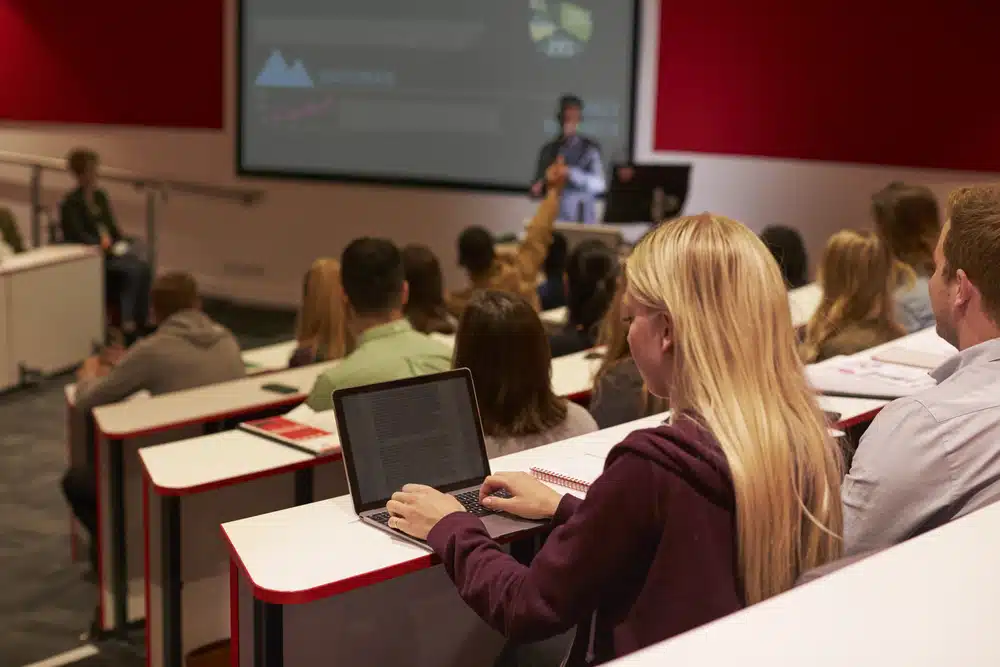
The top computer science summer programs for high school students teach you to build apps, design games, and work with programming languages like Python, Java, and JavaScript. Aside from leveling up your technical skills, you’re also showing colleges that you have the initiative to explore your passion outside the classroom. This can help you especially stand out to the top computer science schools like MIT and Carnegie Mellon.
In this blog, we’ll walk you through some of the best computer science summer programs —what they cost, where they’re located, how long they run, and most importantly, what you can expect from the experience.
- What Are the Best Computer Science Summer Programs for High School Students?
- Research Science Institute (RSI)
- The Anson Clark Scholars Program at Texas Tech
- Beaver (MIT) – Beaver Works Summer Institute (BWSI)
- Iowa Secondary Student Training Program (SSTP)
- Boston University’s Research in Science & Engineering (RISE)
- UCSB Research Mentorship Program (RMP)
- UC Santa Cruz Science Internship Program (SIP)
- COSMOS Summer Program
- Women’s Technology Program (WTP)
- AI Scholars at CMU
- iD Tech Camps
- Summer High School Academic Program for Engineers (SHAPE) at Columbia
- Stanford AI4ALL
- UC Berkeley Summer Computer Science Academy
- Cornell University’s CURIE Academy
- Frequently Asked Questions
- Takeaways
What Are the Best Computer Science Summer Programs for High School Students?
Whether you’re interested in software development, AI and machine learning, cybersecurity, robotics, or app and game design, the top computer science programs for high school students can sharpen your skills and strengthen your future college and internship applications.
Below, you’ll find ten standout programs, where they’re located, and when they run, so you can compare them side-by-side and find the one that aligns with your goals.
| Rank | Summer Program | Location | Dates |
| 1 | Research Science Institute (RSI) | Cambridge, Massachusetts | June 28 – August 8, 2026 |
| 2 | The Anson Clark Scholars Program | Lubbock, Texas | June 21 – August 6, 2026 |
| 3 | Beaver Works Summer Institute (MIT) | Cambridge, Massachusetts | July 6 – August 2, 2026 |
| 4 | Iowa SSTP | Iowa City, Iowa | June 17 – July 24, 2026 |
| 5 | BU RISE Program | Boston, Massachusetts | June 28 – August 7, 2026 |
| 6 | UCSB Research Mentorship Program (RMP) | Santa Barbara, California | June 15 – July 31, 2026 |
| 7 | UC Santa Cruz Science Internship Program (SIP) | Santa Cruz, California | June 15 – August 8, 2026 |
| 8 | COSMOS Summer Program | UC Davis / UC Irvine / UC San Diego / UCLA / UC Santa Cruz | July 5 – July 31, 2026 (some until Aug 1) |
| 9 | Women’s Technology Program (WTP) – MIT | Cambridge, Massachusetts | June 27 – July 25, 2026 |
| 10 | AI Scholars at CMU | Pittsburgh, Pennsylvania | June 20 – July 18, 2026 |
| 11 | iD Tech Camps | Multiple U.S. Campuses + Online | May 24 – August 14, 2026 |
| 12 | Columbia SHAPE Engineering Program | New York City, New York | Session 1: July 6–24, 2026 • Session 2: July 27–August 14, 2026 |
| 13 | Stanford AI4ALL | Stanford, California | June 15–26, 2026 (Online) • July 19–31, 2026 (Residential) |
| 14 | UC Berkeley Computer Science Academy | Berkeley, California | Mid-summer, Two-week sessions |
| 15 | Cornell CURIE Academy | Ithaca, New York | July 16–22, 2026 |
Now, let’s discuss each program one by one.
1. Research Science Institute (RSI)
- Dates: June 28 to August 8, 2026
- Location: Cambridge, Massachusetts (MIT campus)
- Cost: Free
RSI is an intensive summer research program by the Center for Excellence in Education (CEE), aimed at high-school juniors.
The first week consists of advanced lectures and tutorials in math, physics, computer science, and biology. For the next five weeks after that, every student works independently on original projects, often in cutting-edge fields like robotics, AI, biomedical science, or physics. You’ll have one-on-one mentorship (often with an MIT or partner university faculty), access to labs, and a chance to present at a symposium, where some presentations even win awards.
The application asks for your transcript, standardized test scores (PSAT, SAT, ACT recommended), a couple of teacher or science-project mentor recommendations, and essays about your STEM interests and goals. This computer science summer program for high school students is extremely competitive, accepting only around 100 students worldwide each year. Because of that, strong grades, a STEM background, extracurricular STEM activities, and a well-written application help improve your chances of getting accepted.
We laid out what you can expect from a full RSI experience. Take a look for more details.
2. The Anson Clark Scholars Program at Texas Tech
- Dates: June 21 to August 6, 2026
- Location: Lubbock, Texas (Texas Tech University campus)
- Cost: Free
The Anson Clark Scholars Program is a selective research opportunity for high-achieving high school juniors and seniors who want to work directly with Texas Tech faculty in several fields like biology, computer science, engineering, and humanities.

Over seven weeks, you’ll work on a full research project. Expect mentorship from TTU faculty, hands-on lab or academic research, academic seminars, and opportunities to practice written and oral research communication.
Admission is competitive and requires transcripts, essays, recommendation letters, and evidence of strong academic interest. Because it’s fully funded and includes a stipend, spots are limited and highly sought after.
You can read our complete breakdown of the Anson Clark Scholars Program here.
3. Beaver Works Summer Institute at MIT
- Dates: July 6 – August 2, 2026 (4 weeks, following prerequisite coursework in spring)
- Location: Cambridge, Massachusetts (MIT campus)
- Cost: Free
Beaver Works Summer Institute is a top computer science summer program for high school students that offers topics like robotics, autonomous systems, AI, aerospace, cybersecurity, and other fields that require excellent coding and problem-solving skills. Students must complete free online prerequisite courses in the spring before attending the on-campus program in the summer.
The in-person session runs for about four weeks, where you’ll participate in team projects, engineering builds, data analysis, algorithm development, and instructor-guided labs.
Eligibility is specific: applicants must be in high school and no higher than grade 11. Seniors, college students, and students below grade 9 are not eligible. Admission is competitive, and the program is fully funded, making enrollment highly selective.
Check out our full overview of the Beaver Works Summer Institute to get the complete picture.
4. Secondary Student Training Program (SSTP) at University of Iowa
- Dates: June 17 – July 24, 2026 (about 6 weeks)
- Location: Iowa City (University of Iowa campus)
- Cost: $7,500 (financial aid available)
SSTP is built for high-achieving high school students interested in STEM or social science research.
The program is fully in-person and pairs you with a University of Iowa faculty mentor for hands-on lab or computational research. Over six weeks, you collect data, run experiments, code, attend research seminars, write a formal paper, and present your findings at the end.
Admission is selective. Faculty reviewers prioritize essays, but they also check your transcripts, scores, recommendation letters, and how well your interests match an available research mentor. College credit may be awarded to participants.
We put together a complete breakdown of the SSTP experience; feel free to explore it.
5. Research in Science & Engineering (RISE) at Boston University
- Dates: June 28 – August 7, 2026 (6 weeks)
- Location: Boston University, Boston, Massachusetts
- Cost: $6,185 (commuter); $9,785 (residential)
BU RISE is designed for motivated high school juniors and seniors who want to spend their summer doing academic research in fields like computer science, biomedical engineering, neuroscience, chemistry, physics, or social sciences.
You’ll choose between two tracks: Internship (40 hrs/week in a lab) or Practicum (group research with instruction and case studies). Over six weeks, you analyze data, run lab work or code, attend seminars, and finish with a poster presentation.
Admission requires transcripts, essays, and recommendation letters, and eligibility is limited to rising juniors and seniors. Spots are competitive (in 2025, only 190 students were admitted out of thousands of applications), especially for lab-focused placements. Students earn a certificate of completion, and select projects may lead to ongoing mentorship or extended research opportunities.
You can read our complete breakdown of BU RISE here.
6. UCSB’s Research Mentorship Program (RMP)
- Dates: June 15 – July 31, 2026 (about 6 weeks)
- Location: University of California, Santa Barbara
- Cost: $5,675 commuter | $13,274 residential
In UCSB RMP, you’ll spend six weeks on campus working closely with a UCSB mentor in fields like computer science, engineering, biology, climate studies, psychology, and more.
The schedule mixes lab or computational work, seminars, writing workshops, and project time. An especially notable part of the program is GRIT Talks, which is a lecture series where UCSB researchers talk about their work and technologies. Before the on-campus program, you’ll also be required to finish a virtual component.
To apply to this computer science summer program for high school students, you need to be in 10th or 11th grade, though exceptional 9th graders are sometimes considered. A 3.80 weighted GPA is required, along with essays, transcripts, and recommendation letters. Admission is selective and the program is not free, but the mentorship and research outcomes are strong selling points.
Want the specifics on UCSB RMP? We organized everything in one place.
7. UC Santa Cruz Science Internship Program (SIP)
- Dates: June 15 – August 8, 2026 (about 10 weeks)
- Location: University of California, Santa Cruz
- Cost: $4250
In UC Santa Cruz’s SIP, you join a research group working on anything from machine learning and astrophysics to genetics, ocean science, ecology, or robotics.
Regarded among the top high school computer science internships, the program runs for about 10 weeks and includes mentorship from UC Santa Cruz researchers, weekly check-ins, skill-building workshops, and a final symposium where you present your work.
Admission is competitive and open to students aged 14-17 years on the program start date. You must submit essays, transcripts, and recommendation letters, and matching depends on your interests and available mentors. SIP isn’t free, but scholarships can help reduce cost.
We laid out the full SIP experience; take a look for more details.
8. COSMOS Summer Program
- Dates: July 5 – July 31, 2026 (UCI and UCSD); up to August 1, 2026 (UCLA, UCSC, and UCD)
- Location: UC Davis, UC Irvine, UC San Diego, UCLA, UC Santa Cruz
- Cost: $5,256
COSMOS is a month-long residential STEM program where you choose to explore one academic “cluster” in depth: robotics, computer science, engineering, marine science, astrophysics, synthetic biology, or another specialized track. You spend most of your time in labs and project blocks.
You can apply to only one of the five UC campuses, and each campus designs its own curriculum based on faculty research strengths. That means robotics at UCSD won’t look the same as robotics at UCLA, which makes choosing the right campus important. Each site accepts around 160–250 applicants, and a typical admit has about a 3.5+ GPA.
You can read our complete breakdown of COSMOS here.
9. Women’s Technology Program (WTP) at MIT
- Dates: June 27 – July 25, 2026
- Location: MIT campus, Cambridge, Massachusetts
- Cost: Free and fully funded
WTP is a month-long engineering and CS program for young women. You spend four weeks at MIT working through labs, design challenges, and coding assignments in either Electrical Engineering & Computer Science (EECS) or Mechanical Engineering (ME). You learn how circuits work, write programs from scratch, build mechanisms, test prototypes, and solve problems the way MIT engineers actually do.
Most days include lectures, labs, project blocks, and MIT-style homework. You get mentorship, attend workshops, debug hardware and code, and build a final project; a true hands-on experience like other top computer science summer programs for high school students.
Admission is highly competitive. WTP-ME selects about 20 attendees each year, and one cycle received around 320 applications. You apply as a rising senior with strong math/science ability, along with essays, transcripts, and recommendations. Since the program is fully funded, getting in matters more than paying for it.
WTP-EECS is currently on hiatus. However, if it opens up again, the program would still be excellent for students interested in electrical engineering and computer science.
Want the specifics on WTP? We organized everything in one place.
10. AI Scholars at CMU
- Dates: June 20 – July 18, 2026
- Location: Carnegie Mellon University, Pittsburgh, Pennsylvania
- Cost: free and fully funded
AI Scholars is a three-week program where you learn core concepts like neural networks, computer vision, fairness in AI, and model evaluation. You’ll also work in Python and build ML models.
The program mixes lectures, coding labs, team projects, and discussions about ethics and bias. You’ll work with CMU instructors, receive mentorship during project development, and end with something you can present or continue after the program.
To apply, you generally need to be entering 10th–12th grade with a strong academic record and optional programming experience. You should also submit essays, transcripts, and recommendations.
11. iD Tech Camps
- Dates: May 24 -August 14, 2026
- Location: Multiple campuses across the U.S. + online options
- Cost: $949 per week for day camps, $4,399+ for two-week overnight sessions.
iD Tech is a pick-your-track style tech camp where you choose one course and spend a week or more building a game, an app, a robot, a website, or a machine learning model. This tech experience is fast-paced and practical. You learn tools like Python, Unity, Java, C++, Blender, Roblox Studio, and AI/ML libraries, depending on the course you pick.
Sessions run 1–2 weeks, with most of your time spent coding, designing, debugging, and building projects in small groups.
There isn’t a strict GPA requirement. If you’re motivated and interested in tech, you can apply. It’s not free, and prices vary by course, location, and format.
12. Summer High School Academic Program for Engineers (SHAPE) at Columbia
- Dates: July 6 – July 24, 2026 (Session 1) | July 27 – August 14, 2026 (Session 2)
- Location: Columbia University, New York City
- Cost: $5,880 (commuter), $10,705 (residential)
In SHAPE, you’ll explore one engineering track for the full two-week session, like Robotics, Computer Science, and Biomedical Engineering. The course is structured like a real college class, with labs, assignments, and a steady workload. You also get access to electives, college prep support, workshops, and guidance from Columbia engineering students throughout the program. It’s taught by Columbia faculty, but it’s important to note that it does not award college credit.
To apply, you’ll need to demonstrate strong academic performance, show an interest in STEM, provide recommendation letters, and submit a written application. SHAPE is competitive since spaces are limited, and the program is not free, though need-based financial aid is available. If you want a fast, focused way to try engineering at Columbia, this gives you a solid preview of college-level work in a short time.
13. Stanford AI4ALL
- Dates: June 15 – June 26, 2026 (Online) | July 19 – July 31, 2026 (Residential)
- Location: Stanford University, California
- Cost: Free and fully funded
Stanford AI4ALL focuses heavily on AI for good; you explore machine learning, ethics, fairness, healthcare applications, and how AI impacts people. You learn to code in Python, work with datasets, train models, and get comfortable with ML tools researchers use.
Over three weeks, you attend lectures taught by Stanford faculty, build AI projects with guidance from mentors, join small-group work sessions, and hear from industry speakers. You collaborate on a final AI project and present it at the end. Workshops also cover leadership, ethics, and responsible AI.
AI4ALL is selective and typically aimed at rising 10th–11th graders, especially those underrepresented in computer science. You apply with essays, transcripts, and recommendations.
14. UC Berkeley Summer Computer Science Academy
- Dates: Two-week sessions, usually mid-summer
- Location: UC Berkeley campus, California
- Cost: $5,160
The Berkeley Summer CS Academy gives you a focused, deep dive into programming at the university level. You’ll spend two weeks learning core CS concepts, writing code in Python and JavaScript, building projects, and understanding how software and web systems work behind the scenes.
Each day blends lectures, live coding demos, project work, and time with instructors who guide you through concepts like data structures, algorithms, logical problem-solving, and development workflows. Workshops also cover college application tips, collaboration skills, and ways to grow in tech after the program ends.
Applicants must submit transcripts and a short written component. No prior experience is required, but you must have an interest in computer science. Tuition isn’t free, but Berkeley offers financial aid for those who need it.
15. Cornell University’s CURIE Academy
- Dates: Jul 16 — Jul 22, 2026
- Location: Cornell University, Ithaca, New York
- Cost: $1450
CURIE Academy is built for young women interested in engineering and want a short but hands-on look at what engineering study is like at Cornell. You’ll spend the week exploring different engineering fields like chemical, biomedical, mechanical, civil, electrical, or computer engineering through labs, problem-solving sessions, and guided team projects.
Workshops cover topics such as how to succeed in STEM majors, how to think like an engineer, and how to prepare for college-level academics. You also meet Cornell engineering faculty and students, which gives you a glimpse into both the academic and campus aspects of the university.
To apply, you generally need a strong interest in STEM and submit transcripts, a written component, and teacher recommendations.
Frequently Asked Questions
1. What are the best computer science summer programs for high school students in 2025?
Some top options include MIT Beaver Works, Stanford AI4ALL, CMU AI Scholars, UC Berkeley CS Academy, and Columbia SHAPE, which offer a combination of coding and engineering. These programs offer real project work, coding labs, and university-level instruction.
2. Are there free computer science summer programs for high school students?
Yes, fully funded options include MIT WTP (engineering + CS), Stanford AI4ALL, and MIT Beaver Works. These are competitive, but cost won’t be a barrier if you are selected.
3. What subjects do computer science summer programs typically cover?
Most programs focus on Python, machine learning, data science, algorithms, robotics, AI ethics, web development, and programming fundamentals.
4. How can computer science summer programs help with college admissions?
You get real project experience, recommendation potential, and something meaningful to write about in essays. Programs at well-known universities also add credibility to your CS interest.
5. When should I apply for computer science summer programs?
Most deadlines fall between December and March. It’s best to start in the fall so you have time for essays, recommendations, and optional programming prep.
Takeaways
- Computer science summer programs for high school students let you build real technical skills like coding, debugging, training models, and presenting projects. These experiences can boost your college applications.
- Highly selective options like Stanford AI4ALL, MIT Beaver Works, WTP at MIT, CMU AI Scholars, and UC Berkeley CS Academy stand out because they offer mentorship, structured project work, and direct experience with AI, robotics, data science, and software development.
- If you’re serious about computer science, getting involved in a summer program with guidance from a private admissions expert can increase your chances of being accepted.










