

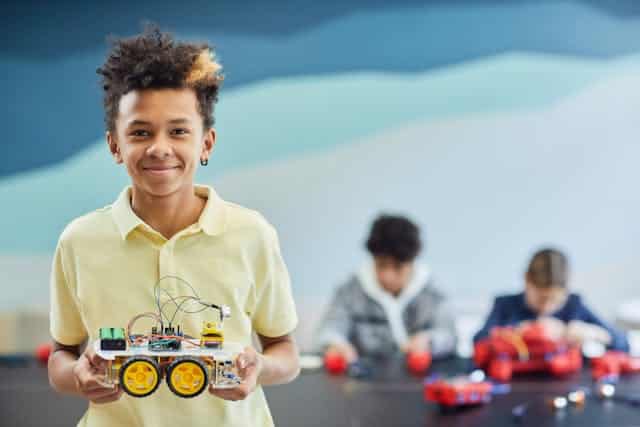
For Dean Kamen, the founder of the FIRST Robotics Competition (FRC), it’s never been just about building robots. He sees the robots as tools for students to develop real-life skills like teamwork, creativity, and problem-solving. Competitions like this provide high school students with a well-rounded learning experience and help them stand out in college applications by demonstrating confidence, initiative, and the ability to tackle big challenges.
This blog will help you take your FIRST Robotics experience to the next level. From practical tips to insider advice, we’ll walk you through what it takes to do well in the competition.
- What is the FIRST Robotics Competition?
- FIRST Robotics Competition Awards and Recognition
- How to Qualify for the FIRST Robotics Competition Championship
- How to Join the FIRST Robotics Competition
- How to Succeed in the FIRST Robotics Competition
- FIRST Robotics Competition 2025 Championship Winners and Finalists
- Frequently Asked Questions
- Takeaways
What is the FIRST Robotics Competition?
The FIRST Robotics Competition (FRC) is where high school students turn engineering into a full-on team sport. Founded by inventor Dean Kamen, FRC challenges students to design, build, and program industrial-sized robots to play an original game that changes every year. It’s fast-paced, hands-on, and as competitive as any major athletic event—just with more gears, sensors, and strategy.
Since its launch in 1992, FRC has grown into a global movement that brings together students, mentors, and professionals from all over the world. The program combines real-world engineering with teamwork, creativity, and problem-solving. The ultimate goal is to inspire young people to see themselves as innovators capable of changing the world.

Here’s a quick look at how FRC works:
- Competition season. Every January, teams get the official game challenge, complete with rules, field layouts, and scoring systems. From there, they have about six weeks to design, build, and program their robot before competition season begins.
- Team setup. Each team is made up of students, mentors, and industry professionals who collaborate on everything from mechanical design to coding and marketing.
- The game. Each year’s game is totally new. Teams compete in alliances of three robots, working together to score points while outsmarting the opposing alliance. Games might include shooting balls, balancing platforms, climbing structures, or delivering game pieces. The activities change annually to keep things fresh and challenging.
- Events. After the build season, teams compete in local, regional, or district events. The best teams move on to the FIRST Championship, a massive international showdown packed with lights, music, and the excitement of a pro-level sporting event.
- No experience required. Whether you’re into coding, building, or creative design, FRC welcomes everyone. Many teams offer workshops and mentorships to help beginners learn the ropes. It’s a safe space to experiment and learn by doing.
While the robots steal the show, the real goal is growth. Students develop technical and soft skills such as leadership, teamwork, communication, and resilience. For college-bound students, it’s an impressive way to show initiative, creativity, and hands-on experience with real-world technology.
A closer look at the game structure
Each season of the FIRST Robotics Competition comes with a brand-new game, revealed every January during the official kickoff event. Every game combines engineering, physics, and strategy in a way that feels part arcade, part engineering marathon.
Teams compete in alliances of three robots, facing off on a large, themed field roughly the size of a basketball court. The game is divided into three important phases:
- Autonomous Period (Auto). The first 15 seconds of each match are completely hands-off—no drivers, no joysticks. Robots run pre-programmed code to complete tasks like scoring game pieces, moving to specific zones, or performing precise maneuvers. This phase rewards smart programming and sensor accuracy.
- Teleoperated Period (Teleop). Once the autonomous phase ends, human drivers take control. Teams use controllers to guide their robots, strategizing on the fly and coordinating with alliance partners.
- Endgame. The final 30 seconds often include a bonus challenge, like climbing bars, balancing on platforms, or docking at a specific station. These are high-risk, high-reward moves that can completely shift the outcome of a match in the last moments.
Scoring systems change every year to match the theme as well. Teams have to balance speed, precision, and alliance strategy to earn the most points.
FIRST Robotics Competition Awards and Recognition
The FIRST Robotics Competition rewards the winning team on the field and celebrates innovation, collaboration, and the spirit of engineering that drives every team. More than building robots, students learn to work like real engineers, tackling complex problems and bringing creative solutions to life. The awards system reflects that balance of technical skill, teamwork, and impact.
Here are some examples of awards that participants can earn in the 2025–2026 FRC season:
| Award | Description |
| Dean’s List Award | Presented to standout student leaders who demonstrate exceptional passion for STEM, technical excellence, and dedication to their team and community |
| Woodie Flowers Award | Given to outstanding mentors who inspire students through exceptional teaching, communication, and guidance in engineering and leadership |
| Volunteer of the Year Award | Honors individuals who dedicate their time and expertise to helping events run smoothly and supporting teams throughout the competition season |
| FIRST Impact Award | The highest honor in FRC, celebrating teams that best embody the mission of FIRST by inspiring others, advancing STEM education, and making a lasting difference in their community. |
| Gracious Professionalism® Award | Given to teams that demonstrate fairness, kindness, and respect toward competitors while maintaining a high level of excellence. |
How to Qualify for the FIRST Robotics Competition Championship
Making it to the FIRST Robotics Competition Championship is the result of months of strategy, teamwork, and engineering under pressure. Before aiming for the big stage, here’s a quick look at who can participate and how qualification works:
Eligibility
To join the 2026 FRC season, you must:
- Be enrolled in grades 9–12 or an equivalent secondary education program during the 2025–2026 academic year.
- Form a team—usually 10 to 25 students—and have at least one adult mentor or coach who will guide the team through design, programming, and competition phases.
- Commit to the full competition season, from regional and district events through the FIRST Championship.
Required documents
Before jumping into the FIRST Robotics Competition season, teams need to get their paperwork in order. FRC is a massive, student-driven event supported by mentors, educators, and volunteers, so having your documents ready ahead of time makes registration and participation much smoother.
For registration (Now – November 18, 2025), you’ll need:
- Team Registration Form. Completed online through the official FIRST portal, including team details, coach or mentor information, and your school or organization affiliation.
- Youth Registration & Consent Form. Required for all student participants. If a student is under 18, this form must be signed by a parent or guardian.
- FIRST Code of Conduct Agreement. All team members, mentors, and coaches must agree to uphold the program’s standards of Gracious Professionalism® and Coopertition® throughout the season.
For the build and competition season (January – April 2026), you’ll need:
- Team Roster Confirmation. Coaches must finalize and verify the team roster before kickoff and ensure all participants are officially registered.
- Safety and Risk Waiver. Each participant must complete safety documentation acknowledging event guidelines and workshop requirements.
- Robot Inspection Checklist. Teams must prepare technical documentation verifying that their robot complies with official FRC rules before competing at regional or district events.

For the FIRST Championship (April 29 – May 2, 2026), you’ll need:
- Travel and Event Waivers. Teams advancing to the Championship must submit forms confirming travel details, emergency contacts, and participation agreements.
- Engineering Notebook or Presentation. Finalist teams often prepare a presentation or documentation that outlines their robot’s design process, coding innovations, and community impact to share with judges.
Getting these documents organized early helps your team avoid last-minute stress, ensuring you’re fully ready to focus on what matters most.
Competition fees
Registration fees help cover event operations, the Kit of Parts, and access to official FIRST resources, everything teams need to get their robots from blueprint to battle-ready.
Here’s a breakdown of costs for the 2025–2026 FRC season:
- Team registration fee. For the 2026 season, the standard registration fee is $6,300 per team, due before the November 18, 2025 deadline. This includes entry into one regional or district event and access to the official Kit of Parts distributed during kickoff.
- Additional event fees. Teams that wish to compete in more than one regional or district event can register for additional competitions, typically costing around $4,000 per extra event.
- Championship registration. Teams that qualify for the FIRST Championship must pay an additional entry fee (usually around $5,000) to secure their spot at the international competition.
- Travel and logistics. While event registration covers participation, travel, lodging, and shipping costs for the robot are handled by the teams. Many schools offset these through sponsorships, fundraising, or local partnerships.
FIRST encourages all teams to seek grants and sponsorships, which are often available through corporate partners, local businesses, and STEM organizations. Many rookie and veteran teams successfully secure funding each season, making the journey to regionals and even the world stage both achievable and rewarding.
Registration deadline
The registration deadline for this cycle is November 18, 2025. Below is a timeline highlighting the major dates and milestones of FRC:
| Date | Event | Description |
| Nov 18, 2025 | Team Registration & Kit-of-Parts Deadline | Teams must complete registration, confirm event participation, and finalize their Kit-of-Parts shipping details. This marks the official start of preparations for the 2026 build season. |
| Jan 10, 2026 (12:00 PM ET) | 2026 Season Kickoff — “REBUILT™” | The new season officially begins! The annual game challenge and rules are revealed, and teams gain access to the Kit-of-Parts and game manual to start designing their robots. |
| Jan 14 – Apr 22, 2026 | Official Q&A and Rule Clarifications Open | The official Q&A forum goes live, allowing teams to ask questions and get clarifications directly from the FIRST Game Design Committee throughout the season. |
| Feb 21, 2026 | Week Zero Scrimmage | An unofficial preview event where teams test their robots in real-field conditions before the competition season kicks off. It’s the perfect chance to refine code, strategy, and teamwork. |
| Mar 4 – Apr 19, 2026 | Regional & District Competitions (Weeks 1–7) | The heart of the season. Teams across the globe compete in regional or district events, forming alliances and battling for a spot at the Championship. |
| Apr 29 – May 2, 2026 | FIRST Championship 2026 | The grand finale of the season brings together top teams from around the world for four days of high-energy matches, innovation showcases, and celebration of STEM excellence. |
Future FRC participants should stay tuned to the official season schedule to avoid missing important milestones. Keeping track of these dates makes it easier for teams to plan their build season, organize testing and strategy sessions, and show up ready for every stage of the competition.
The official site also breaks down the complete list of regional and district competitions, so be sure to check that out when planning your team’s travel and event strategy for the season.
How to Join the FIRST Robotics Competition
Getting started with the FIRST Robotics Competition (FRC) is an exciting adventure that blends creativity, engineering, and teamwork.
Follow these steps to gear up for the 2026 FRC season:
Step 1: Review eligibility and season details.
Timeline: Before registration opens
Begin by reviewing the official FRC eligibility rules and team requirements on the FIRST website. Understand who can participate, what resources you’ll need, and how events are structured. Mentors and coaches should also read the FIRST Code of Conduct and Youth Protection Policy to ensure full compliance before registration.
Step 2: Register your team online.
Timeline: Now through November 18, 2025
Form your team, usually 10 to 25 students, with at least one adult mentor or coach. Register through the FIRST Dashboard, where you’ll enter your school or organization information and confirm your event participation. During registration, you’ll also pay the season fee and complete required forms such as the Consent and Release and Safety Acknowledgment.
Step 3: Attend the official season kickoff.
Timeline: January 10, 2026
The new season officially launches with the global FIRST Kickoff Event, where the year’s unique game is revealed. Teams receive the Kickoff Kit and begin brainstorming, prototyping, and planning their robot design strategy for the weeks ahead.
Step 4: Build and program your robot.
Timeline: January 10 – February 20, 2026
Once the game is announced, the six-week build season begins. Teams work day and night to design, assemble, and program their robots. This phase combines mechanical engineering, coding, electronics, and teamwork, often turning classrooms and garages into full-fledged workshops.

Step 5: Compete in regional or district events.
Timeline: March 4 – April 19, 2026
After the build phase, it’s time to compete. Teams head to official regional and district events across the world, facing off in alliances of three robots. Every match tests design, programming, quick thinking, strategy, and collaboration.
Step 6: Advance to the FIRST Championship.
Timeline: April 29 – May 2, 2026
Top-performing teams from each region qualify for the FIRST Championship, the ultimate celebration of robotics and innovation. Thousands of students, mentors, and supporters gather for four days of competition, inspiration, and global recognition.
Joining the FIRST Robotics Competition means building a robot while also building skills, confidence, and connections that last a lifetime. Start early, plan well, and your team could be one of the next great success stories of the 2026 FRC season.
How to Succeed in the FIRST Robotics Competition
Thriving in the FIRST Robotics Competition takes creativity, patience, and teamwork—not just mechanical skills. You don’t need to be a seasoned engineer or coding expert to stand out. You just need curiosity, a willingness to learn, and the drive to solve real-world problems under pressure. FRC is designed to mirror real engineering experiences while keeping the spirit of teamwork and innovation alive.
Here’s how you can prepare and perform your best in the 2026 FRC season:
1. Learn what FRC is really about.
Before you start building, take time to understand what makes FRC unique. More than just robots, it’s also about solving challenges through design, teamwork, and strategy. Each season introduces a brand-new game with its own theme, scoring system, and field setup. Knowing the goals of the game early will help you make smarter design and programming choices from day one.
2. Master the rules and the manual.
As soon as the 2026 FRC Game Manual drops, read it like it’s your team’s playbook because it is. It covers everything from scoring points and robot limitations to safety and inspection checklists. Understanding these details early helps your team avoid costly mistakes or penalties during competition. You can also access all archived game manuals to help you understand the nature of the competition better.
3. Build a team that communicates.
Strong robots come from strong teamwork. Assign roles like mechanical lead, programmer, driver, and documentation manager so everyone knows their focus. Hold regular team check-ins to track progress and troubleshoot issues together. FRC events are fast-paced, and good communication can make or break your strategy.
4. Manage your build season wisely.
From January 10 to February 20, 2026, every hour counts. Split your build process into phases:
- Brainstorming
- Prototyping
- Building
- Testing
- Refining.
Avoid overcomplicating designs early on. Instead, aim for a reliable robot before chasing advanced features. Keep a build journal so your team can document progress and learn from mistakes.
5. Practice, test, repeat.
The best teams build and test relentlessly. Run your robot in mock matches, simulate game scenarios, and push it to its limits. Identify weak spots in control, mobility, or sensors and fix them early. By the time competitions begin in March 2026, you’ll want your robot (and your drivers) to be match-ready.
6. Focus on strategy, not just power.
FRC matches aren’t won by strength alone. Study how alliances work and create game plans that maximize points while supporting your partners. Sometimes, being a dependable defensive or support bot can be more valuable than going solo for big scores.
7. Embrace Gracious Professionalism®.
One of the defining principles of FRC is competing with respect and integrity. Help other teams, share tools, and celebrate their successes, even when they’re your rivals. Judges notice teams that lift others up, and that attitude often leads to awards and recognition beyond the scoreboard.
8. Keep learning after every match.
After each event, debrief as a team. What worked? What didn’t? What can be improved for the next round? FRC isn’t just a competition; it’s a learning experience that builds technical skills, leadership, and resilience. Every challenge you face now prepares you for bigger ones ahead, both in robotics and in life.
FIRST Robotics Competition 2025 Championship Winners and Finalists
Below are the standout teams and award recipients from the 2025 Championship season, celebrating the most exceptional performances and contributions in the world of high school robotics.
| Award Name | Winner | School / Organization |
| FIRST Impact Award | Project Bucephalus | Family/Community |
| FIRST Dean’s List Award | Yiğit Efe E | Team NF |
| Maeli M | High Scalers | |
| Owen G | SOTAbots | |
| Rudra K | Team Phenomena | |
| Keira P | WarriorBots | |
| Mahendran M | RoboHawks | |
| Melina M | Team Hammond | |
| Marcus W | Las Guerrillas | |
| Kristia N | Mechanical Mustangs | |
| Marlon W | SciBorgs | |
| Championship Winners | MadTown Robotics | Madera High School |
| Jack in the Bot | Henry M. Jackson High School | |
| Maverick Robotics | McCutcheon High School | |
| Iron Panthers | Burlingame High School | |
| Woodie Flowers Award | Francisco Guerra | PrepaTec – Botbusters |
| Founder’s Award | Gene Haas Foundation | — |
| Volunteer of the Year | Thad House | — |
Frequently Asked Questions
1. Who can participate in the FIRST Robotics Competition?
Any student in grades 9–12 can join the FIRST Robotics Competition (FRC). Teams usually consist of 10–25 students, guided by adult mentors, teachers, or engineers who help with design, programming, and project management.
2. What happens if my team performs well?
Teams that excel at their regional or district events qualify for the FIRST Championship, held annually in April. There, top teams from around the world compete in alliances for the title of World Champion.
3. How is the competition structured?
Each January, the new FRC game is revealed during the Kickoff Event. Teams then have about six weeks to design, build, and program their robots before competing in local, regional, or district events. The season concludes with the FIRST Championship, where the best teams advance to the global stage.
4. Is the FIRST Robotics Competition prestigious?
Absolutely. FRC is one of the most recognized STEM competitions worldwide, supported by major sponsors like NASA, Boeing, Google, and the Gene Haas Foundation. Participation reflects high-level technical skills, leadership, and collaboration, traits that universities and employers highly value.
5. How valuable is excelling in FRC for college admissions?
Excelling in FRC is considered a top-tier extracurricular achievement. Competing at the Championship level demonstrates mastery in engineering, coding, and strategic problem-solving, as well as teamwork and innovation—qualities that stand out to top universities and scholarship programs.
Takeaways
- Competing in the FIRST Robotics Competition (FRC) proves that you can design, build, and program complex robots that perform under real-world pressure, all while managing time, resources, and teamwork like a true engineer.
- The 2026 FRC season kicks off on January 10, 2026, followed by regional and district events from March through April, leading up to the FIRST Championship on April 29–May 2, 2026.
- Teams that reach the Championship level showcase technical excellence and also creativity, leadership, and the ability to innovate in high-stakes, fast-paced environments.
- FRC participants develop valuable skills in mechanical design, coding, systems integration, and strategic thinking, the same skills used by real engineers, researchers, and project managers.
- Highlighting your FRC experience in college applications with the help of a college application editor can show universities that you’re a student who studies STEM and someone who applies it, leads with purpose, and thrives in collaboration.










