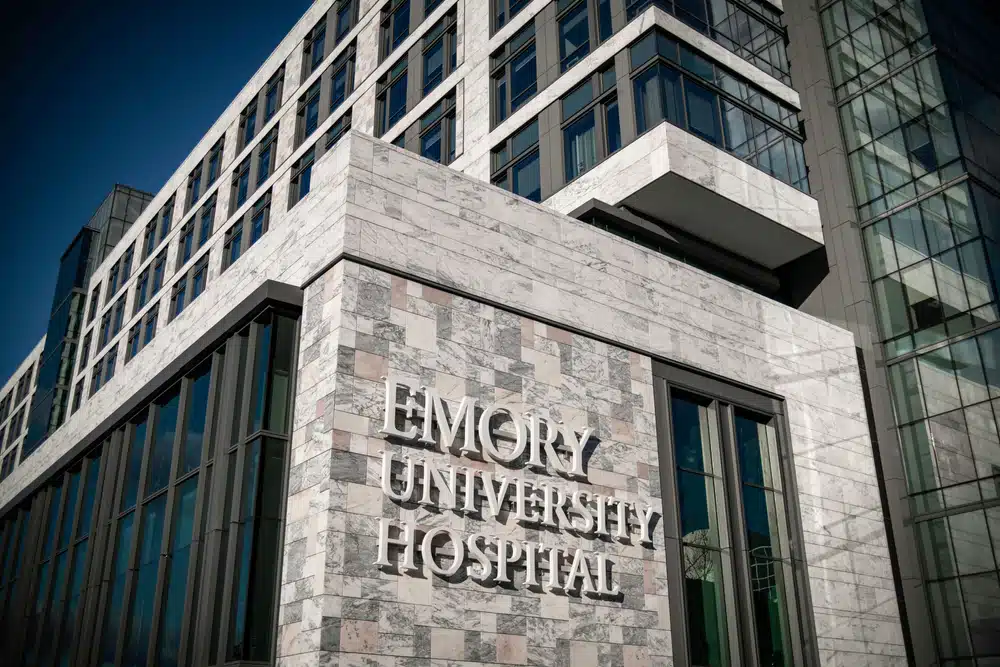
When you’re working on your Emory secondaries—the set of questions they send after you submit your primary application through AMCAS—it’s super important to clearly answer the big one: “Why medical school?” Emory’s medical school wants to understand your motivation and what’s driving you toward this path. Emory is especially interested in applicants who see themselves making a difference in Atlanta, across Georgia, and throughout the southern U.S.
In this blog, you’ll get a clear breakdown of what Emory secondaries are, what kinds of essay prompts to expect, and how to approach each one effectively with clear examples. We also provide a breakdown of what Emory’s medical program is looking for in their applicants.
- What Are Emory Secondaries?
- What Are the Emory Secondary Essay Prompts for 2024-2025?
- How to Answer the Emory Secondary Essay Prompts
- What Does Emory Look for in a Medical School Applicant?
- Frequently Asked Questions
- Takeaways
What Are Emory Secondaries?
Secondary essays are the second part of the application process (hence the name). While your primary application (via American Medical College Application Service or AMCAS) goes out to all your selected schools with the same basic info such as GPA, MCAT, personal statement, and work/activities, secondary applications are where you personalize things. Each med school sends its own set of essay questions, tailored to what they care about.
Think of secondaries as a way to say, “Here’s why I’m a great fit for your school, and here’s how your mission speaks to me.”
Emory University School of Medicine sends its secondary application questions through the Emory Supplemental Application Portal. All secondary prompts and submission steps will be available through that portal, not directly through AMCAS. Make sure to regularly check your email (including spam/junk folders) for updates from Emory, especially after AMCAS verification.
Important dates and deadlines
Emory typically sends out secondaries within 1 to 2 weeks of receiving your verified AMCAS application. The earlier you submit your primary, the earlier you’ll get your secondary, so if you’re applying early in the cycle, expect to see Emory’s questions pop up quickly.

You will receive the instructions only after your AMCAS application has been submitted, verified, and pre-screened. The deadline to submit the Emory Supplemental Application is 11:59 PM EST on December 1 of the year before you plan to start medical school.
Try not to rush your Emory secondaries, as it’s better to take a few extra days to write thoughtful responses than to fire off something half-baked.
What Are the Emory Secondary Essay Prompts for 2024-2025?
If you’re applying to Emory University School of Medicine, it’s really important to get familiar with their secondary essay prompts. These short essays give you the chance to talk more about your experiences, what drives you, and why you’d be a great fit for Emory.
Emory’s secondary prompts have stayed pretty steady over the last few years, so you can expect a familiar format. Emory has not released yet the official secondary prompts for the academic year 2025-2026.
Here’s a quick look at the prompts during the 2024–2025 application cycle.
1. Curriculum plan
List your entire curriculum plan for the 2024–2025 academic year. If you are not in school, please briefly describe your plans for the coming year.
2. Health-related experiences
Briefly describe your health-related experiences. Be sure to include important experiences that are in your AMCAS application, as well as any recent experiences.
3. Why Emory
Briefly describe your interest in Emory and the Emory degree program you have selected.
4. Service to underserved communities
Emory School of Medicine is committed to recruiting and educating medical students who will help deliver quality health care and promote the health of our patients. In our community, this includes learning about and addressing the healthcare needs of our most underserved populations. Please describe any of your activities that have been in service to underserved communities.
5. Updates since AMCAS submission
If you have any updates or new information to report since you have submitted your AMCAS primary application, please briefly describe below.
6. Committee letter explanation (if applicable)
If your school has a Pre-Health or Pre-Medical Committee, and your letters are submitted by three individual letter-writers rather than your school’s Committee, please explain why you are not submitting a Committee letter.
How to Answer the Emory Secondary Essay Prompts
Emory’s secondary application typically includes six short essay prompts; four are required, and two are optional (you only answer them if they apply). Each has a 200-word limit, so your answers need to be focused, intentional, and personal.
Let’s go through them one by one:
1. Curriculum plan prompt
This question is basically asking what you are doing right now and how it is preparing you for medical school. There are two ways to go about this:
(a) If you are still in school
Keep your answer simple and clear, as Emory doesn’t need a full syllabus. You can just list the courses you’re taking and, if relevant, write a quick sentence about why you chose them. If you’re taking any classes that tie into medicine or public health, mention them! It shows intentional preparation for med school.

Here is an example:
I’m currently a senior at XYZ University, finishing my degree in Biology. For the 2024–2025 academic year, I’ll be taking the following courses: Advanced Physiology, Public Health Ethics, Senior Research Seminar, and Spanish for Healthcare Professionals. I’m also working on a thesis project focused on healthcare access in rural areas.
(b) If you are taking a gap year or are currently not in school
This is where students tend to either overthink their answer or not give enough detail. You don’t need to be doing 10 things at once to impress the admissions committee; you just need to show that your year is structured, productive, and aligned with your goals.
Think about how you’re spending your time and what skills or experiences you’re gaining. Are you:
- Working a full-time job or internship?
- Volunteering at a clinic or shelter?
- Shadowing physicians?
- Conducting research?
- Studying for the MCAT (if reapplying)?
- Traveling with purpose (like global health work)?
All of that counts, as long as you explain how it’s helping you grow or preparing you for medicine.
Here is an example:
This year, I’m working as a full-time medical scribe in an emergency department, where I’ve been gaining firsthand experience in patient care and medical documentation. Outside of work, I volunteer twice a week at a community health clinic that serves uninsured patients. I’m also taking an online course in medical Spanish to better prepare for patient interactions in diverse settings.
Don’t write vague statements like “I’m taking a break this year to relax.” Instead, say how you’re using your time intentionally, even if it’s just focusing on personal growth, self-care, or informal learning. You don’t need to explain your entire life, just give a clear snapshot of how you’re spending this year and why it matters to your med school journey.
2. Health-related experiences prompt
This is your space to talk about the meaningful clinical and healthcare-related activities you’ve been involved in. Don’t treat this like a resume where you will just write everything. This is your chance to pull out the most impactful experiences and give a quick snapshot of how they shaped your understanding of medicine.
Start by thinking about your key experiences, such as:
- Shadowing doctors
- Volunteering in hospitals or clinics
- Working as a scribe or EMT
- Participating in medical missions
- Assisting in caregiving roles
- Involvement in public health or community outreach programs related to healthcare
Then ask yourself what exactly you did while in those activities, what you learned about patient care, the healthcare system, or even yourself, and how those experiences ignited your desire to become a health practitioner. You don’t need to cover everything; you can just focus on 1–3 core experiences that show real exposure to medicine and real insight gained.

Here is an example:
Volunteering in the surgical recovery unit at [Hospital Name], I assisted with monitoring post-op patients and supported nurses in daily tasks. I saw how small acts of kindness and clear communication could ease patient fears—something that deeply resonated with me. Later, as a medical scribe in a primary care clinic, I witnessed how physicians built long-term relationships with patients, especially those from underserved backgrounds. I observed the complexity of managing chronic conditions and the importance of listening with empathy. These experiences not only deepened my interest in medicine but also shaped my desire to practice in a setting where I can build meaningful connections and serve communities in need.
3. Why Emory prompt
This is the classic “Why this school?” question, and it’s one of the most important essays in your secondary application. In this section, do not just say that you like Emory. Instead, include why you like Emory and their programs and why you are a perfect match. This is where you can prove that you’ve done your homework and, more importantly, that you’ve thought about how their values, opportunities, and training style align with your goals in medicine.
These specific programs could be the following:
- Working at Grady Memorial Hospital, where you’ll treat underserved patients
- Interest in the Primary Care Track or Urban Health Initiative
- Opportunities for research, especially with the CDC nearby
- Dual degree options like MD/MPH through Rollins School of Public Health
Here is an example:
What really draws me to Emory is how focused it is on health equity and real, hands-on medical training. While volunteering at a free clinic for immigrant families, I saw just how much social factors can affect someone’s health, and that experience made me want to work in communities that face those kinds of challenges every day. I’m especially excited about the chance to train at Grady Memorial Hospital and learn from doctors who serve such a diverse patient population. I’m also really interested in the MD/MPH program at Rollins—it feels like the perfect way to build the skills I’ll need to tackle health issues not just one-on-one, but at the policy level too. Emory’s mission lines up with the kind of doctor I hope to become: someone grounded in community, service, and advocacy.
Avoid being too general when answering the “Why Emory?” prompt; saying something like “Emory is well-respected” doesn’t show real interest. Don’t list programs like Grady Memorial Hospital without explaining why they matter to you.
Also, remember it’s not just about what Emory can offer you but what you’ll bring to the community. And instead of repeating your personal statement, use this space to share something new that connects your goals to what Emory stands for.
4. Service to underserved communities prompt
This is your opportunity to share how you’ve already started doing the kind of work Emory values, which is serving people who are often overlooked or face serious barriers to healthcare and basic resources. “Underserved” can mean a lot of different things: low-income, uninsured, rural, immigrant, elderly, non-English-speaking, homeless, incarcerated, or any group that lacks access to adequate care and support.
When considering what to include in your response, consider experiences like volunteering at free clinics or shelters, tutoring students in under-resourced schools, helping organize food drives, working with organizations supporting immigrant, refugee, or rural communities, and many more.

Once you’ve chosen one or two experiences to highlight, go beyond simply stating what you did. Reflect on why you decided to get involved, what the experience taught you about healthcare, inequality, or yourself, and how it helped shape your values or influenced your goals as a future physician.
Here is an example:
During college, I volunteered at a community health fair that provided free screenings and consultations to uninsured families. I was responsible for registering patients, translating for Spanish-speaking visitors, and guiding them through the process. Though my role seemed small, I saw how much it mattered to people who rarely had access to care. That experience taught me that even basic support—like clear communication—can help someone feel seen and respected. It sparked my interest in working with underserved populations and pushed me to learn more about healthcare access issues.
Many applicants worry they don’t have anything impressive to share, but Emory isn’t looking for flashy experiences. They value kindness, awareness, and a genuine desire to help. Even simple roles like translating at a clinic or visiting elderly neighbors matter if you can reflect on what they taught you.
5. Updates since AMCAS submission prompt
This section is your chance to update Emory on anything important that’s happened since you submitted your AMCAS application. You can mention new grades, clinical or volunteer work, research, awards, leadership roles, MCAT updates, certifications, or healthcare-related projects.
If nothing significant has changed, it’s perfectly fine to leave this section blank—there’s no need to add something just to fill the space.
6. Committee letter explanation (optional)
This prompt only applies if your school offers a committee letter and you chose not to use it. Emory isn’t penalizing you—they just want to understand why. Common reasons include being an alum, missing the deadline, wanting to use stronger individual letters, or attending a school with limited committee access.
Avoid sounding defensive, apologetic, or vague. After all, you’re not being judged for not having a committee letter. Emory just wants context, and a clear, honest explanation is more than enough.
What Does Emory Look for in a Medical School Applicant?
Emory University School of Medicine uses a holistic admissions process, meaning they look beyond just test scores and GPAs to find well-rounded individuals who are academically strong, personally driven, service-oriented, and aligned with the school’s mission.
If you’re applying to Emory, here’s what their admissions committee is really looking for:
Academic excellence & MCAT scores
Competitive applicants typically demonstrate a high level of scholarship, often reflected in a strong GPA and solid MCAT scores. While Emory does not publish official cutoffs, successful applicants usually have GPA and MCAT scores in the upper percentiles:
- Average GPA: 3.7
- Average MCAT score: 514
Clinical experience and patient exposure
One of the most important parts of your application is showing that you understand what a career in medicine involves. Emory looks for applicants with firsthand clinical exposure, such as shadowing physicians, working as a medical assistant or scribe, volunteering in hospitals or clinics, or participating in community health programs. What matters most is that you’ve spent time in real healthcare settings and have reflected on those experiences.

Letters of recommendation
Strong letters of recommendation are an important part of your application. Emory requires three individual or committee letters, ideally from people who know you well in academic, professional, or service settings. These letters speak to your intellectual ability, work ethic, interpersonal skills, and readiness for medical school.
Leadership and extracurricular involvement
Emory looks for applicants who take initiative and show leadership in meaningful ways, both on and off campus. This could include serving as a student organization officer, leading a service project, mentoring underclassmen, organizing a campus health fair, or starting a peer support group.
Leadership in research labs, such as coordinating a team, managing data, or presenting findings, also stands out. Outside of academics, involvement in music, athletics, debate, cultural organizations, or faith-based groups shows balance and well-roundedness. These experiences help Emory see how you work with others, take responsibility, and contribute to your community, as these are traits that they value in future physicians.
Service and community engagement
Emory University School of Medicine places strong emphasis on community engagement, especially work that supports underserved populations in Atlanta, Georgia, and the broader Southern U.S. They want to see applicants who care about health equity and have taken meaningful steps—big or small—to serve others.
Relevant experiences can include volunteering at free clinics, helping with health fairs, tutoring in under-resourced schools, organizing food drives, or working with immigrant, refugee, or rural communities. Roles like translating for patients, supporting mobile clinics, or participating in public health outreach also show your dedication to accessible care.
Personal motivation and mission fit
Why medicine? Why Emory? Your personal statement and secondary essays should make it clear why you’ve chosen this path and how Emory’s mission lines up with your goals. The admissions committee looks for applicants who show a genuine desire to improve lives through healthcare, especially in ways that promote equity, compassion, and community-centered care.
Frequently Asked Questions
1. Does Emory screen for secondaries?
No, Emory does not screen for secondaries. All applicants who submit a verified AMCAS application will receive a secondary application invitation.
2. What is Emory University School of Medicine’s acceptance rate?
Emory University School of Medicine is highly competitive, with an acceptance rate of approximately 1.2%. For the most recent admissions cycle, the school received 12,880 applications and admitted 150 students.
3. Can my Emory secondaries significantly influence my chances of getting accepted?
Yes, your Emory secondary essays can significantly influence your chances of getting accepted. While your GPA and MCAT scores get your foot in the door, it’s your secondary essays that show the admissions committee who you are beyond the numbers. This is where you demonstrate your fit with Emory’s mission, your motivation for becoming a physician, and your commitment to service, leadership, and community health—all things Emory deeply values.
Takeaways
Emory’s secondary application is more than just a formality that each applicant goes through. It is your opportunity to flex who you are beyond academics and grades. It lets you connect your personal story with Emory’s values, especially their focus on service, equity, and helping the community.
- Emory does not pre-screen secondary applications, and every verified AMCAS applicant receives one.
- There are six total prompts in Emory’s secondary application: curriculum plan, health-related experiences, why Emory, service to underserved communities, updates since AMCAS, and an optional committee letter explanation.
- Applicants are encouraged to submit secondaries within two weeks of receiving the prompts but are advised to prioritize quality over speed.
- Secondary essays are your voice in the application, and they allow you to connect your story to Emory’s values and make a compelling case for why you belong there.
- You can answer your Emory secondaries more efficiently with practice and the help of a college admissions expert.