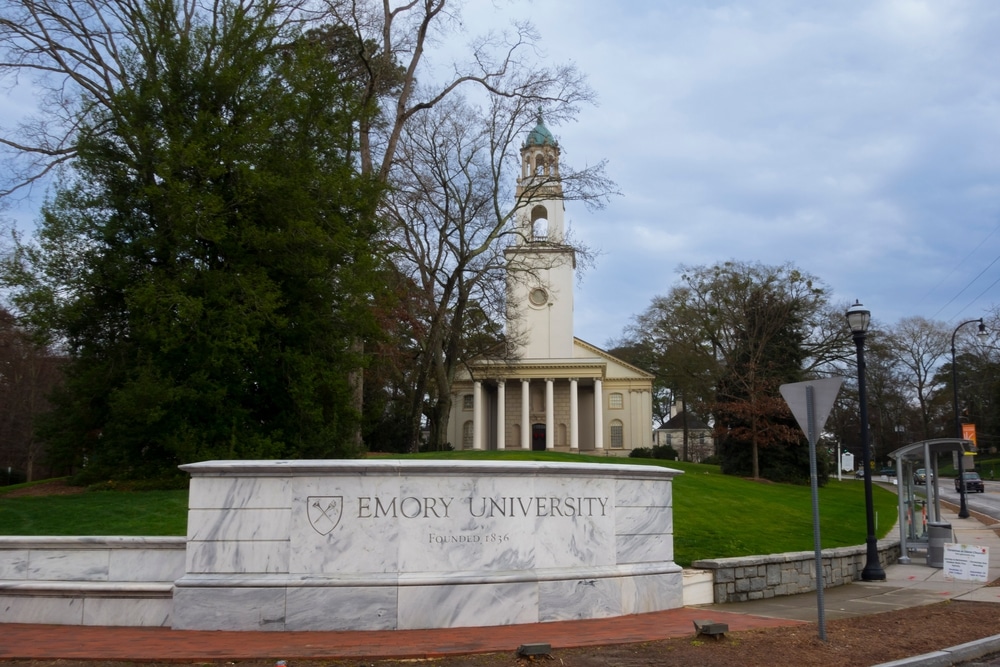
Emory University is well-known for its strong focus on research and academic excellence, but what really sets it apart from other top-tier schools? Every prestigious university has a unique vibe and standout strengths and Emory is no exception.
Located in vibrant Atlanta, Georgia, this highly-ranked private research university snagged the 24th spot in the 2024 U.S. News & World Report Best Colleges list. But rankings are only part of the story—you’ve got to dig deeper to find the right fit for you.
In this blog, we’ll explore what makes Emory University so special. From the admissions process to its standout programs, we’ll cover everything you need to know to decide if Emory is the perfect place for your college journey. Let’s dive in!
- Top Things Emory University Is Known For
- Emory University Application Requirements
- Advantages of Joining Emory University
- Downsides of Joining Emory University
- Is Emory University a Good School?
- Frequently Asked Questions
- Takeaways
Top Things Emory University Is Known For
Here are the distinctive qualities that make Emory an elite school and one of the most sought-after centers of higher education.
Academic excellence
As a research-intensive university, Emory is home to groundbreaking studies in healthcare, public health, and the sciences. It’s also home to the highly regarded Emory School of Medicine, where applicants must demonstrate strong academic performance, meaningful experiences, and compelling responses to Emory secondaries as part of the admissions process.
Its close ties with the Centers for Disease Control and Prevention (CDC) and other institutions offer students access to resources, internships, and collaborations, making it an excellent choice for those passionate about research and innovation.
Currently, the school has over 100 research centers and institutes. These include:
- Emory School of Medicine’s Research Centers. This one focuses on biomedical and clinical research
- Rollins School of Public Health. This has centers dedicated to global health, epidemiology, and health policy
- The Emory Global Health Institute. Focused on addressing global health challenges
- Yerkes National Primate Research Center. A leading center for biomedical and behavioral research
- The Carter Center. This one is dedicated to global health, democracy, and peace
The research centers provide students, faculty, and researchers access to state-of-the-art resources, including advanced laboratories, specialized equipment, and extensive databases.
Additionally, they offer valuable networking opportunities, connecting students with leading experts and industry professionals, further enhancing their academic and professional growth.
Famous alumni
Famous global leaders like Archbishop Desmond Tutu, former President Jimmy Carter, and writer Sir Salman Rushdie once taught at the university. Moreover, Emory has been the alma mater of many influential individuals who have made significant contributions across various fields, from the arts and entertainment to politics and science.
Below are just a few of them:
| Name | Degree | Year | Profession |
| Alben W. Barkley | BA | 1900 | 35th US Vice President |
| David Poythress | BA, JD | 1964,1967 | Former Secretary of State |
| Nathan Philemon Bryan | BA | 1893 | Former Florida Senator |
| Lucius Quintus Cincinnatus Lamar (II) | BA | 1845 | Former Supreme Court Justice |
| Lee Hong-koo | BA | 1959 | 26th Prime Minister of South Korea |
| Lado Gurgenidze | MBA | 1993 | 6th Prime Minister of the country of Georgia |
Low acceptance rate
As per the class of 2028, the overall acceptance rate at Emory University currently stands at 14.5%. This makes it one of the most selective schools nationwide. The acceptance rates vary based on several factors, including the number of applicants and the university’s enrollment criteria. So, if you’re eyeing a spot, be ready to bring your A-game and impress with a strong application.
Here is a breakdown of the number of applicants and those accepted from the class of 2023-2028.
| Class | Applicants | Accepted | Percentage |
| 2028 | 34, 414 | 5058 | 14.5% |
| 2027 | 33, 534 | 5445 | 16.2% |
| 2026 | 33, 517 | 5303 | 15.8% |
| 2025 | 33,780 | 6,892 | 20.4% |
| 2024 | 28,209 | 4,827 | 17% |
| 2023 | 30, 017 | 4,512 | 15% |
Emory University’s best majors
With over 80 majors, 60 minors, and 13 pre-professional tracks to choose from, Emory has something for everyone. Whether you’re passionate about health sciences, business, or the liberal arts, you’ll find a program that aligns with your goals. Plus, Emory’s mix of challenging academics and hands-on learning ensures you’ll be set up for success in your field.
Want to know what’s trending? According to the US News and World Report, here are Emory’s 10 most popular majors:
- Business administration
- Biology and biological sciences
- Psychology
- Economics
- Neuroscience
- Nursing
- Statistics
- Chemistry
- Computer science
- Political science
Racial diversity
The admissions process is fair and unbiased, focusing solely on applicants’ abilities and qualifications. Emory ensures that everyone has an equal opportunity to apply, with no discrimination, fostering an inclusive community for all.
Here is an overview of the racial and ethnic groups admitted to the institution in 2024:
- Black – 11.1%
- White – 37%
- Asian – 29.9%
- Hispanic – 11.1%
- Native American – 1.1%
- Unknown – 6.8%
- International – 16.3%
Emory University Application Requirements
If you’re aiming to apply to Emory, here’s the scoop: the average GPA for admitted students is a solid 3.89 (unweighted). This shows they’re on the lookout for applicants who’ve nailed tough courses and maintained stellar grades.
Emory is test-optional, but if you’re submitting standardized test scores, they’re pretty competitive. For the SAT, most scores fall between 1500-1560, with an average of 1530. For the ACT, the middle range is 32-34, and the average score is 33.
Transfer students need a minimum 3.0 GPA on a 4.0 scale in their college coursework. You’ll also need at least 28 completed credit hours before or during your application—credits from AP, IB, or dual enrollment don’t count. Emory allows up to 62 semester hours of transfer credits, which means you can transfer in and finish two years of study on campus.
For international students, proving English proficiency is a must unless you’ve completed four consecutive years in an English-speaking academic program. If not, you’ll need to submit TOEFL scores or an equivalent. Emory also accepts a 7.5+ IELTS score, a 700+ SAT critical reading score, or a 30+ ACT English subset score.

Advantages of Joining Emory University
Emory isn’t just a place to earn a diploma—it’s where you’ll gain experiences, skills, and connections that last a lifetime. If you’re wondering what makes Emory special, here’s the rundown:
Prime location in Atlanta
Emory’s location gives you the best of both worlds: a peaceful, beautiful campus paired with easy access to Atlanta, a bustling city full of opportunities. Atlanta’s vibrant economy, cultural scene, and professional networks mean you’ll find plenty of ways to gain experience while enjoying everything the city has to offer.
Some favorite student spots include:
- Emory Village
- Candler Park
- Atlanta Botanical Garden
- Piedmont Park
- Lullwater Preserve
- Ponce City Market and the BeltLine
- Decatur Square
- Atlanta History Center
- Westside BeltLine Trail
- Grant Park
These areas provide plenty of opportunities to enjoy nature, culture, and the local community while taking a break from studies.
Collaborative learning environment
At Emory, the emphasis is on collaborative learning. Students engage in team-based projects, discussions, and research, allowing them to develop strong communication and problem-solving skills. This collaborative approach prepares students to work effectively in diverse teams, a crucial skill in the modern workplace.
Innovative facilities and technology
Emory is home to state-of-the-art facilities and technology, which enhance the learning and research experience. From advanced labs in the sciences to collaborative spaces for business and social sciences, the university provides students with the tools needed to succeed in their areas of study.
Entrepreneurial support and innovation
Emory encourages creativity and innovation through its business incubators, mentorship programs, and networking opportunities. Students can access the tools to launch startups, refine their business ideas, and connect with industry leaders, making Emory an ideal place for entrepreneurial growth.
Extracurricular activities
Studying at Emory University is not only about attending classes. The university offers co-curricular opportunities and experience-based learning to prepare students for various challenges beyond the classroom.
The varsity runs multiple sports programs, from athletics and basketball to football and tennis, helping students compete, stay fit, and nurture their passion. You can also join Emory sororities or fraternities, along with a wide range of social clubs, interest groups, and co-curricular programs, giving you plenty of opportunities to build friendships and get involved on campus.
Health and wellness support
Emory offers exceptional health and wellness resources, ensuring students access comprehensive care at the school. These include on-campus healthcare services, fitness centers, and mental wellness programs. The resources help students maintain a healthy balance between academic demands and personal well-being.
Downsides of Joining Emory University
Let’s be real. Even though the university excels in various areas, such as research and academics, it may not be the best fit for everyone. Here are some potential downsides that prospective students should consider when making a decision:
High cost of tuition and living expenses
Emory is a private university. As such, its tuition fees can be quite high. Although financial aid options are available, the cost of attendance can still be a barrier for some students. Additionally, the cost of living in Atlanta, while lower than some other major cities, can be significant, especially for those who live off-campus.
For instance, in the 2024-2025 academic year, Emory University raised its undergraduate tuition by 5.8%, bringing the annual cost from $59,920 to $63,400. This is relatively higher compared to the national average of $40,000. When factoring in fees, room, and board, the total cost for undergraduate students increased by 5.9%, from $79,054 to $83,715.
Cost of housing
The cost of on-campus housing at Emory can be quite high compared to other universities. Many students opt to live off-campus, but this also comes with the added challenge of finding affordable housing near campus, particularly in the surrounding areas where rental prices can be steep. This can increase students’ overall cost of living, even for those receiving financial aid.
On average, you should expect to spend between $5,509 – $9000 for on-campus hostel services per semester. On the other hand, you can find cheap off-campus accommodations for as little as $500 per month.
Is Emory University a Good School?
Now comes the big question: Is Emory University the ideal school for you? If you’re still on the fence, let’s cut through the noise and focus on what matters most. From its stellar academics to its vibrant campus life, let’s see if Emory checks all the right boxes.
First, the institution offers an impressive student-faculty ratio of 9:1, with 79% of classes having fewer than 30 students. This means you’re not just another face in the crowd—you’ll get personalized attention from professors who care.
The university’s dedication to student satisfaction shines through with a 95% freshman retention rate and an 89% graduation rate, reflecting its strong commitment to helping students succeed.
When it comes to academics, the choices are practically endless. Whether you’re aiming for a Bachelor’s, Master’s, Doctorate, or even post-bachelor’s and post-master’s certificates, there’s something for everyone. Plus, Emory embraces international students, creating a vibrant and diverse campus community.
Moreover, despite the relatively high tuition and living expenses, many students find that the university’s strengths outweigh these challenges. So, if you’re looking for a place that will challenge, inspire, and prepare you for success, Emory is the clear choice.
Frequently Asked Questions
1. Does Emory University offer financial aid?
Yes. Emory University offers various financial aid options. These include merit-based scholarships, which are awarded based on academic achievements and extracurricular involvement. Need-based aid is also available to help students who demonstrate financial need. Emory’s financial aid can come in the form of grants, loans, and work-study opportunities.
2. What is the campus culture like at Emory University?
Emory’s campus culture is dynamic, inclusive, and rich in opportunities for personal and professional growth. With over 400 student organizations—ranging from cultural and advocacy groups to sports teams and academic societies—students can engage with diverse communities and develop different skills.
3 . How many campuses does Emory have?
Emory University has three main campuses: the Druid Hills campus in Atlanta, Georgia; Oxford College in Oxford, Georgia, about 36 miles east of Atlanta; and the Clairmont Campus, located near the Druid Hills campus.
Takeaways
- Emory offers a wide range of degree programs, including Bachelor’s, Master’s, and Doctorates in professional practice and research. It has a strong focus on student success with a 9:1 student-faculty ratio and 79% of classes have fewer than 30 students.
- Emory has a competitive 14.5% for the class of 2028. Freshman applicants should aim for a 1500–1560 SAT or a 32–34 ACT with a GPA of 3.89 or higher, while transfer students need at least a 3.0 GPA and 28 college credits before applying.
- Emory welcomes international students, requiring proof of English proficiency via TOEFL, IELTS, or high SAT/ACT English scores. This ensures a diverse and enriching academic environment for all students.
- Emory boasts a graduation rate of 89%, reflecting the university’s commitment to helping students thrive academically.
- If Emory University is your dream school, consulting an admissions expert can make all the difference. We offer personalized strategies to enhance your application and prepare you for campus life.