

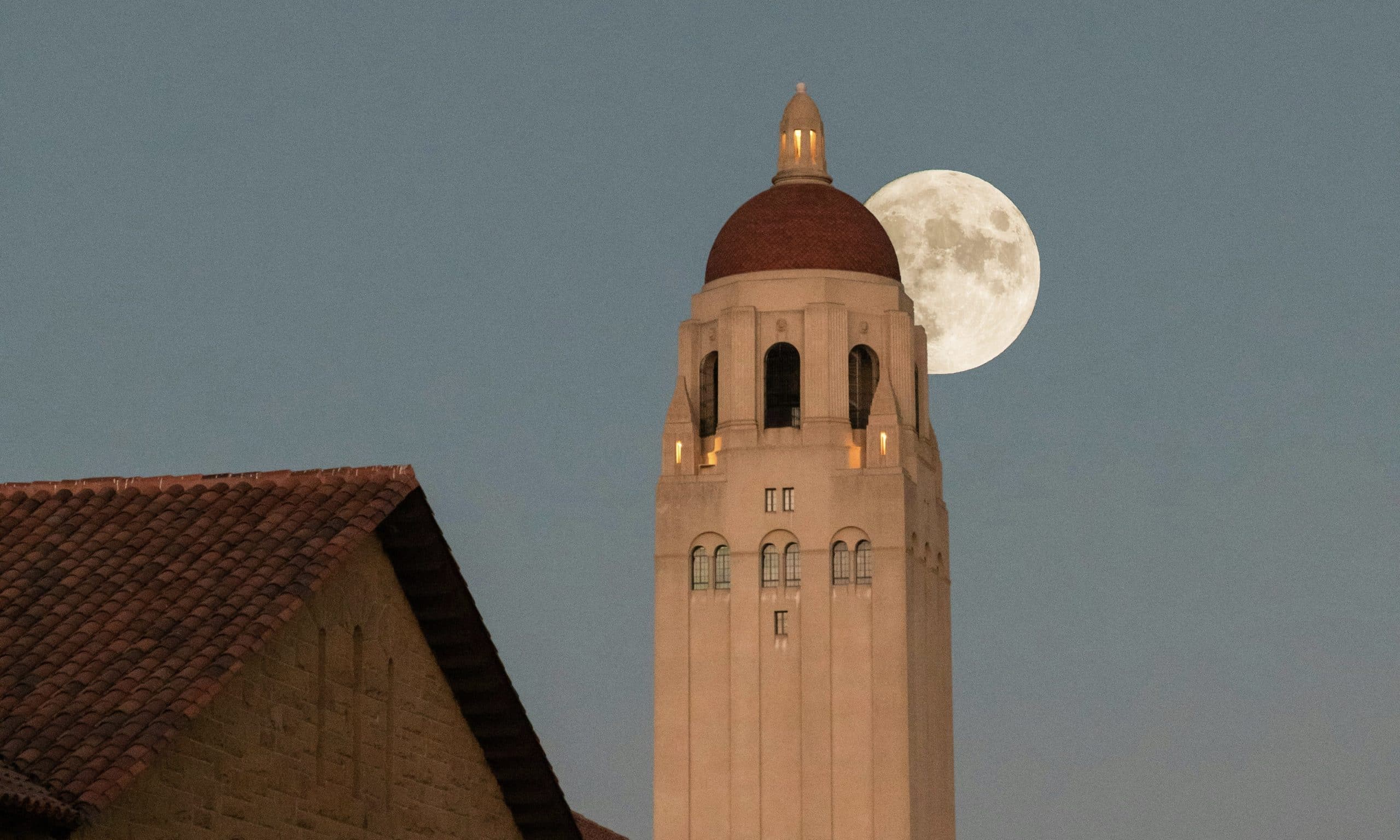
From July 2023 to June 2024, 1,828 undergraduates walked away from Stanford University with their diplomas. Some majors clearly packed the rows at graduation, with clusters of caps and gowns showing where student interest ran strongest.
The most popular majors at Stanford reveal two big things: where students put their energy, and where the university has built its strongest academic reputation. If you’ve ever been curious about what students here choose most often, this list takes you through the top ten majors shaping the Stanford undergraduate experience.
- What Are the Most Popular Majors at Stanford?
- Computer and Information Sciences at Stanford
- Social Sciences at Stanford
- Engineering Technologies at Stanford
- Interdisciplinary Studies at Stanford
- Mathematics and Statistics at Stanford
- Physical Sciences at Stanford
- Biological and Life Sciences at Stanford
- Psychology at Stanford
- Visual and Performing Arts at Stanford
- Area, Ethnic, and Gender Studies at Stanford
- Frequently Asked Questions
- Takeaways
What Are the Most Popular Majors at Stanford?
The table below, based on Stanford’s 2024–2025 Common Data Set, shows the percentage of bachelor’s degrees awarded in each discipline, along with an estimate of how many students that translates to.
| Major | Share of Stanford Bachelor’s Degrees Conferred | Estimated Number of Graduates |
| Computer and Information Sciences | 17.9% | 327 |
| Social Sciences | 16.5% | 302 |
| Engineering Technologies | 16.1% | 294 |
| Interdisciplinary Studies | 15.2% | 278 |
| Mathematics and Statistics | 4.9% | 90 |
| Physical Sciences | 4.6% | 84 |
| Biological/Life Sciences | 4.2% | 77 |
| Psychology | 4.2% | 77 |
| Visual and Performing Arts | 2.5% | 46 |
| Area, Ethnic, and Gender Studies | 2.5% | 46 |
Roughly 327 graduates, or nearly one-fifth of all Stanford bachelor’s degrees, were in computer and information sciences. The remaining degrees were spread across social sciences, engineering technologies, interdisciplinary studies, mathematics and statistics, the physical and biological sciences, psychology, the arts, and area and ethnic studies.
This concentration in computer and information sciences reflects Stanford’s unique environment. While graduates also pursue degrees across the social sciences, engineering, the natural sciences, and the arts, the university’s close ties to Silicon Valley make technology an especially prominent field of study.
Computer and Information Sciences at Stanford
Computer science is the most popular major at Stanford, claiming nearly one-fifth of all bachelor’s degrees. Students are drawn by the university’s proximity to Silicon Valley and its unique combination of technical rigor and entrepreneurial opportunity.
The curriculum balances fundamentals in programming, algorithms, and systems with the freedom to explore interdisciplinary tracks that connect computing to fields like biology, linguistics, and economics.
The program’s global reputation is reflected in its rankings:
- #2 in Computer Science worldwide (QS)
- #2 nationally in Computer Science (U.S. News)
- #3 in Artifical Inteliggence in the U.S. (U.S. News)
- #5 in the world for Computer Science (Times Higher Education)
Graduates routinely move into roles at top tech firms, launch startups, or pursue cutting-edge graduate research. Many begin making an impact before they leave campus, building apps, founding ventures, and contributing to open-source projects.
Social Sciences at Stanford
The Social Sciences represent 16.5% of graduates, which makes them one of the most popular majors at Stanford. Economics leads the way here, but programs in Political Science, International Relations, and Sociology also attract hundreds of students.
Here’s what makes this field stand out:
- Access to world-class think tanks like the Hoover Institution and the Stanford Institute for Economic Policy Research
- Opportunities for students to do policy-driven research, sometimes even influencing local or national debates
- Senior capstone projects and honors theses that let undergraduates dive into issues like inequality, global development, or governance
Stanford’s social sciences stand among the very best worldwide, with economics consistently leading the way. The program is ranked #3 in the world by QS, #3 globally by Times Higher Education, and it holds the #1 spot nationally according to U.S. News.
Political science is equally strong, earning the #1 national ranking from U.S. News, a #5 position worldwide in the QS rankings, and contributing to Stanford’s overall placement as the #3 university in the world for social sciences by Times Higher Education.
Engineering Technologies at Stanford
Engineering Technologies majors make up 16.1% of degrees. These are students focused on applied engineering fields such as design, product development, and energy systems, and they benefit from Stanford’s standing as one of the best universities in the country for engineering.

Here are some program highlights:
- Access to hands-on design spaces like the Product Realization Lab
- Opportunities to collaborate with Silicon Valley companies on engineering solutions
- A curriculum that encourages project-based work over rote memorization
Stanford’s engineering graduates leave with more than just technical knowledge. They are trained to think creatively, adapt quickly, and build solutions for industries ranging from renewable energy to consumer electronics. The engineering culture here combines academic rigor with startup innovation.
Let’s take a look at the program’s rankings according to U.S. News:
- #2 in Engineering nationally
- #1 in Electrical / Electronic / Communications Engineering
- #2 in Mechanical Engineering
- #2 in Environmental / Environmental Health Engineering
- #4 in Aerospace / Aeronautical / Astronautical Engineering
- #4 in Biomedical Engineering / Bioengineering
- #4 in Chemical Engineering
- #6 in Computer Engineering
Stanford’s School of Engineering is also consistently recognized among the very best in the world. According to QS World University Rankings, it sits at #3 globally for engineering. Times Higher Education places it even higher at #2 in the world for engineering.
Interdisciplinary Studies at Stanford
Accounting for 15.2% of degrees, Stanford’s Interdisciplinary Studies give undergraduates unusual freedom to combine fields. The most famous of these is the Symbolic Systems program, which combines computer science, philosophy, linguistics, and psychology.
Some unique aspects:
- Symbolic Systems alumni include Reid Hoffman (LinkedIn) and Marissa Mayer (Yahoo)
- Science, Technology, and Society (STS) connects history and sociology with modern innovation
- Students often design their own study plans across schools and departments
This cluster of majors appeals to students who don’t want to be boxed into one discipline. It’s where creativity meets academic freedom, and it often produces graduates who flourish in hybrid careers like AI ethics, tech policy, and design research.
Mathematics and Statistics at Stanford
About 4.9% of students chose Mathematics and Statistics. While smaller in size than engineering or social sciences, the programs are highly rigorous and deeply respected. This major combines proof-heavy theoretical math with practical applications in probability, data science, and machine learning.
With a #1 national ranking in Mathematics from U.S. News and top placements globally, including #5 in Mathematics and #2 in Statistics and Operational Research from QS, Stanford stands as a leader both in the U.S. and abroad.
What really sets the program apart is the number of opportunities for undergraduates to do real research:
- SURIM (Stanford Undergraduate Research Institute in Mathematics) lets students spend ten weeks during the summer doing original math research with faculty or grad student mentors. Participants also learn LaTeX and seminar-style presentation skills.
- SURP-Stats (Summer Undergraduate Research Program in Statistics) places undergraduates in close collaboration with faculty on active statistics or data science projects over ten weeks.
- Math 199 and Directed Reading Programs allow highly motivated students to create independent research or study projects for credit under direct faculty supervision.

These experiences go beyond classroom learning. Students practice generating results, presenting findings, and solving open-ended problems. Many graduates continue to graduate school or move into finance, data analytics, or quantitative research.
Stanford’s Mathematics and Statistics program stands out as one of the most popular majors at Stanford because it combines rigorous theoretical reasoning with applied skills that translate directly into career success.
Physical Sciences at Stanford
The Physical Sciences—chemistry, physics, and earth sciences—account for 4.6% of Stanford graduates. Program features include:
- Research access at world-renowned labs like SLAC National Accelerator Laboratory
- A strong culture of undergraduate involvement in cutting-edge experiments
- Faculty who are leaders in everything from quantum mechanics to climate modeling
Stanford’s physical sciences program features faculty who are world leaders in their fields. Leonard Susskind, the Felix Bloch Professor of Physics and founding director of the Stanford Institute for Theoretical Physics, is renowned for foundational work in string theory, black hole complementarity, and quantum gravity.
On the applied side, Noah Diffenbaugh, the Kara J. Foundation Professor of Earth System Science at the Doerr School of Sustainability, is a prominent climate scientist known for his research on climate change and its impact on extreme weather, including groundbreaking work on California droughts.
Stanford’s reputation in the physical sciences is reflected in its consistent placement near the top of global and national rankings. Here’s how the university measures up across different fields:
- #1 in the nation for Physics (U.S. News)
- #2 in the world for Physical Sciences (Times Higher Education)
- #4 in the world for Physics & Astronomy (QS)
- #4 in the world for Chemistry (QS)
- #4 in Chemistry in the U.S. (U.S. News)
- #4 in Earth Sciences (U.S. News)
It’s this combination of rankings, resources, and hands-on experience that keeps the physical sciences among the most popular majors at Stanford.
Biological and Life Sciences at Stanford
Roughly 4.2% of Stanford graduates earned their degree in the biological and life sciences. This includes majors in biology, human biology, and related fields.
Here’s what makes the major distinctive:
- Early lab involvement across neuroscience, ecology, genetics, and bioengineering
- Opportunities to work in medical and biotech-focused research labs
- Interdisciplinary coursework connecting biology to public health, policy, and technology
With Stanford’s proximity to biotech hubs and world-class research hospitals like Stanford Health Care and Lucile Packard Children’s Hospital, students have unmatched opportunities to connect classroom learning with real-world clinical and research experience.

Stanford’s strength in the life sciences is clear from its rankings. U.S. News places the university #1 in Biological Sciences, along with #2 in Biochemistry, Biophysics, and Structural Biology and #2 in Cell Biology.
Globally, Stanford holds the #3 position in Biological Sciences according to QS, and ranks #5 in Life Sciences in Times Higher Education’s latest report.
Psychology at Stanford
Psychology also accounts for 4.2%, which makes it one of the strongest social science majors on campus. The program consistently earns top spots in both national and international rankings:
- #1 in the world for Psychology (Times Higher Education)
- #1 in the nation for Psychology (U.S. News)
- #3 in the world for Psychology (QS)
Stanford’s psychology program stands out for how quickly undergraduates can step into groundbreaking research. From brain imaging to social behavior, students have the chance to contribute to labs that are defining the field:
- In the Social Neuroscience Lab, students study how empathy and moral judgment are shaped by culture and context, often analyzing large-scale behavioral data.
- The Decision Neuroscience Lab lets students explore how the brain weighs risks and rewards, connecting psychology to economics and public policy.
- At the Memory Lab, undergraduates work with cutting-edge brain imaging tools to examine how learning, stress, and sleep affect memory formation.
- The Center for Mind, Brain, Computation and Technology gives students experience at the intersection of psychology and artificial intelligence, preparing them for careers in both science and tech.
Psychology majors build skills in both research and critical thinking. They emerge ready for graduate school or careers in education, mental health, business, and beyond. It’s one of the few majors where students see immediate overlap between classroom theory and human behavior around them.
Visual and Performing Arts at Stanford
Visual and Performing Arts account for 2.5% of degrees at Stanford. While smaller than other fields, the program stands out because of the resources and professional opportunities it connects students to on campus and beyond.
Program highlights:
- Students combine practice in music, studio art, film, or theater with the study of culture, history, and technology.
- The Cantor Arts Center and Anderson Collection house one of the strongest university art collections in the country, while Bing Concert Hall hosts international performers throughout the year.
- Through Stanford Live and artists-in-residence, undergraduates stage original productions and collaborate with working professionals.
- Film and media studies students develop technical skills in production and design at the McMurtry Building for Art and Art History.
Stanford is ranked #17 in the world for Art & Design by QS. This ranking shows that even though the arts are not the largest area at Stanford, the program is still recognized globally for its quality. Students benefit from access to modern facilities and a creative community that connects with the Bay Area’s wider arts scene.
Area, Ethnic, and Gender Studies at Stanford
Also at 2.5%, Area, Ethnic, and Gender Studies reflect Stanford’s emphasis on social responsibility and cultural inquiry. The program is anchored by the Center for Comparative Studies in Race and Ethnicity (CCSRE), one of the most active centers of interdisciplinary research on race, power, and identity in the country.

Students here focus on:
- The study of identity, race, gender, and power structures in society through courses that connect sociology, political science, and history
- Research linked to both historical and contemporary struggles for equity, often supported by Stanford’s partnerships with Bay Area advocacy groups
- Pathways into advocacy, public policy, journalism, and education, with options to collaborate with Stanford Law School or the Graduate School of Education
Though smaller in size, the program has an outsized impact. Graduates regularly move into leadership positions in media, law, and public service, continuing Stanford’s tradition of linking academic work with social change.
The combination of CCSRE resources, proximity to Bay Area activism, and interdisciplinary flexibility makes Area, Ethnic, and Gender Studies stand out as one of the most popular majors at Stanford for students committed to exploring race, identity, and social justice.
Frequently Asked Questions
1. What majors is Stanford known for?
Stanford is widely recognized for its excellence in STEM fields, social sciences, and the arts. Some of the most popular majors at Stanford include Computer Science, Engineering, Biology, Economics, and Human Biology. The university is also highly regarded in Psychology, Political Science, and interdisciplinary programs that bridge technology with public policy and the humanities.
2. What majors does Stanford offer?
Stanford offers 66 undergraduate majors across three schools: the School of Humanities and Sciences, the School of Engineering, and the School of Earth, Energy & Environmental Sciences. Students can pursue programs in fields such as Computer Science, Symbolic Systems, Psychology, Economics, and International Relations, while also having opportunities to design their own interdisciplinary major.
3. Where can I find a Stanford list of majors?
The full list of Stanford undergraduate majors is available on the university’s official website under the “Explore Majors” section. Each entry provides an overview of the program, degree requirements, advising resources, and related opportunities for research or study abroad.
4. What are considered Stanford’s best majors?
Stanford consistently ranks among the top universities in the world for majors such as Computer Science, Engineering, Economics, and Biology. It is also #1 in the U.S. for Psychology and Physics, and highly ranked internationally in disciplines like Chemistry and Earth Sciences. Interdisciplinary majors like Symbolic Systems and Human Biology also stand out as uniquely Stanford programs that attract students globally.
5. Are the most popular majors at Stanford all in the sciences and engineering?
No. While STEM fields like Computer Science, Engineering, and Biology make up a large share of degrees, Stanford is also strong in the social sciences and humanities. Economics, Political Science, and Psychology are consistently popular, and programs like Area, Ethnic, and Gender Studies or Visual and Performing Arts reflect Stanford’s commitment to diversity and creativity.
Takeaways
The most popular majors at Stanford reflect both the university’s world-class reputation and the diverse interests of its students. Here’s what you should keep in mind:
- Computer Science leads the list of the most popular majors at Stanford, with nearly one-fifth of students graduating in this field. Its proximity to Silicon Valley and consistent top global rankings make it a natural choice for those aiming at careers in tech and entrepreneurship.
- The Social Sciences are also among the most popular majors at Stanford, especially Economics and Political Science, which both hold #1 national rankings. These programs give students the chance to engage with research institutes and policy debates that shape real-world decisions.
- Engineering Technologies remain a core strength and one of the most popular majors at Stanford. With state-of-the-art labs and strong ties to industry, students gain practical skills and global recognition in fields like electrical, mechanical, and environmental engineering.
- Interdisciplinary Studies stand out as one of the most popular majors at Stanford because of their flexibility. Programs like Symbolic Systems and Science, Technology, and Society let students combine computing, philosophy, history, and sociology in ways few universities can match.
- Students who want to turn their interest in the most popular majors at Stanford into a competitive edge for admissions can turn to a college admissions consultant. AdmissionSight offers tailored support that helps applicants highlight their strengths, build standout applications, and gain acceptance to top-tier schools.










