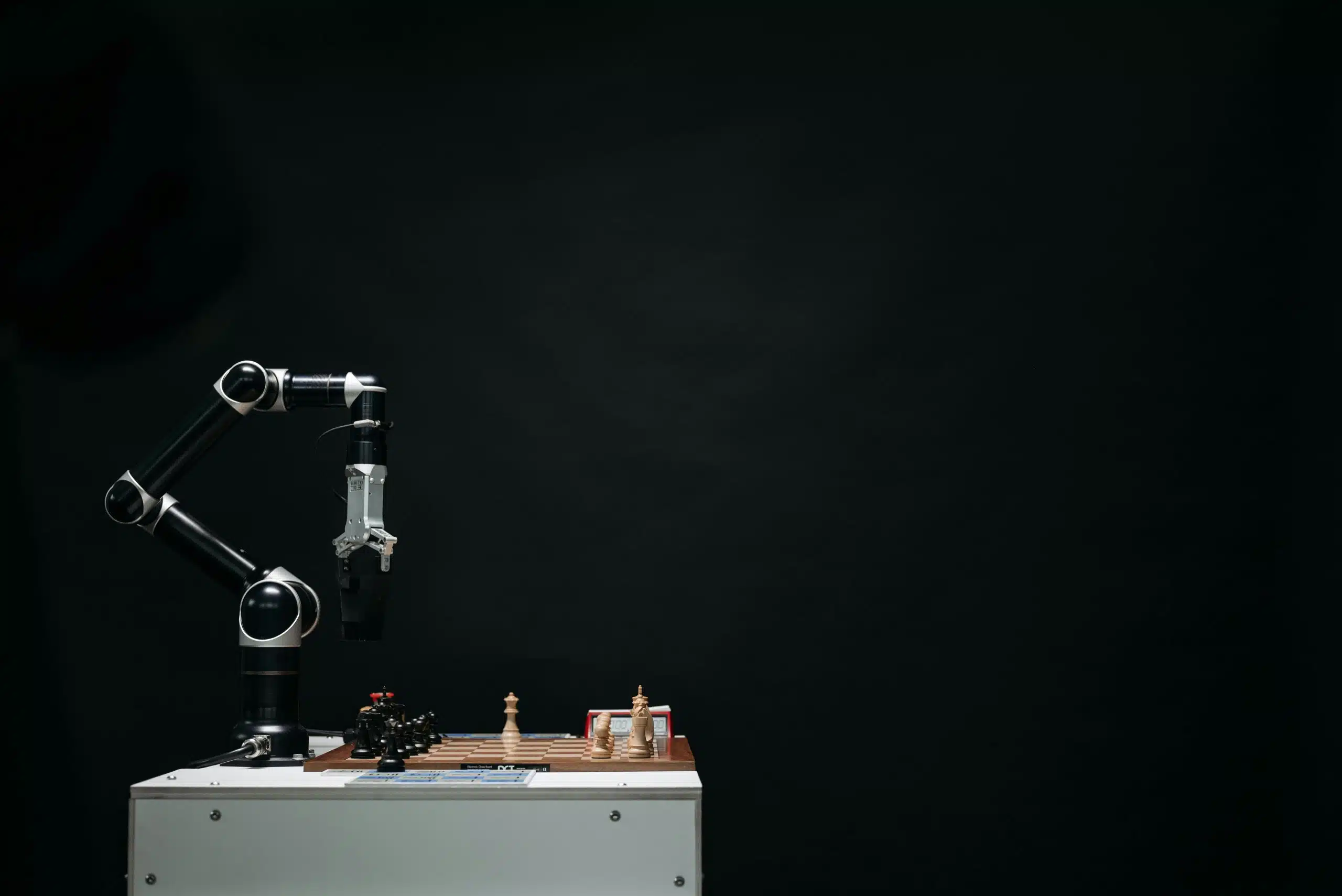
Admission to top-tier schools often depends on clear evidence of intellectual engagement. Robotics internships for high school students provide that proof by demonstrating learning in actual engineering environments, where students build hardware, write code, and collaborate with researchers. These experiences result in project portfolios, strong recommendation letters, research experience, or even publications, which admissions officers value.
This guide outlines the top robotics internships for high school students, with details on dates, locations, and program focus, to help you identify the right opportunity and strengthen your application.
- Best Robotics Internships for High School Students
- Summer High School Internship Program at MIT Lincoln Laboratory
- NASA OSTEM Internships
- Yale University Social Robotics Lab
- Air Force Research Laboratory Scholars Program
- Evodyne Robotics Internship Program
- RECF Internship Program
- NIST Summer High School Internship Program (SHIP)
- Science and Engineering Apprenticeship Program (SEAP)
- RoboMasterminds
- Ladder Internships
- Frequently Asked Questions
- Takeaways
Best Robotics Internships for High School Students
The internships below are competitive, reputable, and known for preparing students for engineering tracks at top universities. Some are research-heavy, others project-based, and a few offer paid placements. Choose one that aligns with your goals, learning style, and availability.
| Rank | Internship Program | Location | Dates |
| 1 | Summer High School Internship Program at MIT Lincoln Laboratory | Lexington/Cambridge, Massachusetts | TBD (Program paused but may reactivate) |
| 2 | NASA OSTEM Internships | NASA Centers nationwide (Houston, JPL Pasadena, Kennedy, Goddard, etc.) | Summer: Feb 27, 2026 deadline • Fall: May 22, 2026 deadline |
| 3 | Yale Social Robotics Lab Internship | Yale University, Connecticut | Expected Summer 6-week format (TBA) |
| 4 | AFRL Scholars Program | Multiple U.S. Air Force Bases | 10–12 weeks, Summer 2027 |
| 5 | Evodyne Robotics Internship Program | California (Research Lab) | Summer 2026 (6–8 weeks) |
| 6 | RECF Internship Program | Remote & U.S.-wide (Company-dependent) | Rolling by company placement |
| 7 | NIST Summer High School Internship Program (SHIP) | NIST Gaithersburg MD / Boulder CO | mid-June to early August 2027 |
| 8 | Science and Engineering Apprenticeship Program (SEAP) | Navy Labs across the U.S. | 8 weeks, Summer 2027 |
| 9 | RoboMasterminds Internships | Maryland/Indian Head/Aberdeen + some remote roles | Academic Year: Oct–Apr • Summer: June 2026 start |
| 10 | Ladder Internships | Remote (Global) | Multiple cohorts year-round • Summer ~8 weeks |
Let’s explore each one of these internships.
1. Summer High School Internship Program at MIT Lincoln Laboratory
- Dates: Upon program reactivation
- Location: Lexington/Cambridge, Massachusetts
- Benefits: Learning from MIT researchers, preparation for college-level coursework
Historically one of the most sought-after robotics internships for high school students, the Summer High School Internship Program at MIT Lincoln Laboratory places rising seniors into research and development projects in robotics, aerospace, AI, and defense technology.
Interns work under MIT researchers and contribute to active lab work. One of the things they’ve worked on is creating a hypervideo system integrating a steerable mirror with a hyperspectral sensor to enable real-time data acquisition and detection at 0.5–1 Hz. This project involves hands-on work combining optics, imaging sensors, and system prototyping.
According to MIT Lincoln Laboratory, however, the high school internship is currently paused but could resume. While the program is still on hold, explore other student opportunities at MIT Lincoln Laboratory.
2. NASA OSTEM Internships
- Dates: Summer 2026: February 27, 2026, 11:59 p.m. ET; Fall 2026: May 22, 2026, 11:59 p.m. ET
- Location: NASA Centers nationwide (Houston, JPL Pasadena, Kennedy, Goddard, etc.)
- Benefits: Paid stipend based on academic level and session duration
NASA offers prestigious robotics internships for high school students, allowing students to work alongside aerospace engineers, robotics researchers, and mission teams tackling NASA projects. NASA hosts multiple internship pathways, but robotics-aligned students typically fall under the OSTEM Internship Track or Pathways Internship, which serves as a pipeline to full-time NASA roles after graduation.
Students interested in robotics typically align with majors such as mechanical, robotics, mechatronics, computer, software, electrical, electronics, and aerospace or astronautical engineering, which map directly to work in NASA automation, rover mobility systems, AI navigation, mechanical design, flight robotics, and embedded systems.
NASA internships produce standout college application materials, which are powerful differentiators for selective engineering schools like MIT, Stanford, and Caltech. Learn more about the different internships you can apply to as a high school student in our NASA internships guide.
3. Yale Social Robotics Lab
- Dates: Previously summer 6-week format (likely similar for 2026)
- Location: Yale University, Connecticut
- Benefits: Unpaid internship but provides research credibility
This program allows high school interns to work directly with researchers in the Yale Social Robotics Lab, an institution known for its groundbreaking work at the intersection of robotics, psychology, computer science, and social behavior.
The lab builds embodied computational models of social development using robots to study early social skills and engagement, with applications in human–robot interaction, autism therapy technology, computational behavior modeling, and socially assistive robotics.
Depending on skills and lab needs, projects may include coding behavior models, collecting and analyzing interaction data, assisting with child study sessions, or supporting robot behavioral testing. Housing is not provided, so commuting access is recommended.
If you’re curious about the other extracurriculars at Yale you can explore this summer, check out our complete list of the best Yale summer programs.
4. Air Force Research Laboratory Scholars Program (AFRL Scholars)
- Dates: 10–12 weeks, Summer 2027
- Locations (multiple U.S. bases): Wright-Patterson AFB (OH), Kirtland AFB (NM), Edwards AFB (CA), Eglin AFB (FL), Rome Lab (NY), Arnold AFB (TN), Barksdale AFB (LA), AFWERX (NV/TX) Catalyst Campus (CO), AMOS (HI), The Pentagon (DC), Whiteman AFB (MO), SSC-CGN (San Diego), and FOSR (VA)
- Benefits: Paid stipend of $501.60/week
The AFRL Scholars Program places high school students in U.S. Air Force technology labs, where they contribute to engineering and defense research in areas including artificial intelligence, autonomous systems, robotics, aerospace materials, and computer vision. One example is the Visually Informed AI Tutor Project, in which interns work on Python development, model evaluation, and human-robot interaction research alongside AFRL’s Human Effectiveness Directorate.
AFRL is competitive but more accessible than MIT’s or NASA’s internships. Strong applicants usually present STEM coursework, programming ability, personal projects, or robotics competition experience.
5. Evodyne Robotics Internship Program
- Dates: Summer 2026 (typical duration 6–8 weeks)
- Location: Evodyne Robotics Research Lab (California)
- Benefits: Portfolio-first engineering work
The Evodyne Robotics Internship Program prioritizes project-based learning, placing selected high school students into research and development work within Evodyne’s robotics lab. Interns help design, program, test, and refine robots such as the EvoDog quadruped and EvoStinger. Work involves CAD modeling using Fusion 360, electronics integration, embedded programming, AI toolkits, and mechatronics challenges.
During summer cycles, interns also assist as robotics mentors/teaching assistants, reinforcing learning by teaching younger students. This program demands advanced skill readiness; basic Python or beginner robotics is not enough. Strong technical competency, problem-solving ability, and accountability are key expectations.
6. RECF Internship Program
- Dates: Varies by partnered company (not a single unified program)
- Location: Remote & U.S.-wide depending on company placement
- Benefits: Varies per program/partnership
The Robotics Education & Competition Foundation (RECF) itself does not directly host a single robotics internship for high school students. Instead, the foundation acts as a career and internship aggregator, guiding students toward engineering opportunities in sectors like automation, autonomous vehicles, manufacturing robotics, semiconductor engineering, AI, and embedded systems.
High school students can browse partner organizations and apply based on skill fit and availability. Here are some relevant opportunities listed through RECF:
| Company / Program | Robotics Sector | Important Notes |
| NASA Internships | Strong robotics + aerospace pathways | Paid internships; requires U.S. citizenship. Work on rovers, robotics systems, and AI navigation. |
| Kodiak Robotics Inc. | Autonomous vehicle robotics | AI for self-driving trucks; ideal for ML/robotics engineering track students. |
| Tesla Internships | Robotics + automation in manufacturing | Competitive; most roles are college-level, but motivated high schoolers can explore pre-intern pipelines. |
| Texas Instruments | Sensor systems + embedded robotics | Internships skew college-level; good future target for embedded/robotics hardware careers. |
| MathWorks | Simulation tools for robotics | MATLAB/Simulink used in robotics R&D; mostly undergrad level. |
| DEVCOM Army Research Laboratory | Research in robotics, AI & defense systems | Advanced research, selective; high school placements occasionally possible. |
| SEAP – Naval Research Labs | Direct robotics opportunities | Strong match for high school robotics pathways. |
For a high school student, the most realistic starting points within the RECF ecosystem are NASA, SEAP, Kodiak Robotics, and occasionally DEVCOM ARL. Others (Tesla, TI, MathWorks) become excellent targets later, especially once you build experience through earlier internships.
7. NIST Summer High School Internship Program (SHIP)
- Dates: mid-June to early August 2027
- Location: NIST Gaithersburg, MD or Boulder, CO
- Benefits: Unpaid internship
The NIST Summer High School Internship Program (SHIP) is a seven-week robotics-adjacent research internship. NIST’s research spans six major laboratories, all of which participate in SHIP. Each lab addresses industry and national needs by developing measurement methods, tools, data standards, and technologies across physical and engineering sciences.
The participating laboratories are:
- Engineering Laboratory (EL)
- Information Technology Laboratory (ITL)
- Material Measurement Laboratory (MML)
- NIST Center for Neutron Research (NCNR)
- Physical Measurement Laboratory (PML)
- Communications Technology Laboratory (CTL)
Students may list first, second, and third lab choices, as acceptance numbers vary by research area and mentor availability each year. Applicants with programming or technical experience are strongly encouraged to state this clearly, especially if seeking projects involving automation, robotics, data analysis, machine learning, or cyber-physical systems.
It’s also important to note that SHIP offers very limited opportunities in biological or life sciences, making it especially well-suited for students with backgrounds in physics, engineering, computer science, chemistry, mathematics, or applied statistics.
8. Science and Engineering Apprenticeship Program (SEAP)
- Dates: 8 weeks, Summer 2027
- Location: Navy Labs across the U.S.
- Benefits: $4,000 (new), $4,500 (returning)
Run by the Department of the Navy (DoN), the Science and Engineering Apprenticeship Program (SEAP) places high school students directly inside active Navy research laboratories, where they contribute to engineering and defense-related research involving robotics prototyping, autonomous navigation systems, artificial intelligence, underwater robotics, electronics, materials science, sensor technologies, and advanced mechanical systems.
A key strength of SEAP is its lab-matching model. Applicants research participating Navy laboratories in advance and rank their top three preferred labs in the application.
With approximately 300 placements nationwide each year, SEAP is highly selective. SEAP is an eight-week, full-time summer internship, with the possibility of extending up to two additional weeks depending on lab needs and funding.
9. RoboMasterminds
- Dates: Academic Year Internships: October 1 – April 15, 2026; Summer Internships: June 2026 start
- Location: Varies by project site (Maryland/Indian Head/Aberdeen), some roles remote
- Benefits: Structured robotics skill-building tied to major R&D institutions
RoboMasterminds offers two primary internship pathways for high school students interested in robotics and intelligent systems. Students may either support robotics education initiatives, helping design and deliver learning pathways for younger participants during the academic year, or join research-focused teams working on autonomy, machine learning, and engineering development.
For students with advanced technical readiness, RoboMasterminds also serves as a pipeline into summer research tracks at Department of Defense laboratories, including the Army Research Laboratory (ARL) and the Naval Surface Warfare Center. Placement into these tracks depends on demonstrated skills in areas such as programming, data analysis, CAD, or machine learning, and students are matched based on their readiness to contribute to active research efforts.
Although the program is not exclusively robotics-focused, several tracks align closely with AI-enabled robotics and autonomous systems, particularly for students with experience in Python, perception pipelines, or computational modeling.
The most robotics-intensive option is the Data Management and Learning for Autonomous Systems pathway. In this track, interns work with robotics datasets, perception and sensor data, autonomy algorithms, and high-performance computing workflows connected to DARPA RACER fleet research, gaining exposure to real-world autonomy challenges.
10. Ladder Internships
- Dates: Multiple cohorts year-round (Summer 2026 session ~8 weeks)
- Location: Remote (global student access)
- Benefits: Fee-based internship
Ladder Internships is a highly selective internship program. Rather than short-term shadowing, Ladder places students in structured roles, working on active projects for start-ups and nonprofit organizations across technology, research, and social impact.
Ladder’s fall and winter offerings are organized into three distinct tracks:
- Startup Internship Program ($2,990). Hands-on exposure to early-stage companies. Interns support product development, marketing, growth strategy, engineering, or research, with weekly supervisor check-ins.
- CEO Internship Program ($4,990). Direct work with a startup founder or CEO, many with experience at major tech firms. Emphasizes high-level thinking, decision-making, and leadership exposure.
- Combination Program ($7,400). Integrates the CEO internship with a mentored research experience, offering both applied industry work and independent inquiry.
Ladder is need-aware and offers full financial aid to students with demonstrated need.
Frequently Asked Questions
1. What is considered the most prestigious robotics internship?
NASA OSTEM, SEAP, AFRL Scholars, and NIST SHIP are widely recognized as the most competitive and prestigious robotics internships for high school students. These programs involve research, mentorship from engineers, and hands-on technical work. Admission rates are selective, especially for NASA and SEAP.
2. Do these programs require previous robotics knowledge?
Not all. Research-heavy programs like NIST, SEAP, and NASA strongly favor applicants with coding, robotics, or engineering experience, while programs like Ladder Internships and some RoboMasterminds tracks are more flexible and skill-building friendly. Competitive applicants typically present a foundation in programming, CAD, or robotics projects.
3. Are there virtual options available in 2026?
Yes. Ladder Internships and select RoboMasterminds projects offer fully remote placements. NASA virtual roles exist but vary by cycle and discipline. Most government lab internships (NIST, SEAP, AFRL) remain primarily in-person.
4. How competitive are high school robotics internships?
Highly competitive. Programs like SEAP accept around 300 students nationally, and NASA’s high school roles are limited. Applicants with strong STEM coursework, personal projects, robotics competition experience (VEX, FRC, FTC), and a clear reason for pursuing robotics often stand out.
5. Can robotics internships improve my college application?
Absolutely. Internships provide concrete proof of initiative, technical skills, and research involvement, all major strengths for selective admissions. Students often gain portfolio projects, recommendation letters, and essays rooted in engineering experience that resonate with Ivy League and top-tier STEM programs.
Takeaways
- Robotics internships for high school students help build engineering experience early, which stands out in selective college admissions.
- Competitive STEM programs such as NASA OSTEM, SEAP, AFRL Scholars, and NIST SHIP offer students hands-on research, project ownership, and mentorship.
- You don’t need to be an expert to start, but having foundation skills in Python, CAD, electronics, or robotics competitions (FRC/FTC/VEX) improves admissions chances significantly.
- Students who want flexibility or global access can explore virtual options like Ladder Internships.
- The earlier you prepare, the better. Begin collecting recommendation letters, building a portfolio, and drafting essays before deadlines open.
- If you’re targeting competitive STEM programs and plan to study robotics in college, working with AdmissionSight through one-on-one private consulting can help you build a compelling profile.