

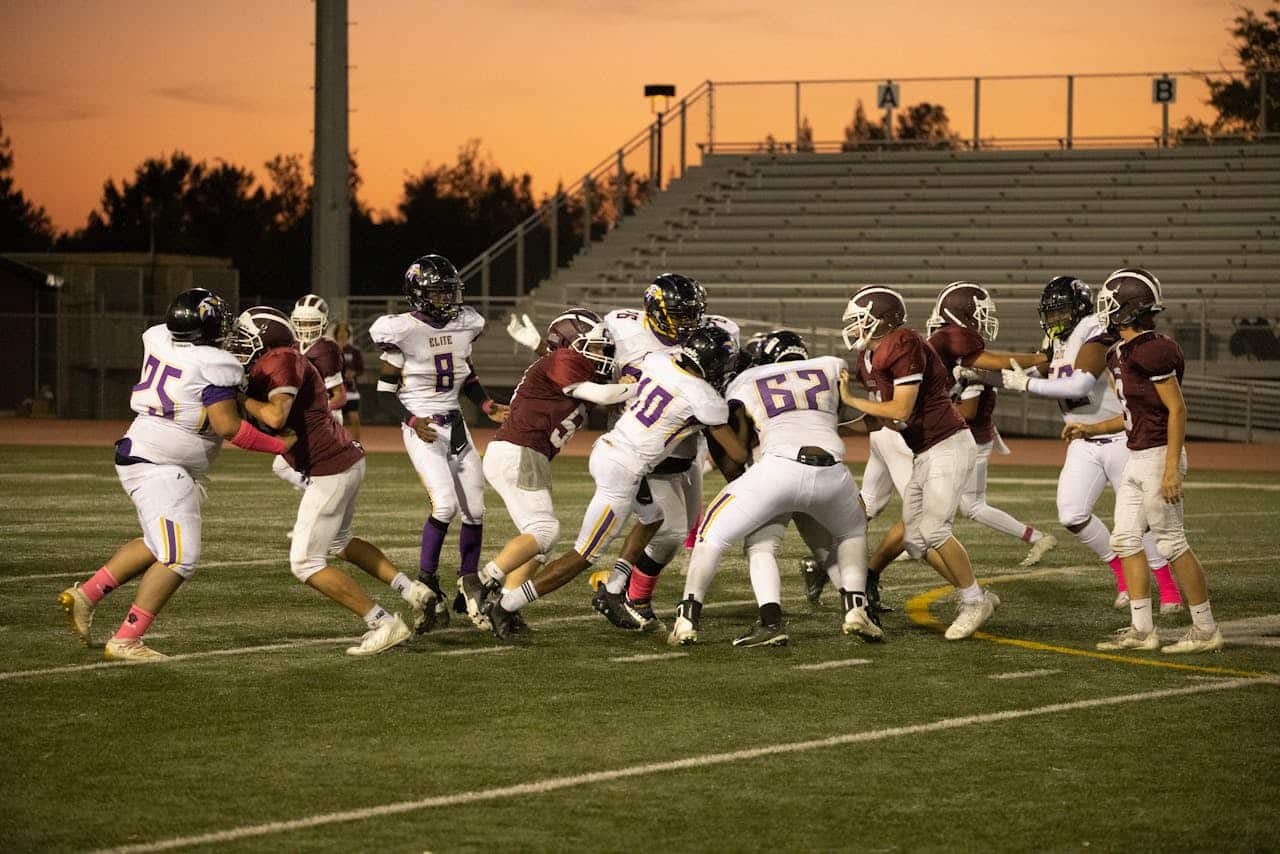
If you’re wondering what percentage of high school athletes play in college, here’s the answer up front: According to the NCAA, only around 7% make the jump from high school teams to playing college sports, and only 2% earn athletic scholarships. Why do so few make it? The reasons range from academic requirements to tough competition and how many spots are available on college teams.
If you’re thinking about trying to play your sport in college, or just want to understand the process, you’re in the right place. We’ll break down the stats, look at what affects your chances, and cover what you need to know if you want to keep your athletic career going after high school.
- What Percentage of High School Athletes Play College Sports?
- Breakdown by Sport: Odds of Playing College Sports
- What Percent of Athletes Go D1?
- What Is the Hardest Sport to Get a Division I Athletic Scholarship In?
- How to Improve Your Chances of Getting Recruited for College Sports
- Frequently Asked Questions
- Takeaways
What Percentage of High School Athletes Play College Sports?
Most high school athletes dream about keeping their sports careers going after graduation, but what percentage of high school athletes actually play in college? The answer: only about 7% of all high school athletes end up playing at any college level.
Here’s what that means for you:
- Out of 100 high school athletes, around 7 will continue their sport in college.
- This includes all college teams: NCAA (Divisions I, II, III), NAIA, and junior colleges.
It’s a tough climb. Division I teams, the highest level, pick less than 2% of high school athletes for some sports. Most college athletes play for smaller schools or at lower divisions, where the competition is still strong but a bit more accessible.
Understanding what percentage of high school athletes play college sports can help set realistic expectations for your athletic journey.
Want to see how those odds compare across sports? Curious what makes the difference between making a team or not? Let’s look at the stats and what they mean for your path forward.
Breakdown by Sport: Odds of Playing College Sports
Not every sport offers the same opportunity to play in college. Some have bigger teams or more college programs, while others are much tougher to crack. According to NCAA data, the percentage of high school athletes who continue playing sports in college varies significantly by sport, so here’s a look at five of the most popular sports and how the numbers stack up:
|
Sport |
High School Athletes |
NCAA College Athletes |
% Playing at NCAA College |
|
Football |
1,028,761 |
77,204 |
7.5% |
|
Men’s Basketball |
537,438 |
19,213 |
3.6% |
|
Women’s Basketball |
373,366 |
16,668 |
4.5% |
|
Baseball |
478,451 |
38,849 |
8.1% |
|
Men’s Soccer |
450,455 |
27,284 |
6.1% |
A few things stand out:
- Baseball and football have the highest chance of moving from high school to NCAA teams.
- Basketball is the toughest among these. Fewer than 4% of high school players continue in college.
- Women’s basketball odds are a little better than men’s, but still very selective.
These numbers are just for NCAA schools. Some athletes compete in NAIA or junior colleges, but the odds are in the same range. When parents and students ask what percentage of high school athletes play in college, these sport-specific statistics provide crucial insight into realistic expectations.
Choosing your sport can impact your chances, but almost all sports are very competitive at the college level. If you play a sport that’s not on this list, the odds might be different, but the general idea doesn’t change much: a small percentage of high schoolers continue to the next level.
What Percent of Athletes Go D1?
Out of over 8 million high school athletes nationwide, only about 204,000 go on to play at the Division I level—that’s a mere 2.5%. Out of 100 high school athletes, only one or two may get a spot as a D1 athlete. While this is just a rough estimate, it shows how competitive it is to make it to the top tier of college sports.
Here’s a quick look at the odds of playing Division I in some of the most popular sports, according to the NCAA:
|
Sport |
% High School Athletes Making D1 |
|
Football |
3% |
|
Men’s Basketball |
1% |
|
Women’s Basketball |
1.4% |
|
Baseball |
2.4% |
|
Men’s Soccer |
1.4% |
These statistics help answer the common question of what percentage of high school athletes play college sports at the highest competitive level.
D1 programs look for top skills, strong academics, and a serious commitment. Most high school athletes who play in college join Division II, Division III, NAIA, or junior college teams, which have less intense recruiting but still high expectations.
If your goal is to become a D1 athlete, it helps to understand just how rare those opportunities are and what coaches are looking for.
So, which sports are actually the toughest when it comes to landing a Division I scholarship, and what makes some of them more challenging than others? Let’s break it down.
What Is the Hardest Sport to Get a Division I Athletic Scholarship In?
Some sports are much more competitive than others when it comes to earning a Division I athletic scholarship. The main reason? Some sports have huge pools of high school athletes but very few college roster spots, and scholarship limits make the odds even tougher.
Men’s sports
1. Men’s basketball
Ever wonder why men’s basketball scholarships are so hard to get? The numbers tell the whole story. Every year, over 500,000 boys play high school basketball, but only about 1% make it to Division I programs. That’s incredibly competitive.
Here’s what makes it so challenging: D1 basketball teams can only offer around 15 scholarships per team, which means your skills need to be among the very best in your state, or even the country. Most of these scholarships are full rides, which sounds great, but there simply aren’t many spots available.
You’re not just competing against players from your area, either. Coaches recruit nationally and internationally, so the talent pool is massive. They’re looking for a specific combination of advanced skills, height, athleticism, and strong academics.
Even if you’re a standout player at your high school, you might not get recruited if your style doesn’t match what a particular team needs or if you haven’t played at tournaments where college scouts can see you perform.
2. Football
Football is extremely competitive, too. With over a million boys playing high school football, about 3% end up competing in NCAA Division I (including both FBS and FCS programs).
Even though D1 football rosters are larger than basketball teams, there’s still a strict limit of 105 scholarships per team. This means only the top athletes, those with standout physical abilities, strong game film, and impressive high school performance, get noticed by recruiters.
What sets football apart is the early and ongoing evaluation process. Some college coaches start following athletes as early as their sophomore year. Many recruits receive offers late in high school after showing major progress or getting seen at camps or combines.
Strong academics and leadership skills matter just as much as your performance on the field. Coaches look for team players who also bring good grades and solid character to their programs.

3. Baseball
Baseball offers a slightly higher chance, with about 2.4% of high school athletes going Division I. However, most scholarships are partial. NCAA rules cap baseball scholarships at 34 per roster, even though a team can have 35 players. As a result, most players get only part of their college paid for, and families often cover the rest.
What do coaches look for in D1 athletes in baseball? Strong pitching arms, high batting averages, speed, and versatility. But above all, they seek players who have excelled in high-level youth and travel programs. Academics, attitude, and coachability are also major factors.
4. Soccer
Men’s soccer slots are also limited. About 1.4% of high school boys’ soccer players reach Division I. Most D1 men’s soccer teams have 28 athletic scholarships that can be divided among 27–29 roster spots. Coaches look for technical skill, speed, and tactical awareness, and they tend to recruit heavily from clubs and academies rather than just high school teams.
Women’s sports
Women’s sports have a competitive scholarship process as well, but in some sports, you’ll find more full-ride opportunities because of different scholarship rules. Still, only top-performing athletes are chosen for these limited spots.
When analyzing what percentage of high school female athletes play in college, here’s how the numbers and competition play out for popular women’s sports:
1. Women’s basketball
The odds are slightly better than men’s basketball, but it’s still incredibly competitive. Only about 1.4% of girls who play high school basketball make it to Division I, just a small step up from the men’s 1%.
Like the men’s basketball, women’s D1 teams also offer full scholarships, so many top recruits do get full rides. The challenge, however, is that there are still very few roster spots available (only 15), so competition remains fierce.
College coaches look for height, strength, basketball IQ, and scoring ability. Athletes who stand out in AAU or competitive club play often have an edge, as do those with strong leadership skills and high academic achievement.
2. Women’s soccer
Women’s soccer ranks among the more promising options for scholarship hopefuls, though the process remains tough. About 2.7% of female high school soccer players advance to Division I. D1 teams have 28 headcount scholarships, so more full-ride opportunities.
Coaches look for athletes who play at a high level year-round, particularly those competing in travel and club leagues. Technical ability, vision, and coachability all get close attention, as do grades and overall leadership.
3. Softball
Softball sees about 2% of high school athletes move up to Division I. With a limit of 25 headcount scholarships per team, many top players can earn full rides.
Competition is fierce for pitching talent and high-performing hitters who stand out in travel leagues and showcases. Coaches also look at how well a player fits with their team culture, along with academic responsibility and coachability.

What to remember
The numbers above tell us that for both men’s and women’s sports, Division I scholarships are reserved for a very small percentage of truly elite athletes, often those who are standouts both in competition and in the classroom. If you’re aiming high, understanding these odds and what coaches are looking for can help steer your preparation and choices.
One more thing to keep in mind: Sports with smaller teams or fewer scholarships per squad (like tennis, golf, or gymnastics) can be even more selective, since there simply aren’t as many chances.
If you’re thinking about the recruiting process, remember: excelling at your sport is important, but academics, leadership, and athletic fit with the team all matter during D1 selection. Knowing this can help you plan your next steps and set realistic expectations about what it takes.
How to Improve Your Chances of Getting Recruited for College Sports
Getting recruited to play college sports requires a well-rounded approach. Coaches are looking for athletes who combine performance, academics, character, and initiative. If you’re serious about competing at the next level, here’s how to make yourself stand out in the eyes of recruiters:
1. Keep your grades strong and consistent.
Academic performance is essential. College coaches need players who can stay eligible under NCAA or institutional requirements. Your GPA and standardized test scores help determine whether a school can recruit you in the first place.
Just as importantly, strong academics can tip the scales in your favor when coaches are deciding between two equally talented athletes. A solid academic record demonstrates discipline, maturity, and the ability to balance the demands of student-athlete life.
Tip: Take challenging courses, seek help early when needed, and keep your grades steady across all four years of high school.
2. Develop your athleticism and play at a high level.
Coaches scout for players who stand out physically—speed, strength, agility, size, or unique skill can give you an edge.
But raw talent isn’t enough. Most serious recruits play outside the high school season on travel, club, or select teams where they face tougher competition. Continuous skill development, training, and high-level game experience show your dedication and long-term potential.
Tip: Commit to offseason training programs, work with a performance coach if possible, and focus on improving your fundamentals and athletic metrics.
3. Be proactive in getting exposure.
You can’t get recruited if you’re not on a coach’s radar. Waiting to be discovered rarely works. Take the initiative—reach out to coaches directly with short, personalized emails, complete recruiting questionnaires on school websites, and attend prospect camps or college-hosted events.
Tip: A well-made highlight video that shows real in-game action (not just drills) can be one of your most powerful tools. Keep your video under 4 minutes, include your contact info, and make sure the footage clearly identifies you. Follow up with coaches who view it.
4. Show exceptional work ethic and coachability.
College coaches often say they’d rather recruit an athlete with average talent and a great attitude than someone highly skilled but hard to coach. Work ethic, leadership, resilience, and willingness to take feedback all matter. Coaches talk to your high school and club coaches—and even teachers or other parents—to learn more about who you are off the field.
Tip: Be the hardest worker on your team. Lead by example in games and practices, and always respond to coaching with a positive attitude.
5. Focus on cultural and team fit.
Not every program is the right fit for every athlete. Coaches want players who match their style of play, values, and team dynamics. That includes how you communicate, how you respond to adversity, and how you contribute to team chemistry. Understanding what a program values can help you target the right schools—and present yourself in a way that resonates with those coaches.
Tip: Research each program’s style, culture, and coaching philosophy. In your conversations, highlight how your approach to the game aligns with theirs.
Frequently Asked Questions
1. How early should I contact college coaches if I want to play sports in college?
Start reaching out as early as your freshman or sophomore year of high school. Serious recruiting contact from most coaches ramps up during junior year, but making connections early shows interest and helps you learn their program’s expectations.
2. What matters more for recruiting: athletic skill or grades?
Both are important, but strong grades can open many more doors. Many coaches look for well-rounded student-athletes who meet or exceed the school’s academic admissions requirements. In some cases, great academics can help tip the scale in your favor if you and another recruit have similar talent.
3. Will a coach offer me a scholarship if I only play on my high school team?
It’s possible, but playing on high-level travel, club, or select teams helps a lot. Coaches often recruit from tournaments and showcases, places where they see a high concentration of serious talent. Club and travel experience show you’re committed and used to strong competition.
4. Are college athletic scholarships guaranteed for all four years?
Most athletic scholarships are awarded for one year at a time and must be renewed. Renewal is typically at the coach’s discretion and depends on your performance, academics, injuries, and team needs. Always ask specific questions about renewals when speaking with a coach or admissions.
5. What percentage of college athletes go pro?
According to the NCAA, fewer than 2% of student-athletes go on to play professional sports after college. The exact percentage depends on the sport, but the odds are very low for every path, including major programs like football, basketball, baseball, and soccer.
The vast majority of student-athletes will move on to other careers after graduation, making academics and career planning especially important.
Takeaways
- It’s pretty tough to play sports in college, as only about 7 out of every 100 high school athletes get to play on a team.
- Making it to a top Division I school is even harder, with less than two out of every 100 high school players getting a spot.
- Understanding what percentage of high school athletes play college sports in your specific sport can help you set realistic goals and develop an appropriate training strategy.
- Coaches look for more than just your athletic skills, so good grades, a great attitude, and hard work are really important.
- You can chat with a college admissions counselor now to find the right path that aligns with your athletic and academic goals. A counselor can help you navigate the recruitment process and create a strategy to achieve your college sports dreams.










