

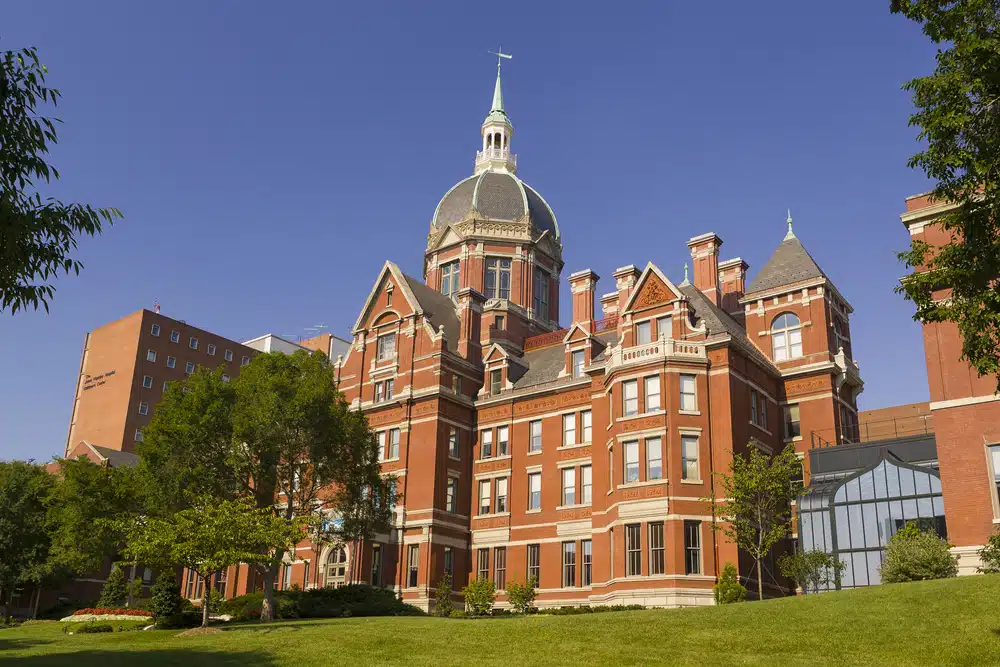
When looking at colleges, rankings can feel like a big deal. They give you a quick snapshot of how a school measures up in academics, research, and innovation. If Johns Hopkins University is on your radar, you might wonder how well it ranks compared to other top schools and what that means for you.
In this blog, we’ll break down Johns Hopkins’ national and global rankings, what makes the school stand out, and how its reputation could impact your college experience. Plus, if you’re considering applying, we’ll go over the admission process and some key tips to help you develop a strong application.
- How Does Johns Hopkins Rank Nationally and Globally?
- Johns Hopkins Application Process
- Other Johns Hopkins Rankings
- Frequently Asked Questions
- Takeaways
How Does Johns Hopkins Rank Nationally and Globally?
Johns Hopkins ranks among the best universities in the country and the world. Below, we break down its rankings from U.S. News & World Report, Times Higher Education, and QS World University Rankings so you can see where it shines.
U.S. News & World Report
The U.S. News & World Report evaluates universities across the U.S. based on academic performance, value, and specialty programs. If you’re looking for a school that’s recognized for excellence across multiple fields, Johns Hopkins stands out as one of the best.
| Ranking Category | Position |
| National Universities | #6 (tie) |
| Best Value Schools | #10 |
| Best Undergraduate Engineering Programs | #13 (tie) |
| Biomedical Engineering | #1 |
| Biocomputing/Bioinformatics/Biotechnology | #5 (tie) |
| Economics | #22 (tie) |
| Undergraduate Research/Creative Projects | #12 |
| Most Innovative Schools | #10 |
If you’re into engineering, research, or innovation, Hopkins is one of the best places you could go. Its #1 ranking in Biomedical Engineering is especially impressive if you’re interested in medicine, biotech, or health technology.
U.S. News ranks Johns Hopkins as a Best Value School, meaning that while the price tag might look high, the university offers generous financial aid to make it much more affordable. The published Johns Hopkins cost of attendance includes tuition, housing, meals, and other expenses. So, while the full cost might seem overwhelming, most students pay much less or even nothing.
Here’s a breakdown of the estimated cost for undergraduate students:
| Expense | Cost |
| Tuition (Full-time, 12+ credits per semester) | $64,730 |
| Matriculation Fee (One-time only) | $500 |
| Housing (On-Campus) | $11,968 |
| Food (On-Campus Meal Plan) | $8,182 |
| Personal Expenses | $1,514 |
| Books & Supplies | $1,356 |
| Transportation (Varies by home state) | $726 |
| Total Estimated Cost | $88,976 |
If you take fewer than 12 credits, tuition is $2,157 per credit hour, so part-time students have different costs.
Here’s how Hopkins financial aid helps you:
- Need-blind admissions. If you’re a U.S. applicant (citizen, permanent resident, DACA, or undocumented), your financial situation won’t impact your admissions decision. Hopkins focuses only on your potential. (For international students, financial need is considered, but aid is still available.)
- 100% of demonstrated need covered. No matter what your family can afford, Hopkins fills the gap with scholarships and aid.
- No loans. Instead of loans, you’ll get need-based scholarships (that don’t need to be paid back) and work-study opportunities.
Here’s a look at financial aid in action:
| Financial Aid Stat | Amount |
| Average Need-Based Scholarship for First-Year Students | $64,000 |
| Total Awarded in Need-Based Scholarships Last Year | $168 million |
| Percentage of Students Receiving Need-Based Aid | 53% |
Hopkins invests heavily in its students and works with families to create financial aid packages that fit their needs. If you’re serious about applying, it’s worth exploring their financial aid resources, as you might pay a lot less than you expect!
Times Higher Education
If you’re thinking beyond just U.S. rankings, Times Higher Education (THE) ranks Johns Hopkins against universities worldwide. This ranking focuses on research quality, teaching, and global reputation.
| Category | Score |
| World University Ranking | #16 |
| Teaching Quality | 83.7 |
| Research Environment | 91.3 |
| Research Quality | 97.3 |
| Industry Impact | 100 |
| International Outlook | 83.6 |
| Overall Score | 90.7 |
A perfect 100 in Industry Impact means the research coming out of Johns Hopkins is actually being used in the real world helping to solve big problems in science, medicine, and technology.
For example:
- mRNA Vaccine Technology. Research from Johns Hopkins contributed to the development of mRNA-based COVID-19 vaccines, which have been critical in combating the global pandemic.
- Cancer Immunotherapy. Hopkins researchers pioneered immunotherapy treatments, including checkpoint inhibitors, which have revolutionized cancer treatment and extended the lives of many patients.
- AI in Healthcare. The university is at the forefront of using artificial intelligence to improve diagnostics, including AI-powered tools that help detect diseases like Alzheimer’s and Parkinson’s earlier than ever.
- Space Exploration. Johns Hopkins Applied Physics Lab (APL) led the NASA DART mission, which successfully altered an asteroid’s trajectory, proving planetary defense technology could work.
These are just a few ways Hopkins research is changing the world, so if you’re looking for a university with real impact, this is it.
QS World University Rankings
Another major ranking system, QS World University Rankings, focuses on academic reputation, research influence, and student success.
| Ranking Category | Position |
| Overall World Ranking | #32 |
| Best by Subject | #3 |
| Sustainability Ranking | #35 |
| Academic Reputation | 86 |
| Citations per Faculty | 84.2 |
| Employment Outcomes | 71.5 |
| Employer Reputation | 62.6 |
| Faculty-Student Ratio | 100 |
| International Student Ratio | 95.8 |
That #3 ranking by subject shows that Hopkins dominates in certain academic fields. The high faculty-student ratio also means you’ll get more access to professors and smaller class sizes than other schools.
Here’s what that looks like in the real world:
- Medicine & Public Health. Hopkins is home to the #1 ranked Bloomberg School of Public Health, which has led major research in global disease prevention, COVID-19 response, and vaccine policy.
- Biomedical Engineering. The Johns Hopkins BME program is ranked #1 in the nation, and its faculty pioneers advances like lab-grown blood vessels and prosthetic limbs controlled by brain signals.
With smaller class sizes and top-tier faculty, you’ll have direct access to leading experts in their fields, opening doors to cutting-edge research, networking, and real-world impact.
Johns Hopkins Application Process
So, you’re thinking about applying to Johns Hopkins? That’s exciting! Whether you’re aiming for Early Decision or planning to submit a Regular Decision application, here’s everything you need to know without the confusing jargon.
Step 1: Choose your admissions plan.
Johns Hopkins offers three application options:
- Early Decision I (EDI). Apply early and get your decision early. This is binding, meaning if you get in, you’re committing to attend.
- Early Decision II (EDII). Similar to EDI but with a later deadline, another option if you’re sure Johns Hopkins is your top choice.
- Regular Decision (RD). This gives you more time to work on your application, but you’ll have to wait a bit longer for results.
If you’re applying through QuestBridge, make sure to check out the specific dates and details at apply.jhu.edu/questbridge. For those applying to the Peabody Institute, requirements and deadlines are different, so visit peabody.jhu.edu for details.
Step 2: Make sure you’re eligible.
You can apply as a first-year student if:
- You’re currently in high school.
- You’ve graduated high school or earned a GED and have less than 12 college credits (not counting AP, IB, or dual-enrollment courses taken in high school).
If you’ve already earned a bachelor’s degree, undergrad admission isn’t an option, but you can explore their graduate programs instead.
Step 3: Know the deadlines.
Johns Hopkins updates its deadlines every August 1, but here’s the current timeline:
| Application Plan | Application Deadline | Financial Aid Deadline | Decision Release | Reply-By Date |
| Early Decision I | November 1, 2024 | November 15, 2024 | December 13, 2024 | January 15, 2025 |
| Early Decision II | January 2, 2025 | January 15, 2025 | February 14, 2025 | February 28, 2025 |
| Regular Decision | January 2, 2025 | January 15, 2025 | March 21, 2025 | May 1, 2025 |
| Transfer | March 1, 2025 | March 15, 2025 | May 9, 2025 | June 1, 2025 |
Step 4: Complete your application checklist.
You’ll submit everything through the Common Application or Coalition on Scoir. Here’s what you need:
- Your application form (including your transcript, activities list, and personal statement).
- The Hopkins supplemental essay (see below).
- $70 application fee (or a fee waiver if eligible).
- Standardized test scores (optional but encouraged).
- Early Decision Agreement (only if applying EDI or EDII).
- Two teacher recommendations (from different academic subjects).
- Mid-year report (submitted by your counselor in February).
Step 5: Write the Johns Hopkins supplemental essay.
This is your chance to show who you are beyond grades and test scores. Here’s the 2024–2025 prompt:
How has your life experience contributed to your personal story—your character, values, perspectives, or skills—and what you want to pursue at Hopkins? (350-word limit)
Think about what makes you, whether it’s an experience, challenge, or passion and how it connects to your goals at Hopkins. For a detailed discussion on how to write the Johns Hopkins supplemental essay effectively, check out our friendly guide here.
Step 6: Submit the required documents from your school.
Make sure your school counselor sends these on your behalf:
- Secondary school report (includes your transcript and counselor recommendation).
- Two teacher recommendations (from different academic subjects).
- Mid-year report (once your first semester senior year grades are available).
Final tips
- Stay organized and track your deadlines.
- Use your supplemental essay to highlight your unique story.
- Ask for recommendation letters early to give your teachers time.
- If you’re applying Early Decision, understand the binding commitment.
If you’re applying as an international student, you must submit the International Certification of Finances form to show proof of funding for your education. If you’re applying for financial aid, submit the CSS Profile and your application.

Other Johns Hopkins Rankings
You already know Hopkins is a top-tier university, but let’s break it down even further. From world-class research to global recognition, Hopkins stands out in multiple rankings. Here are a few that show why it’s a great place to study, grow, and make an impact:
#1 in the world for occupational safety and health
If you’re into making workplaces safer, protecting the environment, or improving public health, Johns Hopkins is leading the way. It’s ranked #1 worldwide for occupational safety and health, so you’ll learn from top experts making a real impact.
#5 in the nation for women’s soccer
Sports at Johns Hopkins are no joke. The women’s soccer team finished the 2024 season ranked #5 nationally, adding to a long history of success. With 18 wins, a Centennial Conference title, and a trip to the NCAA Quarterfinals, the Blue Jays continue to dominate. This marks the 12th top-10 finish since 2008, so if you’re looking for a school with competitive athletics, Johns Hopkins delivers.
#1 university in Baltimore
If you’re looking at schools in Baltimore, Johns Hopkins is at the top. As a major research institution with a global reputation, it stands out in the city and beyond. Plus, Baltimore has a lot to offer from internships and research opportunities to great food and culture.
Frequently Asked Questions
1. Is Johns Hopkins only for students who want to go into medicine?
Nope! While Johns Hopkins is famous for its medical and biomedical programs, it’s not just for future doctors. They have strong programs in engineering, international studies, economics, and even the arts and humanities. The key is finding what fits your interests and making the most of the opportunities they provide!
2. How hard is it to get into Johns Hopkins?
Johns Hopkins has an acceptance rate of 5.7%, meaning competition is fierce. But don’t let that scare you! You’ve got a shot if you’ve got strong grades, solid extracurriculars, and a well-thought-out application (especially your essays). They also do holistic admissions, meaning they look at your entire application, not just your GPA and test scores, so show them who you are beyond the numbers.
3. Do I have to be rich to afford Johns Hopkins?
Absolutely not. While the total estimated cost for an undergraduate student is around $88,976 per year, most students don’t actually pay that full amount. Johns Hopkins is committed to making education accessible through need-based financial aid that covers 100% of demonstrated need. They calculate what your family can afford and fill in the rest with scholarships and grants (not loans).
4. What’s the vibe like at Johns Hopkins?
If you’re picturing a bunch of students locked in the library 24/7, it’s not completely wrong, but there’s way more to campus life than just studying. Students describe the atmosphere as collaborative and intellectually curious people love to learn, but they also support each other. Plus, Baltimore has a lot to offer, and there are tons of student organizations, events, and even a quirky tradition of giving out free donuts on the last day of classes.
Takeaways
- You’re looking at a top-tier school. Johns Hopkins ranks #6 in the U.S. and has the #1 Biomedical Engineering program, making it a powerhouse for research and innovation.
- On a global scale, Johns Hopkins holds the #16 spot, with top marks for research quality and industry impact, meaning its discoveries are actually changing the world.
- Hopkins’s athletics are strong, too. The women’s soccer team finished 2024 ranked #5 in the nation, proving that Hopkins excels in both academics and sports.
- You’ll need strong grades, solid extracurriculars, and a well-crafted application to get in. Depending on your timeline, you can choose between Early Decision and Regular Decision.
- If you want expert guidance to boost your chances of getting into Johns Hopkins, AdmissionSight’s Private Consulting Program can help you craft a standout application and navigate the admissions process like a pro.










