

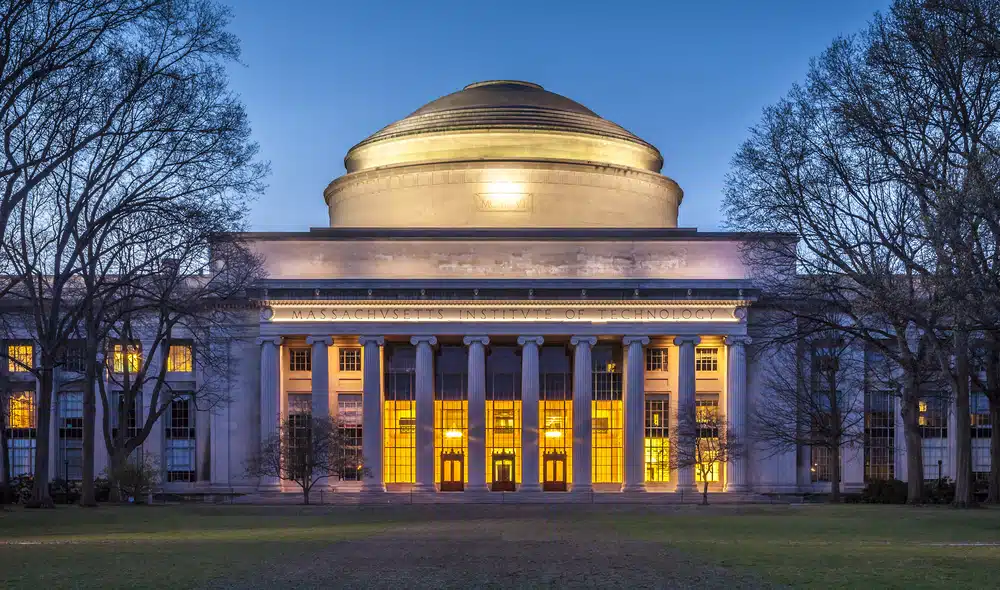
The Massachusetts Institute of Technology (MIT) is a powerhouse of science and technology. It ranks 2nd among national universities, so you might be wondering, what are the MIT best majors?
In this article, we’ll list 10 of MIT’s best programs across several disciplines and discuss what makes them so renowned.
- Engineering at MIT
- Physics at MIT
- Chemistry at MIT
- Biology at MIT
- Mathematics at MIT
- Finance at MIT
- Management at MIT
- Business Analytics at MIT
- Economics at MIT
- Architecture at MIT
- Frequently Asked Questions
- Takeaways
Engineering at MIT
It’s hard to pick out just one program in MIT’s School of Engineering because the whole institution is recognized for its rigorous curriculum, pioneering research, and impact on different industries. In fact, the school ranks #1 in the U.S.
The school offers over two dozen undergraduate degree programs, some of them unique to MIT, such as:
- Climate System Science and Engineering
- Artificial Intelligence and Decision Making
- Urban Science and Planning with Computer Science
- Archaeology and Materials as Recommended by the Department of Materials Science and Engineering
- Mechanical and Ocean Engineering
- Nuclear Science and Engineering
You can also pursue additional concentrations in interdisciplinary areas like computing, energy, medical science and engineering, robotics, or poverty alleviation.
The School of Engineering houses some of MIT’s best majors, also ranking first in the country for Aerospace, Chemical, Computer, Electrical, and Mechanical Engineering, among others.
Aside from that, the school is also a hub of research and innovation, with an extensive network of centers, institutes, and laboratories that includes:
- Center for Microbiome Informatics and Therapeutics (CMIT). This center aims to advance human microbiome science and treat conditions associated with altered microbiomes, fostering research, clinical practice, computational biology, and engineering.
- Microsystems Technology Laboratories. These labs are dedicated to advancing nanoscale science and technology to address human concerns in communications, computation, energy, health, environment, and transportation.
- Center for Environmental Health Sciences (CEHS). In this center, researchers from different disciplines study the biological effects of environmental agents, focusing on how exposure and genetic susceptibility affect health outcomes.
With a strong curriculum and research culture, MIT’s influence extends to the development of stealth technology, GPS technology, and modern lithium-ion batteries.
Physics at MIT
Physics is another one of MIT’s best majors, also ranking first in the country. The Physics program aims to give you a deep conceptual understanding of fundamental physics.
An interesting part of the program is that you can choose between two tracks to complete the degree: the Flexible and Focused track.
- In the Flexible track, you’ll take a series of courses in fundamental physics—including core physics subjects like Quantum Physics I and Statistical Physics I, Differential Equations, and an experimental physics course. You may also complete a “focus area” consisting of three related subjects, which can be in fields like astronomy, biology/biophysics, computer science/engineering, chemistry, or quantum physics.
- Meanwhile, the Focused track will provide you with strong preparation for a career in physics by requiring three terms of quantum mechanics, 36 units of laboratory experience, and a thesis based on faculty-supervised research.

As you may expect from one of MIT’s best majors, you can also be involved in research in various topics, from the simplest entities like individual atoms to the most complex subjects like high-temperature superconductors.
MIT physics faculty and researchers are actively involved in several international collaborations, such as the Ice Cube Neutrino Observatory in Antarctica, the Magellan Project at Las Campanas Observatory in Chile, and the Large Hadron Collider at CERN in Switzerland.
Chemistry at MIT
Chemistry is also one of MIT’s best majors, and it ranks #1 in the country as well. The undergraduate curriculum covers general areas such as biological chemistry, inorganic chemistry, organic chemistry, and physical chemistry.
However, you can also specialize through restricted lecture electives in areas like Chemical Biology, Advanced Organic Chemistry, and Physical Chemistry II.
The Department of Chemistry is dedicated to researching solutions for problems facing humanity, such as developing new molecular labels for tuberculosis tests, using AI to explore 3D genome structure, and creating new technologies for an environmentally sustainable future.
The department provides several specialized facilities and centers to support its community’s research, including:
- Department of Chemistry Instrumentation Facility (DCIF). A shared instrument facility with an open-access lab containing state-of-the-art analytical instruments for Nuclear Magnetic Resonance, Mass Spectrometry, and Electron Paramagnetic Resonance to support research.
- X-Ray Diffraction Facility. Offers single-crystal data collection and structure determination services on all types of molecules, including inorganic, organic, organometallic, and biological samples.
- Francis Bitter Magnet Laboratory. Combines expertise and instrumentation in solution-state NMR, solid-state NMR, EPR, Dynamic Nuclear Polarization, microwave technology, magnet design, probe and console design, and synthesis of polarizing agents.
As one of MIT’s best majors, the Chemistry program will require you to take up laboratory subjects to gain hands-on experience through modules covering Fundamentals of Spectroscopy, Macromolecular Prodrugs, Recombinant DNA Technology, and more. Working as a faculty member’s research assistant can also let you experience working in the department’s facilities.
Biology at MIT
MIT’s Department of Biology is a leading center for life sciences research and education. As another one of MIT’s best majors, biology emphasizes quantitative aspects of biology, including molecular biology, biochemistry, genetics, and cell biology. The curriculum also has an extensive laboratory research component, giving you a better understanding of fundamental principles and current approaches in biology.
You’ll also need to choose three restricted electives from a range of specialized topics—including Biological Chemistry, Modern Biostatistics, Immunology, and Molecular Basis of Infectious Disease. Of course, you’ll have required lab subjects like Fundamentals of Experimental Molecular Biology and Molecular Biology Laboratory to get hands-on experience.
The rigorous curriculum can make it unsurprising to know that MIT ranks 3rd in the biological sciences.

Outside of housing one of MIT’s best majors, the department is affiliated with several prominent research institutes to create a collaborative ecosystem for advancing biomedical science. These include:
- Picower Institute for Learning and Memory. This institute focuses on understanding the biology and neuroscience of learning, memory, and related functions, with the goal of discovering new treatments and diagnostic methods for brain disorders.
- Koch Biology Building (Building 68). This serves as a central research and teaching facility and the administrative headquarters for MIT Biology. Research here spans fundamental biology, including genetics, biochemistry and structural biology, cell biology, microbiology, neurobiology, and developmental biology.
- Ragon Institute of Mass General Brigham, MIT and Harvard. This institute brings together scientists and engineers to understand the immune system and support human health, focusing on HIV/AIDS, Global Infectious Diseases, Emerging Infectious Diseases, Vaccine Development, Basic and Applied Immunology, and Clinical Studies.
Mathematics at MIT
The Department of Mathematics houses some of MIT’s best majors too, including Applied Math, which ranks #4 in the country. However, if we’re talking about how MIT ranks in math in general, they stand at the #1 spot in the U.S.
The department offers four undergraduate programs in mathematics, all leading to a Bachelor of Science degree: General Mathematics, Applied Mathematics, Pure Mathematics, and Mathematics with Computer Science.
Regardless of your track, you can expect to build a strong foundation in many mathematical subjects, including:
- Algebra
- Geometry and topology
- Number theory
- Analysis
- Probability theory
- Combinatorics
- Physical applied mathematics
- Computational sciences
- Computational biology
- Theoretical computer science
As one of MIT’s best majors, there are also many ways to be involved in research. As an undergrad, you can engage mainly through the Undergraduate Research Opportunity Program (UROP).
Other mentoring programs include the Directed Reading Program (DRP) and the Summer Programs in Undergraduate Research (SPUR and SPUR+), where you’ll work on designated projects with graduate student mentors and present your findings to a faculty committee.
The department’s faculty and alumni have received numerous accolades, such as Jesse Douglas, who received the Fields Medal in 1936 for his work on the Plateau problem. Peter Shor, a MacArthur Fellow and Turing Award recipient, is also recognized for his work in quantum computing, including Shor’s algorithm for factoring large numbers.
Finance at MIT
MIT is certainly a powerhouse in math and the sciences, but the institution also has other impressive programs. For example, Finance is also one of MIT’s best majors, known for its rigorous and interdisciplinary approach to understanding and shaping global financial markets.
The Sloan School of Management will require you to take core subjects in Managerial Finance, Corporate Finance, Accounting, Microeconomics, and Probability and Statistics. You’ll also need to complete seven additional full subjects from an approved list of restricted electives, with a minimum number in Core Electives in Finance and Topics in Finance.
As one of MIT’s best majors, Finance graduates are expected to be thought leaders, pushing the boundaries of finance to solve complex problems through a global network of people, programs, research, and partnerships.

To do that, the school offers research opportunities in its different centers and initiatives that can help students see how the finance world works outside academia.
For example, being involved in the MIT Golub Center for Finance and Policy (GCFP) shows you how innovative, cross-disciplinary, and non-partisan research addresses the unique challenges governments face as financial institutions and regulators of the financial system. Meanwhile, the Consumer Finance Initiative focuses on research areas related to consumer finance.
Management at MIT
Sloan’s Management program is also one of MIT’s best majors, ranking 8th in the country. This impressive ranking is thanks to its rigorous curriculum that equips you with the tools to understand complex systems and make informed decisions, building a strong foundation of quantitative analysis and critical thinking.
An excellent feature of the curriculum is the emphasis on individualized concentrations. You’ll basically have to choose five electives to go into depth in a specific area of interest. There are several ways you can go about this:
- Choose from predefined concentrations like entrepreneurship, finance, and operations.
- Create your own tailored concentration with faculty advisor approval.
- Integrate your management studies with other MIT disciplines like Mechanical Engineering, Economics, and Mathematics.
As one of MIT’s best majors, you’ll also apply classroom concepts to real-world business challenges. Your instructors can have you do this by analyzing actual business scenarios to develop problem-solving skills and working on projects with real companies or organizations.
With that, you can expect that Sloan contributes significantly to theory and practice. Some key research areas include:
- Behavioral & Policy Sciences
- Economics, Finance & Accounting
- Management Science
- Technological Innovation, Entrepreneurship, and Strategic Management
- Information Technology
Faculty members are some of the leading researchers in their fields, allowing them to bring their insights directly into the classroom and exposing you to the latest thinking and cutting-edge approaches.
Business Analytics at MIT
When you hear the word “analytics,” you probably think of just crunching numbers. However, MIT Sloan’s Business Analytics program equips you with the analytical prowess and problem-solving mindset needed to tackle complex business challenges using data, optimization, and machine learning. You’ll basically get a deep technical foundation in data science in the context of business.
As one of MIT’s best majors, it also allows you to specialize further by choosing five additional subjects from an approved list. This way, you can go in-depth into areas like:
- Marketing Analytics
- Financial Analytics
- Supply Chain Analytics
- System Dynamics
If you want, you can also take additional technical subjects from other MIT departments, such as more advanced computer science, statistics, or operations research courses.
This depth that one of MIT’s best majors gives you has caused it to rank 2nd in the country.
Outside of academics, you can also be involved in research in areas like machine learning and AI applications, data-driven decision making, and prescriptive analytics. Whether you do independent study or work with a faculty member, you can experience Sloan’s various centers and initiatives, such as:
- Operations Research Center (ORC). The ORC is a hub for research in optimization, probability, and statistics.
- Initiative on the Digital Economy (IDE). This center focuses on the impact of digital technologies on business, which heavily relies on data and analytics.
- Martin Trust Center for MIT Entrepreneurship. While focused on entrepreneurship, data analytics is a critical tool for startups to understand markets, validate ideas, and optimize operations.

Economics at MIT
MIT’s Department of Economics provides rigorous training in modern economic theory, quantitative research, and policy analysis to address complex economic and societal challenges.
Economics is one of MIT’s best majors, ranking #1 in the country. You can actually choose from three undergraduate majors in the department:
- Bachelor of Science in Economics. This program aims to provide a strong foundation in economic theory and data analysis, develop deep knowledge of particular economic issues, and enhance students’ capabilities for independent research. The curriculum is flexible to let you design individual programs and combine studies with subjects from other disciplines. course, statistics, and econometric data science.
- Bachelor of Science in Mathematical Economics. This program is designed for students looking for a deeper mathematical foundation in economics, including topics like mathematical microeconomic theory or econometrics. Because of that, you can also expect substantial coursework in mathematics, such as Real Analysis and Linear Algebra or Differential Equations.
- Bachelor of Science in Computer Science, Economics, and Data Science. This interdisciplinary program is offered jointly with the Department of Electrical Engineering and Computer Science to provide you with skills in economics, computing, and data science. Expect to learn about the overlap between economics and computer science in game theory, mathematical modeling, and data analytics, including algorithms, optimization, and machine learning.
The analytical techniques you’ll learn as an Economics undergrad interact with other social sciences like political science and psychology, and with sciences such as statistics and computer science. Because of that, you can conduct research in many applied fields—such as development economics, environmental economics, health economics, and industrial organization.
Architecture at MIT
Architecture is another one of MIT’s best majors, ranking 2nd in the world. The program combines rigorous technical education, innovative design thinking, and a deep engagement with the social and cultural dimensions of the built environment.
As an architecture undergrad, you’ll get a solid foundation across five aspects of architectural inquiry:
- Architectural Design and Urbanism
- Building Technology
- Design and Computation
- History, Theory, and Criticism of Architecture and Art
- Art, Culture, and Technology (ACT)
MIT’s Department of Architecture is also involved in research that aims to bridge the gap between design practice and cutting-edge technology and theory. If you want to participate, one of the easiest ways to do so is to contact a faculty member who’s involved in research you’re interested in. You can find projects and apply through the Undergraduate Research Opportunities Program.
Research is supported by world-class facilities and centers that enable hands-on learning, experimentation, and collaboration, including:
- Fab Lab. This is an instructional and prototyping facility with laser cutters, a waterjet, small CNC routers, electronics workbenches, and hand tools.
- Woodshop. This is fully equipped for woodworking, including traditional furniture making and large-scale fabrication, with a C.R. Onsrud router and CNC knee mill.
- Mars Lab. This is the main ACT workshop and general assembly area, open to students enrolled in ACT classes with a fabrication component. Here, you can move from digital models to physical prototypes, giving you a deep understanding of materials and construction.

Frequently Asked Questions
1. What majors does MIT offer?
MIT offers 57 undergraduate majors across its schools of Architecture and Planning, Engineering, Humanities, Arts, and Social Sciences, Science, and the Schwarzman College of Computing. These include traditional fields like Mechanical Engineering and Physics, as well as interdisciplinary programs such as Computer Science, Economics, and Data Science, and Biological Engineering.
2. What majors is MIT known for?
MIT’s most popular majors are housed in the STEM departments. Specific strengths include Computer Science, Data Science, Physics, Chemistry, Biology, Finance, Business Analytics, and Economics, all characterized by rigorous academics, pioneering research, and a practical approach to problem-solving.
3. Is MIT as good as an Ivy League school?
MIT consistently outperforms several Ivy League schools in global rankings, securing the #1 spot in QS World University Rankings 2025 and as the highest-ranked US university in THE World University Rankings 2025. While not part of the Ivy League due to geographic and historical reasons, MIT matches or exceeds Ivy League institutions in academic reputation, faculty-student ratio, employer reputation, and employment outcomes.
Takeaways
- Ten of MIT’s best majors are Engineering, Physics, Chemistry, Biology, Mathematics, Finance, Management, Business Analytics, Economics, and Architecture.
- MIT is mostly known for its math and science programs, but it also houses great majors in business and social sciences.
- See your dream program on the list? Work with a private admissions consultant to make your college application stronger and improve your chances of getting accepted.










