

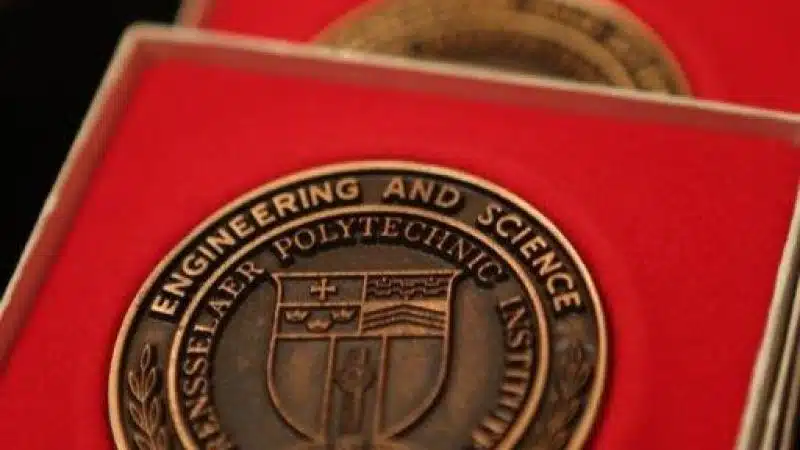
For over a century, the Rensselaer Medal has been one of the nation’s most prestigious honors for promising young scientists and mathematicians. Established by Rensselaer Polytechnic Institute (RPI) in 1916, the Medal recognizes high-achieving high school juniors who demonstrate exceptional academic ability and a passion for STEM fields.
Unlike many scholarships that require lengthy applications, essays, or interviews, it follows a unique process. Students are nominated by their high schools. Each participating school may select one outstanding junior who exemplifies excellence in mathematics and science.
This guide explores everything you need to know about the Rensselaer Medal, from its rich history and scholarship benefits to eligibility criteria, nomination procedures, and strategies for earning this prestigious distinction.
- What Is the Rensselaer Medal?
- Rensselaer Medal Scholarship Value and Benefits
- How to Qualify for the Rensselaer Medal
- How to Apply for the Rensselaer Medal
- How to Win the Rensselaer Medal
- Frequently Asked Questions
- Takeaways
What Is the Rensselaer Medal?
The Rensselaer Medal is a merit-based scholarship awarded to exceptional high school students who have demonstrated remarkable achievement in math and science. Sponsored by Rensselaer Polytechnic Institute, the program encourages talented students to pursue careers in science, engineering, and technology.
Since its inception in 1916, the Rensselaer Medal has honored outstanding juniors from thousands of secondary schools worldwide. Each participating high school nominates one student per year, making the award both competitive and highly selective.
The Medal is a global recognition program, coordinated by RPI’s Office of Admissions in Troy, New York. Nomination materials are distributed to participating schools in March each year, with final nominations due on May 1.
Students selected as Rensselaer Medalists are typically recognized during their school’s spring award ceremony. When they later apply, are admitted, and enroll at Rensselaer, they officially receive their Rensselaer Medallion at the Honors Convocation held in the fall semester of their first year on campus.
Rensselaer Medal Scholarship Value and Benefits
The Rensselaer Medal is a substantial scholarship opportunity. Each recipient who enrolls at Rensselaer receives $40,000 per year for four years, totaling $160,000 toward their undergraduate education. For students in the five-year Bachelor of Architecture program, the scholarship is awarded for the duration of the program, totaling $200,000.
This makes the Medal one of the most generous and long-standing merit scholarships in the country. Here are its other benefits:
- Guaranteed funding. The award is automatically applied to the student’s financial aid package upon admission and enrollment, offering guaranteed support for the duration of their program.
- Renewable scholarship. The Rensselaer Medal is renewable each year as long as the student maintains satisfactory academic progress and full-time enrollment.
- No application required. Unlike most scholarships, students are nominated by their schools. No essays, fees, or supplemental materials are needed.
- Offers prestige and recognition. Being a Medalist highlights a student’s excellence in math and science, strengthening their academic résumé even before college.
- Access to research and innovation. Medalists who attend RPI gain access to one of the country’s most advanced research environments, known for breakthroughs in biotechnology, computer engineering, and renewable energy.

The Rensselaer Medal helps shape future leaders in STEM. Many Medal recipients go on to become distinguished scientists, engineers, entrepreneurs, and innovators. One example is Sheldon Weinbaum ’59, who achieved the rare distinction of being elected to the National Academy of Sciences, the National Academy of Engineering, and the Institute of Medicine.
For students serious about pursuing science or engineering, this honor offers both financial support and academic distinction within RPI’s vibrant STEM ecosystem.
How to Qualify for the Rensselaer Medal
Due to its prestige, the Rensselaer Medal has stringent qualification requirements to ensure that only the most deserving students are nominated.
Eligibility
To qualify for nomination, students must meet the following criteria:
- Grade level. Must be a high school junior at the time of nomination.
- School type. Must attend a participating Medal school—that is, a high school accredited by a recognized agency with a valid CEEB code.
- Academic excellence. Must demonstrate exceptional achievement in mathematics and science coursework.
- Curriculum requirements. The high school must offer all courses required for RPI admission, including biology, chemistry, lab-based physics, and pre-calculus (calculus is encouraged).
- Competitive context. For home-school programs, there must be sufficient competition within the junior class to ensure eligibility.
Schools that wish to participate in the Rensselaer Medal Program but are not yet part of it can apply through the RPI Medal School Profile Form.
Required documents
The process requires no direct submission from students. Instead, high school officials must complete the following steps:
- Online nomination form. Submit the student’s name, school details, and academic performance through RPI’s secure online portal.
- Academic overview. Provide supporting information that reflects the student’s achievements in math and science courses.
- Verification. Ensure that the nominated student meets all course and accreditation requirements.
After the nomination is reviewed and approved, RPI mails an official award certificate to the school, which presents it to the student during an awards ceremony.
Fees
There are no fees for schools or students to participate. The Rensselaer Medal Program is entirely free, making it accessible to every qualified high school student regardless of financial background.
Registration deadline
Nominations for each academic year are typically due by May 1. RPI sends nomination materials and selection criteria to schools in early March, so students should communicate with counselors well before that date to express interest in being considered.
How to Apply for the Rensselaer Medal
Unlike most scholarships that require lengthy essays or online applications, the Rensselaer Medal nomination is handled directly between RPI and participating high schools. Still, students who aspire to become Medalists can—and should—take proactive steps to strengthen their candidacy and prepare for the next stage: applying to RPI and securing the scholarship.
Here’s a breakdown of how the process works from registration to final award and how to position yourself for success at every stage.
Step 1: School participation
Each spring, RPI’s Office of Admissions contacts participating high schools with updated guidelines for nominating their Medalist. Schools must meet specific academic and accreditation requirements, including:

- Offering the core STEM courses RPI expects for admission (biology, chemistry, lab-based physics, and pre-calculus)
- Holding a valid CEEB code and accreditation from a recognized educational authority
- Having sufficient competition within the junior class to ensure a fair nomination process
Schools that are not yet part of the Rensselaer Medal Program can apply by completing the Medal School Profile Form available on RPI’s website. Once reviewed, RPI confirms eligibility and adds the school to its official list of participating institutions.
RPI typically sends the nomination materials and selection criteria in March, with the final submission deadline on May 1 each year. School administrators are responsible for submitting their chosen nominee through RPI’s secure online portal.
Step 2: Selection process
The selection of a Medalist is an internal process handled by each high school. While RPI provides general guidelines, schools have flexibility in how they choose their nominee.
Some schools rely on a faculty committee, while others have their math and science departments nominate candidates based on performance, course rigor, and extracurricular involvement. Common selection factors include:
- High grades in advanced math and science courses
- Participation in STEM clubs, competitions, or research projects
- Leadership in academic organizations or tutoring programs
- Genuine curiosity and engagement with STEM subjects
Once the high school finalizes its decision, officials log into RPI’s online portal and submit:
- The student’s name and academic details
- A summary of their math and science achievements
- The official endorsement confirming that the student meets RPI’s eligibility standards
RPI then reviews the nomination for completeness and validity. If accepted, RPI mails an official award certificate to the high school for presentation during the spring awards ceremony. This certificate formally names the student as a Rensselaer Medalist.
Step 3: Application to RPI
Being nominated doesn’t automatically grant admission to RPI. Medalists must still apply through the Common App or Coalition App and meet standard admission requirements. However, being a Rensselaer Medal recipient gives your application a significant advantage, as it reflects excellence and dedication aligned with RPI’s values.
Here’s a quick look at the academic profile of Medal winners who applied and were accepted into RPI’s most recent freshman class:
| Metric | Average |
| High School GPA | A |
| SAT Combined* | 1473 |
| SAT Math | 752 |
| SAT Evidence-Based Reading and Writing | 721 |
| ACT Composite | 33 |
Step 4: Admission and enrollment
Once admitted, the student becomes an official scholar. The scholarship—worth $40,000 per year—is automatically applied to their tuition as part of the financial aid package.
Step 5: Receiving the Rensselaer Medallion
If you enroll at RPI, you’ll be honored with your official Rensselaer Medallion at the university’s Honors Convocation in the fall of your freshman year. This ceremony is one of RPI’s most celebrated traditions.
How to Win the Rensselaer Medal
Winning the Rensselaer Medal depends on a combination of academic performance, school participation, and proper timing. Here’s what you can do to secure a nomination:
1. Excel in Math and Science early.
Your performance in math and science sets the foundation for your nomination. The Rensselaer Medal honors students who consistently demonstrate mastery in these subjects.
Start strong in your freshman and sophomore years by taking the most rigorous courses available to you. Prioritize honors, accelerated, or Advanced Placement (AP) classes in algebra, calculus, chemistry, and physics. If your school offers dual-enrollment or college-level STEM courses, consider enrolling to show that you can handle challenging material at a higher level.
Consistency matters just as much as achievement. RPI seeks Medalists who demonstrate sustained effort, not just isolated bursts of excellence. Build habits of curiosity, time management, and academic discipline early on—the same qualities that will serve you well in a demanding STEM program like RPI’s.
2. Participate in STEM activities.
Grades show what you can do in the classroom, but extracurricular activities show how you apply that knowledge. Schools often weigh leadership, initiative, and curiosity heavily when selecting their Rensselaer Medal nominee, qualities that come to life through meaningful involvement in STEM clubs and competitions.
Join or take leadership roles in organizations like the Math Club, Science Olympiad, FIRST Robotics, Chemistry Olympiad, or Computer Science Team. If your school doesn’t have one, take the initiative to start a new club or project.
For example, founding a coding club or launching a student-led science outreach initiative shows both leadership and passion for problem-solving—the very values RPI promotes.
If possible, pursue opportunities outside your school. Participating in local or national competitions, such as the American Mathematics Competitions (AMC) or the Regeneron International Science and Engineering Fair (ISEF), or summer research programs can strengthen your portfolio.
3. Build strong teacher relationships.
Your teachers and counselors play a central role in the nomination process, and that means your professional relationships in school can make a real difference. Unlike scholarships based on standardized forms or test scores, the Rensselaer Medal depends on teacher recommendation and judgment.
Show genuine curiosity in class. Participate in discussions, stay engaged during lessons, and ask thoughtful questions that reflect critical thinking. When you encounter challenges, approach your teachers for guidance rather than shortcuts..
Additionally, communicate your long-term goals. Let your teachers and counselor know that you aspire to pursue a career in science or engineering in college. They can guide you toward the right coursework and extracurricular opportunities, or even nominate you for relevant summer programs or competitions.

Remember, relationships take time to develop and nurture. Start connecting early in high school rather than waiting until junior year. When teachers are familiar with your character, work ethic, and intellectual curiosity, their support becomes more authentic—and your name becomes a natural choice when the time comes for nomination.
4. Show interest in Rensselaer Polytechnic Institute.
Many schools prefer to nominate students who are not only academically strong but also likely to attend RPI if accepted. Demonstrating a genuine interest in Rensselaer can help you stand out among peers with similar grades or test scores.
Start by researching RPI’s programs, especially those in engineering, computer science, architecture, and the physical sciences. Learn about the School of Engineering, School of Science, or even interdisciplinary programs like Biomedical Engineering or Cognitive Science. Understanding what RPI values—innovation, collaboration, and hands-on learning—allows you to align your interests naturally.
If possible, attend RPI’s virtual information sessions or campus tours. These events allow you to hear directly from admissions officers and current students, giving you a deeper understanding of campus life and opportunities such as undergraduate research and co-op programs.
You can even email RPI’s Medal Program office ([email protected]) with questions about eligibility or your school’s participation. This shows initiative and professionalism.
Mentioning your interest in RPI to teachers and counselors can also influence their decision. Schools often want to nominate students who will make use of the scholarship, and clear enthusiasm for Rensselaer’s programs can reinforce your readiness to represent your school as a Medalist.
5. Apply thoughtfully to RPI.
Being nominated for the Rensselaer Medal is only the first step—the scholarship becomes official only after you apply, are admitted, and enroll at RPI. Therefore, your college application plays a vital role in securing your place as a Medal Scholar.
Be intentional about how you present your achievements. Include your Medal nomination in your honors and awards section to emphasize your school’s recognition of your STEM excellence. Strong letters of recommendation from math or science teachers who have witnessed your dedication can further support your application.
Finally, don’t rush the process. Submit polished materials that reflect both precision and enthusiasm—the same qualities that define successful RPI students. Whether you’re applying to major in computer science, biomedical engineering, or architecture, show that your curiosity extends beyond coursework and into real-world innovation.
Frequently Asked Questions
1. What GPA do you need to qualify for the Rensselaer Medal?
While RPI doesn’t list a minimum GPA, most Medalists rank in the top 10% of their class with an A average in math and science.
2. Is the Rensselaer Medal renewable each year?
Yes. It’s renewable for four years (or five for B.Arch. students), provided recipients maintain satisfactory academic progress.
3. Can a student receive multiple RPI merit scholarships?
No. If a student qualifies for more than one merit award, RPI grants only the highest-value scholarship.
4. How competitive is the Rensselaer Medal?
Extremely. The average enrolled Medalist reports an SAT of 1473 and an ACT of 33, reflecting top-tier academic strength in STEM.
5. How do I find out if my school participates?
Ask your counselor or visit RPI’s Medal Program page. Schools not yet participating can apply to join by submitting the Medal School Profile Form online.
Takeaways
- The Rensselaer Medal is a prestigious, merit-based scholarship for exceptional high school juniors in math and science.
- It offers $160,000–$200,000 in guaranteed aid for students who enroll at RPI.
- Nominations are due May 1 each year, and only one student per school may be nominated.
- To boost your chances, focus on strong STEM academics, teacher relationships, and leadership in science or math-related activities.
- Ready to strengthen your academic profile and position yourself for top merit scholarships? Our Private Consulting Program offers personalized guidance to help you plan coursework, build STEM projects, and stand out in competitive nominations like the Rensselaer Medal.










