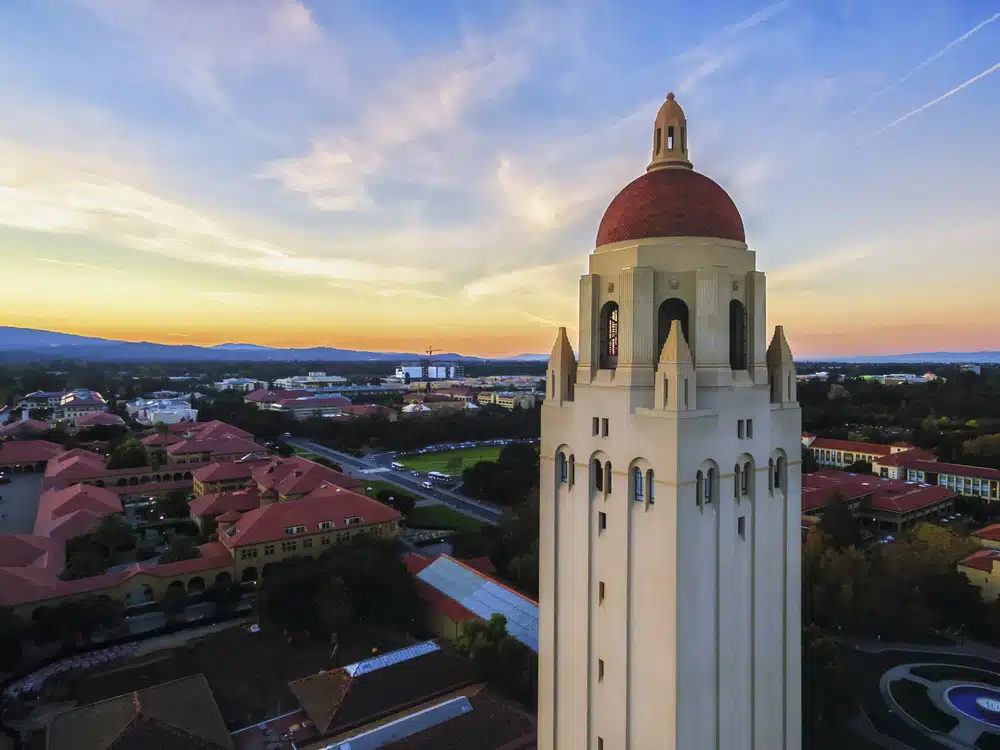
The Stanford Young Investigators program is a highly focused, research-intensive summer experience hosted by the Stanford Doerr School of Sustainability. Students are placed directly into active research groups on Stanford’s main campus, where they work on real-world projects in sustainability, Earth, and environmental science. Since 2004, over 300 high school students have participated, gaining firsthand exposure to the scientific process while being mentored by graduate scholars, postdoctoral researchers, and lab managers.
This guide explores how the Stanford Young Investigators program works and how participating can strengthen your academic profile, clarify your research interests, and enhance your college applications to Ivy League and other highly selective institutions.
- What Is Stanford Young Investigators?
- Stanford Young Investigators Acceptance Rate
- Stanford Young Investigators Application Deadline
- Stanford Young Investigators Requirements
- How to Get into Stanford Young Investigators
- Why Join Stanford Young Investigators?
- Frequently Asked Questions
- Takeaways
What Is Stanford Young Investigators?
The Stanford Young Investigators (SYI) is a selective, research-based summer internship hosted by the Stanford Doerr School of Sustainability. Students work directly in active research labs on Stanford’s main campus in Stanford, California, contributing to projects in sustainability, Earth, and environmental science. The program usually starts on the third Tuesday of June, with the final presentation scheduled during the first Thursday of August. This means students get about seven weeks of immersive, hands-on research under the mentorship of graduate students, postdoctoral researchers, and lab managers.
This internship is open to students who have completed at least one year of high school and must live and attend school within the San Francisco Bay Area, no more than 25 driving miles from campus. The program is non-residential and emphasizes independent research over structured social activities. Applications are currently closed and will reopen from February 1 to March 15, 2027.
Stanford Young Investigators Acceptance Rate
The Stanford Young Investigators program is highly selective, with an acceptance rate of about 2-17%. According to program data, SYI receives between 175 and 300+ applications annually, but only 6 to 30 students are admitted, depending on lab capacity and mentor availability.
This makes SYI one of the more competitive high school research internships, especially given its additional eligibility constraints, including a requirement that applicants live within commuting distance of Stanford University.
Stanford Young Investigators Application Deadline
For the Stanford Young Investigators Program, the application timeline is consistent each year:
| Date | Event |
| March 15 | Applications Due |
| March 25 | Letter of Recommendation Due |
| About May 1 | Acceptance letters sent out |
| Third Tuesday in June | First day of Internships |
| First Thursday in August | Final Presentation |
In the most recent cycle, applications were open from February 1 to March 15, 2026.
If you’re planning ahead, you can expect a similar window for future cycles (e.g., February 1–March 15, 2027), so it’s important to prepare materials, like your recommendation letter and application responses, well before February since late applications are not accepted.
Stanford Young Investigators Requirements
From strict location eligibility to required application components, each requirement reflects the program’s focus on serious, hands-on research. Here’s a clear breakdown of what you need to qualify and apply successfully:
Eligibility
The Stanford Young Investigators Program is open to students who have completed at least one year of high school, although most accepted applicants have completed two to three years. Applicants must live and attend school in the San Francisco Bay Area and reside within 25 driving miles of Stanford’s campus.
The program is non-residential, so students are expected to commute daily. Beyond academics, the program looks for students who are curious, mature, and comfortable engaging with researchers.
Required documents
To apply, students must submit a completed application, a letter of recommendation from a high school teacher, and their preferred research option. Applicants are also required to submit a 2-minute video introduction responding to a sustainability-focused prompt. Use this as an opportunity to showcase your perspective, creativity, and curiosity. Stay within the time limit, as reviewers will not watch beyond two minutes. All materials must be submitted by the deadline.
Program costs
There is no cost to participate in the Stanford Young Investigators Program. Most students join on an unpaid basis, though the experience can count toward community service hours. However, eligible students, such as those from low-income backgrounds or first-generation college applicants, may receive a small honorarium, provided they are legally able to work in the U.S.
How to Get into Stanford Young Investigators
Getting into the Stanford Young Investigators Program requires curiosity, initiative, and a clear interest in research. Here’s a step-by-step guide to help you navigate the process and stand out as a strong applicant.
Step 1: Review the program options.
Before starting your application, you’ll need to choose which research option best aligns with your interests. The program offers different focus areas within sustainability, Earth, and environmental science, but you submit a single application that will be considered across all options.
It’s important to carefully read each track and select one that genuinely reflects your curiosity rather than choosing randomly. Strong applicants clearly connect their interests to the program’s focus, demonstrating alignment and purpose from the very beginning.
Step 2: Submit consent and waiver requirements.
All applicants must have permission from a parent or guardian to participate. A waiver will be sent through Stanford’s system for electronic signature, and accepted students will also be required to provide health and medical information.
Step 3: Prepare your application materials.
The application is designed to evaluate your curiosity and potential. You won’t need standardized test scores, transcripts, or a resume, only the required application responses.
As part of your application, you’ll need to submit a 2-minute video introduction answering one sustainability-focused prompt. This is your chance to showcase your perspective, creativity, and curiosity, so focus on being clear, thoughtful, and authentic rather than overly polished. Stay within the time limit, as reviewers will not watch beyond two minutes.
You can choose one from the following prompts:
- What is one environmental issue that matters to you, and how do you think small changes in your daily life could help address it?
- Think of a place in your community that you feel connected to. How could it become more sustainable—whether it’s a natural space or not? What role do you see yourself playing in making that happen?
- Choose one non-human object, living or non-living, and spend some time observing it. Describe what you notice in a new way. What questions do you have about it, and why do you think it’s important to build relationships with non-human things, whether they’re alive or not?
- Describe a natural system or process that may or may not connect to human activity. How does it function, and what is your connection to it?
- If you were to design a STEM or lab-based project related to sustainability, what would you focus on? What questions would you want to explore?
Because you only have two minutes, keep your answer clear, focused, and concise. Focus on a narrow, well-defined idea instead of trying to tackle global sustainability, and prioritize how you think over what you know by asking questions, noticing patterns, and forming hypotheses. Strong responses typically move from observation to action to reflection: describe what you noticed, what it made you question, and what you did (or would do) about it.
Use a natural, conversational tone rather than sounding overly formal or scripted, and aim to end with a forward-looking insight or question that shows your curiosity and potential for research.
Step 4: Secure a strong letter of recommendation.
A required letter of recommendation from a high school teacher plays an important role in your application. Choose someone who knows you well both academically and personally, and who can speak to your curiosity, work ethic, and readiness for a research environment.
It’s best to ask at least three to four weeks in advance and provide them with context about the program and your goals so they can write a detailed and supportive letter.
Step 5: Submit your application on time.
Applications typically open on February 1 and close on March 15, with no exceptions for late submissions. You should aim to submit well before the deadline to avoid last-minute technical issues. Make sure all components, including your recommendation letter, are completed and submitted on time, and carefully review your application since you may not be able to make edits after submission.

Why Join Stanford Young Investigators?
If you’re looking to deepen your interests, build advanced skills, and stand out in college admissions, here’s why SYI is worth considering:
1. Hands-on research
One of the biggest advantages of the Stanford Young Investigators Program is the opportunity to work directly in active research labs at Stanford. Instead of simulations or classroom-based learning, students contribute to projects in sustainability, Earth, and environmental science, gaining firsthand exposure to how scientific research works.
2. Mentorship from Stanford researchers
Participants are closely guided by graduate students, postdoctoral researchers, and lab managers. This hands-on supervision helps you build technical skills, ask deeper questions, and understand how research is conducted at a top university.
3. Exposure to real-world sustainability issues
Through lab work, talks, tours, and field trips, students explore pressing topics like climate science, energy, and environmental systems. These experiences broaden your understanding of how science connects to real-world challenges and solutions, helping you develop a more interdisciplinary perspective.
4. College-level academic preparation
SYI is designed to prepare students for the expectations of higher education. By working in professional research environments and interacting with experts, you develop independence, critical thinking, and academic maturity, skills that will give you a strong head start in college.
5. Stronger college applications
Because SYI is selective and research-focused, participating signals intellectual curiosity and initiative to top colleges. It shows that you can handle advanced work, pursue your interests deeply, and engage meaningfully with complex topics, qualities that stand out in competitive admissions.
Frequently Asked Questions
1. What is the acceptance rate for Stanford Young Investigators?
The Stanford Young Investigators Program is highly selective, with an estimated acceptance rate of 2% to 17%. Each year, the program receives 175 to 300+ applications, but only 6 to 30 students are admitted.
2. Can international students apply to Stanford Young Investigators?
No. The program is strictly limited to local students. Applicants must live and attend school in the San Francisco Bay Area and reside within 25 driving miles of Stanford’s campus.
3. How much does it cost to join Stanford Young Investigators?
The program is completely free to participate in. Most students join on an unpaid basis, though some eligible participants (such as low-income or first-generation students) may receive a small honorarium if they meet certain criteria.
4. What kind of research projects are accepted in Stanford Young Investigators?
These projects span a wide range of fields, including sustainability and environmental science, Earth and planetary sciences, energy systems, oceans and biodiversity, and environmental social sciences. Participants work on real, ongoing research under Stanford mentors, contributing to topics such as climate systems, geology, and ecosystem studies.
5. When is the application deadline for Stanford Young Investigators?
Applications open each year on February 1 and close on March 15, with no late submissions accepted.

Takeaways
- While the Stanford Young Investigators Program does not publish an official acceptance rate, it is highly selective, with estimates ranging from 2% to 17% based on roughly 175–300+ applicants and only 6–30 students admitted each year.
- Unlike rolling-admission summer programs, SYI follows a fixed application cycle and evaluates candidates based on curiosity, fit for research, and readiness to work in a lab setting.
- During the approximately seven-week, non-residential experience, students work directly in active research labs at Stanford’s main campus, contributing to real projects in sustainability, Earth, and environmental science under the guidance of graduate researchers and lab staff.
- Rather than structured coursework or simulated activities, participants engage in hands-on, mentor-led research, complemented by talks, lab tours, and field trips.
- The program is completely free to attend, with some students eligible for a small honorarium, making it an accessible yet rigorous opportunity for students serious about research.
- If you want to maximize your Stanford Young Investigators experience for competitive college admissions, a college admissions consultant can help you clearly frame your academic growth, initiative, and college readiness in a way that stands out.