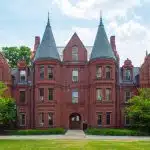
Swarthmore vs. Haverford is one of those classic liberal arts matchups that sparks plenty of friendly debate. Both schools are known for their rigorous academics, close-knit communities, and Quaker heritage that emphasizes collaboration and ethical engagement.
In this blog, though, you’ll learn how Swarthmore and Haverford compare in acceptance rates, costs, financial aid, academics, and campus life. We’ll also look at their rankings, traditions, and community values to give you practical takeaways. By the end, you’ll see what sets these two colleges apart and which might be the best fit for you.
- Swarthmore vs Haverford: Acceptance Rates
- Swarthmore vs Haverford: Rankings
- Swarthmore vs Haverford: Academics
- Swarthmore vs Haverford: Campus Life
- Swarthmore vs Haverford: Cost of Attendance
- Swarthmore vs Haverford: Financial Aid and Scholarships
- Final Verdict: Swarthmore vs Haverford
- Frequently Asked Questions
- Takeaways
Swarthmore vs Haverford: Acceptance Rates
If you’re weighing Swarthmore College against Haverford College, a good first step is to compare their acceptance rates. Looking at these figures can help you understand just how selective each school is and set realistic expectations as you plan your applications.
Here’s a look at each school’s acceptance rate for the Class of 2029:
| School | Total Applications | Total Accepted | Acceptance Rate |
| Swarthmore | 12,995 | 965 | 7.4% |
| Haverford | 6,730 | 893 | 13.3% |
Swarthmore comes out as more selective than Haverford. For the Class of 2029, Swarthmore received 12,995 applications and admitted 965 students, giving it an acceptance rate of 7.4%. Haverford, on the other hand, had a smaller applicant pool of 6,730 but admitted 893 students, resulting in a 13.3% acceptance rate. Both schools are highly competitive, but these numbers show that gaining admission to Swarthmore is especially challenging compared to Haverford.
Looking at the past three years, both Swarthmore and Haverford have stayed highly selective in their admissions:
- Swarthmore’s acceptance rate rate was 6.9% for the Class of 2027, rose slightly to 7.5% for the Class of 2028, and now stands at 7.4% for the Class of 2029.
- Haverford’s acceptance rate was 12.9% for the Class of 2027, 12.4% for the Class of 2028, and increased to 13.3% for the Class of 2029.
Swarthmore continues to rank among the most selective liberal arts colleges, with acceptance rates of 6.9% for the Class of 2027, 7.5% for the Class of 2028, and 7.4% for the Class of 2029. This narrow range reflects both steady demand and consistently high admissions standards.
Haverford, meanwhile, has maintained a comparatively higher acceptance rate, admitting 12.9% of applicants for the Class of 2027 and 12.4% for the Class of 2028, and rising slightly to 13.3% for the Class of 2029. This places Haverford in the 12–13% range, offering applicants somewhat better odds of admission while still remaining selective.
If you’re aiming for Swarthmore, you’ll face one of the most competitive applicant pools in the liberal arts world, while Haverford, though still highly selective, offers slightly better odds without compromising academic intensity. Success at either school comes down to showing curiosity, strong community values, and the ability to thrive in Swarthmore’s intense environment or Haverford’s close-knit culture.
Swarthmore vs Haverford: Rankings
Rankings aren’t the whole story, but they provide a helpful snapshot when comparing two elite liberal arts colleges like Swarthmore and Haverford. These rankings weigh factors such as academic quality, faculty resources, student outcomes, and institutional reputation, offering a sense of how each school is viewed nationally and within the liberal arts landscape.
Here’s a look at how Swarthmore and Haverford compare across some of the most recognized ranking systems:
| Ranking Source | Swarthmore | Haverford |
| U.S. News (National) | #3 | #24 |
| Times Higher Ed (World) | Unplaced | Unplaced |
| QS World University Rankings | #851-900 | Unplaced |
Here’s what the rankings say about Swarthmore and Haverford:
U.S. News (National Rankings)
- Swarthmore: #3
- Haverford: #24
In the U.S. News national liberal arts rankings, Swarthmore sits near the very top at #3, while Haverford comes in at #24. This reflects Swarthmore’s strength in academic rigor, resources, and outcomes. Both schools are highly respected, but Swarthmore carries greater national prestige.
Takeaway: If national recognition is your priority, Swarthmore holds the stronger position.
Times Higher Education (World Rankings)
- Swarthmore: Unplaced
- Haverford: Unplaced
Neither Swarthmore nor Haverford appears in the Times Higher Education world rankings. Since these rankings emphasize global research output and scale, larger universities tend to dominate, while smaller liberal arts colleges often go unranked.
Takeaway: For global research reputation, neither school is a major contender, which is typical for liberal arts colleges.
QS World University Rankings
- Swarthmore: #851–900
- Haverford: Unplaced
Swarthmore makes it into the QS rankings, though in the lower tier at #851–900, while Haverford does not appear. This reflects the limited global visibility of smaller liberal arts colleges compared to larger research universities.
Takeaway: Swarthmore edges ahead here with at least some international presence, but rankings alone don’t fully capture the value of a liberal arts education.
Swarthmore vs Haverford: Academics
Both Swarthmore and Haverford deliver exceptional liberal arts academics, but the learning experience at each takes a different shape.
Swarthmore academics
At Swarthmore, the academic experience is deeply rooted in a rigorous liberal arts tradition combined with opportunities for specialized study. Swarthmore is also distinctive for offering an ABET-accredited engineering program—rare among liberal arts colleges—allowing students to merge technical study with the flexibility of a liberal arts education.
Some of Swarthmore’s most popular majors include:
- Social Sciences
- Computer and Information Sciences
- Biological and Biomedical Sciences
- Mathematics and Statistics
- Engineering
The student-to-faculty ratio is 8:1, ensuring that most classes are small and discussion-based, with close faculty mentorship at the heart of the experience. Independent research, cross-disciplinary collaboration, and honors seminars are central to Swarthmore’s academics, preparing students not only for graduate study and professional careers but also for leadership and meaningful engagement in a global society.

Haverford academics
At Haverford, the academic framework mixes intensity and flexibility in a liberal arts model grounded in trust and student responsibility. All students must earn 32 credits to graduate, which include a major (about 12 credits plus a thesis), first-year writing, a language requirement, quantitative or symbolic reasoning, and a “domains of knowledge” distribution.
Students are encouraged to explore electives and study outside their major, and must earn at least 19 credits outside the major department. This structure gives you enough guidance to build a well-rounded foundation, with ample room to follow your interests.
At Haverford, students benefit from the Bi-Co relationship with Bryn Mawr College, which creates a shared academic and social community between the two schools. This partnership allows you to take classes at either campus without extra cost or complication, expanding your course options and faculty connections.
Beyond the Bi-Co, Haverford students also have access to cross-registration at Swarthmore College and the University of Pennsylvania. You get the chance to explore specialized courses, unique programs, or research opportunities at larger institutions while still enjoying Haverford’s intimate liberal arts environment.
Some of Haverford’s most popular majors include:
- Social Sciences
- Biological and Biomedical Sciences
- Mathematics and Statistics
- Physical Sciences
- Computer and Information Sciences
The student-to-faculty ratio is 9:1, and nearly all classes are small, fostering close relationships between students and professors. With an emphasis on independent research, critical thinking, and interdisciplinary work, Haverford’s academics are designed to prepare students not only for graduate study and professional careers but also for a lifetime of engaged learning and ethical leadership.
Still deciding between Swarthmore and Haverford? Our Academic & Extracurricular Profile Evaluation + Roadmap can help you turn that uncertainty into a clear strategy for your high school years.
In a focused 90–120 minute session with you and your family, we’ll map out a personalized four-year blueprint—covering courses, testing, extracurriculars, summer opportunities, and application strategy—so you’ll know exactly what steps to take and when.
You’ll leave with a detailed, semester-by-semester plan to strengthen your profile and position yourself as a competitive applicant for highly selective schools like Swarthmore or Haverford.
Swarthmore vs Haverford: Campus Life
Both Swarthmore and Haverford offer vibrant student experiences, but the feel of campus life differs in meaningful ways. Here’s how they compare:
Swarthmore campus life
At Swarthmore, your campus is a blend of historic charm and natural beauty. Located just outside Philadelphia, the 425-acre arboretum campus offers tree-lined walkways, gardens, and green spaces that create a serene environment for both study and community life. Most students live on campus all four years, making residential life central to the Swarthmore experience.

Here’s a glimpse of student life at Swarthmore:
- With over 100 student-led organizations spanning politics, the arts, identity groups, service, and academic interests, there are countless ways to get involved—or to start a new club of your own.
- The Matchbox, Swarthmore’s state-of-the-art fitness and wellness center, provides cardio and weight equipment, rock climbing walls, and space for yoga, dance, and group fitness classes.
- Club and intramural sports are popular, ranging from ultimate frisbee and soccer to rugby and volleyball, while varsity athletics bring energy and spirit to the community.
- Dining services focus on sustainability and variety, offering flexible meal plans and spaces that encourage connection, like Sharples Dining Hall and smaller campus cafés.
- Beyond campus, Philadelphia is just a short train ride away, giving students easy access to museums, theaters, restaurants, and internships while still enjoying the close-knit feel of a suburban campus.
At Swarthmore, the balance of intense academics, active student organizations, and a supportive residential community shapes a campus life that is both engaging and enriching.
Haverford campus life
At Haverford, the campus experience is defined by a strong sense of community and the values of the Honor Code, which extend into every aspect of student life. Located on a 200-acre suburban campus just outside Philadelphia, Haverford blends open green spaces, historic architecture, and modern facilities to create a welcoming environment for both study and connection.
Here’s a glimpse of student life at Haverford:
- With more than 145 student-run clubs and organizations—ranging from cultural and political groups to the arts, music, service, and outdoor activities—students have endless opportunities to get involved or create something new.
- Athletic and recreation facilities include the Douglas B. Gardner Integrated Athletic Center, which houses fitness spaces, courts, and group exercise options. Club and intramural sports are active on campus, while varsity athletics add another layer of community engagement.
- Dining is centered around the Dining Center (DC) and the Coop, with meal plans designed for flexibility and community gathering. Sustainability and student input play a large role in dining services.
- Traditions such as Pinwheel Day, Customs (the first-year orientation program), and community events help weave together the academic and social fabric of campus life.
- Just like at Swarthmore, Philadelphia is easily accessible by train, giving Haverford students opportunities for internships, cultural experiences, and urban exploration while returning to the intimacy of a close-knit residential campus.
At Haverford, the combination of collaborative academics, community-driven traditions, and a strong residential culture makes campus life both meaningful and deeply connected.
Swarthmore vs Haverford: Cost of Attendance
Choosing between Swarthmore and Haverford means weighing not only academics and campus life but also the financial investment. College is one of the biggest commitments you and your family will make, so understanding the full cost of attendance—including tuition, housing, meals, and fees—is essential when comparing these two selective liberal arts colleges.
Here’s what one year at each school typically looks like in terms of cost:
| School | Total Cost of Attendance |
| Swarthmore | $90,692 |
| Haverford | $94,297 |
Here’s the breakdown of Swarthmore’s total cost of $90,692 for one year:
- $68,766 for tuition and books
- $11,076 for housing
- $10,390 for food
- $460 for student activities fee
Here’s the breakdown of Haverford’s total cost of $94,297 for one year:
- $73,030 for tuition
- $538 for student government fee
- $12,142 for housing
- $8,284 for food
- $303 orientation fee (first-year students only)
- $1,290 for books and supplies
- $1,864 for personal expenses
- $70 for student loan fees
The figures show that Haverford is slightly more expensive than Swarthmore. Swarthmore’s estimated cost of attendance is about $90,692, while Haverford’s comes in at $94,297.
That’s a difference of roughly $3,600 per year, which adds up to more than $14,000 over four years. While both schools represent a significant investment, families weighing cost alongside academics and campus culture may see Swarthmore as the marginally more affordable option.
Swarthmore vs Haverford: Financial Aid and Scholarships
College is a major financial commitment, and both Swarthmore and Haverford recognize that many students will need support to make it affordable. Each school provides a mix of financial aid options—including need-based grants, scholarships, work-study opportunities, and loans.
Understanding how Swarthmore and Haverford structure their aid can help you see the level of support available and get a clearer sense of how manageable the cost of attending either school could be for you and your family.
Swarthmore financial aid and scholarships
At Swarthmore, affordability is a central commitment. In 2023–24, 52% of Swarthmore students received financial aid from a $56 million budget. The college also meets 100% of determined financial need for all eligible admitted students, making it one of the most supportive liberal arts colleges when it comes to affordability.

Here’s how financial aid typically works at Swarthmore:
- Grants and scholarships are need-based, awarded directly by the college, and do not need to be repaid. Swarthmore does not offer merit scholarships, focusing instead on meeting 100% of demonstrated need.
- Federal loans are available for students who wish to use them, but Swarthmore’s no-loan policy in aid packages ensures that students are not required to borrow as part of their standard financial aid.
- Work-study opportunities provide students with the ability to earn money through on-campus or community-based jobs.
- Outside scholarships can be applied to reduce the cost of attendance, and Swarthmore coordinates them with its own aid packages.
To apply for financial aid, students must submit the FAFSA and the CSS Profile, which the college uses to determine each family’s financial need.
Haverford financial aid and scholarships
With a $42.8 million annual aid budget, Haverford meets 100% of demonstrated financial need for all admitted first-year and transfer students, regardless of citizenship. Haverford also offers a $2 million Student Loan Debt Relief Fund to support graduates managing loan expectations, particularly those in low-paying or transitional jobs, making its commitment to accessibility one of the strongest in the nation.
Here’s how financial aid typically works at Haverford:
- To reduce debt, students from families earning below $60,000 per year have no loan expectation, while those above that threshold see only modest loans ranging from $1,500 to $3,000 annually.
- Grants and scholarships are entirely need-based and awarded directly by the college. These funds do not need to be repaid, and Haverford does not offer merit-based scholarships.
- Loans are not included in standard aid packages, reflecting Haverford’s no-loan policy. Students can still choose to borrow if they wish, but the college’s commitment is to minimize student debt.
- Work-study opportunities allow students to earn money through campus jobs or approved community positions.
- Outside scholarships that students secure independently can be applied toward their overall aid package, helping further reduce costs.
To apply for aid, families must complete both the FAFSA and the CSS Profile, which Haverford uses to calculate financial need.
Final Verdict: Swarthmore vs Haverford
Choosing between Swarthmore and Haverford comes down to the academic culture and campus environment where you’ll thrive. Both are highly selective liberal arts colleges near Philadelphia, but each offers a distinctive experience.
Choose Swarthmore if you want to:
- Be part of an academically intense environment, known for rigorous coursework and a strong culture of intellectual challenge.
- Explore a wider range of programs, including an ABET-accredited engineering major that’s rare among liberal arts colleges.
- Have access to a larger campus with expansive arboretum grounds, blending natural beauty with historic charm.
- Join a community active in social and political engagement, where activism and public service are integral to student life.
- Benefit from a slightly higher national ranking and broader name recognition among liberal arts colleges.
Choose Haverford if you want to:
- Experience a smaller, close-knit community with strong connections both in and out of the classroom.
- Take advantage of the Bi-Co relationship with Bryn Mawr and cross-registration with Swarthmore and the University of Pennsylvania.
- Be part of traditions and community-driven activities that strengthen campus bonds.
- Live and learn in an intimate suburban setting while still being a short train ride from Philadelphia.
Both colleges are highly respected and attract motivated, thoughtful students. Swarthmore is known for its intensity and broader visibility, while Haverford offers a deeply personal, trust-centered experience. Ultimately, the best choice depends on whether you prefer Swarthmore’s energetic, high-pressure academic atmosphere or Haverford’s collaborative, community-driven approach.

Frequently Asked Questions
1. Which is harder to get into, Swarthmore or Haverford?
Swarthmore is harder to get into than Haverford. For the Class of 2029, Swarthmore admitted about 7.4% of applicants, while Haverford admitted around 13.3%. Both are highly selective liberal arts colleges, but Swarthmore’s consistently lower acceptance rate makes it the more competitive option.
2. Which is more affordable, Swarthmore or Haverford?
Swarthmore is slightly more affordable than Haverford based on recent cost of attendance figures. For 2024–2025, Swarthmore’s estimated annual cost is about $90,692, while Haverford’s is around $94,297. Both schools meet 100% of demonstrated financial need with no-loan aid policies, meaning affordability will largely depend on your individual family situation rather than just sticker price.
3. Which is better overall, Swarthmore or Haverford?
Neither school is inherently “better.” It depends on the experience you want. Swarthmore offers a rigorous academic environment, broader recognition, and unique options like an ABET-accredited engineering program in a liberal arts setting. Haverford provides a smaller, collaborative community with rich Bi-Co/Tri-Co opportunities and a more personal feel. Both meet 100% of need with no loans, so the choice is between Swarthmore’s intensity and Haverford’s intimacy.
Takeaways
- Swarthmore is more selective, admitting about 7.4% of applicants compared to Haverford’s 13.3%.
- Swarthmore is slightly more affordable, with an estimated annual cost of about $90,692, compared to Haverford’s $94,297. Both, however, meet 100% of demonstrated financial need with no-loan aid policies.
- Choose Swarthmore if you want an academically intense environment, a broader range of programs (including engineering), and a campus culture known for activism and intellectual energy.
- Choose Haverford if you prefer a smaller, close-knit community shaped by trust, collaboration, and, with strong cross-registration options through the Bi-Co and Tri-Co consortium.
- Consider working with a college admissions expert who can help you highlight your strengths and align your application with what each school values most.