

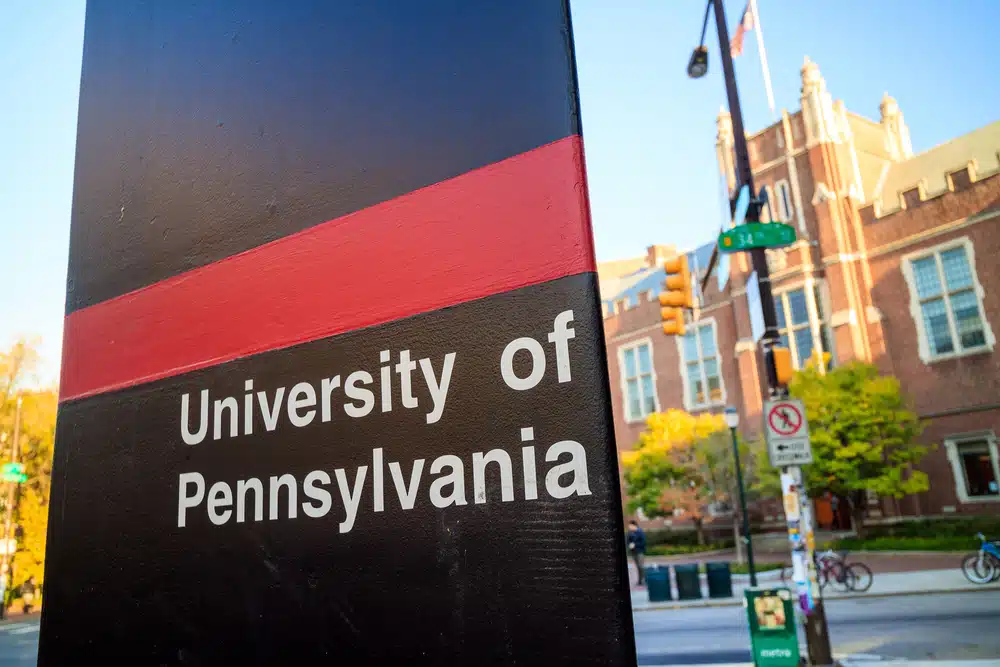
The University of Pennsylvania (UPenn) and Cornell University are two renowned Ivy League institutions. But while UPenn emphasizes professionally oriented, interdisciplinary study within an urban campus and centralized financial aid, Cornell offers broad strengths across its colleges, a residential rural setting, and a mix of endowed and state-supported financial aid models.
In this article, we’ll discuss the differences between UPenn and Cornell—namely selectivity, rankings, academics, campus life, cost of attendance, and financial aid—to help you assess which school fits you better.
- UPenn vs Cornell: Acceptance Rates
- UPenn vs Cornell: Rankings
- UPenn vs Cornell: Academics
- UPenn vs Cornell: Campus Life
- UPenn vs Cornell: Cost of Attendance
- UPenn vs Cornell: Financial Aid and Scholarships
- Final Verdict: UPenn or Cornell?
- Frequently Asked Questions
- Takeaways
UPenn vs Cornell: Acceptance Rates
As Ivy League schools, both UPenn and Cornell are very selective. Here’s a look at their admissions data for the Class of 2029:
|
School |
Total Applications | Total Accepted |
Acceptance Rate |
|
UPenn |
72,544 | 3,530 | 4.9% |
| Cornell | 72,523 | 6,077 |
8.4% |
Let’s take a look at how each school’s acceptance rates have shifted over the past three years:
- UPenn’s acceptance rate has steadily declined. It was at 6% for the Class of 2026, then took a small step down to 5.9% for the Class of 2027, lowered a bit further to 5.4% for the Class of 2028, and took another step down to 4.9% for the Class of 2029.
- Cornell’s acceptance rate has interestingly increased in the past few years. It was 7.3% for the Class of 2026, 7.9% for the Class of 2027, and 8.4% for both the Class of 2028 and 2029.
At first glance, UPenn seems more competitive with a lower acceptance rate that’s been declining through the years. However, if we look at the bigger picture, Cornell is still very competitive. Cornell is a larger school than UPenn, so it offers more undergraduate seats, allowing it to admit more students than UPenn.
UPenn vs Cornell: Rankings
Rankings are also one factor to look at when comparing two schools. However, while rankings don’t tell the whole story, they give you an idea of a school’s academic reputation and global standing.
Here’s how UPenn and Cornell compare across major ranking systems:
|
Ranking Source |
UPenn |
Cornell |
|
U.S. News (National Universities) |
#7 | #12 |
| Times Higher Education | #14 | |
|
QS World University Rankings |
#15 |
We’ll examine each ranking more closely in the following sections below.
U.S. News National Universities Rankings
- UPenn: #7
- Cornell: #12
Cornell falls just outside the top 10 in the US News National University Rankings, but it’s still definitely a top-tier school. The difference between UPenn and Cornell is driven by metrics such as student-faculty ratio, graduation rates, and alumni giving, where UPenn has an edge.
For instance, UPenn has a student-faculty ratio of 8:1, which is slightly better than Cornell’s 9:1. However, given Cornell’s larger student population, its student-faculty ratio is impressively low. Both schools have very similar 4-year graduation rates, which are 86% for UPenn and 87% for Cornell. Both schools are tied with a 98% average first-year student retention rate. For the median salary 6 years after graduation, UPenn reports $90,555, while Cornell reports $87,830.
Times Higher Education World University Rankings
- UPenn: #14
- Cornell: #18
The Times Higher Education focuses on research output, citations, and international outlook, and both UPenn and Cornell rank in the top 20. UPenn’s higher ranking suggests it scores higher in areas like research impact and teaching environment.
UPenn’s extensive research enterprise and higher citations per faculty give it a boost. The ranking also suggests that UPenn is typically viewed as more globally prestigious, but both are firmly in the world’s elite universities cluster. Their international profiles are strong, with each attracting scholars and students from around the globe and producing influential research.
QS World University Rankings
- UPenn: #15
- Cornell: #16
In the QS World University Rankings, UPenn and Cornell are very closely ranked. This means both schools have excellent worldwide academic reputations and strong employer perceptions.
The slight difference in ranking can depend on a few factors. For instance, UPenn’s name recognition in business and finance might boost its employer score, while Cornell’s broad academic excellence (especially in engineering and computer science) means it’s a bit more scattered than UPenn.
Regardless, the bottom line is still that, on QS metrics like global visibility and influence, UPenn and Cornell are virtually on par. Employers and academics worldwide regard graduates from both as coming from premier institutions.
UPenn vs Cornell: Academics
As Ivy League schools, you can expect rigorous, world-class academics from UPenn and Cornell, with differences in the structure of your education.
Before taking a look at the differences in each school’s academics, let’s first take a look at the academic profiles of their admitted students:
|
Academic Metric |
UPenn |
Cornell |
|
Average GPA |
3.9 | Not reported |
| Average SAT Score | 1510–1570 | |
|
Average ACT Score |
34–36 |
33–35 |
Cornell doesn’t report an average GPA of accepted students, but strong applicants tend to also have a 3.9 unweighted GPA. However, we can see in the average SAT and ACT scores that admitted applicants at both schools have very similar scores.
UPenn academics
UPenn academics offer a highly interdisciplinary curriculum that follows the “One University Policy,” which allows cross-registration across its schools. UPenn also offers several interdisciplinary programs, such as the Digital Media Design Program and the Huntsman Program in International Studies and Business.
Some of UPenn’s most popular majors are:
- Business and Marketing
- Biological and Life Sciences
- Social Sciences
- Computer and Information Sciences
- Engineering
UPenn’s location in Philadelphia enables community-engaged learning, and the school is known for its strong civic engagement tradition. For instance, the Netter Center for Community Partnerships offers “Academically Based Community Service” (ABCS) courses, where students can earn credit while working with West Philadelphia community partners to solve real-world problems.
Overall, UPenn’s academics offer a combination of liberal arts, pre-professional training, and community service experience in an interdisciplinary environment.
Cornell academics
Cornell academics is broader and more decentralized than UPenn’s, thanks to its eight undergraduate colleges/schools. This gives the institution a very large academic portfolio of at least 80 programs.
An interesting part of Cornell is that it has statutory (public) colleges and endowed (private) colleges, although they all coexist under one institution. Some of its unique schools are the College of Agriculture and Life Sciences, Human Ecology, and its world-renowned Industrial and Labor Relations.
Some of Cornell’s most popular programs include:
- Computer and Information Sciences
- Business/Marketing
- Engineering
- Agriculture
- Biological and Life Sciences
While you apply to a specific school in Cornell rather than to Cornell as a whole, once you’re accepted, you often have flexibility to shape your academic path within that framework. Double majors and minors are common, though they’re typically within your college. It’s also possible to cross-register to other schools, though it might be trickier than at UPenn. However, similar to UPenn, Cornell also combines theoretical and hands-on learning.
Still deciding whether you prefer to explore UPenn’s highly interdisciplinary academic environment or focus on your chosen college at Cornell? Our Academic and Extracurricular Profile Evaluation & Roadmap can give you a clear plan for the academics and extracurriculars you should pursue to build a competitive application profile that aligns with either school.
UPenn vs Cornell: Campus Life
Outside of academics, it’s also important to be aware of what experience each school offers that allows you to connect with your peers and explore other interests. Here’s a quick look at UPenn’s and Cornell’s location and campus setting:
|
School |
Location |
Campus Setting |
|
UPenn |
Philadelphia, Pennsylvania | Urban |
| Cornell | Ithaca, New York |
Rural, self-contained campus |
As an urban school, UPenn offers the chance to explore a large, lively, and historic city. Meanwhile, Cornell has a quieter, rural college-town setting and a more contained campus environment.
Campus life at UPenn
Campus life at UPenn has an urban flair, with more off-campus excursions, a mix of campus traditions, and opportunities for city exploration.
Here are more aspects to watch for if you choose UPenn:
- UPenn is home to over 800 student clubs and organizations covering academics, culture, sports, arts, community service, and more, which means everyone tends to be very involved outside of class. You can watch out for the Mask and Wig (the nation’s oldest collegiate comedy troupe), the Penn Debate Society, and everything in between.
- UPenn is a Division I school (Ivy League conference) with a strong athletic tradition. Varsity sports include 33 teams, everything from football and basketball to more niche sports like fencing and squash. Beyond varsity sports, intramural and club sports are big for the general student body too.
- UPenn guarantees housing for freshmen and sophomores and has a well-developed College House system that creates on-campus dorm communities. Students who move off campus have nearby apartments in University City or Center City.
- UPenn students have access to many internships throughout the year, thanks to its location in Philadelphia, which is also relatively close to New York and Washington, D.C. Certain schools and programs (such as Wharton, Engineering, and the Huntsman Program) also offer specific professional resources.
- UPenn has tons of traditions that foster community spirit. For instance, Convocation is the ceremonial welcome for freshmen at the start of the year, and Hey Day is when UPenn juniors officially become seniors. Spring Fling is a huge two-day event with food trucks, games, student performances, and a concert with big-name artists.
Campus life at Cornell
Campus life at Cornell is relatively contained within the school’s grounds. You can expect a strong community spirit, rich traditions, and a balance of rigorous academics with opportunities to relax and celebrate together.
Here are five aspects of student life at Cornell:
- Cornell offers an enormous selection of student organizations, with more than 1,000 clubs and teams active on campus. Whether you want a serious academic society like the Society of Women Engineers or a more fun and niche club like the Quidditch team, you’ll find something that will interest you at Cornell.
- Cornell is also Division I (Ivy League) and fields 37 varsity teams, and ice hockey is by far the most celebrated sport at Cornell. There’s even a tradition where Cornell fans throw fish onto the ice when playing Harvard. Apart from varsity sports, intramural and club sports thrive because there’s space and facilities for them.
- All freshmen live on North Campus, and many sophomores move to West Campus housing or stay on North Campus in upperclass dorms. Then, some juniors and most seniors often choose to live off-campus in Collegetown, the neighborhood adjacent to campus.
- Cornell is a large university and has a robust system for career development, similar in some ways to Penn’s but a bit more decentralized by college. Because Ithaca is quite remote, much recruiting is done through virtual interviews or by having companies fly to campus for specific career days. Cornell hosts some of the largest career fairs in the Northeast, including University-wide Career Fair Days each fall and spring.
- Cornell also has tons of traditions. For instance, on Dragon Day every March, first-year Architecture students design, build, and parade a giant dragon across campus, from the Architecture school through campus, often met by a symbolic “phoenix” created by Engineering students in friendly rivalry.
UPenn vs Cornell: Cost of Attendance
Cost of attendance is a huge factor to consider when comparing two private universities. Below are the estimated costs for the 2025–2026 academic year at UPenn and Cornell:
|
School |
Cost of Attendance |
|
UPenn |
$78,730–$95,612 |
| Cornell |
UPenn’s and Cornell’s estimated costs of attendance are quite similar. At the lower end, UPenn is more expensive by about $5,718, totaling $22,872 over four years, before financial aid. Meanwhile, at the upper end, Cornell is $656 more expensive, which adds up to $2,624 over four years, before financial aid.
UPenn cost of attendance
UPenn’s cost of attendance mostly depends on where you’ll live. The estimated total is $92,288 for students living on campus, $91,474 for students living off campus, and $76,076 for students living with family.
For all students, tuition is $63,204, mandatory fees are $8,032, books and supplies are estimated to be $1,412, transportation is $1,080, and personal expenses are $2,008.
The main differences among students lie in housing and food. UPenn estimates that on-campus students will spend $13,132 for housing and $6,744 for food, while off-campus students will spend $12,978 for housing and $5,988 for food. Students who live at home have no housing charge and a reduced food estimate of $2,318 per year.
Your estimated cost of attendance may still increase depending on factors like required health insurance.
Cornell cost of attendance
Cornell groups its cost of attendance by college type and residency status. Endowed colleges and New York State contract colleges charge the same estimated total cost for out-of-state students, while New York State contract colleges offer a lower rate for in-state students.
The difference between these two estimates comes entirely from tuition. Tuition is $71,266 for students in endowed colleges and for out-of-state students in contract colleges, compared with $48,010 for New York State residents enrolled in contract colleges.
All other billed costs are identical across Cornell colleges: $13,246 for housing, $7,328 for food, and $1,004 in mandatory fees.
Estimated non-billed expenses are also the same for all students. Cornell budgets $1,216 for books and course materials and $2,208 for personal expenses, while transportation costs vary by individual.
UPenn vs Cornell: Financial Aid and Scholarships
Both UPenn and Cornell are committed to making their education affordable for admitted students through generous need-based financial aid, and neither offers academic merit scholarships. However, they differ in some nuances of aid policies, such as loan expectations and aid for international students.
Financial aid and scholarships at UPenn
UPenn’s financial aid program practices need-blind admissions for all U.S. citizens, permanent residents, and eligible non-citizens. The school is need-aware for international applicants, but once admitted, it meets their full need as well.
UPenn has a no-loan policy for undergraduates, so your aid package will be comprised of grants and work-study job opportunities. Students can still choose to take loans on their own if they want to supplement, but Penn doesn’t expect or require borrowing as part of the need-based package.
The institution has many financial aid initiatives that make a UPenn education more affordable for many families. For instance, the Quaker Commitment guarantees that families who earn $75,000 or less don’t pay for tuition, fees, housing, or dining, and families earning up to $200,000 with typical assets receive full tuition or possibly more. For students whose financial aid covers full need, UPenn also provides a one-time laptop grant to help buy a computer.

Financial aid and scholarships at Cornell
Cornell’s financial aid program is need-blind for admissions for US students and permanent residents. Similar to UPenn, Cornell is also need-aware for international applicants but pledges to meet their full need once admitted. However, Cornell sometimes includes loans in international student aid packages.
Cornell has a nuanced no-loan initiative, where families with incomes below a certain threshold have no student loans in their aid packages. Families in middle or upper-middle income brackets may receive a loan component. However, you can also expect grants and work-study.
The school expects a summer earnings contribution from students—an amount you’re expected to earn each summer to put toward your costs. This could be waived or reduced for the lowest-income who might need to do unpaid internships.
Final Verdict: UPenn or Cornell?
How do you choose between two top-tier Ivy League schools? You look at fit and the kind of experience you want to have during your undergraduate years.
Choose UPenn if you want a campus integrated into a major city, where you can easily engage with rich culture, food, arts, and nightlife. The school is also best if you want a highly interdisciplinary academic environment that allows you to easily explore interests across its different schools. These factors give UPenn a “work hard, play hard” campus vibe that lets you experience the best of world-class academics and a lively environment. UPenn has a strong financial aid program with a no-loan policy.
Choose Cornell if you want a classic college campus with beautiful natural scenery that makes it especially great for outdoor enthusiasts. Cornell also offers unique majors and schools that allow students to pursue an unconventional academic path or a strong focus in a niche field like Fiber Science and Animal Science. Social life is centered around campus events, house parties, and campus traditions. The school may offer loans, but it’s also more affordable for New York State residents.
Frequently Asked Questions
1. Is UPenn harder to get into than Cornell?
Numerically, yes. However, that’s because UPenn has fewer undergraduate seats than Cornell, so it accepts fewer students. Cornell is still a highly competitive school that accepts fewer than 10% of its more than 70,000 applicants.
2. Does UPenn or Cornell offer better financial aid?
Both provide excellent need-based aid covering 100% of demonstrated need, but UPenn’s aid is slightly more generous on average thanks to its no-loan policy and strong programs like the Quaker Commitment.
3. How should I decide between UPenn and Cornell if I’m admitted to both?
Consider your fit and priorities. Do you prefer UPenn’s urban campus with city life and interdisciplinary, pre-professional culture? Or, do you prefer Cornell’s campus-town in nature, breadth of specialized programs, and classic college atmosphere?
Takeaways
- For the Class of 2029, Cornell admitted 8.4% of applicants, while UPenn accepted 4.9%, making UPenn numerically more selective.
- Major ranking systems favor UPenn over Cornell. UPenn ranks #7 in U.S. News, #14 in Times Higher Education, and #15 in QS, while Cornell ranks #12, #18, and #16, respectively.
- UPenn academics offer the chance to easily cross-register across its schools for an interdisciplinary education. Cornell also allows students to explore its different schools, but it’s more structured than UPenn.
- UPenn offers an urban, fast-paced campus interwoven with Philadelphia’s opportunities, ideal for students seeking city energy and pre-professional networking. Cornell provides a beautiful, self-contained college town experience with a community-centric spirit.
- Cost of attendance is quite similar at both schools: UPenn estimates $78,730–$95,612, while Cornell estimates $73,012–$96,268.
- Still considering which school is better for you? Working with a college admissions expert can help you evaluate fit, compare costs and financial aid outcomes, and build a competitive profile for either school.










