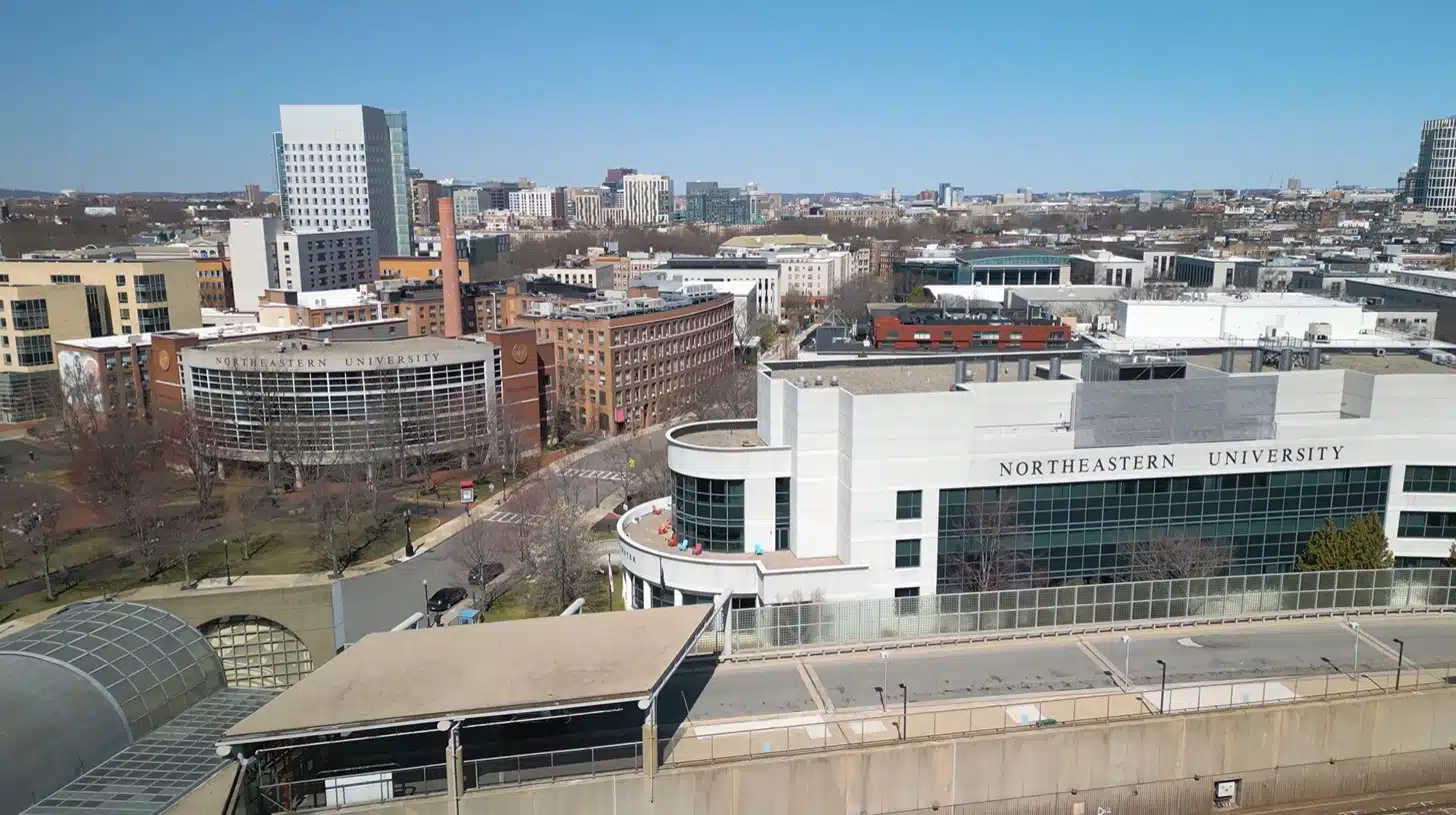
Northeastern University is a global research university founded in 1898, establishing its flagship campus at 360 Huntington Avenue in Boston’s Fenway-Kenmore and Roxbury neighborhoods.
This 73-acre urban campus places students in one of America’s most intellectually vibrant cities, just steps from the Museum of Fine Arts and Symphony Hall. What began as an evening school for working students has grown into one of the most selective universities in the United States.
This guide walks prospective students through everything they need to know about the Northeastern University campus: what it looks like, what makes it distinctive, how to reach it, and what life in the surrounding area is truly like.
- Northeastern University Campus Location
- Getting to Northeastern University
- Living Near Northeastern University
- Why You Should Visit Northeastern University Campus
- Frequently Asked Questions
- Takeaways
Northeastern University Campus Location
The Northeastern University Boston campus occupies 73 acres in the heart of Boston, situated between the Fenway-Kenmore and Roxbury neighborhoods. The address, 360 Huntington Avenue, places the university directly on the “Avenue of the Arts,” a corridor that runs past Symphony Hall, the Museum of Fine Arts, and the Isabella Stewart Gardner Museum.
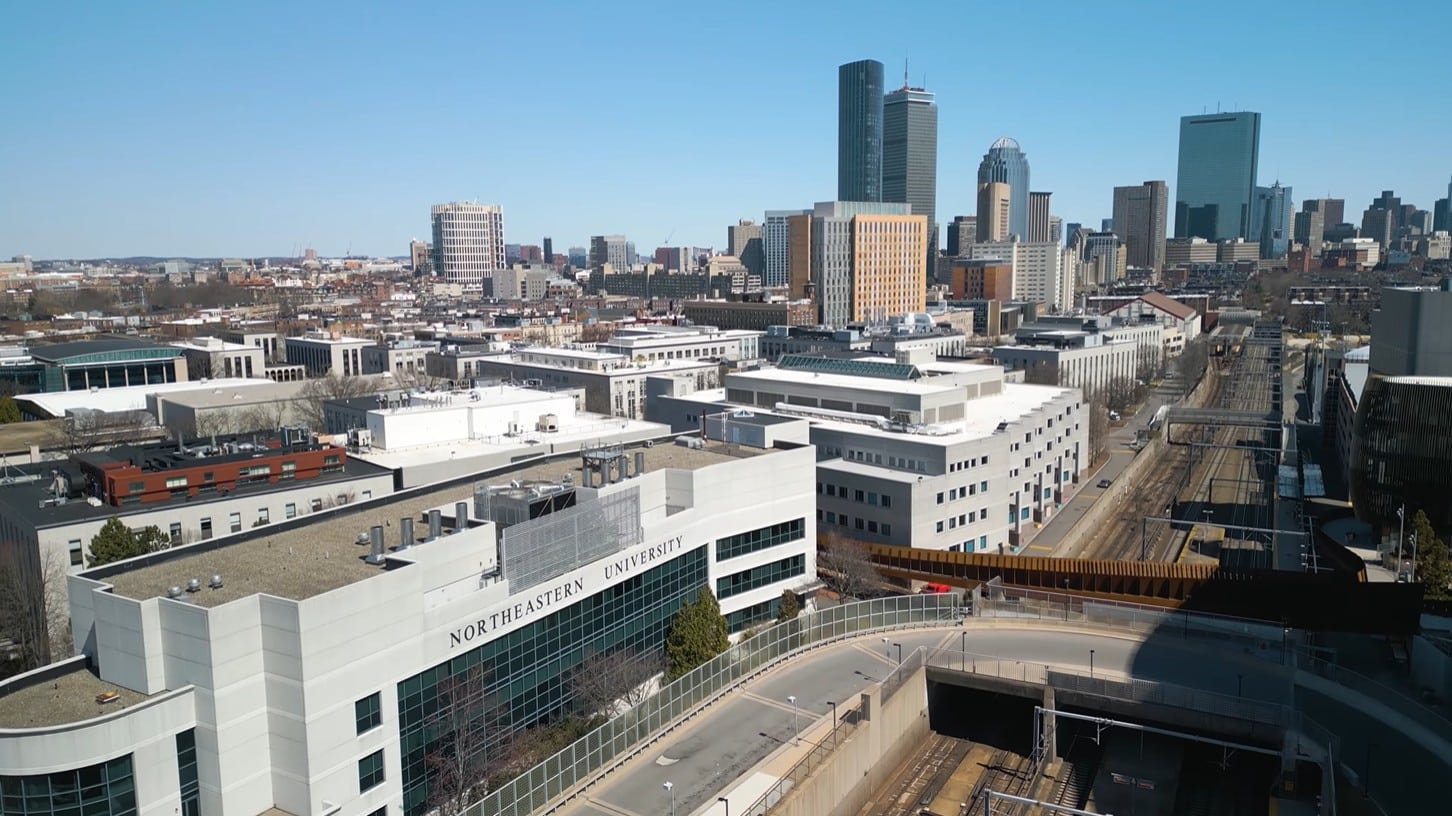
The campus is frequently described as a “73-acre urban oasis,” and the university has officially designated the entire Boston campus as an arboretum, meaning its tree-lined pathways and green spaces are cultivated with the same intentionality as its academic facilities. With the equivalent of more than 55 NFL football fields of land, the campus manages to feel expansive and serene despite sitting in one of the most densely populated urban environments in the United States.
Architecturally, Northeastern blends historic brick buildings with striking contemporary structures. Richards Hall, the first building to appear on the front quadrangle when it opened in 1938, set the campus signature in white brick with neoclassical symmetry, a design language that shaped subsequent construction for decades.
Newer additions like the Interdisciplinary Science and Engineering Complex (ISEC) reflect the university’s forward-looking research identity, with its award-winning contemporary facade and light-filled interiors. The result is a campus that feels both rooted in history and oriented toward the future.
The campus extends its presence into the surrounding community through revitalized spaces like William E. Carter Playground and the Columbus Avenue corridor, where new residential and research developments continue to deepen Northeastern’s ties to its Boston neighbors.
Main campus landmarks
The Northeastern University campus is anchored by a set of buildings and spaces that define its academic character and daily student life.
The Interdisciplinary Science and Engineering Complex (ISEC) is the crown jewel of the modern campus. The 234,000-square-foot, six-story facility won the 2018 Harleston Parker Medal, recognizing it as the most beautiful building in the Boston metropolitan area.
Designed by Payette, ISEC features a dramatic spiral staircase, glass-walled laboratories, a soaring atrium, and two distinct facades: curved bronze-coated aluminum fins on the west and gray ribbed metal panels on the east. LEED Gold certified, it saves 75% more energy than a typical research lab, supporting work in cybersecurity, robotics, coastal sustainability, and drug delivery.
EXP sits adjacent to ISEC, extending the university’s research infrastructure with eight floors of cross-disciplinary labs and maker spaces.
Snell Library is the academic hub of campus, open 24/7 and receiving up to 300,000 visits per month at peak. It offers media creation studios, 3D printing, audio/visual recording, and reservable study rooms.
Curry Student Center is the social heart of campus, housing the bookstore, food court, Indoor Quad, and the Center for Student Involvement, which coordinates at least 400 student organizations and events like Fall Fest and Homecoming Week. The adjacent Reclining Figure bronze sculpture was created by Blake Edwards, director of The Pink Panther.
Marino Recreation Center offers three floors of gym equipment, basketball courts, an indoor track, rock climbing walls, swimming pools, a golf driving range, and 52 exercise stations with panoramic Boston skyline views.
Krentzman Quad, flanked by Dodge, Richards, and Ell halls, is the ceremonial heart of campus. Its brick ledge bearing the university seal is a beloved graduation photo spot, located on Huntington Avenue next to the Green Line’s Northeastern stop. Ell Hall and Blackman Auditorium anchor large-scale campus events and performances.
The Campus Tunnel Network is a 16,705-square-foot underground system connecting 11 buildings, with its primary entrance near Curry Student Center. An essential resource during Boston winters.
Richardson Plaza Clock Tower, built in 1985, is a four-faced central landmark near Kariotis Hall and the Co-op and Career Development office.
The Cy Young Statue marks the original pitcher’s mound of the Huntington Avenue Grounds, where Cy Young led the Boston Americans to victory in the 1903 World Series. Sculpted by Robert Shure, it stands as a testament to the university’s deep roots in Boston’s civic history.
Centennial Common is the central green gathering space, lined with bicentennial commemorative bricks, with Carter Field nearby for soccer, tennis, and recreation.
The campus Public Art Initiative adds further character, including Daniel Anguilu’s colorful pedestrian bridge mural inspired by One Hundred Years of Solitude and Cedric Douglas’s mural on the Behrakis Health Sciences Center on Leon Street.
Northeastern University’s other campuses and affiliated sites
Northeastern extends well beyond Boston. The university operates a network of 14 campuses across the United States, United Kingdom, and Canada, each designed to serve specific academic, research, or professional education needs.
Oakland, California (Mills College at Northeastern University) is the university’s most expansive satellite campus, covering 135 acres of wooded land that was formerly home to Mills College, a 170-year-old institution. Dominated by towering eucalyptus trees planted in the 1870s, the Oakland campus has a distinctly different feel from Boston: bucolic, serene, and rich with history.
Its landmark, El Campanil clock tower, designed by architect Julia Morgan and built using pioneering reinforced concrete techniques, survived the 1906 San Francisco earthquake intact. The campus features the Littlefield Concert Hall, a 500-seat Greek Theater, the Mills College Art Museum with over 12,000 works, a student-run farm, and a 2-mile hiking trail. The Oakland campus serves undergraduate students, houses the Mills Institute, and offers robust entrepreneurship programming.
London, England serves as Northeastern’s European hub, offering undergraduate and postgraduate degrees. One of its most distinctive features is a US/UK double degree program that allows students to earn credentials from both countries in four years. The London campus is also home to the university’s world-leading Network Science Institute.
Arlington, Virginia focuses on graduate education and research at the intersection of technology, national security, and policy. It also serves as a Washington, D.C.-area location for the Kostas Research Institute for Homeland Security.
Burlington, Massachusetts is the headquarters of the Kostas Research Institute for Homeland Security and a hub for national security and defense research. It also attracts science-based startups through flexible research and development partnerships. A university shuttle connects the Burlington and Boston campuses.
Portland, Maine houses the Roux Institute and the Institute for Experiential AI, with graduate programs and research in life sciences, artificial intelligence, and computational medicine.
Seattle, Washington offers graduate degrees and research aligned with the Pacific Northwest’s booming technology sector, along with undergraduate summer programs.
Silicon Valley, California provides graduate education in high-tech fields, with startup co-working spaces positioned in the heart of California’s innovation ecosystem.
Charlotte, North Carolina is an engine for professional education in the life and health sciences, home to Northeastern’s Center for Health Sciences.
Miami, Florida serves the rapidly evolving finance and technology economies of South Florida with graduate education, entrepreneurship programming, and industry partnerships.
Nahant, Massachusetts is home to the Coastal Sustainability Institute and is dedicated to research on coastal resilience and climate change.
Toronto, Canada prepares professionals for high-demand fields in North America’s third-largest technology market through experiential graduate education.
Vancouver, Canada supports graduate education aligned with British Columbia’s rapidly expanding startup and high-tech ecosystem, with active research partnerships with Microsoft, Mastercard, and Amazon.
Getting to Northeastern University
Reaching the Northeastern University Boston campus is straightforward from virtually any direction. The campus is embedded in one of the best-served public transit systems in the country, and multiple options exist for students and visitors arriving by air, rail, or road.
Public transportation options
The Massachusetts Bay Transportation Authority (MBTA), known locally as “the T,” provides the most practical and reliable way to reach the Northeastern University Boston campus.
The MBTA Green Line (E Branch) stops directly at the “Northeastern University” station on Huntington Avenue, right in front of the Marino Recreation Center. This stop places visitors at the main pedestrian entrance to campus within seconds of stepping off the train.
The MBTA Orange Line stops at Ruggles Station, which provides direct access to the center of campus and is also served by three commuter rail lines: the Franklin, Needham, and Providence/Stoughton lines. Ruggles is the more central transit hub for students moving between campus buildings and connecting to the rest of the city.
Multiple bus lines also serve the campus along Huntington Avenue and the surrounding streets.
For students managing co-op placements, internships, or regular city exploration, the MBTA’s connectivity means that downtown Boston, Back Bay, Cambridge, and the Airport are all accessible without a car. Northeastern participates in the MBTA’s semester pass program, and students receive an 11% discount on passes purchased through the Student Hub portal.
Boston Logan International Airport (BOS) is located approximately 30 to 40 minutes from the Northeastern University campus by transit or taxi.
Two transit options connect Logan to campus:
- Silver Line (SL1). A free rapid transit bus picks up curbside at each terminal and connects to South Station, where riders can transfer to the Orange Line or Commuter Rail directly to Ruggles Station.
- Logan Express Shuttle. Drops passengers in Back Bay, within walking distance of campus.
- Blue Line. Riders can take the MBTA Airport Station shuttle to the Blue Line, transfer to the Orange Line at State Street, and arrive at Ruggles Station. This option requires a standard fare.
- Taxi or rideshare. Typically a 30 to 40 minute ride depending on traffic.
Students traveling from Manchester-Boston Regional Airport in New Hampshire or T.F. Green Airport in Providence, Rhode Island can access bus services that connect both airports to Boston.
Getting there by car or other means
The campus address for driving navigation is 360 Huntington Avenue, Boston, MA 02115. Several parking garages serve the campus and its surrounding areas:
- Renaissance Park Garage (835 Columbus Avenue) features a pedestrian overpass directly connecting to Ruggles Station, making it the most convenient option for event attendees and visitors.
- Columbus Garage (795 Columbus Avenue) houses 19 EV charging ports and Zipcar vehicles.
- West Village Garage, Forsyth Lot, and Gainsborough Garage offer additional parking.
EV charging is available at all three Boston campus garages, with the first four hours free and a $2 per hour fee thereafter, capped at $10 per day. Real-time station availability can be checked at Chargepoint.com.
For students who prefer not to use transit or drive, BlueBikes, Boston’s bike-share system, has stations on and near campus. The university provides bike racks throughout campus and free bicycle registration through the Northeastern University Police Department (NUPD).
Zipcar vehicles are stationed at the Columbus Garage, Ryder Lot (66 Lenon Street), and Matthews Arena (9 Gainsborough Street). Northeastern students, alumni, faculty, and staff receive discounted memberships.
By Amtrak, travelers can arrive at South Station and transfer to the Orange Line or Commuter Rail to Ruggles, or arrive at Back Bay Station and take the Orange Line directly to Ruggles.
Living Near Northeastern University
Living near the Northeastern University Boston campus places students at the intersection of academic intensity and authentic Boston city life. The campus neighborhood combines green spaces, arts institutions, residential streets, and the energy of one of the most student-dense cities in the United States.
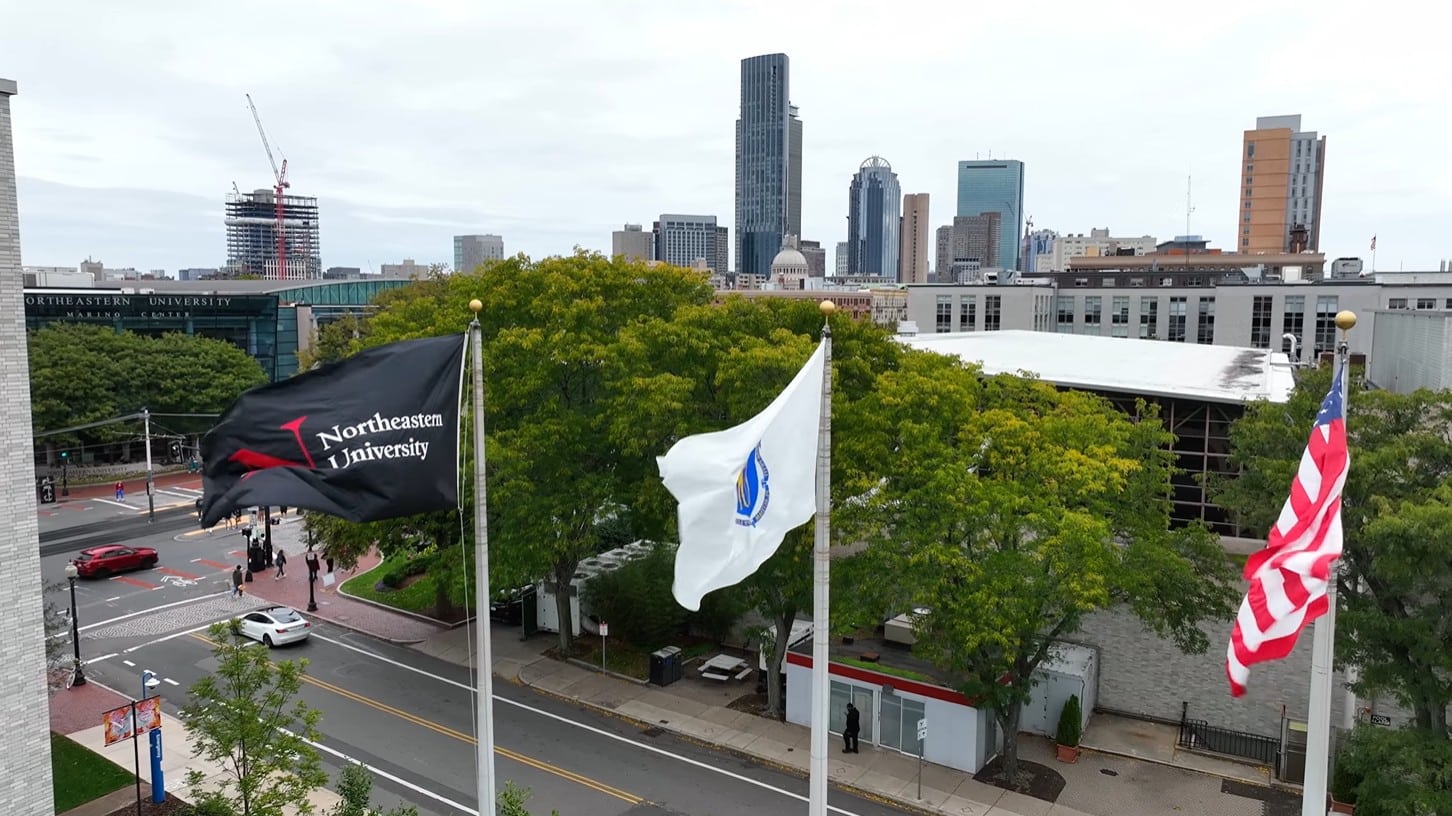
Boston is home to more than 350,000 college students and holds the highest concentration of engineers of any US city. It is the 10th-largest metropolitan area in the country and operates the 12th-largest economy in the world. First-year students are required to live on campus, and Northeastern guarantees housing for the first two years. After that, many students move into the surrounding neighborhoods.
On-campus housing includes traditional corridor-style halls (Stetson East and West, Speare, Smith, Melvin, Light, Hastings, and Kerr), suite-style accommodations (International Village, East Village, Kennedy Hall, and 60 Belvidere Street), and apartment-style residences across the West Village A-K complexes, Davenport Commons, Willis Hall, and numerous nearby buildings on Huntington Avenue and St. Stephen Street.
The East Village residence hall features a high-end event space on the 17th floor with sweeping views of the Boston skyline. A new 23-story dorm at 840 Columbus Avenue is currently under construction and will house over 1,200 additional students.
Off-campus, students tend to gravitate toward a handful of neighborhoods within easy reach of the Northeastern University Boston campus as well.
The area surrounding campus is also notably safe. Northeastern sits directly beside Boston Police Department headquarters and maintains its own NUPD force, one of the largest university police departments in Massachusetts.
Places to check out near Northeastern University
The neighborhoods surrounding the Northeastern University Boston campus offer an extraordinary range of experiences for students. Here are the highlights by category:
Museums and culture
The Museum of Fine Arts, situated directly across the street from campus, is one of the most comprehensive art museums in the world, and Northeastern students gain free admission with their Husky Card. The same card unlocks free entry to the Institute of Contemporary Art.
Nearby, the Isabella Stewart Gardner Museum, housed in a stunning Venetian-style palazzo, is also free for Northeastern students using the code “NORTHEASTERN.” For live performance, Symphony Hall is steps away, and students can purchase a College Card for $30 to access select Boston Symphony Orchestra performances throughout the season.
The Museum of Science and New England Aquarium are both easily reachable via the T, and on Sunday mornings during the warmer months, the SOWA Open Market brings together local artists and craftspeople in a beloved open-air setting.
Food and coffee
Wollaston’s Market is a campus staple, known for its creative sandwiches with Northeastern-themed names like “The Huntington” and “The Marino Fitness.” Tatte is the go-to for breakfast pastries and coffee, while El Jefe’s draws a steady crowd for dinner.
On Huntington Avenue, Sprout offers Mediterranean-inspired salads for a quick and healthy grab-and-go option. Pavement Coffeehouse on Gainsborough Street has earned a loyal following for its iced matcha latte and rosemary salt bagel, and Pressed Cafe is a casual favorite at any time of day for its paninis, açaí bowls, and coffee.
Students looking for a cafe with reliable Wi-Fi and charging ports tend to gravitate toward Caffé Nero’s Symphony location on New Edgerly Road. For something sweet, Oakleaf Cakes Bake Shop next to Symphony Hall delivers exceptional coffee and pastries, and Rebecca’s Café inside Churchill Hall keeps things simple with soups and sandwiches right on campus.
For boba, Chatime, Kung Fu Tea, and Vivi Bubble Tea are all popular nearby options.
Parks and green space
The Back Bay Fens, a Frederick Law Olmsted-designed parkland with community gardens, is just minutes from campus. It forms part of the Emerald Necklace, a 1,100-acre chain of parks and waterways that connects Boston Common, Boston Public Garden, The Fens, Arnold Arboretum, and Jamaica Pond.
Northeastern’s own Parsons Field and Friedman Diamond athletic facilities in Brookline sit along this corridor, accessible via a scenic 30-minute walk. On campus, Carter Field provides open space for soccer, tennis, and skateboarding, and the Charles River is a short trip away for sailing and kayaking.
Shopping
Newbury Street and the Prudential Center are easily accessible from campus and offer upscale shopping and dining. Students who bring their Husky Card can take advantage of a 15% discount at Madewell and J.Crew. Faneuil Hall Marketplace, a Boston landmark, draws visitors and students alike for its mix of shopping, dining, and street performance.
Entertainment and sports
Fenway Park, home of the Red Sox, is approximately a 10-minute walk from campus, and the Celtics and Bruins both play in the city as well. For live music, the House of Blues and Orpheum Theatre are accessible by transit, and the Hatch Shell hosts free outdoor concerts throughout the summer months. The Theater District offers regular performances from Blue Man Group and Shear Madness for students seeking something different.
Day trips from Boston
Salem draws visitors for fall foliage and its famous haunted happenings, while Cape Cod’s beaches are roughly 90 minutes away. Ski resorts in Massachusetts and New Hampshire are also within a 90-minute drive.
For longer trips, New York City, Providence, Portland (Maine), and Hartford are all reachable by train or bus.
Why You Should Visit Northeastern University’s Campus
Reading about where Northeastern University is located gives prospective students useful context, but it tells only part of the story. A Northeastern University campus tour reveals something no description can fully convey: the specific feeling of being in an urban research campus that opens directly onto one of America’s most dynamic cities.
Walking through Krentzman Quad, passing the Cy Young statue, stepping into the light-flooded atrium of ISEC, or navigating the tunnel network for the first time gives applicants a far more grounded sense of whether this environment is the right fit for them. For students who thrive in dense, intellectually charged, city-integrated environments, visiting the campus often confirms what they already suspected. For students who are less certain, seeing the campus in person provides the clarity that no virtual resource can replicate.
Northeastern offers in-person campus visits year-round at its Boston, Oakland, and London campuses. Each visit includes an information session covering academics, the student experience, and the admissions and financial aid process, followed by a 60-minute Husky Ambassador-led walking tour of the campus.
Virtual options are also available, including an interactive virtual tour and virtual event programming registered through the admissions portal.
To schedule a Northeastern University campus tour or explore visit options, visit the official Northeastern admissions visit page.
For students still weighing the pros of Northeastern University against other institutions on their college list, our Senior Editor College Application Program is a valuable resource to explore before that visit. The program helps students develop a strong, well-researched college list and craft a competitive overall application, so that by the time they set foot on campus, they already have a strategic sense of where a school fits within their broader admissions plan. Schedule a consultation today to get expert guidance tailored to your goals.
Frequently Asked Questions
1. What is Northeastern University’s address?
The main Northeastern University Boston campus is located at 360 Huntington Avenue, Boston, MA 02115. The undergraduate admissions office is located at 40 Leon Street, Boston, MA 02115.
2. How big is Northeastern University’s campus?
The Northeastern University Boston campus spans approximately 73 acres, equivalent to more than 55 NFL football fields. The Oakland campus covers 135 acres. Across all 14 campuses in the US, UK, and Canada, Northeastern’s global footprint is substantial.
3. Can I visit Northeastern University before applying?
Yes. Northeastern offers in-person visits year-round at its Boston, Oakland, and London campuses, including information sessions and Husky Ambassador-led campus tours. Group visits for schools and community organizations are also available with at least two weeks’ notice. Virtual tours and virtual events are available for those unable to visit in person.
4. Is parking available at Northeastern University?
Yes. Several parking garages serve the Boston campus, including the Renaissance Park Garage at 835 Columbus Avenue, the Columbus Garage at 795 Columbus Avenue, the West Village Garage, Forsyth Lot, and Gainsborough Garage. EV charging is available at multiple garages. Because Boston traffic can be significant, the university strongly encourages visitors to use MBTA transit when possible.
5. What landmarks are near Northeastern University?
The campus sits within walking distance of the Museum of Fine Arts, Isabella Stewart Gardner Museum, Symphony Hall, Fenway Park, the Back Bay Fens, and Newbury Street. The broader Emerald Necklace park system, the Institute of Contemporary Art, and the Prudential Center are all easily accessible by foot or transit.
Takeaways
- Northeastern’s 73-acre Boston campus sits at 360 Huntington Avenue, steps from the Museum of Fine Arts, Symphony Hall, and Fenway Park, with two MBTA lines running directly through campus.
- From Richards Hall’s 1938 neoclassical facade to the award-winning ISEC, the Northeastern University campus reflects both deep institutional roots and a forward-looking research identity.
- With 14 campuses across the US, UK, and Canada, including the 135-acre Oakland campus and London’s US/UK double degree program, Northeastern offers a genuinely international educational experience.
- Free museum access, Husky Card discounts, the Emerald Necklace, and proximity to Cape Cod, Salem, and New York City make the area around the Northeastern University Boston campus exceptionally livable.
- Our Private Consulting Program helps students build a well-researched college list and develop a competitive application strategy tailored to their goals. Schedule a consultation today and approach your admissions journey with clarity and confidence.