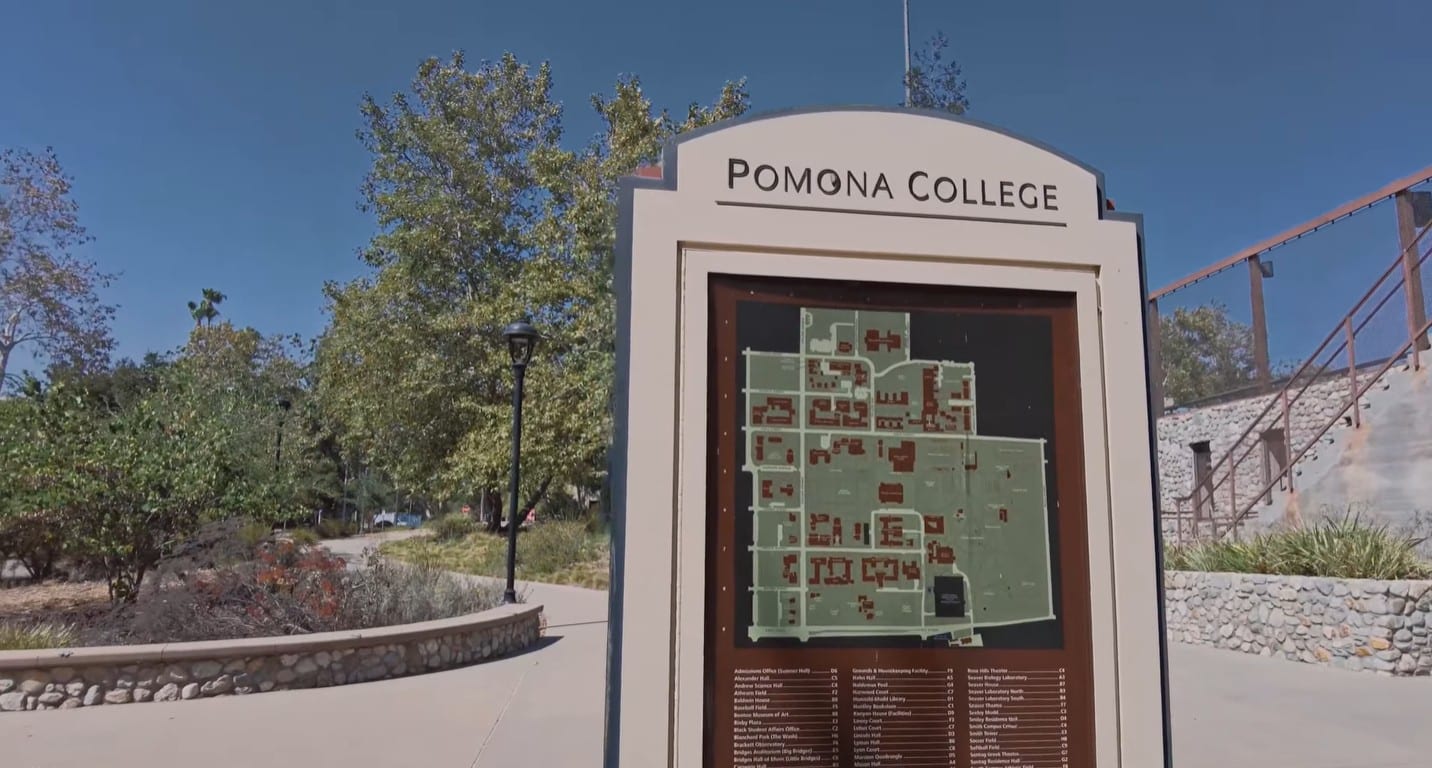
Pomona College is a private liberal arts college founded in 1887. It relocated from the city of Pomona to its permanent home in Claremont, California in 1889, where it has remained ever since. Pomona’s campus sits at 550 N. College Avenue, Claremont, CA 91711, about 35 miles east of downtown Los Angeles. Claremont is a walkable college town of roughly 35,000 residents at the base of the San Gabriel Mountains, known locally as the “City of Trees and PhDs.”
This guide covers everything a student needs to know about Pomona College: the look and feel of the campus, its landmarks, affiliated sites, transportation, and what daily life is like.
- Pomona College Campus Location
- Getting to Pomona College
- Living Near Pomona College
- Why You Should Visit Pomona College Campus
- Frequently Asked Questions
- Takeaways
Pomona College Campus Location
Pomona College is a 140-acre campus located at 550 N. College Avenue, Claremont, California. Designed around a planning framework established by architect Myron Hunt in 1908 and elaborated by landscape architect Ralph Cornell, its campus is organized along formal axes, symmetrical quadrangles, and a network of pedestrian pathways that make the entire campus walkable in roughly five minutes from end to end.

The campus sits directly on the Claremont street grid, allowing it to extend naturally into the surrounding neighborhood. Its architectural style is rooted in Mediterranean and Spanish Colonial Revival traditions: light-colored walls, low-pitched gabled and hipped roofs with red clay tiles, covered arcades, and courtyard arrangements that reflect California’s climate and the influence of early Spanish settlers. This aesthetic, sometimes described as “vernacular classicism,” has guided campus development for over a century and remains the standard for new construction today.
Eleven buildings on campus hold LEED certification (one silver, six gold, and three platinum), reflecting Pomona’s commitment to sustainability alongside its respect for architectural heritage. The campus is composed of roughly 110 acres of developed, irrigated land and 30 acres of natural, non-irrigated native landscape known as “The Wash,” or Blanchard Park, which sits at the eastern edge of campus.
Pomona is the founding member of The Claremont Colleges, a consortium of seven independent institutions, five undergraduate colleges and two graduate universities, located on contiguous campuses within approximately one square mile.
The other undergraduate colleges (Scripps, Claremont McKenna, Harvey Mudd, and Pitzer) are all a short walk from Pomona College, as are the shared Honnold-Mudd Library and the Administrative Campus Center.
Main campus landmarks
Pomona College is rich in architecturally and historically significant spaces. Here are the landmarks that define its character and draw the most attention from visitors:
Marston Quadrangle
The historic heart of the campus, Marston Quadrangle is a formal lawn framed by the College’s most significant academic and civic buildings. It is the centerpiece of Myron Hunt’s original 1908 plan and remains the visual and social anchor of campus life.
California sycamores line their edges in regular formation, their irregular, organic forms organized in the classical gestures Hunt envisioned. The Quadrangle connects to a network of east-west enfilades, interior and exterior spatial sequences.
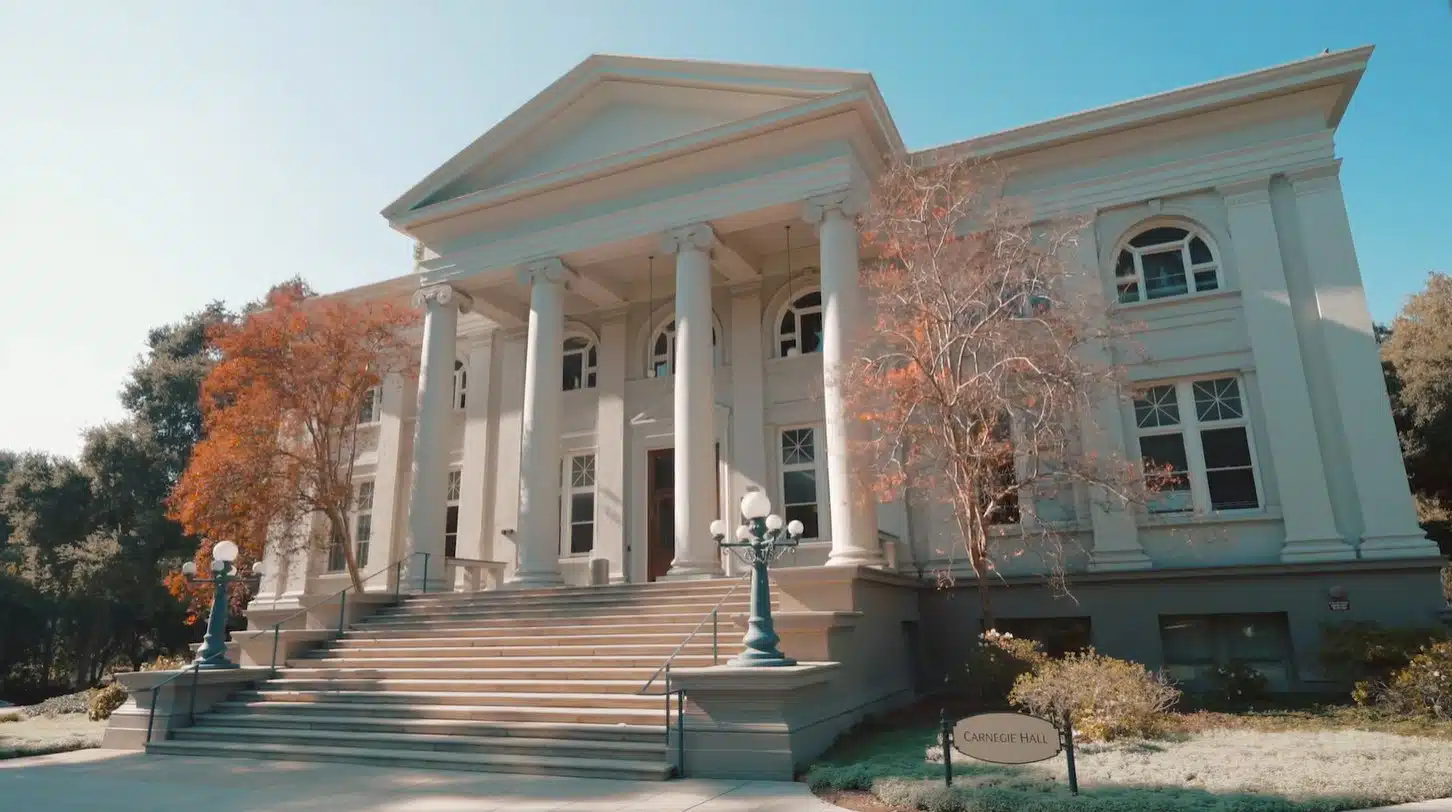
Carnegie Building
Completed in 1908, the Carnegie Building is one of Pomona’s most recognized structures, anchoring the campus along College Avenue at the western edge of Marston Quadrangle. Built with support from philanthropist Andrew Carnegie, it is a Neo-Classical building that has served as a backdrop for annual faculty photographs, family portraits, and several Hollywood productions over the years.
Bridges Hall of Music and Bridges Auditorium
Designed by Myron Hunt, Bridges Hall of Music (known as “Little Bridges”) is considered one of the finest buildings on campus: intimate in scale, distinguished in detail, and home to the music program. Adjacent Bridges Auditorium (“Big Bridges”) is a monumental civic structure that serves as the eastern termination of Marston Quadrangle.
Peter W. Stanley Academic Quadrangle
Located in the northwest corner of the Marston Quadrangle district, the Peter W. Stanley Academic Quadrangle groups several of Pomona’s historic academic buildings, including Pearsons Hall (1898) and Mason Hall, around a restored courtyard. It was fully renovated and restored in 2009 and is a key example of what makes Pomona College architecturally distinctive.
James Turrell Skyspace: “Dividing the Light”
Located in the courtyard between the Lincoln, Edmunds, and Cowart buildings, this immersive public art installation by light artist James Turrell is one of the most talked-about features of the Pomona College. It is free and open to the public, including dogs, and is best experienced at sunrise or sunset.
Benton Museum of Art
A central cultural hub on campus, the Benton Museum of Art features modern architecture, rotating exhibitions, and a permanent collection that spans works on paper, photography, and contemporary art. It is open to the public and serves students, faculty, and the broader Claremont community.
Smith Campus Center
Praised in the campus planning guidelines for its integration of planning and architectural qualities, the Smith Campus Center is the primary student hub: housing dining, gathering spaces, student services, and the Housing and Residence Life Office. It sits at a key crossroads along College Avenue and Sixth Street, near the historic College Gates.
The Wash (Blanchard Park) and Sontag Greek Theatre
The 30-acre natural landscape at the eastern edge of campus is known as The Wash or Blanchard Park. Myron Hunt envisioned this space as a refuge for recreation, solitude, and reflection, and it continues to serve that role. It is home to the Frederick and Carol Sontag Greek Theatre, the College Farm, and athletic fields.
The natural campus zone represents one of the last intact native landscapes on Pomona College and is protected from further development.
Brackett Observatory
Built in 1908 using local fieldstone and concrete, Brackett Observatory houses a manually controlled revolving dome and reflects the College’s early commitment to scientific inquiry. It was funded by Llewellyn Bixby, Class of 1901, and designed by the faculty member whose astronomy teaching it was built to support. Astronomy students today continue to use Pomona’s one-meter telescope on nearby Table Mountain for observational work.
Smiley Hall
Completed in the summer of 1908, Smiley Hall was the first building on campus designed as a dormitory, and it is believed to be the oldest college dormitory in continuous use west of the Mississippi River. Its simple massing and red-tile roof represent an early expression of the architectural language that would go on to define Pomona College.
Pomona College’s other campuses and affiliated sites
Pomona College’s academic and community presence extends well beyond the boundaries of its own campus. As the founding member of The Claremont Colleges, it participates in a set of shared facilities and resources that serve all seven institutions in the consortium.
For example, Honnold-Mudd Library holds over two million volumes and serves all seven Claremont institutions, making it one of the most significant shared academic resources among any group of colleges in the country. Students from any of the five undergraduate colleges can access the full collection.
Next, the Claremont Colleges Services (TCCS) is the central coordinating organization for the consortium, employing approximately 300 staff who deliver more than 30 shared programs and services. TCCS is located on the consortium’s shared grounds and handles everything from risk management to campus safety.
The College Farm, located within The Wash, gives students hands-on engagement with sustainable agriculture and food systems, extending the classroom into the landscape itself.
For programs and resources at the other Claremont Colleges, including Claremont Graduate University’s graduate and doctoral offerings and Keck Graduate Institute’s applied life sciences programs, Pomona students have easy walking access to neighboring campuses, making cross-registration and consortium participation straightforward.
Getting to Pomona College
Whether you are visiting for a Pomona College campus tour, attending an admitted student event, or moving in for the first time, the campus is accessible by air, rail, and road.
Public transportation options
The most convenient public transit option is Metrolink’s San Bernardino Line, which stops at the Claremont Metrolink Station just three blocks from campus. From Los Angeles Union Station, the trip takes approximately 45 minutes to an hour. Upon exiting the station, turn right (east) one block to College Avenue, then left (north) two blocks to reach campus.
Students and visitors also have access to Foothill Transit, the local bus network serving the Claremont area and surrounding Inland Empire communities. All students, faculty, and staff at any of The Claremont Colleges ride Foothill Transit buses for free, a perk for students who want to explore the region without a car.
For trips into Los Angeles and beyond, Metro Transit (MTA) bus and rail connections are accessible via Metrolink at Union Station, linking Pomona students to the full Los Angeles County transit network. Omnitrans serves San Bernardino County and the broader Inland Empire.
Getting there by car or other means
The Pomona College campus is accessible from major interstate highways:
- From I-10 (east or west): Exit at Indian Hill Boulevard. Drive north approximately one mile to East 1st Street. Turn right and continue to Columbia Avenue (the stop sign just past College Avenue). Turn left to enter the South Campus Parking Structure at 295 E. First Street.
- From I-210 East: Exit Towne Avenue, drive south to Foothill Boulevard, turn left (east) to Indian Hill Boulevard, then right (south) approximately one mile to East 1st Street. Turn left, proceed past College Avenue to Columbia Avenue, and turn left into the parking structure.
- From I-210 West: Exit Baseline Avenue, turn right, then left on Monte Vista, then right on Claremont Boulevard. Follow Claremont Boulevard approximately two miles to 1st Street, turn right, and continue to Columbia Avenue. Turn right into the South Campus Parking Structure.
Note that the main parking structure may appear as an athletic field in Google Maps. Navigate directly to 295 E. First Street, Claremont, CA 91711 for accurate directions.
Additional visitor parking is available in the Alexander Hall lot at the corner of N. College Avenue and Sixth Street. Limited street parking exists along College Avenue for the general public.
Electric vehicle charging is also available at four campus locations through the ChargePoint network, including 16 ports at the South Campus Parking Structure alone. The public rate is $1.25 per hour.
By air, the closest airport is Ontario International Airport (ONT), approximately 15 to 20 minutes from campus by rideshare or taxi, and served by most major airlines. Los Angeles International Airport (LAX) is approximately one to two hours away depending on traffic. Hollywood Burbank (BUR), Long Beach (LGB), and John Wayne (SNA) airports are all within a 45-mile radius.
Living Near Pomona College
What is Pomona College known for, beyond its academics? In large part, it is the quality of life that surrounds the campus, a combination of small-town walkability, natural beauty, and proximity to one of the world’s great cities.
Claremont is a genuinely pleasant place to live. Known as the “City of Trees and PhDs,” it has a population of about 35,000 and a strong college-town identity shaped in part by the presence of The Claremont Colleges.
Most students rarely feel the need to venture far. The campus itself is designed to be a complete living environment, and with more than 90% of students choosing to live on campus all four years, the community it fosters is unusually close-knit.
Places to check out near Pomona College
There is no shortage of things to do in and around the Claremont area. Here are some of the best spots to explore.
The downtown area, called the Village, is a strollable destination with more than 150 shops, galleries, cafés, and restaurants spread along tree-lined streets. A weekly farmers market, regular street festivals, concerts in the park, and a five-screen movie theater give the Village a lively, community-oriented character.
Students who want green space will find plenty of it. The Claremont Hills Wilderness Park is a 2,000-acre natural area just north of campus with a popular five-mile loop trail offering panoramic views of the San Gabriel Mountains and the valleys below.
The California Botanic Garden, located at 1500 N. College Avenue just minutes from the campus, is a 86-acre showcase of California native plants, with walking trails, clean facilities, and an annual pass that makes it a favorite retreat for students and faculty alike. It is also directly referenced in the campus planning documents as a model for native plant selection on campus.
For students who want more urban stimulation, Los Angeles is 35 miles west via the I-10 freeway or the Metrolink train. The full scope of Southern California is within easy reach: world-class museums, live music venues, beaches, desert hiking, and mountain ski resorts are all accessible within a day trip.
Why You Should Visit the Pomona College Campus
No guide can fully convey what it feels like to walk through the Marston Quadrangle on a bright October morning, to sit inside the Turrell Skyspace at dusk, or to have a genuine conversation with a faculty member during a campus visit.
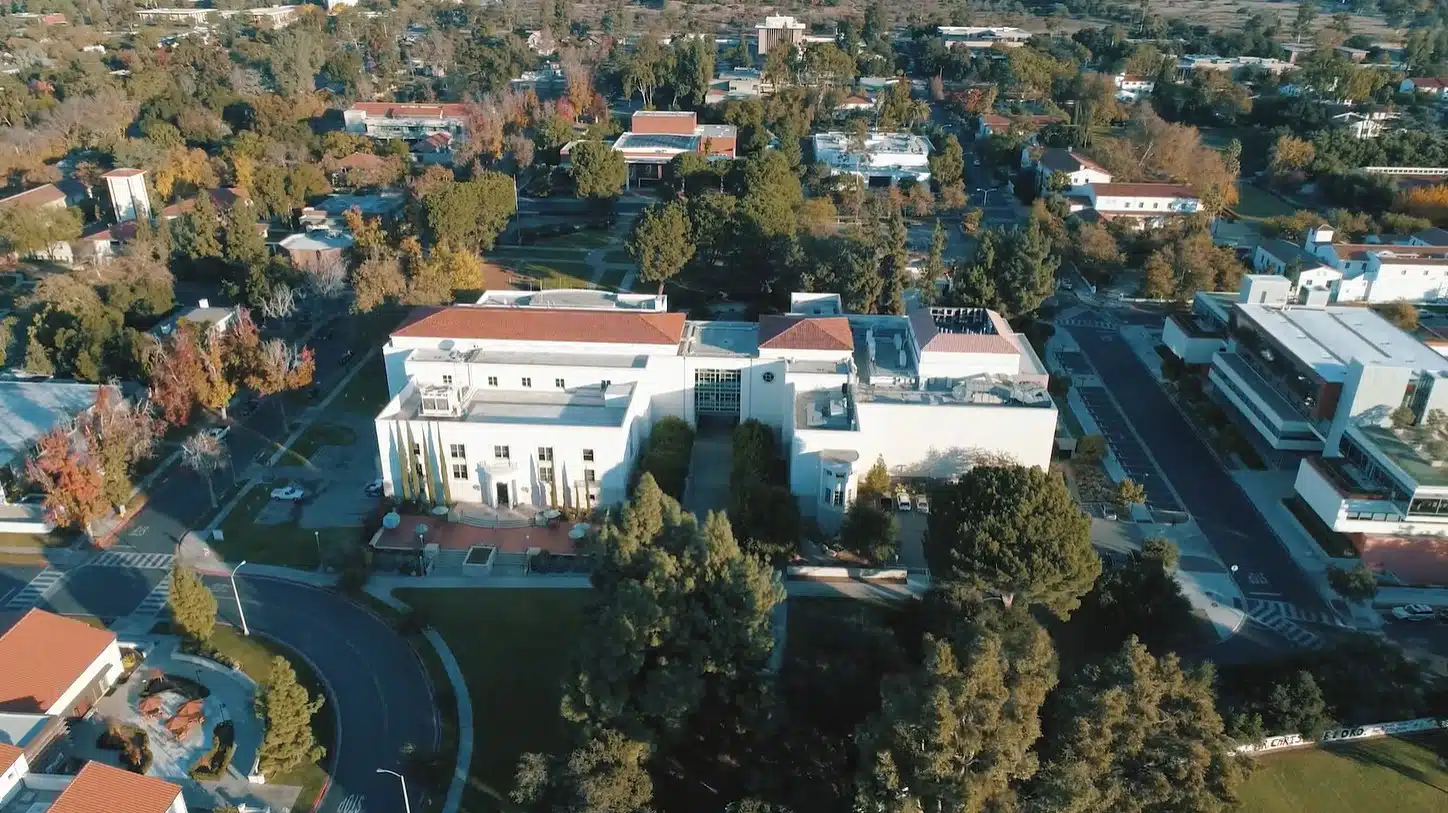
In-person visits consistently help students understand whether the scale, culture, and atmosphere of a campus are genuinely right for them, and that clarity is especially valuable when narrowing down a college list.
For scheduling a Pomona College campus tour, including information on tour options, visiting hours, and any virtual tour resources, prospective students should visit Pomona College’s official campus visit page.
Building a strong college list requires more than knowing where schools are located. It requires understanding how each school fits a student’s academic goals, personal values, financial situation, and long-term ambitions. Our Senior Editor College Application Program helps students do exactly that: build a well-researched, strategically balanced college list, develop a compelling overall application, and approach every campus visit with a clear sense of what they are looking for. Students who visit with that kind of preparation consistently make better decisions.
Frequently Asked Questions
1. What is Pomona College’s address?
The main campus address is 550 N. College Avenue, Claremont, CA 91711. The mailing address, corresponding to Sumner Hall (the main administrative building), is 333 N. College Way, Claremont, CA 91711. For navigation purposes, the South Campus Parking Structure entrance is at 295 E. First Street, Claremont, CA 91711.
2. How big is Pomona College?
The Pomona College campus covers 140 acres in Claremont, California. Of that, approximately 110 acres are developed and irrigated, and 30 acres consist of the natural, non-irrigated native landscape known as The Wash. The campus has 14 residence halls, three dining halls, and over 70 buildings.
3. Can I visit Pomona College before applying?
Yes. Pomona College welcomes prospective student visits throughout the academic year. Visiting on a weekday during the academic year gives the fullest picture of student life. Tours, information sessions, and visit scheduling are available through the College’s official admissions website.
4. Is parking available at Pomona College?
Yes. The main visitor parking structure is located at 295 E. First Street (South Campus Parking Structure). Additional visitor and handicapped parking is available in the Alexander Hall lot at N. College Avenue and Sixth Street. Limited street parking exists along College Avenue for the general public.
5. What landmarks are near Pomona College?
Within walking distance: the Claremont Village, a walkable downtown with more than 150 shops, cafés, and restaurants, a weekly farmers market, and a five-screen movie theater; the California Botanic Garden; and the Claremont Metrolink Station. Just north of campus, the Claremont Hills Wilderness Park has panoramic views of the San Gabriel Mountains. Los Angeles is 35 miles west via the I-10 or Metrolink, with museums, live music, beaches, and mountain ski resorts.
Takeaways
- Pomona College is a small 140-acre campus located in Claremont, California, but as the founding member of The Claremont Colleges, Pomona students access four neighboring colleges, a two-million-volume library, 3,000-plus courses, and a combined student community of more than 6,000, all within a square mile.
- The campus itself is a defining part of the experience. From Marston Quadrangle and Myron Hunt’s 1908 architectural vision to the James Turrell Skyspace and 30 acres of protected native landscape, the Pomona College campus is designed to be lived in. Nearly all students choose to remain on campus all four years.
- Claremont is a stronger college town than it first appears. The Village, Claremont Hills Wilderness Park, the California Botanic Garden, and a solid independent dining a nd café scene give students a rich local environment, with Los Angeles accessible by rail 35 miles west.
- The Claremont Metrolink Station is three blocks from campus, Ontario International Airport is 15 to 20 minutes by rideshare, and the campus sits directly off both the I-10 and I-210. Foothill Transit is free for all Claremont Colleges students.
- Knowing where Pomona College is located is a starting point. Building a strong application once it makes your list is a different challenge. Our Private Consulting Program pairs students with experienced advisors who help identify the right schools and position each application strategically.