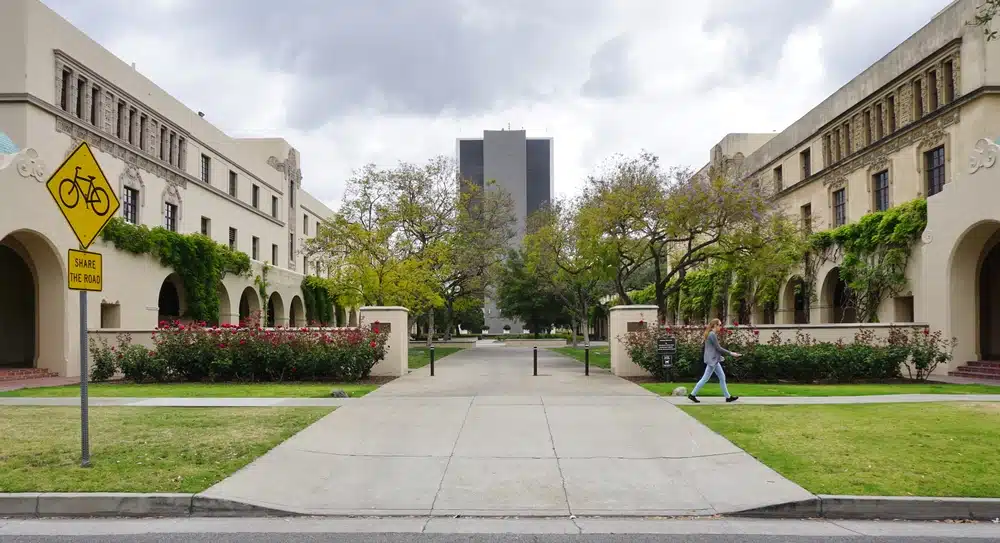
If you’re passionate about architecture but also fascinated by physics, math, or engineering, Caltech might be the perfect fit. But here’s the twist: Caltech architecture isn’t what you expect. The California Institute of Technology doesn’t offer a traditional architecture major, but that doesn’t mean your dream of becoming an architect is out of reach.
In fact, Caltech can offer you an even more rigorous and innovative approach to the built environment—if you know how to navigate its programs wisely. This guide will show you exactly how to study architecture at Caltech, what courses and majors to choose, and how to become a licensed architect—even without a Bachelor of Architecture (B.Arch).
- Can You Study Architecture at Caltech?
- Recommended Majors for Aspiring Architects at Caltech
- Best Caltech Architecture-Related Courses to Take
- Research and Projects: Designing Your Own Caltech Architecture Experience
- Cross-Enrollment and Off-Campus Opportunities for Caltech Architecture Training
- How to Become an Architect Without an Architecture Degree
- Frequently Asked Questions
- Takeaways
Can You Study Architecture at Caltech?
You might be wondering: “Does Caltech have an architecture program?” The answer is no—at least, not in the traditional sense. There is no Caltech architecture major, and the school doesn’t offer a B.Arch or Master of Architecture (M.Arch) like other universities do.
However, Caltech has always taken a highly interdisciplinary approach to learning. That means you can tailor your academic path to support your architectural goals using a combination of science, engineering, and design coursework.
Recommended Majors for Aspiring Architects at Caltech
Before diving into majors related to architecture, it’s important to understand how major selection works at Caltech.
Caltech doesn’t require you to declare a major upon admission. You can wait until the end of your first year to officially choose, giving you time to explore different areas. Even better, Caltech encourages you to pursue interdisciplinary combinations—such as double majors or minors—and to work closely with advisors to customize your academic path.
This flexibility makes it possible to build your own Caltech architecture major by combining complementary disciplines.
Even though there is no standalone architecture degree, several majors provide ideal foundations for architectural training:
1. Mechanical engineering
Mechanical engineering at Caltech blends theory with hands-on design, giving you the ability to analyze and build systems that involve forces, motion, energy, and materials. The program emphasizes both classroom fundamentals and lab experience, which means you’ll learn how to translate abstract principles into practical solutions.
For students interested in architecture, mechanical engineering offers insight into building systems such as heating, cooling, ventilation, and structural mechanics. You’ll also gain exposure to thermodynamics, fluid dynamics, and materials—knowledge that directly impacts sustainable building design.
Beyond technical skills, Caltech’s program develops creativity, leadership, and ethical awareness, preparing you to approach architecture as both a designer and problem-solver with a broad technological outlook.
2. Civil engineering
Civil engineering at Caltech focuses on the research, planning, design, and construction of the built environment, from buildings and bridges to pipelines and power plants. The program emphasizes safety, functionality, and resilience, particularly in protecting structures against natural hazards such as earthquakes, floods, and winds.

For students pursuing architecture, civil engineering provides one of the most direct academic pathways. You’ll study structural engineering, geotechnical systems, and environmental engineering—disciplines that are essential for designing safe, sustainable buildings.
With Caltech’s emphasis on applying fundamental science and mathematics to solve real-world problems, you gain a deep technical foundation to support both architectural creativity and structural reliability.
3. Physics
Believe it or not, physics can be an excellent starting point. From acoustics in performance spaces to lighting dynamics and energy transfer in buildings, using physics in architecture helps you understand how people interact with space.
For aspiring architects, this means you’ll develop theoretical knowledge and practical skills in computational modeling, data analysis, and experimental design. Together, these experiences prepare you to approach architecture with a strong scientific foundation, allowing you to integrate physical principles into energy-efficient, climate-responsive, and structurally innovative designs.
4. Computer science
With the rise of generative design, Building Information Modeling (BIM), and advanced visualization tools, computer science has become an essential part of modern architecture.
At Caltech, computer science emphasizes robust modeling of physical systems, using mathematically and physically sound approaches to simulate structures, environments, and mechanical systems. This foundation connects directly to architectural visualization, design optimization, and building performance analysis.
Another cornerstone of Caltech’s program is systematic design, which teaches you how to manage complexity through algorithms, distributed systems, and computational models. For an aspiring architect, this means developing the ability to design, test, and refine digital models of buildings—skills that align with how architecture is evolving in a technology-driven era.
5. Environmental science and engineering
Caltech’s environmental science and engineering program equips students to understand the physical, chemical, and biological systems that shape our planet. With its interdisciplinary focus, ESE prepares you to tackle challenges like climate change, energy efficiency, and sustainable resource use.
For aspiring architects, this program offers the tools to design resilient and eco-friendly buildings. By learning how natural systems interact with the built environment, you can create structures that minimize environmental impact, adapt to climate pressures, and promote long-term sustainability.
The emphasis on research and cross-disciplinary collaboration makes ESE especially relevant for future architects interested in green design and climate-responsive architecture.
Best Caltech Architecture-Related Courses to Take
Caltech doesn’t offer a standard studio-based architecture curriculum, but it does provide a range of technical and scientific classes that mirror the depth of architectural education. Here are some standout Caltech architecture courses to consider:
AM/CE 151: Structural Mechanics and Dynamics
This advanced course provides the foundation for understanding how structures respond to forces, vibrations, and dynamic loads such as earthquakes. Topics include equilibrium, energy dissipation, natural frequencies, damping, and stability, along with applications to rods, beams, plates, and membranes.
For aspiring architects, AM/CE 151 is particularly valuable because it teaches you how buildings and infrastructure behave under real-world stresses. By mastering vibration theory, seismic response, and structural dynamics, you gain the technical expertise needed to design safer, more resilient structures that meet both aesthetic and engineering demands.

ESE 101: Earth’s Climate
This course introduces the science of Earth’s climate, examining historical climate shifts, the impacts of rising greenhouse gases, and projections for future change. Students also explore how uncertainty shapes policy decisions and risk management strategies related to climate.
ESE 101 is an essential complement to technical training, as it connects building design with broader environmental realities. Understanding climate dynamics equips you to design structures that are energy-efficient, climate-resilient, and responsive to sustainability goals—skills that are increasingly central to the future of architecture.
ME 14: Design and Fabrication
This hands-on course introduces students to the principles of mechanical engineering design, fabrication techniques, and visual communication. Through lectures and team-based projects, you’ll explore topics like material strength, design safety factors, and engineering case studies while also gaining experience in Caltech’s machine shop and maker-space facilities.
ME 14 is especially valuable because it blends theory with practice. By building working prototypes and participating in design reviews, you develop skills in material selection, structural testing, and collaborative problem-solving—all of which mirror the processes architects use to turn concepts into real-world structures.
CS/CNS 171: Computer Graphics Laboratory
This intensive course introduces the core concepts and algorithms of computer graphics, from 3D transformations and interactive modeling to shading models, animation, and scientific visualization. Students gain hands-on experience implementing graphics systems while building a deep understanding of the computational tools behind modern visualization.
CS/CNS 171 is a powerful way to develop visualization and modeling skills. The ability to create accurate renderings and interactive models is essential for architectural design, and this course equips you with both the programming expertise and mathematical grounding to bring complex spatial concepts to life digitally.
These Caltech architecture courses can serve as the backbone of your customized architectural education.
Research and Projects: Designing Your Own Caltech Architecture Experience
Caltech strongly encourages undergraduates to pursue independent research, especially through the Summer Undergraduate Research Fellowships (SURF) program. For students interested in architecture, this means you can go beyond the classroom and tackle projects that integrate engineering, science, and design.
Here are some research directions you could pursue:
Earthquake-resistant design
Given the area’s seismic activity, earthquake engineering is a natural area of study at Caltech, which is located in California. Through research projects, you can analyze structural dynamics, develop new materials, and test design strategies that make buildings more resilient against seismic forces.
This type of work not only strengthens your technical skills but also prepares you to design safer infrastructure in earthquake-prone regions.
Energy-efficient structures
Sustainability is at the heart of modern architecture, and Caltech provides opportunities to investigate how buildings can reduce energy use. Research might include passive solar design, advanced insulation materials, or integrated renewable systems like solar panels.
These projects help you develop the skills to design climate-responsive buildings that balance comfort, efficiency, and environmental responsibility.
AI-assisted design algorithms
With Caltech’s strong emphasis on computation, you can explore how artificial intelligence and machine learning can transform architecture.

Research might involve generative design algorithms that optimize building forms for efficiency or algorithms that simulate thousands of structural variations to identify the best solution. This experience puts you at the forefront of architectural technology.
Smart building systems
Caltech’s research culture also supports projects in automation and intelligent systems. You can work on developing “smart” buildings that use sensors and controls to regulate lighting, heating, ventilation, and security. These projects combine engineering with user-centered design, preparing you to create buildings that are more responsive to the needs of their occupants.
Urban mobility and space utilization
Architecture doesn’t just focus on single buildings—it also addresses how spaces work within cities. At Caltech, you can study urban mobility and infrastructure, analyzing how transportation systems and public spaces shape community life.
Projects in this area help you understand architecture at the urban scale, equipping you to design solutions for crowded, dynamic environments.
Cross-Enrollment and Off-Campus Opportunities for Caltech Architecture Training
Caltech doesn’t offer a formal architecture major. Students often enrich their education through partnerships with other institutions. These opportunities allow you to combine Caltech’s rigorous STEM foundation with studio-based or humanities-driven perspectives on design.
Caltech students can also take advantage of its relationship with nearby institutions. For example:
ArtCenter College of Design (Pasadena)
Located just a few miles from Caltech, ArtCenter College of Design offers degrees that overlap with architectural training and the built environment. These programs provide studio-based, design-focused experiences that complement Caltech’s science and engineering strengths.
For example, the Spatial Experience Design undergraduate program immerses students in the study of the entire built environment, including architecture, interiors, lighting, and furniture. It offers valuable studio practice and creative exploration to balance their technical training.
Study Away at the University of Chicago
Caltech also offers a Fall Study Away exchange program with the University of Chicago, a campus renowned for its interdisciplinary and intellectual culture. While UChicago doesn’t offer a traditional architecture major, it does provide a Minor in Architectural Studies through its Department of Art History.
This minor combines studio work, theory, and electives that examine the built environment from cultural and social perspectives. Courses include:
- ARCH 20000: Understanding the Built Environment (introductory studio)
- ARCH 24205: Skills & Processes for Architecture and Urban Design (studio skills and methods)
- PHSC 11800: Physics and Contemporary Architecture
- CEGU 20150: Sustainable Urban Development
For Caltech students, spending a term at UChicago offers something unique: the chance to pair their technical, science-based training with critical, humanities-informed perspectives on space, design, and cities. This combination creates a well-rounded preparation for future graduate study in architecture or design.
How to Become an Architect Without an Architecture Degree
Even though Caltech doesn’t offer a traditional architecture program, you can still pursue licensure as an architect in the United States. The National Council of Architectural Registration Boards (NCARB) oversees the process, and there are two main routes: earning a Master of Architecture (M.Arch) after Caltech or pursuing licensure through experience and exams.

Option 1: Earn a Master of Architecture (M.Arch).
After graduating from Caltech, you can apply for a professional M.Arch degree at schools like Harvard GSD, MIT, or Yale. These programs accept students from all academic backgrounds, including engineering and physics majors.
During graduate school, you’ll complete design studios, build a professional portfolio, and meet educational requirements for licensure.
Option 2: Gain licensure via experience (NCARB AXP + ARE).
If you prefer not to pursue a graduate degree, some states allow licensure through professional experience. This pathway is more demanding but possible if you meet all NCARB requirements:
| Category | Architectural Experience Program (AXP) | Architect Registration Examination (ARE) |
| Requirement | 3,740 documented hours of professional work under a licensed architect. | Passing the ARE, a six-part national licensing exam. |
| Structure / Content | Divided into six practice areas: Practice Management, Project Management, Programming & Analysis, Project Planning & Design, Project Development & Documentation, and Construction & Evaluation. | Covers six domains: Practice Management, Project Management, Programming & Analysis, Project Planning & Design, Project Development & Documentation, and Construction & Evaluation. |
| Purpose / Goal | Ensures candidates gain experience in all aspects of the profession, from office management to construction oversight. | Confirms technical and professional competency to design safely and protect public health and welfare. |
| Format / How it Works | Candidates log hours in NCARB’s online system, with oversight and verification by a licensed supervisor. | Computer-based exams combining case studies, multiple-choice questions, and technical drawing/diagram tasks. |
State variations:
- Some states require both a professional degree (B.Arch or M.Arch) and completion of AXP + ARE.
- Others allow candidates without a degree to sit for exams if they have extensive supervised experience (the so-called “experience-only” pathway).
- Always check NCARB’s state-by-state requirements.
So, while you can’t pursue a formal Caltech architecture major, you can absolutely pursue licensure after Caltech with the right planning, as it is one of the good schools that can prepare you well.
Frequently Asked Questions
1. Does Caltech offer an architecture degree?
No, Caltech does not offer a traditional architecture degree like a B.Arch or M.Arch. However, students can pursue related fields such as civil engineering, mechanical engineering, and environmental science to prepare for architectural careers.
2. Can I become an architect if I study at Caltech?
Yes. You can apply to M.Arch programs after graduating or follow the experience-based route to licensure through NCARB’s AXP and ARE.
3. What’s the benefit of studying architecture at Caltech instead of a traditional architecture school?
You’ll gain stronger technical and scientific training, which is increasingly valuable in architecture—especially in areas like sustainability, computation, and engineering.
Takeaways
- Caltech does not have a traditional Caltech architecture degree, but its interdisciplinary programs offer strong architectural preparation.
- You can build your own architecture track using majors like mechanical engineering, civil engineering, and physics.
Research opportunities and external studio programs can help you build a portfolio for M.Arch admissions. - Licensure is possible through graduate school or work experience, even without a B.Arch.
- Want to explore architecture? Get a personalized Academic and Extracurricular Profile Evaluation to build the strongest strategy for Caltech—and prepare for a future in architecture.