Picture this: you’re sliding down the hill next to Janss Steps on a block of ice from the grocery store. A few months earlier, you dipped your hand into the Inverted Fountain during orientation, a ritual called “Bruintizing,” and tradition says you wait until graduation to touch that water again.
These are UCLA traditions, and they shape daily life at one of the most applied-to universities in the country. With more than 140,000 applicants each year, UCLA stands out for its top-ranked programs and championship athletics, but also for nearly a century of rituals and rivalries, from the Victory Bell battles with USC to the Midnight Yell during finals week.
For applicants, these traditions offer more than fun trivia. They give you a window into UCLA’s culture. Since admissions decisions are based on your application alone, specificity is what makes your essays shine. When your personal insight questions show genuine knowledge of what makes UCLA tick, your writing about fit becomes far more convincing.
In this guide, we’ll walk through the traditions that define Bruin life, then show you how to turn that knowledge into sharper, more authentic application essays.
- Top 10 UCLA Traditions
- How to Use UCLA Traditions in Your Application
- Take the Next Step in Your UCLA Application
- Frequently Asked Questions
- Takeaways
Top 10 UCLA Traditions
When you’re applying to UCLA, you’re most likely paying more attention to what directly relates to you as an applicant, such as the acceptance rate, requirements, and programs offered. However, UCLA is also looking for students who’ll fit right in with their community, students who’ll feel at home on campus and look forward to participating in its activities.
A big part of what makes UCLA feel like UCLA are its traditions, the rituals and rivalries that fill campus life with energy, humor, and a whole lot of school spirit. Whether you’re still applying or you just got your acceptance letter, knowing the traditions at UCLA lets you understand the school better and allows you to look forward to taking part in them.
From game-day hype to finals-week stress relief, here are 10 UCLA traditions you’ll want to know about:
1. The Victory Bell
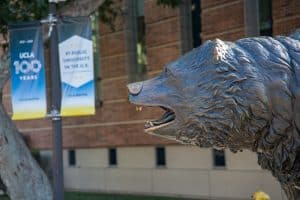
If one tradition defines UCLA pride, it’s the annual football rivalry with the University of Southern California (USC). Every year, students kick off Beat ‘SC Week with a huge bonfire. You’ll see USC gear set on fire, the Bruin Bear statue wrapped up for protection, and the entire student body out in force.
The winner of the game claims the Victory Bell, a 295-pound bell that once sat on a Southern Pacific freight train. UCLA got it in 1939 as a gift from the Alumni Association. When it’s on campus, cheerleaders ring it after every Bruin point.
The rivalry heated up in 1941 when USC students posing as Bruins stole the bell. They hid it for over a year, setting off a wave of pranks between the schools. In 1942, both sides agreed that the winner of the game would keep the bell. That year, UCLA won 14 to 7. It was the first victory in the series and led to the program’s first Rose Bowl appearance.
Today, the Victory Bell isn’t just a shiny trophy but a symbol of school pride and one of the fiercest rivalries in college football.
2. Spring Sing
Every spring, the university hosts Spring Sing, a campus-wide talent show featuring student singers, musicians, and dancers. The event takes place after UCLA’s spring break, drawing huge crowds and becoming a major part of student life. Celebrities like Ronald Reagan, Paula Abdul, Raven-Symoné, and Dennis Quaid have even served as judges.
The show also includes the Gershwin Awards, a lifetime achievement honor for artists in the music industry. Past winners include Julie Andrews, Stevie Wonder, and James Taylor.
Spring Sing began in 1945 when fraternities started serenading sororities just before the end of World War II. What began as a simple tradition grew fast, eventually filling the Hollywood Bowl with more than 15,000 people. After a short break in the 1970s, students revived the event. Today, it’s still one of UCLA’s most loved traditions.
3. The Midnight Yell
Finals week at UCLA is brutal. You’re running on caffeine, short on sleep, and drowning in notes. But one tradition brings a little relief every night during finals, starting Sunday: the Midnight Yell.
At exactly midnight, students across campus stop what they’re doing, open their windows, and scream. It’s loud, chaotic, and weirdly comforting. For a few seconds, the whole campus lets out its stress together. That brief silence at 11:59 turns into a shared burst of frustration, energy, and noise. It’s a reminder that you’re not going through finals alone!
4. Ice blocking
One of UCLA’s most lighthearted traditions happens on the hill next to Janss Steps, formerly known as Tongva Steps. It’s called ice blocking, and yes, it’s exactly what it sounds like.
You grab a block of ice from the nearest grocery store, find a good patch of grass, sit on the block, and slide down the hill. Sounds simple, but staying balanced is harder than you’d think. You’ll end up muddy, maybe a little bruised, but that’s part of the fun.
Now, the tradition didn’t actually start at UCLA. Ice blocking first caught on in Orange County as a kind of dry-weather sledding alternative. Locals would slide down golf course hills after dark, especially when the grass was wet from rain or sprinklers. Eventually, the idea made its way to UCLA, where the Bruins turned it into a campus classic.
Whether you go with friends, roommates, or your student org, it’s one of those weird but memorable things you should try at least once.
5. The Undie Run
Every finals week, right when the pressure hits its peak, thousands of UCLA students take a break. How? By running through campus in their underwear! It’s called the Undie Run, which happens at midnight on Wednesday under the tunnel at Strathmore and Gayley.
Students strip down, take photos with friends, and run the loop around campus together. It’s loud, chaotic, and oddly therapeutic. You’ll see people in everything from boxers to costumes to graduation sashes.
UCLA started the tradition, and now it happens every quarter. Some do it just for a laugh. Others see it as a must-do before graduation. Either way, it’s definitely a finals week release like no other!
6. Getting “Bruintized”
During orientation, new students participate in a quiet but meaningful tradition called “Bruintizing.” You dip your hand into the water of the Inverted Fountain, officially marking your start as a UCLA student. But there’s a catch! You’re not supposed to touch the water again until you graduate.
Legend says breaking that rule means you won’t finish your degree on time. So, most students wait. After their final exams, seniors then return to the fountain to celebrate. Some wade in with friends. Others bring champagne or wear their graduation sashes for photos. It’s a full-circle moment and one of the most symbolic ways to end your time at UCLA.
7. Meeting Powell Cat
For years, UCLA students found unexpected comfort in a black-and-white tuxedo cat known as Powell Cat. First spotted near Powell Library in 2015, he quickly became a campus favorite. Students stopped to pet him, left food, and snapped photos as he lounged in the sun. He eventually made his home near Glorya Kaufman Hall, where you could often spot him napping in the grass.
Powell Cat had his own Instagram account, appeared on stickers and t-shirts, and even made a cameo in a UCLA Library holiday card! Many students believed petting him brought good luck, especially during finals week.
Powell Cat sadly passed away in 2023, and students gathered near Powell Library to hold a memorial. Today, many still work to preserve his memory and the joy he brought to generations of Bruins.
8. Bruin Walk
Bruin Walk has been part of UCLA life for decades. It runs through Bruin Plaza and is the main path students take to get to class. You’ll walk it almost every day, and that alone makes it a shared experience across generations of Bruins. It also has a long history as a bustling and active part of campus life, filled with movement, noise, and connection.
One tradition tied to this path is flyering. Student orgs line the walkway, handing out flyers for events, protests, performances, and campaigns. Some people avoid eye contact. Others stop to talk. Either way, it’s a ritual you’ll get used to fast!
9. UCLA fight songs
UCLA has several fight songs, but the most popular might be “The Mighty Bruins.” It was introduced in 1984 during a football game against Stanford University. The music was composed by Bill Conti, best known for scoring Rocky films, and the lyrics were written by UCLA alumni Barbara Lamb and Don Holley.
Another long-standing fight suong is “Sons of Westwood,” adopted in the 1960s with lyrics based on UC Berkeley’s “Sons of California.” It’s a regular feature at games and rallies, often followed by the “Eight-Clap,” a chant created by a UCLA student in 1948 that still fires up the crowd today.

10. True Bruin Traditions Keeper
This is the tradition that ties everything together. When you arrive on campus, you’re encouraged to participate in the whole UCLA experience through academics, athletics, leadership, service, and school spirit. That’s the heart of the True Bruin Traditions Keeper (TBTK) program.
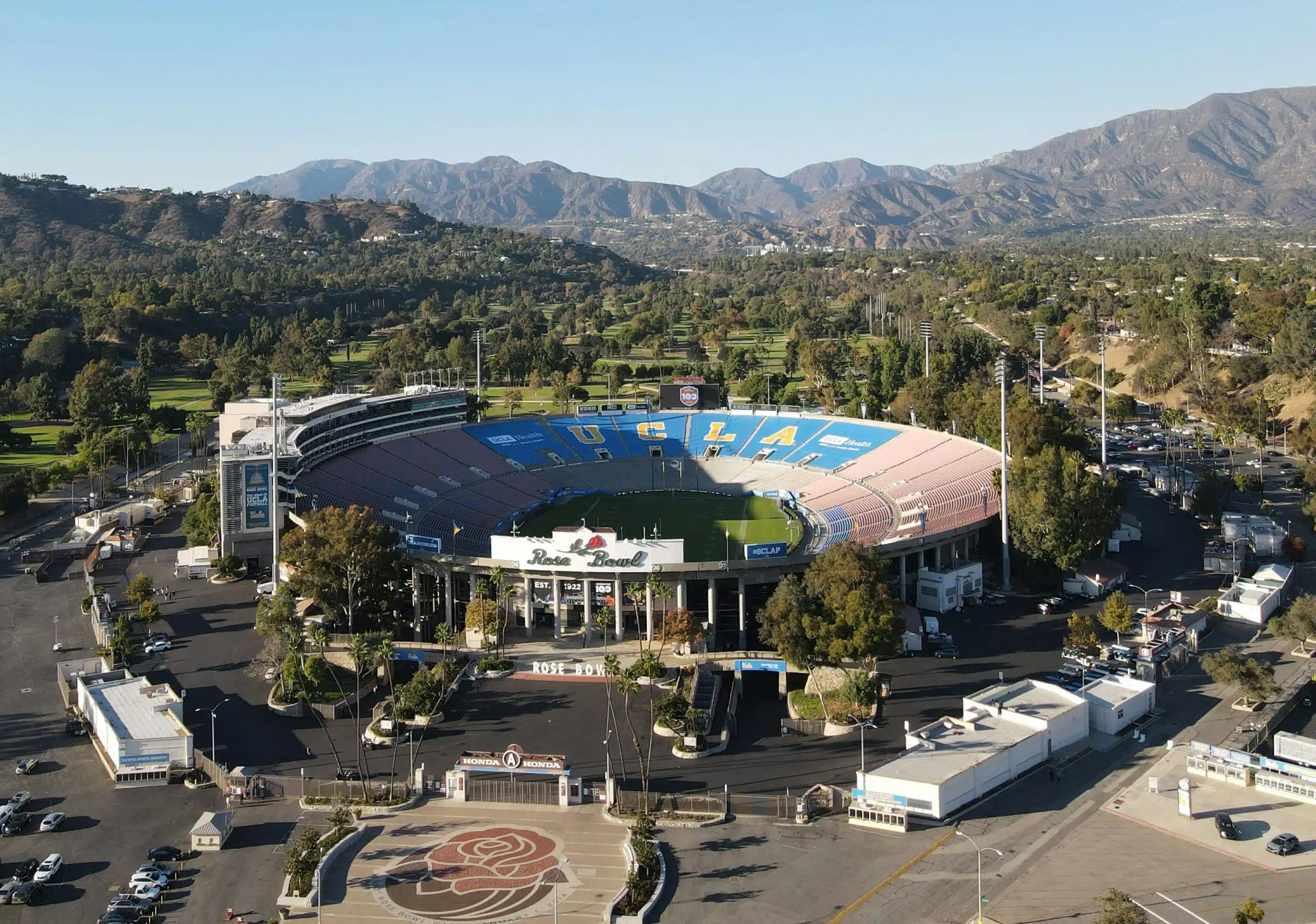
As you complete various mini-traditions, you log your progress and get closer to earning the Traditions Keeper medal, awarded during graduation. Some traditions are big, like joining a student org or attending a game at the Rose Bowl. Others are simple, like taking a Fiat Lux seminar, visiting Diddy Riese, or rubbing the Bruin Bear’s paw for good luck.
The more traditions you complete, the more connected you’ll feel to UCLA—and the closer you’ll be to becoming a True Bruin.
How to Use UCLA Traditions in Your Application
UCLA applicants apply through the University of California system, which means you’ll answer 4 of 8 Personal Insight Questions (PIQs), and those same four responses go to every UC campus you apply to. There’s no dedicated “why UCLA” essay, and no slot reserved for traditions. But used well, one of UCLA’s unique traditions can still make your application sharper. Here’s how to pull it off:
1. Match the tradition to the right PIQ.
Not every PIQ leaves room for a tradition, and forcing one in where it doesn’t belong is a mistake readers spot instantly. Two particular prompts are your best bet.
The first is PIQ 7, which asks what you’ve done to make your school or community a better place. If community involvement is your thing, something like the True Bruin Traditions Keeper program or Bruin Walk flyering fits naturally here, because it shows the kind of involvement you’d continue as a Bruin. The second is PIQ 8, the open-ended prompt about anything else that makes you a strong candidate. Smaller details, like Spring Sing or the story behind the fight songs, work better here as supporting texture.
Remember, PIQs aren’t “why UCLA” essays. If a tradition doesn’t serve the specific question being asked, leave it out.
2. Ground the tradition in your own involvement.
A tradition should never stand in for a personal detail. It should support one. Say you’re writing about the Traditions Keeper program: connect it to a specific way you already build community, like organizing events, mentoring younger students, or running a club. Now the tradition shows continuity, a thread running from what you already do to what you’d keep doing at UCLA. Naming one of these UCLA campus traditions without tying it to your own actions makes it look like you only did research on what UCLA offers rather than also reflecting on how it relates to your current experiences and aspirations.
3. Use one detail, not a list.
Readers can tell when a tradition is doing real work versus when it’s decoration. Compare these two.
- Done well: “After two years organizing my school’s talent showcase, I’ve learned that community is built backstage, in the hours before anyone claps. It’s why UCLA’s Spring Sing, a student-run show that’s filled venues since 1945, feels like a stage I’ve been rehearsing for all along.”
- Done poorly: “I can’t wait to attend Spring Sing, ring the Victory Bell, get Bruintized at the Inverted Fountain, and do the Undie Run during finals week. UCLA’s traditions are amazing and I want to experience them all.”
The first weaves one tradition into a personal story. The second is a checklist with no personal connection, and it could’ve been written by anyone with a browser.
Once you’ve picked your four PIQs, the real work begins. Check out our guide to UCLA supplemental essays for prompt-by-prompt strategies, examples, and tips to make your responses stand out.
Take the Next Step in Your UCLA Application
Learning the traditions at UCLA gives you a feel for campus life, but getting in takes more than good research. When you’re ready to turn that knowledge into a real strategy, our How to Get into UCLA guide breaks down everything that matters, from GPA and coursework to activities and PIQs.
Want support that goes beyond a guide? Our Standard College Counseling pairs you with experts who know exactly what UC readers look for, so every part of your application, especially your essays, works in your favor. The students who stand out usually have someone in their corner who’s done this before. You can too.

Frequently Asked Questions
1. What are some unique traditions at UCLA?
UCLA has plenty, but a few stand out. Students slide down the hill next to Janss Steps on blocks of ice, scream out their windows at midnight during finals week, and run through campus in their underwear at the quarter’s end. There’s also the Beat ‘SC Bonfire during rivalry week, Spring Sing (a student talent show dating back to 1945), and Powell Cat, a beloved campus cat students memorialized after his passing in 2023.
2. What is Bruintizing at UCLA?
Bruintizing is UCLA’s unofficial initiation. During orientation, new students dip their hands into the Inverted Fountain to mark the start of their time as Bruins. Tradition says you shouldn’t touch the water again until you graduate, or you risk delaying your degree. After final exams, seniors return to the fountain to celebrate, some wading in with friends or posing in their graduation sashes.
3. What is the True Bruin Traditions Keeper program?
The True Bruin Traditions Keeper (TBTK) program is a checklist of campus traditions spanning academics, athletics, leadership, service, and school spirit. Students who entered as first-years complete 75 UCLA campus traditions, keeping proof along the way, to earn the Traditions Keeper medal at graduation. Items range from big moments like attending a Rose Bowl game to simple ones like visiting Diddy Riese or rubbing the Bruin Bear’s paw for luck.
4. Does UCLA have a “Why UCLA” essay?
No. UCLA uses the University of California application, which asks you to answer 4 of 8 Personal Insight Questions. Those same four responses go to every UC campus you apply to, so there’s no UCLA-specific essay.
5. How can I mention UCLA traditions in my Personal Insight Questions?
Use them sparingly and strategically. PIQ 7 (improving your school or community) and PIQ 8 (the open-ended prompt) are the most natural fits. Pick one tradition, connect it to something you already do, and let it show continuity between your current involvement and the Bruin you’d become.
Takeaways
- UCLA’s unique traditions are the heart of campus culture. From the Victory Bell rivalry with USC to ice blocking down Janss Steps, these rituals shape what daily life as a Bruin actually feels like, beyond rankings and stats.
- UCLA doesn’t have a “why UCLA” essay, but showing genuine knowledge of campus culture in the right Personal Insight Question makes your writing about fit far more convincing.
- PIQ 7 and PIQ 8 are the most natural homes for a tradition, and it should always support a story about your own actions, not stand in for one.
- Admission readers can tell when a tradition is doing real work in an essay versus when it’s decoration, so weave in a single tradition that connects to who you already are.
- Want expert guidance on your UCLA application? Our Private Consulting Program gives you one-on-one support from admissions experts who’ve helped students earn spots at top schools like UCLA. From building your profile to polishing your PIQs, we’ll help you put your best application forward.