

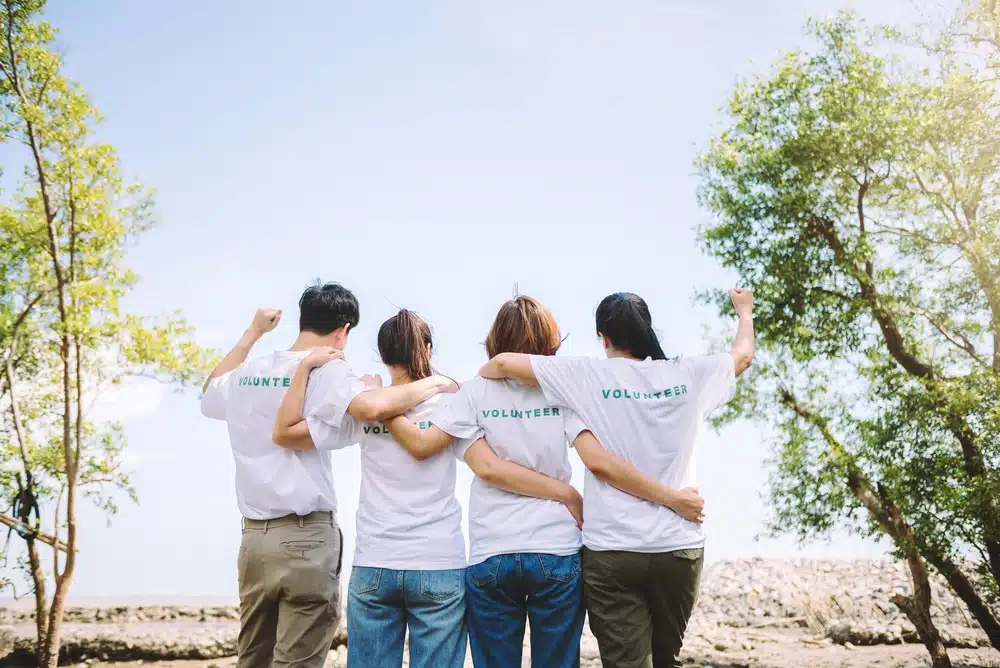
Community service is really just about finding simple ways to help people in your community. If you’re in high school, it might seem like something you need to do for college, but it can actually be a chance to do something that feels real and meaningful. The best community service ideas don’t have to be huge or super creative; they just need to match what you care about and let you make a difference in a way that feels right for you.
In this blog, you’ll find a bunch of community service ideas you can actually do—on your own, with friends, or even with your family. Each one is doable, meaningful, and can help you grow while giving back.
- The Best Community Service Ideas for High Schoolers
- Does Community Service Impact Your College Application?
- Frequently Asked Questions
- Takeaways
The Best Community Service Ideas for High Schoolers
Mahatma Gandhi said it best: “The best way to find yourself is to lose yourself in the service of others.” That quote still rings true today, especially when you look at how many people stepped up during the pandemic.
According to the latest census data, more than half of Americans helped their neighbors informally, even though only 23% officially volunteered through charities. People clearly want to help, and they just don’t always do it through formal programs.
Community service is a powerful way for students like you to show compassion, leadership, and creativity. It’s also a chance to do something meaningful while standing out to colleges. On top of strong grades and test scores, schools are looking for students who care about the world around them and want to make a difference on campus, too.
There’s more to it than that, though. Admissions officers often say that community service helps show if a student aligns with the school’s values. If you’re involved in causes that matter to you, it sends a clear message that you’ll contribute to the school’s mission. And when it comes to college decisions, that kind of fit really matters.
That’s why we have come up with a detailed list of community service ideas that you can do together with your family or friends.
Donations and fundraising ideas
Donations and fundraising are fantastic ways to make a difference, even as a high school student. These ideas are easy to start, totally doable, and can impact your community.
1. Start a fundraiser for a cause you believe in.
Pick a cause that means something to you—maybe mental health, cancer research, or animal rescue—and launch a small fundraiser. You can set up a page online, host a garage sale, or do something active like a walk-a-thon or bike ride to raise awareness and funds.

Tip: Partner with an adult you can trust—a family member, teacher, or neighbor. They can help you with the legalities and processes needing adult supervision.
2. Collect books for kids in need.
Gather gently used books from friends, neighbors, or classmates and donate them to a local children’s hospital, public school, or community center. A quick chat with a librarian or staff member can help you figure out what kinds of books they need most.
3. Donate your clothes and toys.
Chances are, your closet is hiding stuff you haven’t used in forever. Go through your things and pack up clothes and toys that are still in good condition. Then, drop them off at a local shelter, Goodwill, or the Salvation Army.
4. Make a giving jar.
Grab an empty jar, decorate it however you want, and choose a cause you’re passionate about. Ask your family and friends to chip in whenever they can—spare change adds up fast. At the end of the month, donate the jar to your chosen organization.
5. Turn old t-shirts into dog toys.
Cut up old t-shirts into strips and braid them into fun dog toys. Local animal shelters love donations like this, and it’s a creative way to recycle while helping out furry friends.
6. Organize a school-wide donation drive.
Team up with a teacher or club and run a drive at school to collect canned food, hygiene kits, winter coats, or school supplies. Make posters, set a goal, and celebrate when you hit it.
7. Sell homemade treats or crafts.
If you’re into baking or crafting, turn that hobby into a fundraiser. Sell cookies, friendship bracelets, stickers, or even digital art to raise money for a local charity or global cause.
8. Create care packages for a local shelter.
Ask your community to donate travel-sized toiletries, snacks, socks, or other essentials. Then pack them into kits and drop them off at a homeless shelter or women’s center.
9. Host a virtual fundraiser night.
Get creative—plan a virtual trivia night, talent show, or game stream where people donate to join. You can even include small prizes for participants. It’s fun, low-cost, and can reach more people.
10. Partner with a local business.
Talk to a small business in your area about doing a fundraising collab. Some restaurants or cafés will donate a portion of a day’s sales to your cause if you help bring people in.
Helping out seniors
Spending time with seniors in your community is a great way to give back and it can be more rewarding than you’d expect. Here are a few simple ways you can lend a hand and brighten someone’s day.

11. Walk dogs for an elderly neighbor.
If someone’s having a tough time getting around, offer to walk their dog for them. And while you’re at it, take a few minutes to chat—they might be feeling lonely or just need someone to talk to.
12. Spend time with older adults in your neighborhood.
A little company can go a long way. You can visit regularly, help with small chores, or just hang out and talk. Ask around through your church, family, or local YMCA to find someone who could use a friend.
13. Run grocery errands for someone.
If you have a car, offering to pick up groceries for an older adult can be a huge help. It’s quick for you but can mean the world to someone who struggles with mobility or transportation.
14. Help out with tech stuff.
Seniors didn’t grow up with the internet like you did, so things like sending emails or using FaceTime can feel overwhelming. You can offer to teach them the basics or help set up their phone or tablet. Check with your local library or senior center to see if they need volunteers.
15. Help with home projects or yard work.
Offer to mow the lawn, rake leaves, shovel snow, or fix small things around the house for an elderly neighbor. These everyday tasks can become physically exhausting or even risky for older adults, so your help can make a real difference in their safety and comfort.
Community collaboration
These community-focused activities are perfect for high school students who want to give back in meaningful, hands-on ways. Many of these ideas are fun, flexible, and can even be done with friends.
16. Prep or serve meals at a local soup kitchen.
Soup kitchens always need an extra hand. You can help cook, serve, or even just wash dishes. If talking to new people makes you nervous, helping behind the scenes is just as valuable. Local churches or community centers can point you in the right direction.
17. Babysit for free to help out family or friends.
If you’re good with kids and have experience, offering to babysit for free can be a big help, especially for parents juggling work or emergencies. It’s fun, builds trust, and gives you a chance to step up for someone who needs it.
18. Volunteer at an animal shelter.
Love animals? Shelters need help with all kinds of things—walking dogs, socializing cats, cleaning, or even just answering phones. It’s a great way to support animal welfare and spend time with some very cute four-legged friends.
19. Help out at your local hospital.
Hospitals often have volunteer spots that don’t involve medical stuff—think delivering flowers, helping visitors, or working in the gift shop. Just being there to help can brighten someone’s day.

20. Get involved in local campaigns or election events.
Even if you’re not old enough to vote, you can still help! Volunteer for a candidate or cause you care about by handing out flyers, making calls, or helping at polling stations.
21. Offer free music lessons to younger kids.
If you know how to play an instrument, teach the basics to kids who can’t afford formal lessons. Music can be life-changing, and even a few lessons can spark a lifelong passion.
22. Train to volunteer with a crisis hotline.
Some teen-focused hotlines, like Teen Line, offer training so you can help others who might be going through a tough time. It’s a meaningful way to offer support and learn how to truly listen.
23. Get involved in a community garden.
Love being outdoors? Help plant, water, and maintain veggies or flowers in a shared garden. You’ll meet new people and contribute to a space that brings fresh food and beauty to the neighborhood.
24. Start a neighborhood clean-up crew.
Grab some gloves, trash bags, and a couple of friends, then spend an afternoon picking up litter at your local park or along busy sidewalks. It’s simple, impactful, and shows you care.
25. Help pack and distribute food at a pantry.
Food pantries always need volunteers to sort items, pack bags, or distribute food to families. It’s a direct way to support people in need and stay active while doing it.
Education-based community service ideas
If you’re passionate about learning and love helping others, education-based service is a great way to give back. Here are five easy and impactful community service ideas focused on education enrichment.
26. Tutor younger students after school.
Offer free tutoring in subjects you’re confident in, like math, science, or reading. You can do this through your school, a library, or a local youth center.
27. Host a school supply drive.
Organize a donation drive to collect backpacks, notebooks, pencils, and other essentials for students in underserved communities.
28. Start a reading buddy program.
Partner with an elementary school or local library and read with younger kids once or twice a week to help boost their literacy and love for books.
29. Create and donate study guides or educational videos.
If you’re good at breaking down tough subjects, create simple study guides or explainer videos and share them with students who need extra help.
30. Volunteer at an after-school program.
Help out with homework support, educational games, or enrichment activities like arts, science experiments, or creative writing.
Health and wellness
This is about helping others feel their best—physically, mentally, and emotionally. Whether you’re into fitness, healthy living, or just want to support people in tough situations, there are so many ways to get involved.

31. Lead a free fitness class or walk group.
Love yoga, dancing, or just staying active? Start a small group in your neighborhood or at school to promote movement and connection.
32. Create care packages for hospital patients.
Fill small bags with comfort items like snacks, socks, lip balm, or uplifting notes to brighten someone’s hospital stay.
33. Volunteer at health fairs or blood drives.
Help set up booths, hand out flyers, or guide visitors at community health events.
34. Host a mental health awareness event.
Organize a speaker panel, start a school wellness week, or create a safe space where students can talk openly about mental health.
35. Make hygiene kits for shelters.
Gather essentials like soap, toothpaste, shampoo, and more to distribute at local shelters or through outreach programs.
Arts and culture
If you’re creative, artistic, or just love sharing stories, these activities give you space to use your talents for good. Art connects people, lifts spirits, and helps preserve culture in fun and powerful ways.
36. Paint murals in your school or community.
Add color and inspiration to blank walls by teaming up with local artists or art teachers.
37. Organize a local talent show for charity.
This is a fun and creative way to raise money for a cause you care about while giving others a chance to share what they love doing. You can invite classmates, teachers, or community members to perform. Think singing, dancing, spoken word, comedy, or even magic tricks.
Ask a local school, church, or community center if they’ll let you use their space. You may send or deliver the funds to the charity, school project, or community program you’re supporting.
38. Run art workshops for kids or seniors.
Teach simple crafts, painting, or drawing at a library, daycare, or senior center.
39. Collect and donate art supplies.
Round up unused markers, sketchbooks, and paint to give to schools or community centers that need them.
40. Record oral histories from elders in your community.
Interview grandparents or long-time neighbors and document their stories. It’s a great way to preserve history and learn something new from them.
Technology and digital literacy
Tech-savvy students can do a lot to help others get more comfortable with technology. From helping seniors navigate smartphones to teaching basic coding, you can empower people just by sharing what you know.
41. Teach seniors how to use smartphones.
Older adults often want to stay connected with their families, but technology can be a real barrier. Offer to teach them how to send text messages, make video calls, take photos, or download helpful apps. You can do this one-on-one, or organize a small workshop at a local senior center, library, or even through your school.

42. Help set up devices at community centers.
Local nonprofits, libraries, and youth programs often receive donated tech, but they don’t always have the staff to set things up. You can volunteer to help with simple tasks like setting up computers, installing software, connecting Wi-Fi, or organizing cables.
43. Create how-to videos for basic tech tasks.
If you’re good at explaining things clearly, try making short video tutorials that walk people through common tech tasks. Think: how to create an email account, join a Zoom meeting, use Google Docs, or even navigate social media. You can post these videos on YouTube or share them with your school, library, or local community groups.
44. Offer free coding lessons to kids.
Know a little Python or Scratch? Use it to teach younger students how to build simple games or websites. You can partner with an elementary school, library, or after-school program to run a weekly workshop.
45. Volunteer to update websites for local nonprofits.
Many small nonprofits don’t have a tech team and struggle to keep their websites current. If you know how to work with WordPress, Wix, or Squarespace or even just basic HTML, you can offer to help with updates like uploading event photos, adding blog posts, fixing broken links, or refreshing outdated info.
Does Community Service Impact Your College Application?
Community service can definitely help your college application, but it’s not just about adding something extra to your resume. A report by admissions leaders from top U.S. colleges, in partnership with Making Caring Common at Harvard’s Graduate School of Education, points out that what really stands out is meaningful involvement.
Colleges want to see that you care about something bigger than yourself. So, instead of trying to collect a ton of hours, focus on doing work that feels real to you, something that shows heart, commitment, and personal growth.
A 2019 survey from DoSomething.org backs this up. They asked over 300 college admissions officers what they thought, and nearly 70% said community service plays a role in their decision-making. It helps them get a sense of how you might show up on campus, not just as a student but as a person who contributes to the community.
Of course, service alone won’t outweigh poor grades at super competitive schools, but when paired with strong academics and outstanding essays, it can definitely make you stand out. Colleges love seeing students who are kind, driven, and ready to make a difference—community service is one of the best ways to show that.
Frequently Asked Questions
1. How many community service activities should I add to my college admissions portfolio?
You don’t need a long list. Two to three meaningful community service activities is enough, as long as you’ve been genuinely involved. Colleges care more about depth than quantity. It’s better to show consistent effort, leadership, or impact in a few causes you really care about than to list a bunch of one-time events.
2. Do Ivy League schools care about community service?
All Ivy League schools care about community service, but how much it matters can vary based on the rest of your application. None of them explicitly say, “You must do community service,” but they all value students who show initiative, compassion, and a commitment to their communities and community service is one strong way to show that.
3. Is 50 community service hours good?
Yes, 50 community service hours is definitely good especially if those hours show real commitment and impact. Most colleges don’t set a specific number of hours they’re looking for. What matters more is how you spent that time, what you learned, and what it says about your character.
Takeaways
More than being a college checklist, community service is your chance to grow, connect with your community, and better understand yourself. From small acts of kindness to organized efforts, there are countless ways to give back that match your interests and strengths.
- You don’t need a huge project to make an impact. Simple, thoughtful actions like walking a neighbor’s dog or collecting school supplies can be just as powerful as large-scale events.
- Colleges want to see real effort, not just a long list.
- You don’t need 10 different service projects to impress admissions officers. In fact, 2 to 3 meaningful activities that show commitment and impact are more than enough.
- Community service can look different for everyone. From tech support for seniors to starting a giving jar, there’s no one “right” way to serve.
- Working with a college admission expert helps you craft a strong college admissions profile by giving you personalized guidance, helping you highlight your strengths, and making sure every part of your application reflects who you are and what you care about.










