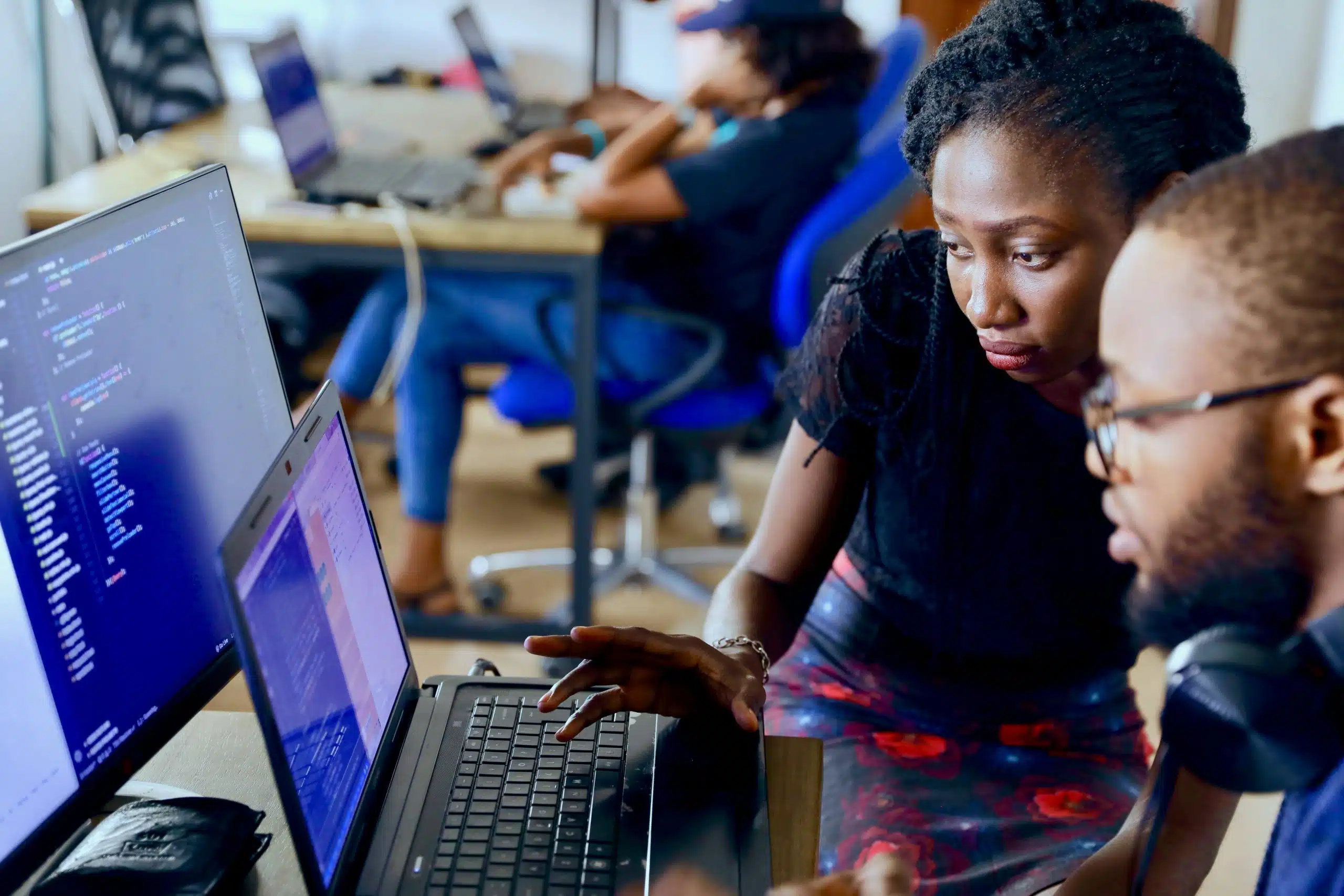
Planning to major in computer science? To stand out in college admissions, especially if you are aiming for top colleges like those in the Ivy League, participating in computer science competitions for high school students is an effective way to build a strong academic profile.
In this guide, you will find the top computer science competitions for high school students. Each section explains who can join, what the contest involves, and what outcomes you can expect as you build your skills.
- Best Computer Science Competitions for High School Students
- USA Computing Olympiad (USACO)
- American Computer Science League (ACSL)
- CyberPatriot National Youth Cyber Defense Competition
- Carnegie Mellon Informatics and Mathematics Competition (CMIMC)
- Congressional App Challenge
- Microsoft Imagine Cup Junior
- Lockheed Martin Code Quest
- Bebras Computing Challenge
- MIT Battlecode
- High School Capture the Flag (CTF) Competitions
- Frequently Asked Questions
- Takeaways
Best Computer Science Competitions for High School Students
Taking part in the top computer science competitions gives you structured opportunities to test your coding skills and see how you perform in timed or judged settings. These competitions help you practice programming, problem solving, and technical communication. They also create results that can strengthen your college applications, increasing your chances of being accepted into top computer science schools like MIT, Carnegie Mellon, and Stanford.
Below is a table of the best computer science competitions for high school students, including each competition’s name, location, and dates.
| Rank | Computer Science Competition | Location | Dates |
| 1 | USA Computing Olympiad (USACO) | Online | Dec 2026 to June 2027 (specific dates vary by session) |
| 2 | American Computer Science League (ACSL) | Online | Sept 1, 2026 (registration) to May 29, 2027 (invitational finals) |
| 3 | CyberPatriot National Youth Cyber Defense Competition | Online; Finals in Maryland | March 20 – 24, 2026 (National Finals) |
| 4 | Carnegie Mellon Informatics and Mathematics Competition (CMIMC) | Pittsburgh, PA (Math); Online (Programming) | April 18 – 20, 2026 |
| 5 | Congressional App Challenge | Nationwide (district-based) | October 26, 2026 (submission deadline) |
| 6 | Microsoft Imagine Cup Junior | Online (global) | January 5, 2026 (submission deadline) |
| 7 | Lockheed Martin Code Quest | Various global in-person sites; virtual options | February 28, 2026 at all sites except APAC; APAC event will be held March 28, 2026 |
| 8 | Bebras Computing Challenge | Online (school-based) | November 2026 |
| 9 | MIT Battlecode | Online; Final at MIT | January 2027 |
| 10 | High School Capture the Flag (CTF) Competitions | Online | May 1, 2026 – March 2027 |
Let’s discuss each competition one by one.
1. USA Computing Olympiad (USACO)
- Dates: Dec 2026 to June 2027 (specific dates vary by session)
- Location: Online
- Cost: Free
USACO is one of the most established computer science competitions for high school students. The season has four online contests, and each contest runs for 4 to 5 hours. You choose any time block within the contest window, and your personal timer starts once you begin.
You solve 3 to 4 algorithmic problems per contest in C++, Java, or Python. Your score depends on how many input cases your program handles within strict time limits.
Submissions are judged immediately, and you receive feedback codes such as X for incorrect output, T for time exceeded, and I for run-time or memory limits. If your program does not compile, you see compiler errors before resubmitting.
Perfect scores lead to promotions through the Bronze, Silver, Gold, and Platinum divisions. Only top performers earn an invitation to the summer training camp, which selects the U.S. IOI team.
USACO is open to all pre-college students. All training pages are public, and you can compete from anywhere.
If you want to improve your USACO performance and move up divisions, an Olympiad Training service can help. You get targeted lessons, real contest practice, and support from experienced coaches.
2. American Computer Science League (ACSL)
- Dates: Sept 1, 2026 (registration) to May 29, 2027 (invitational finals)
- Location: Online
- Cost: $175 for the first team in a division; $150 per additional team in a division
ACSL is one of the longest-running computer science competitions for high school students and had over 7,000 participants from 21 countries last season.
The season has four online contests from October to March. High school students join either the Senior Division (for students with programming experience, including AP Computer Science) or the Intermediate Division (for beginners or advanced middle schoolers).
A team may choose the 5-score format (top 5 scores count; up to 10 students on the roster) or the 3-score format (top 3 scores count; up to 6 students on the roster). Schools can register multiple teams to increase scoring opportunities.
Programming tasks can be completed in languages such as Python, Java, or C++. Students with strong cumulative scores qualify for the online ACSL Finals on May 17, 2026.
If you want to see how the competition develops strong foundations in algorithms, logic, and coding for high school competitors, review our detailed breakdown of ACSL.
3. CyberPatriot National Youth Cyber Defense Competition
- Dates: March 20–24, 2026 (National Finals)
- Location: Online for qualifying rounds; Finals in Maryland
- Cost: $225 for Open Division high school teams
CyberPatriot is a major cybersecurity competition for high school teams. You work on securing Windows and Linux systems and complete Cisco networking challenges. Rounds are scored based on vulnerabilities fixed and penalties avoided. Top teams advance through online rounds to the National Finals in Maryland.

Fee waivers are available for Title I schools, all-girl teams, JROTC teams, and Civil Air Patrol teams.
Teams consist of two to six students and compete across multiple timed online rounds. Strong cumulative scores determine advancement to the semifinals and eventually to the National Finals.
4. Carnegie Mellon Informatics and Mathematics Competition (CMIMC)
- Dates: April 18 – 20, 2026
- Location: Online (Programming)
- Cost: Free
CMIMC runs an in-person math contest at Carnegie Mellon and an online programming contest. Both are designed for high school students who are comfortable with advanced problem solving.
Teams consist of 4 to 6 students, but incomplete teams, including solo participants, are allowed. All participants must be in high school.
The Programming contest is held online and focuses on algorithmic coding tasks that require efficient solutions in languages such as Python, Java, or C++. Top teams receive trophies, and top individuals receive medals.
5. Congressional App Challenge
- Dates: October 26, 2026 (submission deadline)
- Location: Nationwide (district-based)
- Cost: Free
The Congressional App Challenge is the official app creation competition of the U.S. House of Representatives. It was established through House Resolution 77 (2013), which authorized each Representative to run an annual district-level computer science competition. The program is supported by the bipartisan chairs of the Congressional Internet Caucus and has continued in every Congress since.
You create an original app using any programming language or platform. You may work individually or in teams of up to four students. Each congressional district selects one winning app based on functionality, creativity, and demonstrated technical skill.
Winning teams are recognized by their Representative and invited to the House of Code event, where apps are displayed.
The competition is open to U.S. middle and high school students, and all submissions must be uploaded by October 26th, 2026. Participation is always free.
6. Microsoft Imagine Cup Junior
- Dates: January 5, 2026 (submission deadline)
- Location: Online (global)
- Cost: Free
Microsoft Imagine Cup Junior is an international competition that introduces students to AI and responsible technology design. High school participants work in teams under an educator or adult facilitator to create a concept for an AI-driven solution.
The competition does not require coding. Instead, it focuses on understanding AI principles, ethical considerations, and real-world applications. Microsoft provides learning modules and resources that guide students through AI basics, project design, and presentation structure.
Teams can include students ages 5–18, but high school students participate in the main AI for Good category.
Participation is free, and all project submissions must be uploaded by January 5, 2026.
7. Lockheed Martin Code Quest
- Dates: February 28, 2026 at all sites except APAC; APAC event on March 28, 2026
- Location: Various global in-person sites; virtual options available
- Cost: Free
Lockheed Martin Code Quest is an annual programming competition where teams of two to three high school students solve 20 to 30 engineering-focused problems created by Lockheed Martin engineers. Problems can be solved using Java, Python, C#, or C++.
Teams compete in a 2.5-hour timed session, either on-site at participating host locations or virtually. Divisions are separated into Novice and Advanced, though all teams receive the same problem set. Scoring is based on correctness and completion speed.
Participation is free for all teams.
8. Bebras Computing Challenge
- Dates: November 2026
- Location: Online (school-based)
- Cost: Free
The Bebras Computing Challenge is a global contest organized in over 30 countries to build computational thinking skills. High school students complete the challenge online at their school.
Each participant gets 45 minutes to answer 15 multiple-choice questions that test logic, pattern recognition, and algorithmic reasoning. Each age group receives 3 sets of 5 tasks, each set labeled easy, medium, or hard.
Bebras is one of the most accessible computer science competitions for high school students since it is free for all participants and does not require coding knowledge.
9. MIT Battlecode
- Dates: January to February 2027
- Location: Online; Final Tournament at MIT
- Cost: Free
MIT Battlecode is an AI programming competition where teams build autonomous bots using Java. The game rules and software release in early January, and teams spend the month refining their bots through scrimmages and ranked tournaments.
The Final Tournament takes place live at MIT and is streamed online. Top teams receive cash prizes, with a total prize pool of more than $20,000, and high school teams compete in their own bracket while still appearing on the global leaderboard.
Battlecode focuses on traditional AI such as pathfinding, resource management, communication, and combat decision-making. Machine learning is rarely used due to strict computation limits, though teams may attempt it.
To join most tournaments, teams must upload a bot, mark eligibility correctly on their team profile, and submit resumes for all members. Resumes are not required for the Sprint Tournaments, and anyone can participate in scrimmages.
10. High School Capture the Flag (CTF) Competitions
- Dates: May 1, 2026 – March 2027
- Location: Online or in-person, depending on the event
- Cost: Usually free
High school CTF competitions are cybersecurity contests where you solve real security challenges such as binary exploitation, reverse engineering, web vulnerabilities, forensics, and cryptography.
Events can be jeopardy-style, where you earn points by solving tasks, or attack-and-defend.
Popular high school CTFs include picoCTF, CSAW Cyber Security Challenge, and local or regional school-hosted tournaments. Many CTFs are beginner-friendly and offer practice problems, training modules, and walkthroughs to help students build foundational cybersecurity skills.
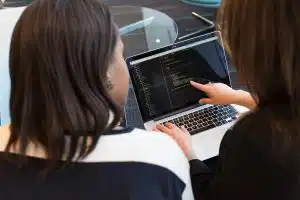
Most events allow teams of up to four students, although some accept individual competitors. Scoring is based on flags submitted during the event window. Many CTFs publish detailed write-ups, which help students analyze their performance and improve at higher-level tasks.
These competitions run throughout the year, and most are free to join.
Frequently Asked Questions
1. What are the best computer science competitions for high school students
The top computer science competitions for high school students include USACO, ACSL, CyberPatriot, CMIMC, the Congressional App Challenge, Microsoft Imagine Cup Junior, Lockheed Martin Code Quest, the Bebras Computing Challenge, MIT Battlecode, and high school Capture the Flag events.
2. Are there free computer science competitions for high school students?
Yes. Several major competitions are free, including the Congressional App Challenge, Microsoft Imagine Cup Junior, Bebras, MIT Battlecode, and most Capture the Flag events. Others may charge team registration fees or require school-based registration.
3. What skills do computer science competitions help high school students develop?
These competitions build skills in programming, algorithms, data structures, cybersecurity, AI logic, debugging, and computational thinking. Students also develop collaboration, communication, and strategic problem solving under time pressure.
4. How do computer science competitions help high school students with college admissions?
Strong results in computer science competitions can strengthen applications by demonstrating technical depth, problem-solving ability, and sustained interest in computing. High placements, national recognition, and published score reports provide strong evidence of academic ability for selective colleges.
5. When should I apply for computer science competitions for high school students?
Most competitions run on fixed annual cycles. Some open registration in early fall, others release problems or begin rounds in January. Deadlines vary widely, so students should confirm dates early, especially for multi-round events like USACO, CyberPatriot, and CMIMC.
Takeaways
- Computer science competitions for high school students give you structured ways to build programming skills, algorithmic thinking, cybersecurity knowledge, and real technical problem-solving ability.
- Prestigious options such as USACO, ACSL, CyberPatriot, CMIMC, and MIT Battlecode offer national or international recognition, score reports, awards, and advanced challenge problems.
- Many competitions provide measurable outcomes like rankings, division promotions, trophies, medals, and published results that strengthen your academic record and show colleges clear evidence of technical depth.
- Competing in multiple computer science events shows sustained interest in computing, strong analytical ability, and a long-term commitment to technical growth and innovation.
- If you want help building a stronger academic profile through computer science competitions for high school students, a college admissions consultant can help you plan your competition strategy, highlight results, and present your achievements more effectively.