


The top data science programs for high school students help you build a strong academic profile that Ivy League schools expect. When you code, work with datasets, and explain your findings clearly, you show admissions officers that you can excel in advanced STEM work and contribute to meaningful projects on campus.
In this guide, you will find the top data science programs for high school students that can strengthen your Ivy League applications. Each section explains who the program is for, how it works, and what results you can add to your academic record.
- What Are the Best Data Science Programs for High School Students?
- MIT Beaver Works Summer Institute (Data Science & Machine Learning)
- MITES (Minority Introduction to Engineering and Science)
- Carnegie Mellon Pre-College (CS Scholars)
- Wharton Global Youth: Data Science Academy
- Harvard Pre-College Program: Introduction to Data Science
- Stanford Pre-Collegiate Summer Institute: Data Science Course
- University of Chicago Summer Session: Pathways in Data Science
- UC San Diego FinDS (Mathematical Foundations of Data Science)
- Berkeley Unboxing Data Science (BUDS)
- University of Michigan MIDAS Data Science & AI Summer Camp
- Frequently Asked Questions
- Takeaways
What Are the Best Data Science Programs for High School Students?
Data science programs give you structured ways to build strong technical skills and produce work that can strengthen your college applications—especially if you’re applying to the top data science schools, like UC Berkeley and MIT. These programs teach you how to analyze datasets, write code with accuracy, and communicate results in a clear and professional way.
Below is a table of the best data science programs for high school students, including each program’s name, location, and projected dates.
| Rank | Data Science Program | Location | Dates |
| 1 | MIT Beaver Works Summer Institute (Data Science & Machine Learning) | Cambridge, Massachusetts | July 6 – August 2, 2026 |
| 2 | MITES (Minority Introduction to Engineering and Science) | Cambridge, Massachusetts | Late June – Early August 2026 (specific dates to be announced) |
| 3 | Carnegie Mellon Pre-College (CS Scholars) | Pittsburgh, Pennsylvania | June 20 – July 18, 2026 |
| 4 | Wharton Global Youth: Data Science Academy | Philadelphia, Pennsylvania | June 21 – July 11, 2026; July 12 – August 1, 2026 |
| 5 | Harvard Pre-College: Introduction to Data Science | Cambridge, Massachusetts | June 21 – July 2, 2026; July 5–17; July 19–31, 2026 |
| 6 | Stanford Pre-Collegiate Summer Institute: Data Science | Online (Stanford University) | June 15–26, 2026; July 6–17, 2026 |
| 7 | UChicago Summer Session: Pathways in Data Science | Chicago, Illinois | July 5–24, 2026 |
| 8 | UC San Diego FinDS (Mathematical Foundations of Data Science) | La Jolla, California / Hybrid | July 27–August 14, 2026 for Beginner; June 15–29, 2026 for Advanced |
| 9 | Berkeley Unboxing Data Science (BUDS) | Berkeley, California | June–July 2026 |
| 10 | University of Michigan MIDAS Data Science & AI Summer Camp | Ann Arbor & Detroit, Michigan | June 2026 |
Let’s discuss each program one by one.
1. MIT Beaver Works Summer Institute (Data Science & Machine Learning)
- Dates: July 5 – August 2, 2026
- Location: Cambridge, Massachusetts
- Cost: Free for most students; $2,350 tuition only for families with incomes over $150,000
MIT Beaver Works Summer Institute (BWSI) is a four-week technical program for high school students who want advanced training in data science and machine learning. To join, you must be a rising senior and complete the required online course and exams during the spring.
The track teaches Python programming, model development, and applied machine learning. You work full-day schedules that combine lectures, coding labs, and structured project time. Each team follows clear technical milestones and submits a final project that demonstrates specific machine learning skills learned in the course.
If you want to understand how MIT structures a machine learning curriculum for high-ability high school students, check out our MIT BWSI detailed breakdown.
2. MITES (Minority Introduction to Engineering and Science)
- Dates: Late June – Early August 2026
- Location: Cambridge, Massachusetts
- Cost: Fully funded
MITES is a six-week residential program for high-achieving rising seniors interested in trying out the pace and workload of first-year college STEM courses.
The curriculum includes advanced coursework in math and science, along with electives that introduce topics such as data science, computing, and engineering. Students follow a full academic schedule with daily classes, problem sets, labs, and evening study hours.
Admission is highly selective and prioritizes students from underserved or underrepresented backgrounds who have strong academic records in STEM.
If you want to understand how MITES builds college-level readiness through its accelerated STEM curriculum and elective tracks, read our comprehensive guide on MITES.
3. Carnegie Mellon Pre-College (CS Scholars)
- Dates: June 20 – July 18, 2026
- Location: Pittsburgh, Pennsylvania
- Cost: Fully funded
CS Scholars is a four-week residential program designed for rising juniors who want structured preparation in computer science and early data science topics. It is specifically intended for students who are historically underrepresented in technology fields.
The curriculum includes Python programming, problem solving, and technical modules that introduce core ideas used in data analysis and algorithmic thinking. Each student completes assignments that build toward a final project demonstrating the skills learned during the course.
4. Wharton Global Youth: Data Science Academy
- Dates: June 21 – July 11, 2026 (Session 1); July 12 – August 1, 2026 (Session 2)
- Location: Philadelphia, Pennsylvania
- Cost: $10,599 for the 3-week residential program (financial aid available)
The Data Science Academy is a three-week residential program for high school students currently enrolled in grades 10-11 who want formal training in data science methods used in business, economics, and applied analytics. The curriculum covers data wrangling, visualization, statistical modeling, and supervised learning techniques taught by Wharton faculty and instructors.

The Academy admits only about 75 students, which makes the program extremely competitive.
If you want to see how the Academy structures its three-week curriculum and the type of capstone projects students complete, read our complete guide on the Data Science Academy.
5. Harvard Pre-College Program: Introduction to Data Science
- Dates: June 21 – July 2, 2026 (session 1); July 5 – 17, 2026 (session 2); July 19 – 31, 2026 (session 3)
- Location: Cambridge, Massachusetts
- Cost: $5800 for a 2-week residential session (financial aid available)
Harvard’s Pre-College Program offers a two-week elective in Introduction to Data Science, designed for students who want a foundation in data analysis and visualization. The course introduces core concepts using Python or R.
Because the Pre-College Program runs multiple sessions, you select one two-week block and focus on a single subject the entire time.
If you want a more in-depth look, you can check out our overview of Harvard’s Pre-College Program.
6. Stanford Pre-Collegiate Summer Institute: Data Science Course
- Dates: June 15 – 26, 2026 (session 1); July 6 – 17, 2026 (session 2)
- Location: Online (live instruction)
- Cost: $3,200 for the 2-week course (financial aid available)
Stanford’s Pre-Collegiate Summer Institute offers a two-week data science course for high school students who want structured training in statistical reasoning, modeling, and data analysis. Classes average about 16 students, so you can interact with instructors and teaching assistants easily.
If you want more details, check out our full overview of Stanford’s Pre-Collegiate Summer Institute for a clearer breakdown.
7. University of Chicago Summer Session: Pathways in Data Science
- Dates: July 5–24, 2026
- Location: Chicago, Illinois
- Cost: $9,300 for the 3-week residential program (financial aid available)
Pathways in Data Science is a three-week course that teaches high school students (grades 9 to 11) how to use Python for data analysis, visualization, and introductory machine learning. The course follows a college-level structure and includes lectures, labs, daily assignments, and a project that applies core methods to datasets.

The course is intended for students who already have programming experience (preferably in Python) and ideally have completed single-variable calculus, such as AP Calculus AB. Applicants without prior coding experience must finish a required online Python module before the program.
8. UC San Diego FinDS (Mathematical Foundations of Data Science)
- Dates: July 27–August 14, 2026 (Beginner); June 15–29, 2026 (Advanced)
- Location: La Jolla, California / Hybrid
- Cost: $750 for the 3-week beginner program; $800 for the advanced program (scholarships available)
FinDS is a math-focused data science program that teaches the core concepts needed for college-level work in statistics, machine learning, and computing. The beginner track is open to students who have completed Algebra II, while the advanced track is for students who have completed the beginner course or have equivalent preparation. Both tracks offer in-person and online options.
Because the program runs in partnership with multiple universities and receives NSF support, tuition is lower than most summer programs, and many students receive scholarships.
9. Berkeley Unboxing Data Science (BUDS)
- Dates: June–July 2026
- Location: Berkeley, California
- Cost: Free
BUDS is a 5-week free outreach program run by UC Berkeley’s Division of Computing, Data Science, and Society. It is designed for high school students from underserved or underrepresented backgrounds who want an introduction to data science.
The curriculum includes modules on visualization, basic modeling, and real-world data applications, supported by near-peer mentorship. Teams produce a final project that applies the skills learned during the program.
10. University of Michigan MIDAS Data Science & AI Summer Camp
- Dates: June 2026
- Location: Ann Arbor and Detroit, Michigan
- Cost: $100 for U-M internal; $3,000 for external participants
The MIDAS Summer Camp is a one-week day program that introduces high school students to data science and artificial intelligence. The camp focuses on basic data concepts, visualization, and simple AI methods, all taught through short lectures led by University of Michigan faculty and graduate students.
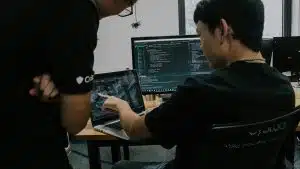
The program includes a campus visit, lab demonstrations, and group sessions that show practical applications of AI across different fields.
The camp is designed for students from the Detroit area, with priority given to those who have limited access to STEM opportunities.
Frequently Asked Questions
1. What are the best data science programs for high school students?
Some of the top data science programs for high school students include MIT Beaver Works Summer Institute, MITES, Carnegie Mellon CS Scholars, the Wharton Data Science Academy, the Harvard Pre-College data science course, the Stanford Pre-Collegiate data science course, UChicago’s Pathways in Data Science, UC San Diego FinDS, Berkeley’s BUDS program, and the University of Michigan MIDAS Summer Camp.
2. Are there free data science programs for high school students?
Yes. Several data science programs are free, including MITES, Carnegie Mellon CS Scholars, and the UC Berkeley BUDS program. MIT Beaver Works is also free for most students, and FinDS offers low-cost tuition with available scholarships.
3. What skills do data science programs help high school students develop?
Data science programs strengthen skills in Python or R programming, data wrangling, visualization, statistical analysis, and introductory machine learning. Students also build problem-solving, analytical reasoning, and communication skills by working with datasets and presenting project results.
4. How do data science programs help high school students with college admissions?
Completing a selective data science program can improve applications by demonstrating advanced STEM ability, technical preparation, and interest in quantitative fields. Many programs include graded assignments or final projects that can be referenced in essays or shared in a portfolio.
5. When should I apply for these data science programs?
Most data science programs open applications in the fall or winter. Competitive programs typically have deadlines from December through February, while others accept applications through early spring. Students should confirm dates each year, since deadlines vary by program.
Takeaways
- Data science programs give you structured training in coding, statistics, and analytical thinking, helping you work confidently with datasets and build technical skills that selective colleges value.
- Prestigious options such as MIT Beaver Works, MITES, Carnegie Mellon CS Scholars, the Wharton Data Science Academy, Stanford’s Pre-Collegiate data science course, and UChicago Pathways offer rigorous curriculum, selective admission, and meaningful academic outcomes.
- Many programs produce measurable results like coding projects, final presentations, graded coursework, or research experience that strengthen your academic record and give colleges a clearer view of your readiness for STEM study.
- Completing one or more data science programs shows sustained interest in computing and quantitative fields, along with the ability to handle fast-paced instruction and college-level material.
- If you want support using these data science programs to strengthen your college applications, a college admissions consultant can help you choose the right options, shape your project outcomes, and present your experiences effectively in your application materials.










