

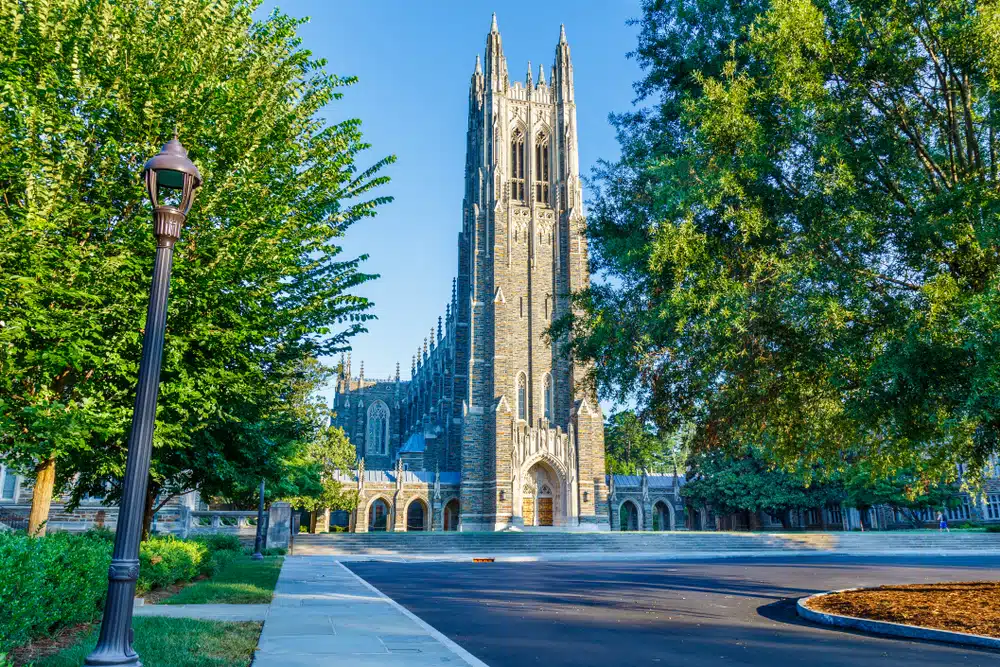
Duke University is well-known for its rigorous academics, but what really enriches the student experience is the variety of clubs and organizations on campus. With over 600 student-run clubs at Duke, there’s something for everyone—whether you’re into sports, culture, or just meeting new people.
According to a survey from Duke Student Affairs, about 90% of students are involved in at least one Duke University club or organization. And it’s not just about filling up your schedule–research from the National Survey of Student Engagement (NSSE) shows that students involved in extracurriculars are more likely to feel challenged academically, learn more, and be happier with their college experience.
No matter what your interests are, Duke University’s clubs and organizations have a wide variety of options for you. Let’s look at some of the most popular Duke University clubs and organizations you can join.
-
- Academic and Professional Clubs at Duke
- Cultural and Identity-Based Organizations
- Arts and Performance Groups
- Athletic and Recreational Clubs
- Balancing School and Extracurriculars
- Steps to Join a Club at Duke University
- Want to Start Your Own Club? Here’s How
- How Duke University Clubs Help Your Future
- Frequently Asked Questions
- Takeaways
Academic and Professional Clubs at Duke
Duke University has tons of academic and professional clubs that give you hands-on learning, opportunities to connect with peers, and career preparation. No matter if you’re into finance, law, medicine, or robotics, you’ll find a club that matches your interests and career aspirations.
- Duke Investment Club. The Duke Investment Club manages a $150,000 portfolio, giving members hands-on experience in stock analysis, trading, and financial decision-making. The club also hosts workshops with Wall Street professionals and offers networking opportunities with alumni in the finance industry.
- Duke Pre-Law Society. The Duke Pre-Law Society provides LSAT prep courses, moot court competitions, and events with practicing attorneys and law school representatives. Members also get to attend talks with law professors and guest speakers from top law firms.
- American Medical Student Association (AMSA). The AMSA at Duke offers MCAT prep sessions, healthcare volunteering opportunities, and workshops on the medical school application process. They also give students a firsthand look at the medical profession by arranging service trips and shadowing experiences in local hospitals.
- Duke Business Society. The Duke Business Society organizes case competitions, consulting projects for local businesses, and seminars with industry leaders. The club also offers mentorship and career guidance to help students prepare for the business world.
- Duke Robotics Club. The Duke Robotics Club lets students design and build robots for national and international competitions. Members get practical applications of their academic studies by working on projects that combine engineering, programming, and design.

Cultural and Identity-Based Organizations
At Duke University, cultural and identity-based organizations give you a chance to connect, celebrate your heritage, and get involved. These groups are all about building a sense of community and helping students like you feel at home on campus.
- Asian Students Association (ASA). The ASA at Duke organizes events like the Lunar New Year Festival, cultural showcases, and discussions on Asian-American issues. The group also helps build a solid community for Asian students by offering peer mentoring and leadership opportunities.
- Black Student Alliance (BSA). The BSA hosts Black History Month events, social justice forums, and community service initiatives. They also provide support and resources for Black students on campus by organizing networking events with alumni and professionals.
- Latinx Student Organization (LSO). The LSO celebrates Hispanic Heritage Month with cultural performances, food festivals, and educational workshops. They also offer leadership training and advocate for Latinx students to ensure their voices are heard within the Duke community.
- Jewish Life at Duke. Jewish Life at Duke offers religious services, holiday celebrations, and social events for Jewish students. They also promote understanding among students from various backgrounds by facilitating discussions between different faiths and organizing community service projects.
- Duke International Association (DIA). The DIA supports international students by helping them adjust to life in the U.S. They host global awareness events and allow students to showcase their cultures through food, dance, and music.
Service and Social Justice Groups
At Duke, service and social justice groups give you the chance to make a real difference. If you’re passionate about community work, fighting poverty, or advocating for sustainability, these organizations are the perfect place to take action.
- Duke Partnership for Service (dPS). The dPS coordinates volunteer opportunities with local nonprofits, organizes service-learning trips, and hosts the annual DukeEngage conference focused on social impact. This group plays a central role in promoting a culture of service and civic engagement at Duke.
- Duke Coalition for Alleviating Poverty (CAP). The CAP works on advocacy, fundraising, and direct service projects to reduce poverty in the Durham area. They also host workshops and discussions to raise awareness and inspire student action.
- Duke Students for Humane Borders. This group focuses on immigrant rights, providing aid on the U.S.-Mexico border, and advocating for policy changes related to immigration. It’s a way for students to engage with critical social issues on a global scale.
- Environmental Alliance. The Environmental Alliance promotes sustainability on campus, organizing Earth Day events and working on projects like recycling programs and sustainable dining. They play a crucial role in encouraging environmental awareness at Duke.
- Duke Social Justice Living Learning Community (SJLLC). The SJLLC allows students to live in a community focused on social justice. Members participate in activism, workshops, and discussions on social issues and work on projects to create positive change.
Arts and Performance Groups
Duke’s campus is full of opportunities to dive into the arts. If you’re into performing, there are plenty of student-led groups to explore your talent in music, theater, or comedy.

- Duke University Improv (DUI). Duke University Improv is a student-led comedy group that performs regularly on campus. They offer workshops to help students develop improvisation skills and provide a space for creative expression through humor and performance.
- Hoof ‘n’ Horn. Hoof ‘n’ Horn is Duke’s student-run musical theater company, known for producing high-quality shows each semester. Students involved gain experience in all aspects of theater production, from acting and singing to set design and stage management.
- Duke Chorale. The Duke Chorale is a large, mixed-voice choir that performs a wide range of classical and contemporary choral works. The group also allows students to perform in prestigious venues worldwide by touring internationally.
- Duke Jazz Ensemble. The Duke Jazz Ensemble allows students to perform various jazz styles, from big band to small combo settings. The ensemble often collaborates with guest artists and performs at campus events and jazz festivals.
- Awaaz. Awaaz is Duke’s South Asian cultural show, featuring dance, music, and drama performances. It’s one of the largest student-produced shows on campus, celebrating South Asian culture and giving students a platform to express their heritage.
Athletic and Recreational Clubs
You’ll find plenty of athletic and recreational clubs that cater to every level of experience at Duke. From competitive sports to relaxed outdoor adventures, these clubs give you a great way to meet people, stay fit, and have fun while balancing your academic life.
- Duke Club Sports. Duke lets students compete at a high level while balancing their academic work by offering a wide range of club sports, including soccer, rugby, and ultimate frisbee. These teams often travel for competitions and represent Duke at regional and national levels.
- Outdoor Adventures Club. The Outdoor Adventures Club organizes hiking, camping, and kayaking trips to encourage students to explore the natural beauty around Duke. They also offer workshops on outdoor skills and safety to make the club accessible to all experience levels.
- Duke Running Club. The Duke Running Club provides a structured environment for runners of all levels. They organize group runs, participate in local races, and support those training for marathons or other long-distance events.
- Duke Cycling Team. The Duke Cycling Team competes in road and mountain biking events yearly. The team welcomes cyclists of all skill levels and provides coaching and support for those looking to improve their performance.
- Duke Intramurals. Duke’s intramural sports program offers a variety of sports, including basketball, volleyball, and flag football. These leagues provide a fun and competitive way for students to stay active and engage with their peers.
Balancing School and Extracurriculars
Balancing schoolwork with extracurriculars at Duke can be tricky, but many Duke students find it worthwhile. The key is to pick activities that you really care about, and that fit your goals.
For example, joining academic-focused Duke University clubs like the Duke Pre-Medical Association can help with things like MCAT prep and med school applications. At the same time, you might join a club like Duke Club Running to stay active and manage stress.
Many students find that being involved in clubs at Duke actually helps them do better in school because it teaches them to manage their time well. It’s all about finding the right balance and focusing on what matters most to you.
Steps to Join a Club at Duke University
Joining Duke University clubs is easy, and the university offers many opportunities to explore different organizations. The best time to start is at the Student Activities Fair at the beginning of the school year. It’s a great way to check out all the Duke University clubs and organizations, meet current members, and find out how to join. It’s the perfect way to discover clubs you may not have known about.

If you miss the fair, don’t worry—many Duke University clubs maintain active websites or social media pages where you can learn more about their events, meeting times, and how to join. You can easily find contact information or details about upcoming events.
Some clubs, particularly performance-based groups like Duke’s a cappella groups or the Duke Dance Council, require auditions or applications. These groups may have limited spots, so checking their deadlines and requirements early is important. Other organizations, such as service groups or professional societies, may ask you to submit a brief application detailing your interest.
Most Duke University clubs are open to all students with no special requirements. For these, simply attending a meeting or event is often enough to become a member. Many clubs welcome new members throughout the year, so even if you don’t join right away, you can always get involved later in the semester.
Duke’s Student Involvement and Leadership office is a great resource if you’re unsure where to begin. They can help guide you toward clubs that match your interests and provide information about leadership opportunities within the student organizations at Duke.
Want to Start Your Own Club? Here’s How
If you have an idea for a club that doesn’t exist yet, Duke makes it easy to start your own. First, you’ll need to find at least ten other interested students. This is important because Duke wants to ensure your club has enough initial support to succeed.
Next, you’ll need to submit a proposal to the Office of Student Affairs. This proposal outlines what your club will focus on, its goals, and why it’s a good addition to Duke’s campus community. Be specific about what your club will offer that isn’t already available at Duke—this helps show that your club fills a gap or provides a fresh perspective.
Once you submit your proposal, Duke Student Government checks if it follows university guidelines and brings something fresh and inclusive. You’ll get help finding a meeting space and managing your club if approved. Plus, you can apply for funding through the Student Organization Finance Committee (SOFC) to cover event costs, supplies, or marketing. These resources make getting your club off the ground and running smoothly easier.
Once your club is approved, you’ll get access to resources like meeting spaces and funding to grow your club and contribute to the diverse array of Duke University clubs. You can apply for funding from the Student Organization Finance Committee (SOFC) to cover events and supplies.
Many successful clubs have started this way—take Duke’s Food for Thought, which began with a small group of students tackling food insecurity and now hosts major events. Starting a club is a great way to make your mark and create a space for shared interests.
How Duke University Clubs Help Your Future
Being involved in Duke University clubs and organizations can open doors for your future. Employers often look for candidates who have shown leadership, teamwork, and initiative—qualities you can easily develop through your involvement in student organizations.
Serving in leadership roles in Duke University clubs, such as the Duke Marketing Club, you likely gained experience managing a team of 15-20 students, organizing events like the annual Marketing Insights Conference, and handling a budget of over $10,000. These practical skills translate directly to project management, event planning, or finance roles.
Moreover, Duke’s alumni network is incredibly strong, especially within specific industries. Many alumni once involved in these clubs return to campus to offer mentorship, internships, or even direct job opportunities.

For example, the Duke Business Society has a mentorship program where current students are paired with Duke alumni working at firms like Goldman Sachs and McKinsey & Company. This connection can be crucial when applying for internships or full-time roles in these competitive industries.
Research shows that participating in extracurricular activities, especially those involving leadership and significant time commitment greatly increases the number of job offers students receive. Being active in Duke University clubs can give you a real advantage in the job market.
Frequently Asked Questions
How many clubs does Duke University have?
Duke University has over 600 student-run clubs and organizations that offer various extracurricular activities. Whether you’re interested in academic, cultural, or recreational groups, Duke University clubs have something for everyone.
How do I join Duke University clubs?
You can join Duke student organizations by attending the Student Activities Fair at the start of the school year. Many clubs have websites and social media pages detailing meetings and events if you miss the fair. Most clubs at Duke are open to all students.
What types of clubs can I join at Duke?
Duke extracurriculars cover various interests, including academic clubs, service organizations, cultural groups, athletic teams, and Duke Greek life, which remains an important part of campus culture. Whether you’re interested in professional development or just a fun hobby, Duke University clubs provide endless opportunities to get involved.
Can I start my own club at Duke University?
Yes! If you have an idea for a club that doesn’t exist, you can easily start your own. You’ll need at least ten interested students and a proposal to submit to Duke Student Affairs. Once approved, your club will access resources like meeting spaces and funding.
Do Duke University clubs help with future careers?
Yes, being active in Duke University clubs can significantly enhance your career prospects. Employers value leadership, teamwork, and communication skills, all of which you can develop through Duke’s extracurricular activities. Many clubs also provide networking opportunities with alumni and industry professionals.
Takeaways
- Studies show that joining extracurriculars helps students feel more connected, academically challenged, and happy during their time on campus.
- With over 600 student-run clubs, Duke University offers endless ways to explore your passions, whether it’s business, arts, or sports.
- Many clubs, like the Duke Investment Club and Pre-Law Society, offer hands-on experiences and networking opportunities that can help shape your future career.
- Joining clubs and organizations that offer real-world experiences and career networking can boost your prospects and set you apart in the job market.
- Planning to apply to Duke University? A college admissions consultant can help you get into Duke with expert guidance. With AdmissionSight, you’ll receive personalized strategies and tailored tips to help you stand out in the competitive admissions process.










