

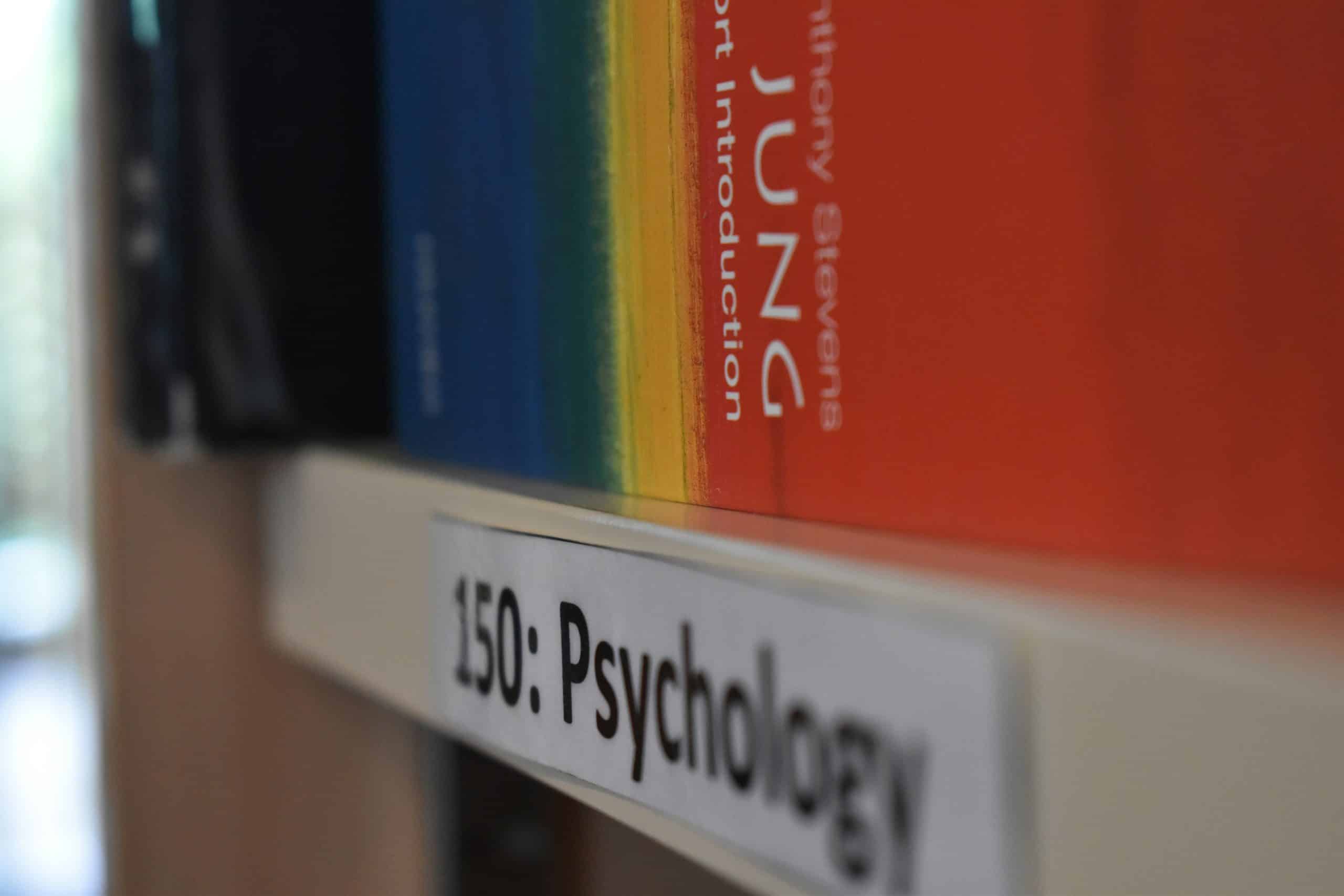
Choosing which Advanced Placement (AP) courses to take is a big decision for many high school students. One of the popular options is AP Psychology, which deals with how the brain works and the reasons behind human behavior.
But how hard is AP Psychology, really? Or is AP Psychology easy? In this blog, we’ll break down the course and the exam format and give tips to help you decide if it’s the right fit.
- What Is AP Psychology?
- How Easy Is AP Psychology?
- Breaking Down the AP Psychology Exam
- Should You Take AP Psychology?
- Frequently Asked Questions
- Takeaways
What Is AP Psychology?
AP Psychology is a college-level course that introduces high school students to the scientific study of human behavior and mental processes. You’ll explore topics like memory, personality, emotions, and social interactions. In short, you’ll study what makes people think and act the way they do.

While AP Psychology is often considered one of the more accessible AP classes, it still requires strong memorization skills and critical thinking. You’ll analyze research studies, interpret data, and apply psychological concepts in different scenarios. If you’re curious about why people behave the way they do and enjoy problem-solving, this course could be a great option for you.
What does AP Psychology cover?
The AP Psychology curriculum follows college-level standards and incorporates content and skills recommended by the American Psychological Association’s (APA) Introductory Psychology Initiative. Here are the areas you’ll explore in the course:
- Research methods and ethics. Learn how psychologists study behavior using experiments, surveys, observations, and the ethical rules they follow.
- Biology and behavior. Examine how the brain and behavior are connected, including how neurons, brain structures, and hormones influence our actions.
- Cognitive psychology. Explore how we think, learn, remember, and make decisions.
- Developmental psychology. Understand how people change and grow from infancy to old age.
- Social psychology. See how people influence each other, from peer pressure to group behavior.
- Clinical psychology. Study mental disorders, their causes, and how they’re treated.
- Therapies and treatments. Learn about different ways to help people struggling with mental health issues, including therapy and medication.
With these topics, AP Psychology gives you a well-rounded introduction to human behavior, setting the stage for more advanced psychology studies in college.
How Easy Is AP Psychology?
In general, AP Psychology is one of the easier AP courses. There’s no complex math involved, which is great if you’re into humanities and similar fields. However, it does require strong reading comprehension and memorization skills. You’ll learn psychological theories, case studies, and terminology, which can quickly feel overwhelming.
While the workload is manageable compared to other AP science courses, you must still put in effort to succeed. The AP exam includes multiple-choice and free-response questions, so you’ll be tested on your ability to recall information and apply psychological concepts to different scenarios. Many find AP Psychology engaging—just be prepared to stay organized and develop consistent study habits.
Let’s go over other factors:
The pass rate
One way to gauge how easy (or difficult) a course is is by looking at the pass rate.
| AP class/exam | Pass rate (3 or higher) | Perfect score (5) |
| AP Psychology | 61.7% | 19.2% |
| All AP classes | 60% | *Data not readily available |
According to the College Board, AP Psychology has a slightly higher pass rate than other AP courses, with 61.7% of students scoring a 3 or higher compared to the 60% average across all AP exams. Additionally, 19.2% of test-takers earned a perfect score of 5, which is certainly a feat for an AP course. This only means that while AP Psychology can be challenging, you can definitely do well if you’re prepared.
The course material
AP Psychology covers a great deal of material, from brain functions to social interactions. While that can be interesting and engaging, it can be a lot to take in if you’re not used to studying so many concepts at once.
The good news is it’s not as technical or math-heavy as other AP courses, making the workload much more manageable for most students.
Your subject skills
If you’re one of those students with a knack for memorization and analyzing ideas, you might find AP Psychology easier. The course delves heavily into understanding and applying psychological concepts rather than complex calculations or lab work.
Breaking Down the AP Psychology Exam
Once enrolled in the AP class, the next step is understanding how the AP exam works. The AP Psychology exam evaluates your understanding of the core concepts and theories from the course.
During the 2024 AP exams, around 320,164 students took the AP Psychology exam. Of those students, over 197,000 earned a passing score. While the pass rate is slightly above average, you must prepare well to make sure you perform well on test day.
Exam format
AP Psychology is a fully digital exam that lasts two hours long. You’ll complete the test using the Bluebook app, which automatically submits your answers once the exams end. It’s divided into two main sections:
- Multiple-choice questions. In this section, you’ll answer 100 multiple-choice questions, which make up two-thirds of your total score. You’ll have 70 minutes to work through them, from basic definitions to applying psychological theories to real-world situations.
- Free-response questions. In this section, you’ll need to write two detailed essays in 50 minutes. These questions require you to analyze and explain psychological principles, so practice structuring your answers well.
The multiple-choice section only gives you less than one minute per question. Time management is super important here, so pace yourself to complete the entire section.
For the free-response questions, your teacher should guide you through explanations and provide practice questions to help you prepare. If you’ve taken other AP classes, the essay structure might be similar to what you already know.

Scoring
As mentioned, the AP Psychology exam is divided into two sections: Section I features 100 multiple-choice questions (MCQs), and Section II includes two free-response questions (FRQs).
Each MCQ is worth one point, and each FRQ is scored out of seven points. The table below outlines the latest scoring structure, showing how each section contributes to the total composite score:
| Section | Number of questions | Points | Composite score |
| Section I: MCQ | 100 | 100 | 100 |
| Section II: FRQ | 2 | 14 | 14 * 3.57 |
| Final composite score | 150 | ||
Altogether, the highest possible raw score on the exam is 150 points.
You might be wondering if there’s a penalty for guessing on the AP Psychology exam. Good news, there isn’t! Wrong answers won’t cost you extra points, so it’s always better to take a guess rather than leave a question blank. Even if you’re unsure, making an educated guess still gives you a 20% chance of picking the correct answer.
Meanwhile, on the FRQs, minor spelling and grammar mistakes won’t cost you points. However, to earn credit, you need to fully understand the prompt, analyze it effectively, and support your response with relevant psychological theories, concepts, and research-based evidence when applicable.
Once both Section I and Section II are graded, your raw scores are combined to create a composite score out of 150. This composite score is converted into the AP scaled score, ranging from 1 to 5:
| Composite score range | AP score | Qualification |
| 113-150 | 5 | Extremely well-qualified |
| 93-112 | 4 | Very well-qualified |
| 77-92 | 3 | Qualified |
| 65-76 | 2 | Possibly qualified |
| 0-64 | 1 | No recommendation |
A perfect score of 150 corresponds to a top score of 5 on the exam. However, remember you don’t need to get all the answers perfect to score a 5.
Should You Take AP Psychology?
AP Psychology is a great choice if you’re curious about how the mind works and why people behave the way they do. The course covers a wide range of topics, including brain function, perception, psychological disorders, and more. It’s generally considered one of the easier AP courses, so that’s something to think about if you’re weighing the workload, expectations, and test difficulty.
Beyond the subject itself, taking AP Psychology can also strengthen your college applications. Many colleges consider AP courses when reviewing applicants, and earning a high score, which is usually a 4 or 5, may earn you college credit and allow you to graduate early.
Frequently Asked Questions
1. Why is AP Psychology easy?
AP Psychology is often considered one of the easier AP courses because it doesn’t involve complex math or technical problem-solving. The material is straightforward, focusing on psychological theories, concepts, and research. However, it does require strong memorization skills and the ability to think critically when applying concepts to different scenarios.
2. Is AP Psychology easy to self study?
Yes, AP Psychology is one of the easier AP courses to self-study. If your school doesn’t offer it, you can use a textbook or review book and practice free-response questions. A qualified tutor can also help by clarifying difficult topics and teaching you effective test-taking strategies.
3. When should you take AP Psychology?
Many take AP Psychology in their junior or senior year because they have more advanced reading and study skills by then. It pairs well with other social science APs like AP Government or AP Economics. Seniors may also take it as a lighter course while focusing on college applications.
4. How many college credits do you get for AP Psychology?
It depends, as college credit policies vary. Some colleges give credit for a score of 3, while others require a 4 or 5. Over 2,000 colleges accept AP Psychology scores for credit, but it’s best to check with the schools you’re interested in to see their specific requirements.

Takeaways
- AP Psychology is considered one of the easier AP courses since it doesn’t require advanced math or technical skills.
- However, AP Psychology still requires a lot of memorization and strong critical thinking skills.
- The course covers a wide range of topics, including human behavior, cognitive psychology, mental disorders, therapy, and medication.
- The AP Psychology exam has a slightly higher-than-average pass rate, but you’ll still need to study and prepare well to ace the exam.
- If you’re unsure whether AP Psychology is a good fit for you, consider consulting an admissions expert for guidance on what to expect and how to prepare.










