Odyssey of the Mind (OM) is one of the most respected creative problem-solving programs for students worldwide. The competition is ideal for students who enjoy building, performing, designing, or thinking creatively under pressure, and who want an extracurricular that colleges genuinely value.
The program’s educational impact aligns with a recent study showing that project-based, collaborative problem solving strengthens critical thinking, creativity, communication, and the real-world application of knowledge.
This guide explains what Odyssey of the Mind is, how the competition works, eligibility rules, costs, timelines, and why reaching the World Finals is a meaningful achievement for college-bound students.
- What Is Odyssey of the Mind?
- Odyssey of the Mind Awards and Recognitions
- How to Qualify for Odyssey of the Mind
- How to Get into Odyssey of the Mind
- How to Win Odyssey of the Mind
- Odyssey of the Mind Previous Winners
- Frequently Asked Questions
- Takeaways
What Is Odyssey of the Mind?
Odyssey of the Mind is an international creative problem-solving program that challenges you to design and present original solutions to open-ended problems. You aren’t judged on finding a single “right” answer; instead, your team is evaluated on creativity, critical thinking, collaboration, and how effectively you present your ideas.
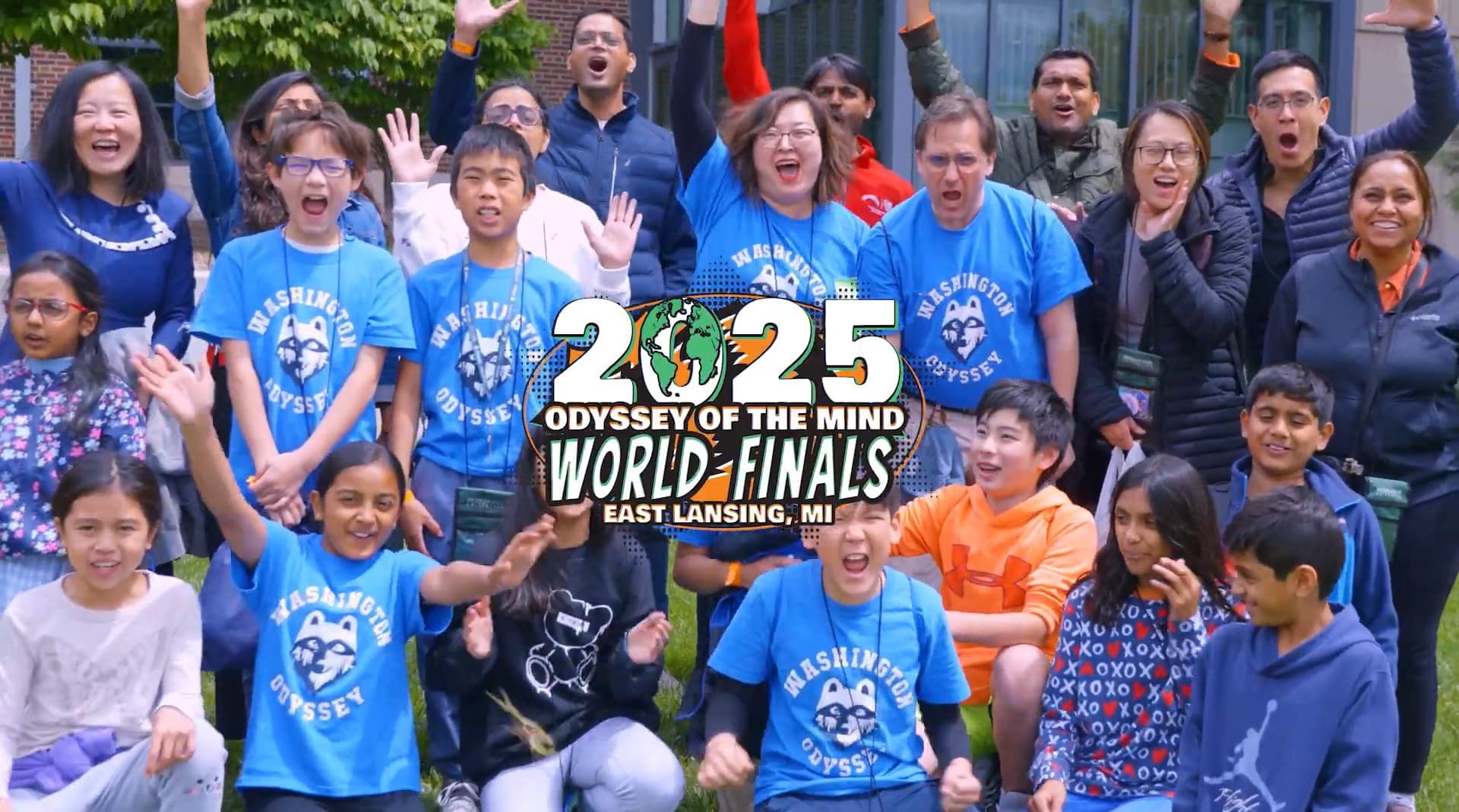
Each year, you choose one Long-Term Problem that matches your interests and strengths, blending STEM, engineering, arts, and performance. You work in a team of up to seven students, guided by a coach who can teach general skills but cannot contribute ideas or solutions.
Odyssey of the Mind problem types include:
|
Problem Type |
Description |
| Primary (Grades K–2, non-competitive) | Your team creates introductory performances focused on creativity, storytelling, and basic STEM or arts concepts, with an emphasis on learning and feedback. |
| Vehicle | Your team designs, builds, and operates an original vehicle that completes required tasks during a live performance, emphasizing engineering, physics, and creative energy use. |
| Technical | Your team creates and operates mechanical or electronic devices that perform specific functions, showcasing applied engineering, innovation, and problem-solving. |
| Classics | Your team writes and performs an original theatrical piece inspired by classical literature, history, mythology, or art, blending research with creative reinterpretation. |
| Structure | Your team designs and builds a lightweight balsa-wood structure that supports as much weight as possible before breaking, combining structural engineering with performance. |
| Performance | Your team presents an original skit centered on humor, storytelling, or social themes, highlighting originality, stagecraft, and audience impact. |
In addition, every team solves a surprise Spontaneous problem—an on-the-spot verbal, hands-on, or hybrid challenge completed in minutes—testing your ability to think creatively and work under pressure.
The most recent Odyssey of the Mind World Finals were held at Michigan State University in East Lansing, Michigan, from May 21–24, 2025. For 2026, the World Finals will take place at Iowa State University from May 27–30.
Odyssey of the Mind Awards and Recognitions
Odyssey of the Mind does not offer cash prizes. Your recognition comes from competitive placement and creativity honors that signal high achievement and carry strong academics.
Below are the placement and special awards given to outstanding teams:
|
Award |
Description |
| World Finals Place Awards | At World Finals, only 18 teams out of hundreds are named World Champions. Teams placing 1st, 2nd, and 3rd in each problem and division receive a trophy and individual medals, while teams placing 4th–6th earn honorable mention. |
| Ranatra Fusca Creativity Award | Awarded for exceptional originality and the highest level of creativity in Odyssey of the Mind. This honor can grant automatic advancement to World Finals regardless of placement. At World Finals, recipients receive gold medals and have their names engraved on the Ranatra Fusca trophy. |
| OMER’s Award | Recognizes outstanding sportsmanship, leadership, integrity, or exceptional skill demonstrated during a tournament. This award emphasizes character and contribution rather than competitive ranking. |
| Odyssey of the Mind Creativity Award | Given for extraordinary creative achievement or for applying creativity to benefit society. Presented at World Finals, with past recipients including individuals and organizations such as NASA, The Library of Congress, and Blue Man Group. |
| Odyssey of the Mind Spirit Award | Honors teams or individuals who consistently demonstrate cooperation, self-respect, and appreciation for others throughout their participation, highlighting sustained positive impact rather than a single performance. |
At AdmissionsSight, we consider qualifying for World Finals, earning World Champion medals, or receiving the Ranatra Fusca Creativity Award to be among the most meaningful distinctions for college admissions, as they signal exceptional creativity and teamwork.
How to Qualify for the Odyssey of the Mind Competition
All students may participate as long as they compete through an officially registered Odyssey of the Mind organization and take part in the formal tournament system. Below are the qualification requirements in further detail:
Eligibility
You are eligible to participate in OM if you compete through a registered organization. These include an individual school or multiple schools sharing a principal, a homeschool organization, a community group, or a college, accredited technical school, or military program.
Your team is placed into a division based on the grade level and age of its members, and you must compete in the lowest division for which your team qualifies. Divisions are defined as follows:
- Primary (K–2, non-competitive). Introductory, creativity-focused participation.
- Division I (K–5). Elementary competition with foundational problem-solving.
- Division II (6–8). Middle school level with increased technical and creative depth.
- Division III (9–12). High school division with advanced problem-solving and performance demands.
- Division IV (Collegiate). For post-secondary students or military members, emphasizing high-level innovation.
Required documents
Before you compete, your team must submit a complete set of official documents so judges can verify eligibility, scoring, and rule compliance. These forms are reviewed before your performance and play a direct role in how your solution is evaluated.
- Team roster. Lists all members and confirms the correct competition division based on grade and age
- Cost form. Itemizes all materials and verifies you stayed within the cost limit; missing items or exceeding the limit can cause penalties
- Style form. Identifies which creative elements you want judged for Style; unlisted elements may not earn points
- Outside assistance form. Documents any help from non-team members to protect the student-driven rule
- Membership confirmation. Verifies that your school or organization is officially registered for the season
Incomplete, inaccurate, or missing paperwork can lead to score deductions, loss of Style points, or disqualification, even if your performance itself is strong.
Contest fees
To compete, your school or organization must purchase an annual membership, which determines how many teams you can enter. Below are the types of membership your team can avail:
- Standard membership ($290). Covers individual schools, homeschools, community groups, and collegiate programs
- Additional membership ($190). Required if more than one team from the same organization competes in the same problem and division
- District gold membership ($240 per school). For 6–10 schools joining together
- District platinum membership ($190 per school). For 11+ schools joining together Additional memberships may be purchased at any time if more teams qualify.
Beyond membership, you should expect local and state tournament registration fees, which are set by individual associations and vary by region.
Each Long-Term Problem also includes a mandatory cost limit, which caps how much your team may spend on its solution.
Registration deadlines
Registration deadlines for regional and state tournaments are set by your local Odyssey of the Mind association and typically fall between December and January. You must meet your association’s deadline to remain eligible for advancement.
If you qualify for World Finals, on-site registration is required. The 2025 World Finals took place from May 21–24, 2025, at Michigan State University, and all qualifying teams were required to complete in-person registration during competition week.
Officially registered coaches may register teams at the STEM Building, where they submit required forms, receive housing and competition materials, and complete team check-in.
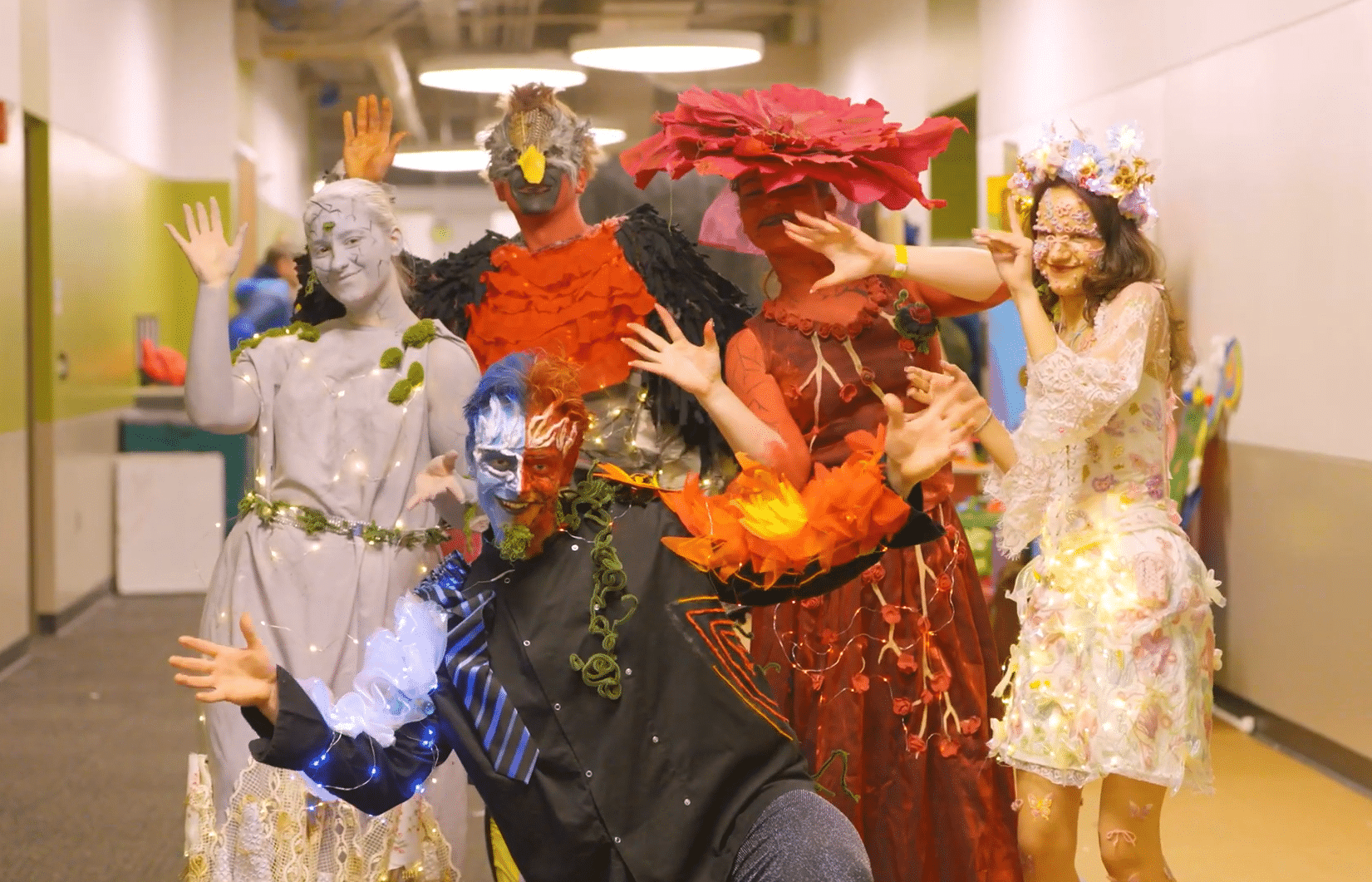
The 2026 World Finals will be held at Iowa State University from May 27–30 and is expected to follow a similar in-person registration process. Missing the registration window can result in loss of eligibility, even after qualification.
How to Get into the Odyssey of the Mind Competition
Getting into Odyssey of the Mind is a structured, multi-level process that starts locally and advances through increasingly competitive stages.
Below are each steps you can take that require planning, originality, and consistent performance.
1. Complete your official membership registration.
Start by purchasing a membership for your school, homeschool, or community organization. Membership provides access to the current season’s long-term problems, official rules, and program resources through the Member Area. It also connects you with your local association, where you’ll find tournament schedules, training opportunities, and important deadlines.
One membership allows one team per problem per division, with discounted options available for additional teams in the same age group.
2. Assemble your team and select a long-term problem.
Create a team of up to seven students with an adult coach and select the long-term problem your team will solve. Each problem emphasizes different skills, such as performance, engineering, design, or technical construction.
3. Learn the rules, requirements, and competition expectations.
Before building or writing, carefully review the Program Guide and your chosen problem’s limitations. While Odyssey of the Mind encourages open-ended creativity, every problem includes specific requirements that must be met.
4. Develop, build, and rehearse your creative solution.
Teams develop their solution over several weeks or months through brainstorming, collaboration, building, writing, and rehearsal. All ideas and work must come from the students, reinforcing independence and teamwork. As the solution takes shape, teams refine their performance, test designs, and practice until they can confidently present their 8-minute solution.
5. Compete and advance through the competition levels.
Register for your local tournament and present your solution in competition, where teams also complete spontaneous problems. Events progress from regional to state or association levels, with top teams advancing to World Finals.
How to Win the Odyssey of the Mind Competition
Winning in Odyssey of the Mind is rule mastery, clean execution, and strategic creativity. But because each long-term problem demands different strengths, the smartest teams tailor their approach to the specific contest they’re in. Below are distinct winning strategies for each problem type:
Vehicle Problem
Winning in the Vehicle problem comes down to a machine that works every time and a story that showcases its movement naturally. Judges reward teams whose engineering is reliable, inventive, and clearly tied to the performance.
A standout example is the 2025 Ranatra Fusca Awards winner, Shanghai Pudong Youth Performance Club of Division II. Their “walking” vehicle used 26 cola bottles as pressure chambers, controlled by electromagnetic valves attached to a PVC frame.
Instead of rolling, it strode forward on timed bursts of air—an unexpected solution that proved mastery of pressure control, fluid dynamics, and synchronization. It was unusual, creative, and consistent.
Start by identifying every required action your vehicle must complete. Design your propulsion system to be simple enough to run reliably, yet creative in concept or materials. Shape your skit so each vehicle action advances the plot rather than interrupting it. If the vehicle climbs, turns, or stops, it should happen because of something happening in the story.
Don’t forget to stress-test your vehicle on different surfaces and practice recoveries for stalls or misfires.
Technical Problem
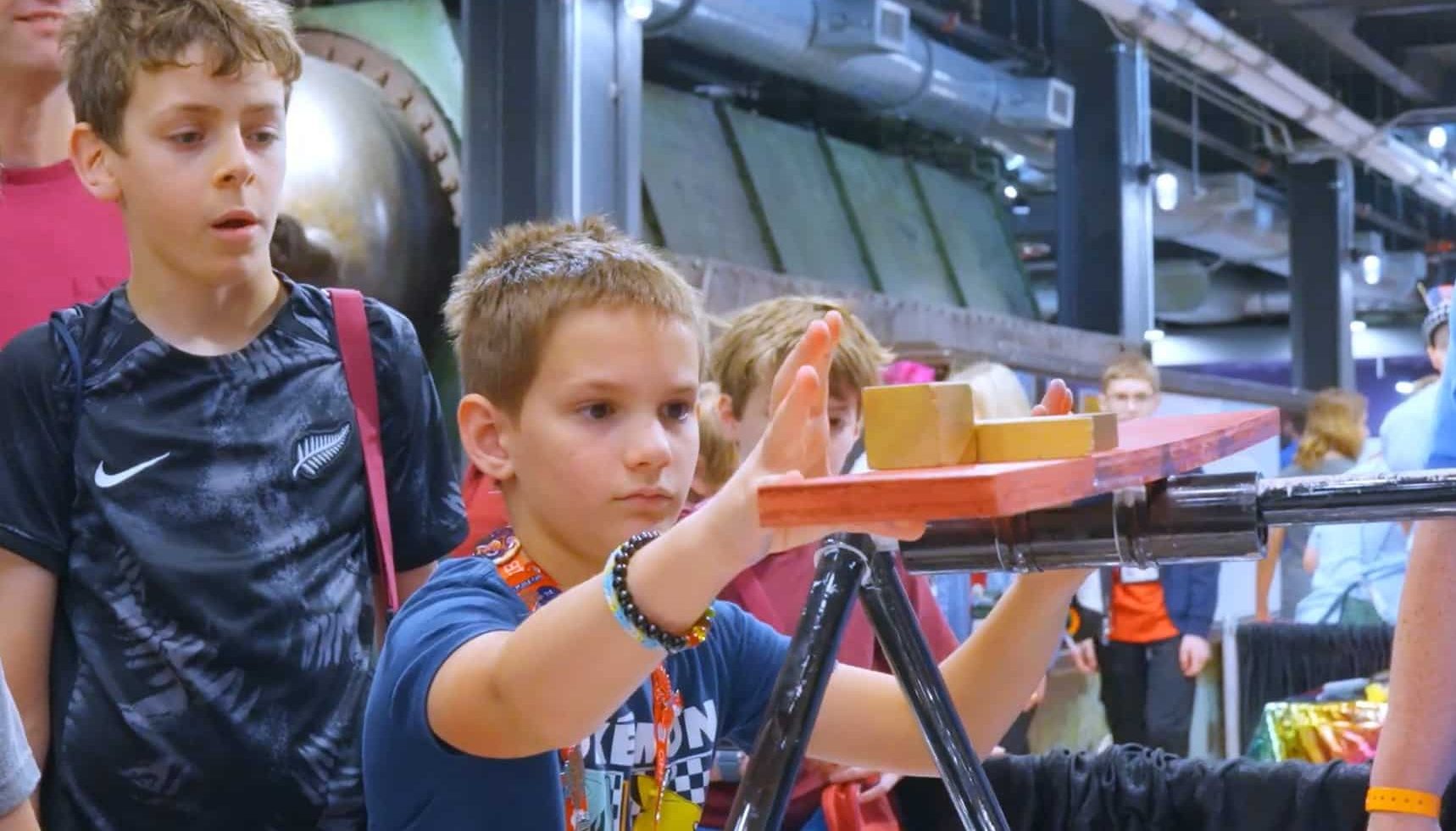
Winning the Technical problem hinges on reliable mechanisms paired with clear, memorable storytelling.
One example is another 2025 Ranatra Fusca Awards winner for Division I, West University ES Team A for Mech-Animal Sidekick. Their giant gray Mecha-Whale transformed the entire scene. In one smooth action, the stage and actors were “swallowed,” revealing an interior set with curved walls, balsa “whale bones,” green mucus, and animated facial features operated by team members using repurposed parts. The reveal worked because every mechanical cue fired cleanly, making the engineering the engine of the story.
To do this, list every required technical function and build the simplest mechanism that performs each one consistently. Keep devices compact enough for the suitcase rule and design transitions so they feel like part of the performance, not interruptions. Rehearse full run-throughs to sync motion, timing, and character reactions, and prepare in-character recovery lines for minor misfires.
Classics Problem
Winning the Classics problem depends on strong character work, clear ties to classical or literary sources, and polished performance skills. Judges respond to performances that feel researched, intentional, and genuinely entertaining.
A standout example is OMER’s Awards winner, Alisha Bruce from Division II – Cooking with Books. She immersed herself in her subject—Julia Child—traveling to study her life and work, then transforming that research into a performance that was authentic and hilarious.
With precise costuming, spot-on voice imitation, sharp comedic timing, and deep knowledge of Julia Child’s mannerisms, she delivered a portrayal so engaging that people came just to watch her segment. Her performance elevated the entire skit and impressed judges with its professionalism and charm.
Choose a classical or literary foundation you can bring to life with the same clarity and commitment. Focus on a well-crafted quest poem, strong character choices, and visual elements—like purposeful color use—that reinforce the story.
4. Structure Problem
Top Structure teams win by treating balsa wood like an engineering material and making the weight test the highlight of the performance.
For example is another OMER’s Awards winner, Mira Costa High School from Division III. Their three balsa animals—a peacock, a bee, and a hybrid creature—were built with such clean structural logic that they were recognizable and functional even without paint. Hinges, joints, and frames were purposeful, lightweight, and strong. Judges could see the engineering before a single weight was added.
To follow this approach, design with efficiency first. Every stick should carry load or stabilize the frame. Prepare for both vertical weight and side impacts from rolling balls by reinforcing key joints and keeping the structure balanced. Rehearse the weight test as part of the story so it lands as your performance’s climax.
5. Performance Problem
Performance is won through clear storytelling, sharp timing, and memorable characters. Props, lighting, and puppetry help, but what really matters is how confidently the team delivers its world onstage.
Past Performance standouts succeeded by committing fully to their characters—whether portraying animals, living food, or eccentric heroes—and using clean transitions, strong visuals, and well-timed humor to keep the audience engaged.
Apply this approach by crafting a focused tall tale featuring an original hero, an exaggerated feat, and a clever origin explanation. Treat each comedic moment as a planned beat and use the required emotional weather effects to underline the story rather than distract from it.
Rehearse pacing, reactions, and delivery until the humor flows naturally and the surprise moment lands cleanly. When your characters are bold, your story is tight, and every visual element reinforces the joke or plot, you rise to the top in Performance.
Odyssey of the Mind Previous Winners
The 2025 World Finals saw hundreds of teams representing countries around the world. Among them, 18 teams were named World Champions, with one champion awarded for each long-term problem and division.
|
Problem & Category |
Division I | Division II | Division III | Division IV |
| The OM-Mazing Race (Vehicle) | Shanghai Daning International Elementary School (Shanghai, China) | Shanghai Pudong Youth Performance Club (Shanghai, China) | Geneseo Middle/High School (Geneseo, New York) |
— |
|
Mech-Animal Sidekick (Technical) |
Warwick Valley Middle School (Warwick, New York) | Delaware Valley Middle School (Milford, Pennsylvania) | East Mecklenburg High School (Charlotte, North Carolina) | — |
| Cooking with Books (Classics) | Long Beach Elementary School (Long Beach, New York) | Towarzystwo Przyjaciół Sierakowice (Sopot, Poland) | Goshen High School (Goshen, New York) |
TheatreZone (Bonita Springs, Florida) |
|
Save Me Structure (Structure) |
Martin Luther King Elementary School (Edison, New Jersey) | Randolph Middle School (Charlotte, North Carolina) | Poquoson High School (Poquoson, Virginia) | Shanghai Jiao Tong University (Shanghai, China) |
| AstronOMical Odyssey! (Performance) | Społeczna Szkoła Podstawowa (Sopot, Poland) | Randolph Middle School (Charlotte, North Carolina) | Stowarzyszenie DASIE – Kraków (Poland) |
Uniwersytet Śląski – Katowice (Poland) |
Note: It’s a Wonderful World! for Primary does not award a World Champion. Primary Division teams participate for learning, creativity, and feedback only.
Ranatra Fusca Creativity Award recipients
The Ranatra Fusca Creativity Award recognizes exceptional creativity and can result in automatic advancement to World Finals.
Notable 2025 recipients include the Shanghai Pudong Youth Performance Club in Shanghai, China, which won Division II of the OM-Mazing Race; Fundacja Wyobraź Sobie – Skawina in Poland, which earned the Division III title; West University Elementary School in Houston, Texas, which won Division I of Mech-Animal Sidekick; and Oradell Public School in Oradell, New Jersey, which earned the Division II award.
Frequently Asked Questions
1. Is Odyssey of the Mind competitive?
Yes. While entry is open to registered schools and organizations, advancement is performance-based. Only top teams progress from regional tournaments to state/association finals, and a small fraction reach World Finals.
2. Is the World Finals prestigious?
Yes. World Finals represents international-level achievement, with only 18 World Champions named across problems and divisions each year. Selective colleges recognize this level of distinction as evidence of creativity, teamwork, and execution under pressure.
3. Does Odyssey of the Mind help with college admissions?
Yes. At AdmissionSight, we view OM as a high-impact extracurricular when you clearly explain your role, contributions, and competitive results. Advancing to State or Association Finals signals meaningful achievement, while qualifying for World Finals—or earning distinctions such as World Finals medals or the Ranatra Fusca Award—represents international-level recognition that selective colleges value.
Takeaways
- Odyssey of the Mind is a global, performance-based competition centered on creative problem-solving, teamwork, and independent execution.
- Qualifying for World Finals represents the highest level of achievement and reflects international-caliber performance.
- Strong results require originality, rule mastery, disciplined collaboration, and polished presentation under pressure.
- For college admissions, OM signals independent thinking, leadership, resilience, and long-term commitment—especially when you clearly articulate your role and outcomes.
- If you want expert guidance on how to position Odyssey of the Mind strategically within a competitive college application, our Academic and Extracurricular Profile Evaluation can help you frame your achievements clearly and plan your extracurricular path with intent.