
Oxford vs Harvard—two names that pretty much scream “academic royalty.” Every year, they draw in students from around the world. And let’s be real, if you’re looking for top-notch education, these two are probably already on your list.
So, here’s the big question: Oxford or Harvard? They’re both incredible, but they each bring something totally different to the table. Oxford is all about breaking new ground with its research, while Harvard takes the crown for world-class teaching. So which one do you choose?
In this blog, we’ve broken down the key differences between Oxford and Harvard to help you decide which might be the right fit for you.
- Oxford vs Harvard: A Quick Look
- Oxford vs Harvard: Acceptance Rates
- Oxford vs Harvard: Rankings
- Oxford vs Harvard: Quality of Education
- Oxford vs Harvard: Eligibility
- Oxford vs Harvard: Cost of Attendance
- Oxford vs Harvard: Scholarships
- Oxford vs Harvard: Popular Majors and Courses
- Frequently Asked Questions
- Takeaways
Oxford vs Harvard: A Quick Look
When picking the perfect university, there’s a lot to think about. You’ve got your pros and cons list, a breakdown of the costs, a lineup of must-have courses, and of course, a long list of schools to sift through. But once you’ve managed to narrow it all down to just two options, that’s when things really get tricky.
Here’s a quick look at both top universities before we get into the specific factors:
Oxford University
Oxford is the oldest university in the English-speaking world, with teaching dating back to 1096. Today, it offers undergraduates a wide range of fields to study, from biomedical sciences to linguistics. At the same time, over 23,000 students take advantage of its 11 academic divisions and popular graduate programs in law, business, and policy.

But Oxford is more than just academics. Its rich history and central location create the perfect mix of a close-knit college community and a vibrant local scene. With alumni that include 20 Nobel Prize winners—Sir Howard Florey (1945, Physiology or Medicine), for example, and Doris Lessing (2007, Literature)—and three UK Prime Ministers—Boris Johnson, Margaret Thatcher, and Tony Blair—it’s clear that Oxford’s legacy of excellence is as strong as ever.
Harvard University
Harvard University, founded in 1636, holds the title of the oldest higher education institution in the U.S. and is still considered one of the most prestigious universities in the world. Known for its excellence across a wide range of fields—from engineering to arts and humanities—it offers programs through 13 degree-granting schools.
With over 46,000 courses available each year and a student body of more than 23,000, there’s no shortage of opportunities to explore your interests. Harvard’s programs span everything from undergrad concentrations to graduate areas like business, law, medicine, education, and the arts. Plus, with a 6:1 student-faculty ratio, you’ll get plenty of personal attention. And don’t forget the sprawling 5,000+ acre campus, packed with libraries, labs, and research centers waiting to be discovered.
Oxford vs Harvard: Acceptance Rates
For the 2024 admissions cycle, Harvard University had an acceptance rate of 3.6%, making it one of the most selective universities in the world. Meanwhile, the University of Oxford reported a slightly more lenient acceptance rate for international students, typically around 16-18%, varying by program.
This stark difference highlights Harvard’s ultra-competitive nature, with its low acceptance rate driven by a large global applicant pool and its prestigious reputation. Oxford, while still highly selective, offers a higher likelihood of admission, particularly for applicants who excel in specific academic assessments and interviews required for their chosen courses.
Let’s look at both schools’ historical data on acceptance rates:
| School | Class | Acceptance Rate | Applicants |
| Harvard University | Class of 2024 | 4.90% | 40,428 |
| Class of 2025 | 3.40% | 57,435 | |
| Class of 2026 | 3.20% | 61,220 | |
| Class of 2027 | 3.40% | 56,937 | |
| Class of 2028 | 3.60% | 54,008 | |
| Oxford University | Class of 2024 | 16.90% | 23,020 |
| Class of 2025 | 16.80% | 23,414 | |
| Class of 2026 | 14.60% | 24,338 | |
| Class of 2027 | 15.30% | 23,819 | |
| Class of 2028 | 16% | 23,211 |
Harvard and Oxford are both getting harder to get into but in different ways. At Harvard, acceptance rates have dropped as low as 3.2% in recent years thanks to a huge surge in applications. Policies like test-optional admissions during the pandemic made it easier for more students to apply, but the competition is fierce with so few spots available.
Oxford’s acceptance rates aren’t dropping as dramatically—down from about 17% to 15%—but it’s still highly competitive. The rise in international interest and the university’s tough academic requirements, including subject-specific tests and interviews, keep it selective.
Oxford vs Harvard: Rankings
One way to gauge how reputable a college or university is? Check out how it’s ranked globally. Plenty of organizations analyze schools worldwide and rank them from top to bottom. It’s always a good idea to dig into these rankings and see how your chosen university stacks up.
Let’s examine how Oxford and Harvard have performed in the last three years according to Times Higher Education and QS World University Rankings, two of the most prominent university ranking platforms.
| World Rankings | Oxford | Harvard |
| Times Higher Education 2025 | #1 | #3 |
| Times Higher Education 2024 | #1 | #4 |
| Times Higher Education 2023 | #1 | #2 |
| QS World University Rankings 2025 | #3 | #4 |
| QS World University Rankings 2024 | #3 | #4 |
| QS World University Rankings 2023 | #4 | #5 |
Oxford has been dominating the Times Higher Education (THE) rankings, consistently holding the #1 spot in recent years. This reflects its strong academic reputation, innovative research, and global influence. With a rich history and a focus on advancing knowledge, Oxford is clearly setting the standard.
Harvard might not always take the top spot, but it’s a consistent presence among the world’s best. Its steady performance shows it excels across all areas, from academics to reputation. With elite faculty, prestigious programs, and global recognition, Harvard remains a powerhouse in education.
Here’s where it gets interesting: different ranking systems focus on different aspects of a university’s performance. QS Rankings prioritize reputation, employer feedback, and factors like student-to-faculty ratios, making them a great resource for understanding how a school is viewed by employers and students.
On the other hand, Times Higher Education (THE) Rankings emphasize research, teaching quality, and international diversity, providing a clearer picture of a university’s academic output and global impact. This difference explains why Oxford often leads in THE, while Harvard might perform slightly better in QS.
Oxford vs Harvard: Quality of Education
When it comes to choosing between Oxford vs Harvard, the main focus has to be on the quality of education. Both are global leaders in academics, but they stand out differently.

Harvard offers over 3,700 undergraduate courses across 50 fields of study, spread over eleven schools and allied institutions. Meanwhile, Oxford has 39 colleges, each specializing in various fields, with 48 undergraduate courses to choose from.
Both universities are recognized for their top-tier programs, but their strengths vary by subject. For instance, according to the US News Report, Harvard’s Economics and Business Department ranks #5 globally, while Oxford’s sits at #10. However, Oxford takes the top spot worldwide for Arts and Humanities, with Harvard right behind at #2. For students pursuing clinical medicine, Harvard shines at #1, with Oxford trailing at #8.
In terms of variety, Harvard’s wide selection of courses offers something for everyone, while Oxford provides a unique college system that creates a more specialized academic environment.
Oxford vs Harvard: Eligibility
Let’s break down what it takes to get into these two prestigious institutions. While both Harvard and Oxford are world-class universities, their eligibility criteria differ significantly due to their locations, education systems, and admission philosophies.
Oxford University
When it comes to applying for Oxford, here’s the deal: your A-levels or equivalent qualifications are key—they show you’re ready for the challenge. For international students, equivalent grades from your country will work just fine.
To accept an offer to study at Oxford, applicants must meet the qualification requirements for their chosen course. While many applicants take A-levels, a wide range of equivalent UK and international qualifications is also accepted.
Oxford also values extracurriculars and community involvement, so highlight any activities where you’ve made an impact. Don’t forget to take an English proficiency test like IELTS, TOEFL, or PTE if needed. Lastly, make sure all your transcripts and documents are organized and submitted on time to keep things simple.
Harvard University
If you’re a US citizen applying to Harvard, you’ll need to take the SAT seriously. Harvard also looks for students who are actively involved in extracurriculars, community projects, or achievements outside of academics.
Harvard’s admissions process takes a close look at several key factors in a holistic review. Here’s what they expect:
- Academic records. Strong grades and GPA are essential.
- Letters of recommendation. Two from teachers and one from your counselor.
- Standardized test scores. Submit either SAT or ACT scores.
- Essays. Write a personal statement and five short supplemental essays (150 words each).
- Extracurriculars. Show your passion and involvement outside the classroom.
- Interview (optional). Alumni interviews may be offered but aren’t guaranteed.
To make it through the admissions round, we highly recommend that you achieve the following:
- GPA – 4.2 or higher
- SAT – 1580 or higher
- ACT – 36
If you want to know more about how to get into Harvard, check out our blog here.
For international students, proving your English skills is key. Aim for a minimum IELTS score of 7.5, a TOEFL score of at least 109, or a PTE score above 7.5. Depending on your program, you’ll also need to take standardized tests like the GRE, SAT, ACT, or GMAT.

Make sure your transcripts and all required documents are well-organized. The final piece? A standout statement of purpose and application that highlights your unique story.
Oxford vs Harvard: Cost of Attendance
Applying to top-tier universities like Oxford or Harvard also comes with a serious financial commitment. These schools charge a premium for their world-class education, so it’s important to know exactly what you’re signing up for. In this case, it’s less about Oxford vs. Harvard and more about balancing your budget with your dreams. How much does Oxford cost? How about Harvard? We’ll explore that in this section.
Let’s take a look at the both schools’ estimated cost of attendance for the academic year 2024-2025:
| School | Tuition and Fees | Living Costs (housing, food, transportation etc.) | Total |
| Oxford University | Homestay students: £9,535
Overseas students: £33,050 – £48,620 |
£10,110 | Homestay students: £19,645
Overseas students: £43,160 – £58,730 |
| Harvard University | $61,676 | $21,290 | $82,866 |
Oxford vs Harvard: Scholarships
Oxford and Harvard are expensive schools, but both offer plenty of scholarships to help ease the financial burden.
At Oxford, there’s a wide range of options for both domestic and international students. Scholarships like the Rhodes Scholarship, Clarendon Fund, and Reach Oxford Scholarship are highly sought after, covering tuition fees and even living costs in some cases. Oxford also offers need-based and merit-based funding tailored to specific courses or student backgrounds.
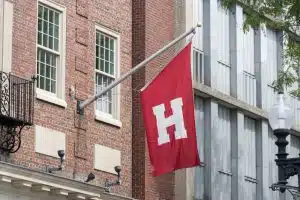
At Harvard, the financial aid system is one of the most generous in the world. The university follows a need-blind admissions policy, meaning your ability to pay doesn’t impact your chances of getting in. Harvard’s financial aid packages can cover up to 100% of tuition and living expenses, depending on your family’s income. For many, this makes Harvard more affordable than it seems at first glance.
Here are more scholarships available at both schools:
Scholarships at Oxford
- Clarendon Fund Scholarship. Your tuition is fully paid for. A generous grant is provided to support your day-to-day living costs during your studies. The Clarendon Fund is highly competitive and is also open to all graduate students, regardless of nationality.
- Weidenfeld-Hoffmann Scholarships and Leadership Program. There is no need to worry about tuition with this scholarship as all course fees are covered. A stipend of at least GBP 18,622 per year to cover expenses. In addition to financial support, recipients join a leadership program to help them develop their skills and networks.
- Reach Oxford Scholarship. This is an opportunity for students from low-income countries who cannot study in their home country. Tuition is completely covered. A stipend for housing, food, and other needs are provided, too. Travel costs to and from your home country are also included.
- Felix Scholarship. The scholarship covers the complete cost of your program. A living allowance of approximately GBP 17,800 per year is provided.
Scholarships at Harvard University
- Horace W. Goldsmith Fellowship. A financial Aid of USD 10,000 is provided which can significantly offset tuition or other educational expenses.
- Boustany MBA Harvard Scholarship. This scholarship provides substantial financial relief. Benefits include as it covers 75% of tuition fees. It also covers expenses related to the mandatory internship with the Boustany Foundation.
- Robert S. Kaplan Life Sciences Fellowship. This fellowship is for students with a background in life sciences or related fields. The scholarship covers the entire cost of tuition fees. A generous stipend is also provided to help cover housing, food, and other daily expenses.
Oxford vs Harvard: Popular Majors and Courses
Harvard offers a whopping 3,700 courses, while Oxford provides over 250 programs across its 18 colleges. Both universities are home to some of the most sought-after courses in the world. Unsurprisingly, the MBA is one of the top picks for students at both Harvard and Oxford. Here’s a quick look at some of the most popular courses these prestigious universities have to offer.
Top courses at Oxford
The University of Oxford, with its centuries-old tradition of excellence, offers top-tier programs across various fields. Here are the top courses at Oxford:
- Medicine
- Law
- Philosophy, Politics, and Economics (PPE)
- English Language and Literature
- Engineering Science
- Mathematics
- Computer Science
- Mathematics
- Modern Languages
- History
Top courses at Harvard
Harvard University, known for its top-notch academics and wide range of programs, offers many popular majors that draw students from around the globe. Some stand out for their popularity and the great opportunities they offer.
- Economics
- Social Sciences
- Biological and Biomedical Sciences
- Mathematics and Statistics
- Computer Science
Choosing between Oxford and Harvard comes down to what you’re looking for. Oxford is perfect if you love a focused, academic approach with a strong emphasis on research and specialized courses.

On the other hand, Harvard offers a well-rounded, holistic experience with plenty of opportunities across a wide range of fields. Both are incredible schools with world-class reputations, so it’s less about which one is “better” and more about which one feels like the right fit for your goals.
Frequently Asked Questions
1. Between Oxford and Harvard, which one is easier to get into?
Harvard is significantly harder to get into compared to Oxford. Harvard’s acceptance rate historically ranges between 3% to 5%. It is one of the most selective universities in the world. In contrast, Oxford’s acceptance rate is approximately 17%, which, while still competitive, offers a better chance for applicants. So, if you’re looking at pure numbers, Oxford is easier to get into than Harvard.
2. Do you need to take an English proficiency test to apply to Harvard University or Oxford University?
Yes, non-native English speakers typically need to take an English proficiency test like TOEFL or IELTS for both Harvard and Oxford.
3. Is Oxford better than Harvard?
Oxford and Harvard are both exceptional universities, but neither is objectively “better.” Each excels in different areas: Oxford is renowned for its humanities and research-driven programs, while Harvard is celebrated for its business, law, and holistic academic approach.
If based purely on rankings, it depends on the ranking system. Oxford has consistently ranked #1 in the Times Higher Education (THE) World Rankings in recent years, while Harvard typically ranks slightly lower. However, in the QS World University Rankings, Harvard often edges closer or ranks higher in specific fields like Business or Clinical Medicine. Rankings vary based on the criteria used, so the “better” choice still depends on what matters most to you.
Takeaways
Both Oxford and Harvard are global leaders in education, but they differ greatly in their programs, admissions processes, and overall student experiences. Choosing between them ultimately comes down to your personal goals and what you’re looking for in a university.
- Harvard is more selective, with acceptance rates ranging between 3% and 5%, compared to Oxford’s 15%-17%.
- Oxford ranks #1 in the Times Higher Education (THE) rankings because of its academic strength and research. Harvard excels in QS Rankings for its global reputation and impact in fields like business and medicine.
- Oxford’s college system creates a close-knit academic setting focused on research, while Harvard offers a broader experience with plenty of resources and extracurricular activities.
- Want to get into Oxford or Harvard? Make an informed decision and increase your chances of getting into the school of your dreams by working with an admissions expert.