Thinking about Vanderbilt Law? As a Tier 2 law school, Vanderbilt offers competitive programs that attract applicants from across the country. One part of the admissions process is the alumni interview. It’s not required, but it gives you the chance to talk about your goals and interests.
In this guide, you’ll learn what the Vanderbilt Law interview involves, how the process works, and what kinds of questions you might face. You’ll also get practical tips on how to prepare so you can make a strong impression and stand out from other applicants.
- What Is the Vanderbilt Law Alumni Interview?
- The Vanderbilt Law Interview Process
- Common Vanderbilt Law Interview Questions
- How to Prepare for the Vanderbilt Law Interview
- Frequently Asked Questions
- Takeaways
What Is the Vanderbilt Law Alumni Interview?
The Vanderbilt Law alumni interview is an optional part of the admissions process where you meet one-on-one with a law school graduate. While not required, it’s a great chance to make a strong impression. The interview helps the admissions team learn more about you, including your interests, goals, and how you communicate beyond what they see on paper.
It’s also a great opportunity for you to hear directly from someone who once stood where you are and can share their own experience at Vanderbilt and beyond.

Think of it as a two-way conversation. You’ll talk about your background and why you’re interested in law, but you’ll also get to ask questions. What did they love about Vanderbilt? What was the hardest part of law school? How did it prepare them for their job? These kinds of insights can be just as valuable as anything you’ll find on a website or brochure.
You can request an interview through your application, but not all requests will be granted. Because alumni availability is limited, Vanderbilt can’t guarantee a match for every student. If you’re offered one, though, take it! It’s another way to stand out.
The interview won’t delay your application, and you don’t need legal experience or technical knowledge. Just be ready to share your story and explain why law school feels like the right next step.
What does the interviewer know about you?
Before your meeting, you’ll be asked to send your resume to your alumni interviewer. That’s it. They won’t see your full application or any other materials. Your resume helps them guide the conversation and ask more personal and relevant questions, often about things you’ve listed in your work, school, or extracurricular experience.
The admissions office may let your interviewer know the outcome of your application later, but during the interview, it’s all about getting to know you.
The Vanderbilt Law Interview Process
If you’re interested in an alumni interview, you must plan ahead. Vanderbilt offers alumni interviews across the U.S. and in select international locations, but spots are limited. To request an interview, you must complete the admission interview section of the application and submit your complete application by 11:59 PM on November 15, 2025.
Once you submit your request, Vanderbilt will try to match you with an alum in your area. You can’t choose your interviewer, and not everyone who requests an interview will be matched. Alumni availability is limited, so submitting early can help, but there are no guarantees.
If you’re matched, the alum will reach out to you directly to schedule the interview. If no alum is available, Vanderbilt may offer a video interview with an admissions officer, depending on availability. Regardless of the outcome, you’ll still have the chance to complete the optional Video Essay in your application portal.
What if you miss the November 15 deadline?
If you submit your application after November 15 or don’t have all materials in by the deadline, you won’t be able to request an alumni interview. The interview program is only available to applicants who meet the deadline with a complete application.

That said, Vanderbilt encourages everyone to complete the optional Video Essay, especially if you miss the interview window. It’s a great way to bring your application to life and give the admissions team a better sense of who you are.
Common Vanderbilt Law Interview Questions
While every alumni interview is slightly different, most questions will focus on you. There’s no need to prepare like it’s a job interview, but it helps to know the kinds of topics that might come up, such as:
1. Questions about your motivation and interest in law school
One of the most common questions in a Vanderbilt Law interview is some version of: Why law? Think of this part of the interview as the law school version of your “Why Major?” essay. The interviewer wants to understand why you’re choosing law school and what inspired that decision.
There’s no single “right” answer here. Maybe your interest grew through a class, a volunteer experience, or something that happened in your family or community. What matters is that you can explain what influenced your choice and what it revealed about your values or the kind of impact you want to make.
For example, you might say, “After tutoring students during the pandemic, I saw how uneven access to education could be. One student’s family was being evicted during finals week, and no one seemed to know their rights. That stuck with me and pushed me to explore education law as a way to create long-term change.” A short answer like this shows clarity, reflection, and purpose—all of which interviewers are looking for.
You may also be asked how you stay engaged with legal news or issues. The key is to be honest. Whether you follow major court rulings, listen to podcasts, or keep up with legal blogs, it helps to show you’re curious and informed.
2. Questions about your academic and professional background
This part of the interview gives you space to discuss your academic and work history. Your interviewer might ask why you chose your undergraduate school or major, how certain classes influenced your thinking, or what you took away from work or internship experiences.

A question like “Why did you choose this undergraduate school?” gives you a chance to talk about what you were looking for at the time and how your goals have evolved. Be as specific as you can while answering. Maybe you were drawn to a strong political science program, smaller seminar classes, or opportunities for public service. Whatever your reason, connect it to how it helped you grow academically or personally.
You might also be asked, “Talk about the experiences you had after college.” This is where your professional background comes in, whether that’s full-time work, research, fellowships, or time off to explore other paths. What’s important is to explain what those experiences taught you and how they prepared you for the challenges of law school.
For example, you could say, “After college, I worked as a paralegal at an immigration firm in Houston. One case involved a DACA recipient nearly deported over a traffic stop. I helped with translations and filings, and saw how one mistake could change someone’s life. That experience made me want to do more than support legal work—I wanted to lead it.”
Answering like this shows your interviewer that you understand what the work involves and why you’re ready to take it on.
3. Questions about your career goals
Interviewers know your plans might change, but they still want to see that you’ve thought about your future. A question like “What kind of law are you interested in practicing?” helps them understand what draws you to the field and how your goals connect to your experiences. Even if you’re undecided, naming a few areas of interest shows that you’ve done some reflection.
You might also be asked, “How would a law degree help you reach your goals?” This is your chance to show that you’re not just going to law school to figure things out, but because it aligns with something bigger. Whether that’s public interest, corporate law, environmental justice, or something else, connect your long-term vision with what law school will allow you to do.
For example, you could say, “I’m interested in environmental law, especially how legislation impacts rural communities. I grew up in a farming town where water pollution from nearby factories was common, but no one knew what legal options they had. A law degree would give me the tools to fight for those communities, starting with policy research and eventually litigation.”

Focused answers like this show that you’re thinking ahead and have a specific reason for choosing this path.
4. Questions about your personal qualities
This part of the interview is where things get more personal. A question like “Tell me about yourself” might sound broad, but it’s your chance to highlight the qualities that make you a strong candidate—and a good future classmate. Consider how you approach challenges, work with others, or stay grounded under pressure.
Interviewers may also ask, “What do you do with your free time?” to better understand your personality and what matters to you outside of academics. It’s okay to share hobbies, interests, or routines, even if they have nothing to do with law. The point isn’t to impress; it’s to show that you’re self-aware, well-rounded, and more than your grades and test scores.
For example, you could say, “I’ve been playing the piano since I was nine. I practice almost every day because it forces me to slow down and focus. It’s helped me develop patience, attention to detail, and the ability to work through frustration—all of which I know I’ll need in law school.”
Sharing something personal like this gives interviewers a fuller picture of who you are and how you’ll show up in the classroom.
5. Vanderbilt Law School-specific questions
At some point in the interview, your alum may ask why you chose Vanderbilt specifically. A question like “What aspects of Vanderbilt’s programs, curriculum, or resources are most appealing to you?” is meant to test whether you’ve done your homework and whether your goals align with what the school offers.
Vanderbilt consistently ranks among the most prestigious law schools in the country, placing #14 according to U.S. News & World Report. While that reputation matters, it’s not enough to mention ranking alone. You need to show how Vanderbilt’s specific strengths match what you’re looking for in a law school.
Start by identifying two or three elements of the school that genuinely interest you. That could be the Law & Business curriculum, the Immigration Practice Clinic (IPC), a particular professor’s research, or even the campus location. Be ready to explain why those offerings matter to you and how you would take advantage of them.
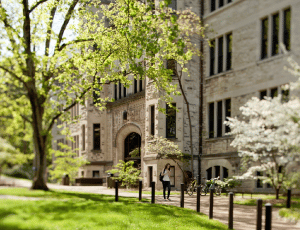
For example, you could say, “One reason I’m drawn to Vanderbilt is its location in Nashville. The city’s legal and political scene offers real-world exposure I’m excited to tap into, especially through clinics and externships.” A focused answer like this shows you’ve considered how the environment around the school supports your learning and goals.
How to Prepare for the Vanderbilt Law Interview
The interview may be conversational, but preparation still matters. Below are some important tips to help you present yourself clearly and confidently.
1. Understand the school inside and out.
Start by learning everything you can about Vanderbilt Law. Go beyond the basic facts and rankings, and dig into what actually makes the school unique. Look into programs like the Branstetter Litigation & Dispute Resolution Program, read about faculty whose work aligns with your interests, or explore journals like the Vanderbilt Law Review.
Remember, you can’t fake genuine interest in a one-on-one conversation. Your interviewer will notice if your answers sound like they could apply to any law school. Instead, show that you understand Vanderbilt’s academic strengths, missions, and the type of community it fosters.
Try speaking with current students or alums to take it a step further. You can use your college’s alumni network or LinkedIn to find people who attended Vanderbilt Law and reach out with a few thoughtful questions. A small detail from one of those conversations, like what they appreciated about the school’s collaborative environment or clinical training, can add depth and authenticity to your interview.
2. Reflect on your application.
Your interviewer won’t see your complete application, but they’ll have your resume and likely use it to guide the conversation. Make sure you’re familiar with everything you’ve included, especially your most meaningful experiences. Be ready to talk about internships, research, leadership roles, or gaps in your timeline.
Think about how each experience connects to your decision to pursue law. If you wrote about a specific moment in your personal statement, be prepared to reflect on it in conversation. You don’t need to memorize your application word for word, but you should be able to speak naturally and confidently about what you’ve shared.
3. Practice with mock interviews.
The best way to feel confident in your interview is to practice out loud. Set up mock interviews with a friend, professor, or mentor who can ask you common questions and give honest feedback. Record yourself and review your tone, pacing, and clarity.

Practicing helps you catch habits like rambling, over-explaining, or sounding too scripted. It also allows you to fine-tune your answers to feel natural and focused. Again, the goal isn’t to memorize responses but to speak clearly and stay grounded in your experiences.
If you’re looking for more support, working with an admissions coach is a good idea. A one-on-one session can help you identify weak spots and shape answers that reflect your story and goals more clearly.
4. Polish your delivery.
Your ideas matter, but how you express them matters just as much. The interview gives the admissions team a glimpse into your communication style, ability to think on your feet, and ability to handle pressure. All of these skills are essential to succeeding in law school and beyond.
Work on maintaining steady eye contact, a calm tone, and a confident posture. Practice speaking clearly and at a steady pace. You don’t want to sound scripted or robotic, so aim for a thoughtful and natural conversation. Lastly, don’t forget to breathe, pause when needed, and smile!
5. Prepare thoughtful questions to ask.
Most interviewers will leave time at the end for your questions, which is where many applicants fall short. Avoid asking generic questions that you could easily find on the school’s website. Instead, come prepared with questions that reflect your values, goals, and curiosity about the student experience.
Think about what really matters to you. You might ask how students engage with the legal community in Nashville, how scholarship recipients are supported throughout their time at Vanderbilt, or how the school fosters dialogue across different perspectives. Questions about recent curricular updates or clinical placement opportunities can also show that you’ve done your research.
This part of the interview is also your chance to gather real insight to help you decide where to enroll. For example, asking if a professor you admire is teaching next year (or on sabbatical) could influence your final decision. Thoughtful and specific questions show that you’re prepared and seriously invested in finding the right fit.
Frequently Asked Questions
1. Does Vanderbilt Law School do admissions interviews?
Yes, Vanderbilt offers optional alumni interviews to applicants who request one and submit a complete application by November 15. Not every request is guaranteed, but participating when possible can strengthen your application.
2. How long does it take to hear from Vanderbilt Law?
Vanderbilt uses a rolling admissions process, so response times vary. Some applicants hear back within weeks, while others may wait longer as each application is reviewed carefully and individually.
3. What is Vanderbilt Law School’s acceptance rate?
Vanderbilt Law is highly selective, with an acceptance rate of about 18.5%. Strong academic credentials, high LSAT scores, and a compelling application are very important!

Takeaways
- The Vanderbilt Law alumni interview is optional, but it gives you a chance to show your communication skills, personality, and interest in the school.
- To request an alumni interview, you must submit a complete application by November 15. Interview spots are limited and not guaranteed.
- Preparing with mock interviews, researching Vanderbilt’s programs, and reviewing your application can help you stand out.
- If Vanderbilt Law is your top choice, work with an admissions expert to strengthen your application and prepare for the interview.