Brown University is an Ivy League research institution founded in 1764 in Providence, Rhode Island. It’s the seventh-oldest college in the United States and home to roughly 7,000 undergraduates, with more than 80 academic concentrations. What sets Brown apart is its distinctive Open Curriculum, which gives students more control over what and how they study.
So what is Brown University known for? It’s known for a specific mix of academic freedom, intellectual rigor, and a collaborative campus culture. Students take ownership of their education, explore different fields, and engage deeply with their interests in an environment that values curiosity and shared learning.
This guide breaks down what Brown University is best known for, including its Open Curriculum, strongest majors and programs, student experience, and what you should know if you’re considering applying.
- What Is Brown University Best Known For?
- What Majors and Programs Is Brown University Known For?
- How AdmissionSight Can Help You Get Into Brown
- Frequently Asked Questions
- Takeaways
What Is Brown University Best Known For?
Brown University is best known for its Open Curriculum, its academic strength as an Ivy League research university, and a student culture that values independence and collaboration. It’s also known for its setting in Providence, Rhode Island, and campus traditions that play a visible role in student life.
The Open Curriculum
The Open Curriculum is what Brown University is best known for and a major reason students choose to apply. Instead of following general education or distribution requirements, students design their own academic path. To graduate, students complete 30 courses, fulfill the requirements for their concentration, and demonstrate writing proficiency in English. Outside of these, there’s no required core curriculum.
The Open Curriculum was introduced in 1969 after a proposal by undergraduates Ira Magaziner and Elliott Maxwell. It’s based on the idea that students learn best when they take ownership of their education and choose courses based on their interests.
If you want a deeper breakdown of how this unique academic process works and how to write about it in your application, check out our complete guide to Brown’s Open Curriculum.
Academic reputation as an Ivy League research university
Brown has a strong academic reputation as a leading Ivy League research university with global recognition. In Spring 2025, its faculty earned national and international recognition for research, teaching, and leadership across fields. This includes historian Keisha Blain, who was elected to the Society of American Historians, computer scientist Maurice Herlihy, and molecular biologist Bess Frost, who is leading breakthrough work in Alzheimer’s disease.
This level of academic strength is also reflected in its alumni. Graduates include Janet Yellen, one of the most influential economic policymakers of her generation, and Emma Watson, who balanced her studies at Brown while building an acting career after starring in the Harry Potter films. In science, Craig Mello won the 2006 Nobel Prize in Physiology or Medicine for discovering RNA interference, a breakthrough in gene research.
What Brown University is known for academically is access to high-level research opportunities. Students can pursue original work through programs like the Undergraduate Teaching and Research Awards (UTRAs), which fund research and creative projects, or design independent study courses with faculty mentors. Many also complete senior honors theses, especially in research-intensive concentrations.
Students work closely with faculty in labs and research centers, such as the Annenberg Institute and the Carney Institute for Brain Science. This experience prepares them to compete for top international fellowships, including the Fulbright, Rhodes, and Marshall scholarships. In fact, Brown produced more student Fulbright winners than any school in the nation for the 2024–25 academic year, marking the fifth time it has earned this distinction.
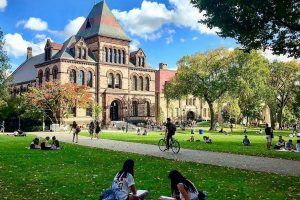
A collaborative, independent-minded student culture
Brown is known for a student culture that’s both collaborative and independent-minded. Academically, students tend to work together rather than compete, with an emphasis on discussion, shared ideas, and intellectual exploration. At the same time, students are encouraged to take risks, question assumptions, and develop strong perspectives.
Some students describe the culture as “individualistic, welcoming, and kind,” with a strong sense of openness across campus. Brown also has a reputation as the “happiest” Ivy League school, a perception many students say reflects their day-to-day experience. This environment attracts a creative, curious, and often politically engaged student body. Brunonians regularly take part in conversations around social issues, campus initiatives, and public policy.
That same energy carries into Brown’s student clubs and organizations. Publications like the The Brown Daily Herald give students a platform to report, write, and debate current issues, while the Brown Entrepreneurship Program (Brown EP) connects entrepreneurs and innovators through startup competitions, networking events, and mentorship programs.
Providence, Rhode Island as a college town
Brown’s location in Providence is a key part of its appeal. The city has a strong creative and culinary scene, and was recently ranked #5 on Food & Wine’s list of Emerging Food Cities in the U.S. It has a high concentration of independent restaurants and cafés, with its arts presence equally visible through theaters, music venues, and galleries such as the Rhode Island School of Design (RISD) Museum.
This reputation is the result of long-term planning. As early as the 1970s, city planners built a food-focused ecosystem by protecting green spaces and supporting local agriculture. That work gained international recognition in 2019, when the UN Food and Agriculture Organization (FAO) highlighted Providence as a model in its publication Integrating Food into Urban Design. Today, local policies and a strong culinary culture continue to support independent restaurants.
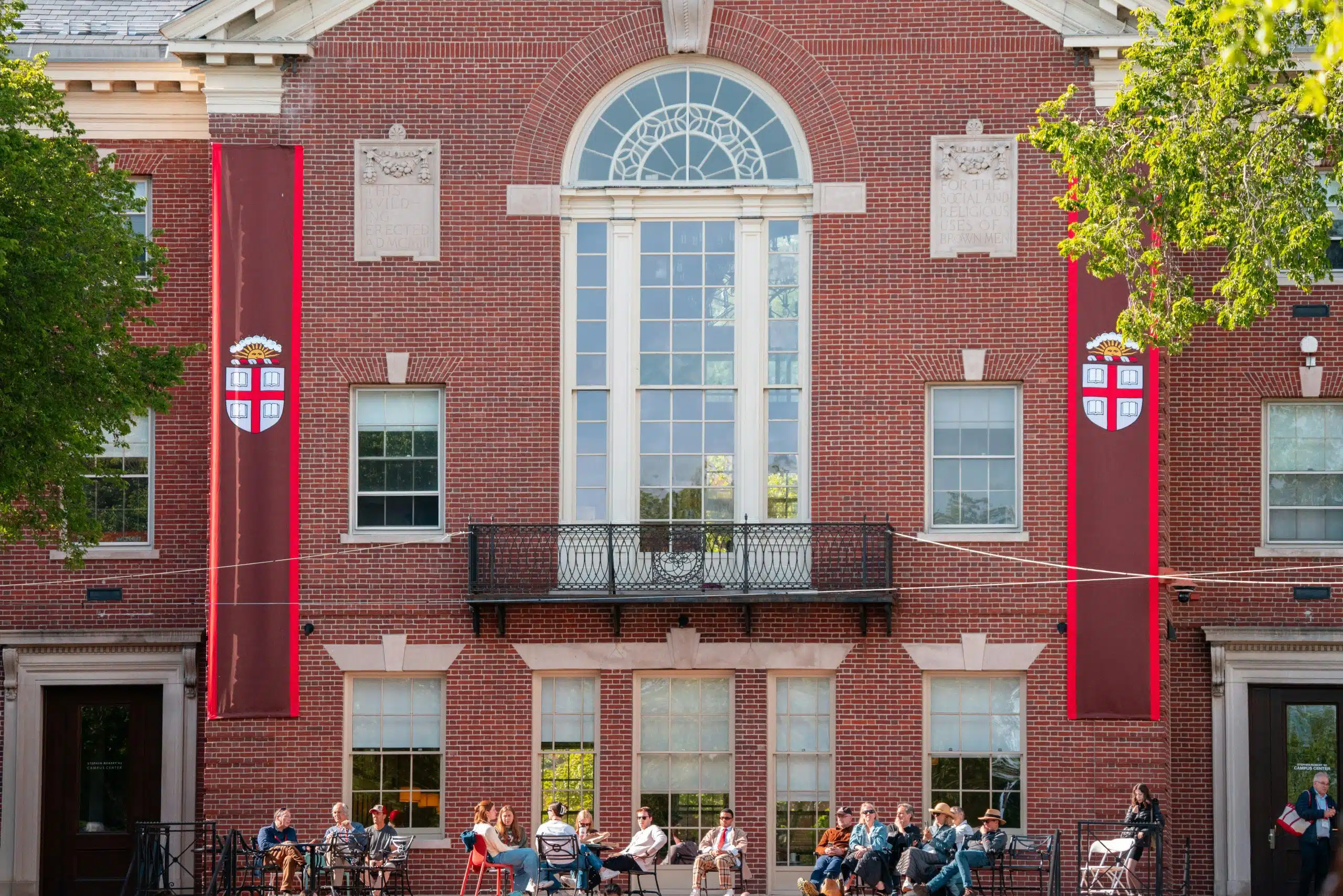
Daily life at Brown centers on College Hill, the historic neighborhood where the university is located. The area includes landmarks like the Main Green and University Hall, with Thayer Street nearby offering cafés, bookstores, and restaurants in a walkable, student-focused setting.
Location also adds convenience beyond campus. Boston is about an hour away, and New York City is roughly three hours by train, making weekend trips easy and expanding access to internships and cultural opportunities.
The Van Wickle Gates and other fun facts
Brown is also known for traditions and quirks that give the campus its personality. One of the most recognizable is the Van Wickle Gates, built in 1901, which open only twice a year—inward for Convocation and outward for Commencement. There’s a long-standing superstition that walking through the center gate at any other time can bring bad luck, with some students even avoiding it entirely until graduation.
Another well-known tradition is the fictional professor Josiah S. Carberry, a made-up academic first introduced in 1929. He’s celebrated every Friday the 13th, when students mark Carberry Day by placing coins into brown jugs around campus. The funds go to the Josiah S. Carberry Fund, which supports books that he “might or might not approve of,” adding to the humor and long-running joke.
Brown’s mascot also has an unusual history. In the early 1900s, Bruno the Bear was an actual live animal brought to football games, starting in 1905. The tradition continued for decades before shifting to the costumed mascot used today, but statues and symbols of Bruno across campus still reflect that legacy.
To learn more about the university’s unique traditions and campus culture, read our blog on fun facts about Brown University.

What Majors and Programs Is Brown University Known For?
Brown offers more than 80 concentrations (what colleges usually call majors) across its schools, giving students a wide range of academic paths to explore. Under the Open Curriculum, students have the flexibility to combine interests and shape their studies based on their goals.
Strongest undergraduate majors
Several of Brown’s programs hold strong U.S. News undergraduate rankings or national recognition. Some of the most notable include:
- Social Sciences. One of Brown’s largest academic areas, covering fields like economics, sociology, anthropology, and political science, with a focus on issues such as structural inequality and population health.
- Computer Science. A popular and fast-growing field offering both Bachelor of Arts (A.B.) and Bachelor of Science (Sc.B.) degrees, with strengths in areas like artificial intelligence, graphics, and robotics.
- Mathematics and Statistics. A rigorous program covering pure and applied math, probability, and statistics, with flexible course selection and strong preparation for data science and research.
- Biological and Biomedical Sciences. Spanning undergraduate, doctoral, and the Warren Alpert Medical School, with a focus on molecular biology, biomedical engineering, and human health, often collaborating with Providence-area hospitals.
- Multi/Interdisciplinary Studies. The Independent Concentration program allows students to design a custom field of study not offered as a standard concentration, including emerging areas like “disability studies” or “educational neuroscience.”
For a more detailed breakdown of each program, read our guide to the best majors at Brown.
Signature programs and dual-degree options
Brown is also known for a few signature programs that are unique among top universities. One of the most distinctive is the Program in Liberal Medical Education (PLME), an eight-year combined program that offers a direct path from undergraduate study to Brown’s Warren Alpert Medical School. Students in PLME explore a broad undergraduate education before continuing on to medical training, without the traditional medical school application process.
Another standout option is the Brown–RISD Dual Degree Program (BRDD), which allows students to earn both a Bachelor of Arts (A.B.) from Brown and a Bachelor of Fine Arts (B.F.A.) from the Rhode Island School of Design over five years. The program is highly selective and designed for students who want to combine rigorous academic study with intensive studio art and design training.
How AdmissionSight Can Help You Get Into Brown
Brown is one of the most selective universities in the country, with a recent acceptance rate of 5.65% for the Class of 2029, admitting just 2,418 students out of 42,765 applicants. With that level of competition, a strong and well-planned application strategy can make a meaningful difference.
If you’re just getting started, the best next step is to read our complete guide on how to get into Brown University, which walks through academic requirements, extracurricular expectations, application timelines, and how to write Brown’s supplemental essays.
For students who want more personalized support, AdmissionSight also offers the Senior Editor College Application Program. This program provides one-on-one guidance from experienced admissions experts, including in-depth essay editing, strategic positioning, and application review. Students who have worked with us have gone on to earn admission to Ivy League and other top-tier universities, reflecting our strong track record in highly selective admissions.

Frequently Asked Questions
1. What is Brown University most famous for?
Brown University is most famous for its Open Curriculum, which allows students to design their own academic path without general education requirements. It’s also known for its collaborative student culture, strong research opportunities, and distinctive campus traditions like the Van Wickle Gates.
2. What major is Brown University known for?
Brown is especially known for majors in the social sciences, computer science, applied mathematics, and biological sciences. These programs are widely recognized for their academic strength and research opportunities.
3. What is Brown University known for academically?
Academically, Brown is known for combining intellectual freedom with rigorous scholarship. Students have direct access to faculty-led research, independent study options, and programs like UTRAs, which support original research and creative work.
4. Where is Brown University located and what is it like?
Brown University is located in Providence, Rhode Island, in the historic College Hill neighborhood. The area is known for its walkable campus, strong food and arts scene, and proximity to major cities like Boston and New York.
5. What makes Brown different from other Ivy League schools?
Brown stands out for its Open Curriculum, which gives students more academic freedom than any other Ivy League school. Its collaborative, less competitive culture and emphasis on interdisciplinary learning also make it distinct.
Takeaways
- Brown is best known for its Open Curriculum, which gives students control over their academic path without general education requirements.
- Brown’s strongest academic areas include the social sciences, computer science, math and statistics, and biological sciences, along with flexible interdisciplinary programs.
- The student culture is collaborative and independent, with active involvement in campus publications and performing arts groups.
- Traditions and setting shape the experience, from the Van Wickle Gates to daily life on College Hill and access to nearby cities like Boston and New York.
- If you’re considering applying to Brown, working with an admissions expert can help you build a strong strategy and stand out in a highly competitive pool.