Colleges today aren’t just searching for qualified students—they’re seeking those who are genuinely committed. Schools want to admit applicants who are capable of thriving academically and also likely to enroll once offered a spot.
If you’ve ever been rejected or waitlisted by a college you considered a “safety,” you’re not alone—and yield protection may have played a role.
This blog explains everything you need to know about yield protection: why it happens, which colleges are known to use it, and how you can minimize its impact on your admissions journey.
- What Is Yield Protection?
- Why Do Colleges Reject Overqualified Students?
- Do Colleges Really Use Yield Protection?
- How to Avoid Yield Protection as an Applicant
- Frequently Asked Questions
- Takeaways
What Is Yield Protection?
You’ve probably heard the term yield protection tossed around in admissions discussions or on Reddit threads. But what is yield protection, exactly?
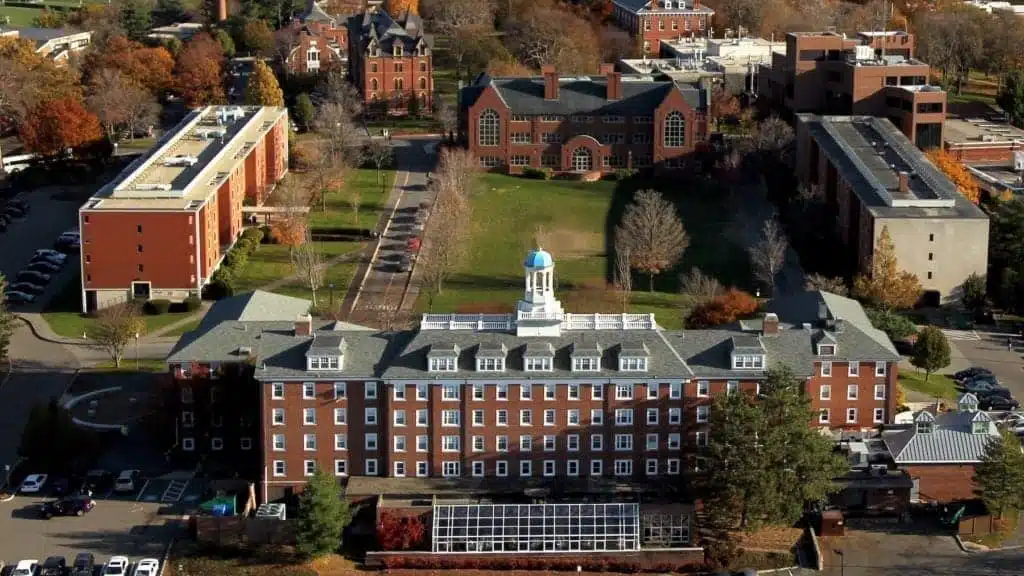
Also known as Tufts Syndrome, yield protection happens when colleges waitlist or deny highly qualified applicants who seem unlikely to enroll if admitted.
The name comes from Tufts University, which was often mentioned in discussions where strong applicants were unexpectedly rejected or waitlisted, leading people to assume the school was protecting its yield rate. While there’s no official confirmation that Tufts (or any college) uses this strategy intentionally, the phrase stuck as a nickname for the broader concept.
While it may sound harsh, yield protection is a strategic way for schools to maintain their yield rate—the percentage of admitted students who actually choose to attend.
Why yield matters in admissions
A college’s yield rate measures how many admitted students actually choose to enroll. For example, if a university admits 10,000 applicants and 6,000 decide to attend, its yield rate is 60%.
This number might seem like just another statistic, but it has a big influence on how colleges operate and how they’re perceived.
From a practical standpoint, yield determines everything from how many dorm rooms the school needs to how many professors to hire and how many classes to offer. Colleges must accurately predict how many accepted students will say “yes” so they can plan housing, allocate financial aid, and manage classroom sizes effectively.
If too few students enroll, the school faces empty seats and lost tuition revenue. Meanwhile, if too many enroll, there can be overcrowded classes and housing shortages.
From a reputation standpoint, yield affects how selective and desirable a college appears. A higher yield means most admitted students choose to attend—something that signals prestige and popularity. For instance, elite universities like Harvard (84%) and Stanford (82%) have high yield rates, reinforcing their status as top-choice destinations.
Meanwhile, mid-tier but highly competitive universities—schools just below the Ivy League level—face a tougher balancing act. Many top students apply to them as “backup” or “safety” options while aiming for higher-ranked schools. If too many of those high-achieving applicants turn down offers, the college’s yield rate drops, making it seem less competitive in rankings and reputation.
That’s where yield protection sometimes comes into play. By waitlisting or rejecting students who seem unlikely to enroll, colleges can keep their yield rate higher and maintain the perception that most admitted students truly want to be there.
Common misconceptions
One major misunderstanding about yield protection is that schools “punish” high achievers. Some students think it means a college rejects you because you’re too good or overqualified, but that’s not actually the case. In reality, yield protection is a form of risk management, not rejection based on merit.
Colleges want to admit students who genuinely fit their mission—not just those with perfect grades and test scores. If an applicant shows little interest, skips optional essays, or doesn’t engage with the school, admissions officers might assume they’ll enroll somewhere else and place them on the waitlist instead.
Why Do Colleges Reject Overqualified Students?
Do colleges reject overqualified students? The answer is: sometimes, yes. But more than ego, it’s to ensure that every admitted student represents a likely enrollment. Here’s why it happens:
1. Institutional goals and selectivity
Every college needs to predict how many admitted students will actually enroll. If too few accept, the school risks empty dorms and budget gaps, but if too many say yes, it can run out of housing or class space.

To keep things stable, colleges aim for a consistent yield rate. Yield protection helps schools admit just enough students to fill their class while maintaining a strong yield.
A higher yield also boosts a college’s reputation and selectivity in national rankings, as noted by the Assistant Dean of the University of Michigan Law School.
2. Demonstrated interest
One of the strongest predictors of whether you’ll enroll is something called demonstrated interest—which is how clearly you’ve shown that you want to attend.
That can mean visiting campus, attending info sessions, opening school emails, or writing thoughtful “Why Us” essays. If your application doesn’t show much engagement, admissions officers might assume you’ll choose another school and move your file to the waitlist.
According to a report by the Institute for Higher Education Policy, around 74% of selective private colleges consider demonstrated interest when making admissions decisions. So yes, showing your enthusiasm matters.
3. Data-driven decision-making
Many admissions offices use analytics and historical data to model applicant behavior, predict which admits will matriculate, and optimize yield. If an applicant’s profile (geographic moves, school choices, engagement patterns) statistically suggests low likelihood of enrollment, they may be deprioritized—even if their credentials are strong.
Do Colleges Really Use Yield Protection?
The idea of yield protection has become one of the most talked-about mysteries in college admissions. Some people think it’s a myth—something frustrated applicants blame for surprising rejections—while others believe it’s a quiet, behind-the-scenes reality that colleges use to protect their numbers.
The truth? It’s a little of both. While colleges rarely admit to rejecting students solely to protect yield, research shows that yield management practices influence nearly every stage of the admissions process.
Evidence from college admissions experts
Colleges today use far more data and analytics than ever before to forecast how many admitted students will actually show up in the fall. This isn’t necessarily yield protection in its harshest form—but it’s definitely yield management, and it shapes a lot of admissions decisions.
EAB’s Yield-Management Resource Center calls the post-admit phase “the highest-stakes part of the recruitment funnel.” Colleges spend significant time and money figuring out how to turn accepted students into enrolled students, using predictive analytics, engagement tracking, and virtual communities to boost yield.
Further, Trellis Strategies points out that today’s admissions environment is very different from the past. The number of high school graduates is shrinking, and fewer of them are choosing to go to college—so schools can’t just rely on huge applicant pools anymore.
According to Trellis, the median yield rate is now 27.5% for public and 23.9% for private four-year colleges, meaning most accepted students end up going somewhere else. To counter that, schools are now putting more focus on guiding admitted students through every enrollment step—from turning in transcripts to signing up for orientation—to make sure they actually show up.

U.S. News & World Report explains that yield is a major factor in how selective or desirable a college appears. A school with a high yield rate (like Harvard or Stanford) is seen as a top choice, while a lower yield can make a college seem less in demand. That’s why many institutions work hard to predict and protect their yield.
So, while yield protection may not appear in any admissions handbook, the underlying behavior of prioritizing applicants who are more likely to enroll is very real.
Schools most associated with yield management
Yield protection or management is most often discussed in relation to competitive private universities just below the Ivy League tier.
Reddit users cite colleges like Tufts, Emory, UChicago, Case Western, WashU, Boston University, NYU, and Northeastern with this speculation. Primarily, they attract thousands of top-scoring students who may treat them as “safety” options, so when those students don’t demonstrate genuine interest, their applications can be viewed as enrollment risks.
Even though none of these universities confirm the practice, counselors and analysts note that it’s more prevalent at selective mid-tier schools, which must balance academic quality with enrollment predictability.
How test-optional policies affect yield
The shift to test-optional admissions has changed how colleges evaluate applicants—and it’s made predicting yield much harder.
Before, standardized test scores gave admissions offices a consistent benchmark for comparing students and estimating how likely they were to enroll. Now, with many students choosing not to submit SAT or ACT results, colleges have fewer quantitative clues to rely on.
Instead, schools are placing more weight on qualitative factors—like essays, recommendation letters, interviews, and especially demonstrated interest. These details help admissions officers figure out both academic fit and intent to enroll, two things that are now harder to measure with data alone.
At the same time, the test-optional era has widened applicant pools, meaning more students are applying to more schools—often with similar academic credentials. That makes it even trickier for colleges to tell which applicants are serious about attending and which are simply applying “just in case.”
How to Avoid Yield Protection as an Applicant
You can’t completely avoid yield protection, but you can make your application stronger and show colleges that you’re genuinely interested in attending. Admissions officers want to admit students who have good grades and test scores, and also really want to be part of their community.
Here are some ways to make your application stand out and reduce the chances of being affected by yield protection:
1. Show genuine engagement.
Colleges want to know that you’re serious about them. You can show this by attending virtual info sessions, campus tours, or student panels. If possible, talk to an admissions representative or join an online Q&A event. Showing up and asking thoughtful questions proves you care.
Keep track of the events you attend so you can mention them in your essays or interviews. It shows you’ve taken time to learn about the school.

2. Write personalized supplemental essays.
Your supplemental essays are your best chance to show why you’d be a great fit. Avoid generic statements that could apply to any school. Whether you’re aiming for Johns Hopkins, Northwestern or Cornell, mention specific programs, professors, clubs, or experiences that make that specific college stand out to you.
Before you write, spend a few minutes exploring the school’s website. Look at majors, campus life, and traditions. Adding real details shows that your interest is genuine.
Need help crafting a strong and authentic essay? Work with our College Application Essay Editing Program to make your writing stand out.
3. Apply strategically.
If a school is your top choice, applying Early Decision (ED) or Early Action (EA) can help. These plans show strong interest and can improve your chances. ED is binding, which means you must attend if accepted, while EA is non-binding but still shows strong interest.
Again, only apply Early Decision if you’re 100% sure that school is your first choice. If not, choose Early Action to show enthusiasm without a full commitment.
4. Communicate continued interest.
Getting waitlisted doesn’t mean “no.” It means the college may admit you later if spots open up. Sending a short Letter of Continued Interest (LOCI) can remind the admissions team that you’re still excited about attending. Mention any new accomplishments or awards since applying and explain why the school is still your top choice.
Keep your message short and positive. One thoughtful letter is enough—avoid sending multiple emails or calls.
5. Build a smart college list.
Don’t apply only to your top or “dream” schools. Include a balanced mix of reach, match, and safety schools, and make sure you’re genuinely excited about each one. Treat your safety schools seriously since they might end up being a great fit.
Visit or research every college on your list, even your safeties. The more genuine your interest, the better your chances of getting admitted.
6. Highlight your fit.
Colleges look for students who fit well with their community and values. Use your essays and activities to show what kind of student and person you are—and how you’ll contribute to their campus.
Read the college’s mission statement or “About” page. If they emphasize creativity, leadership, or service, share examples from your own life that reflect those same qualities.
Frequently Asked Questions
1. What is yield protection in college admissions?
Yield protection—also known as Tufts Syndrome—is when a college waitlists or rejects strong applicants who seem unlikely to enroll. It’s a way for schools to manage their yield rate, or the percentage of admitted students who actually attend.
2. Why do colleges reject overqualified students?
It’s not about being “too good.” Colleges may pass on top students if their applications don’t show real interest or fit. If you skip optional essays or don’t engage with the school, they might assume you’ll go elsewhere.
3. Do all colleges use yield protection strategies?
No. Yield protection is more common at selective mid-tier universities that compete with higher-ranked schools. Ivy League and top-tier colleges rarely need it since most admitted students choose to attend.
4. How can I show interest to avoid being yield-protected?
Show enthusiasm! Attend info sessions, write thoughtful “Why Us” essays, and connect with admissions representatives. Applying Early Action or Early Decision also signals that you’re serious about enrolling.
5. Which types of colleges are most likely to use yield protection?
Schools just below the Ivy League—like Tufts, Boston University, Case Western, and Northeastern—are often associated with yield protection because many top students apply to them as “safety” options in case they don’t get into higher-ranked schools like the Ivies.
Takeaways
- Yield protection isn’t about rejecting great students—it’s about helping colleges manage enrollment and keep class sizes balanced.
- Showing genuine interest goes a long way. Attend events, talk to admissions reps, and write essays that show you’ve done your research.
- Applying early can boost your chances. Early Decision or Early Action tells colleges you’re serious about attending.
- Build a balanced college list. Include reach, match, and safety schools you’d be excited to attend, and give each one the same thoughtful effort.
- Work with a college admissions expert and get personalized guidance to help you craft strong essays, show genuine interest, and build a smart application strategy that minimizes the risk of yield protection.