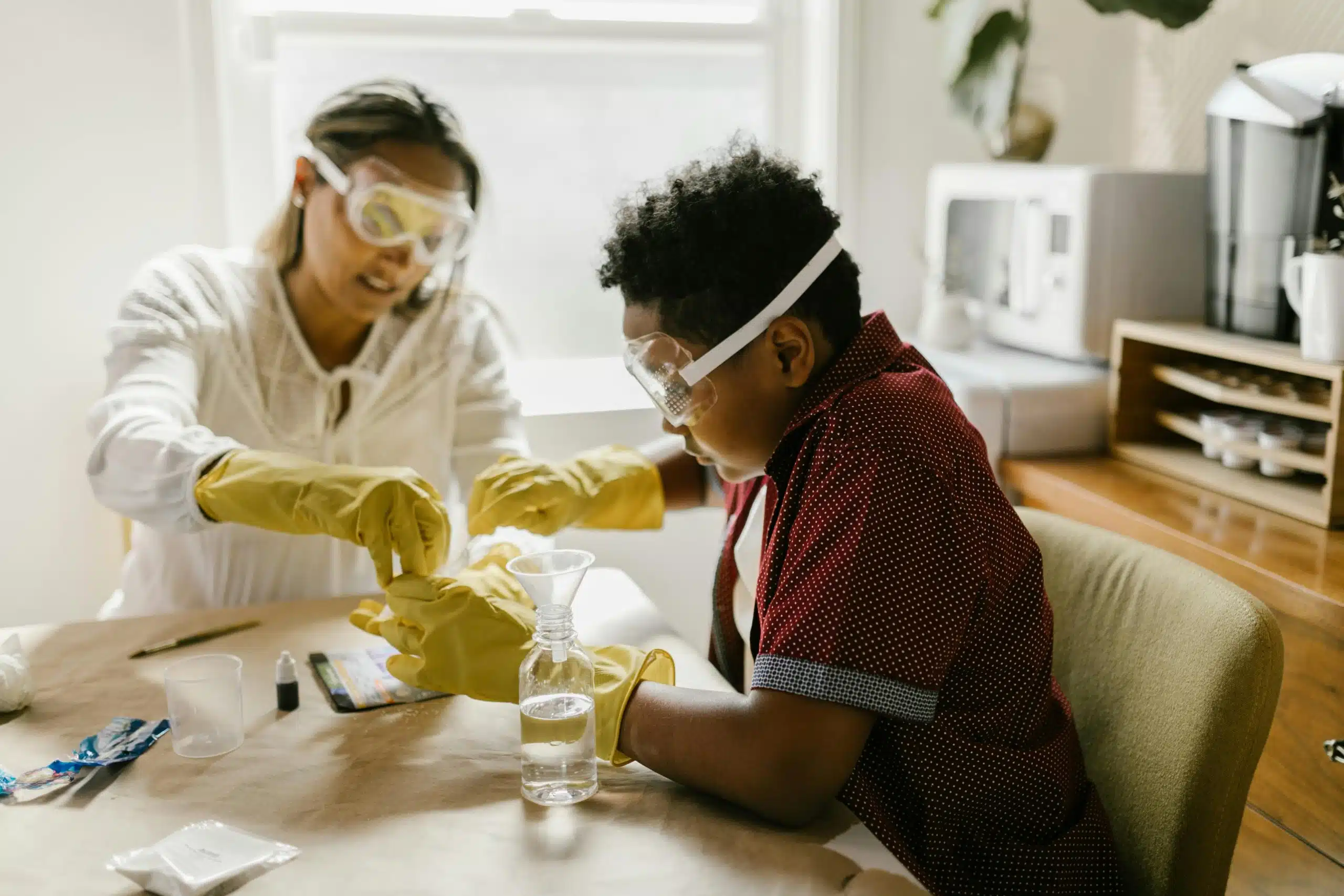
Chemistry research in 2026 includes hands-on experiments to simulation-based and data-driven studies. At the 2025 Regeneron International Science and Engineering Fair (ISEF), for example, a project titled “Total Synthesis of Novel Antivirals” won the $100,000 George D. Yancopoulos Innovator Award. The work involved synthesizing new carbon-based molecules through multi-step reactions.
If you also want to conduct winning research projects, this blog highlights 150 chemistry research topics specifically for high school students. Use these ideas to choose a topic you can explore in depth and present with confidence.
- Key Chemistry Research Topics to Explore
- Organic Chemistry Research Topics
- Inorganic Chemistry Research Topics
- Physical Chemistry Research Topics
- Analytical Chemistry Research Topics
- Biochemistry Research Topics
- How to Choose the Best Chemistry Research Topics
- Frequently Asked Questions
- Takeaways
Key Chemistry Research Topics to Explore
Because students use various tools and methods, chemistry research is organized into major areas based on what’s being studied and how the research is carried out. The categories below help clarify what’s involved before you choose a topic.
| Research Area | Description |
| Organic Chemistry | Studies carbon-based compounds and reactions. Topics often focus on reaction mechanisms, polymers, fuels, pharmaceuticals, and everyday chemicals found in plastics, food, and medicines. |
| Inorganic Chemistry | Examines metals, salts, minerals, and coordination compounds. Research commonly connects to batteries, catalysts, pigments, corrosion, and industrial materials. |
| Physical Chemistry | Explains how chemical systems behave using energy, reaction rates, and equilibrium. Many projects use calculations, simulations, and modeling instead of lab experiments. |
| Analytical Chemistry | Focuses on measuring and identifying substances. Topics include spectroscopy concepts, chromatography, water quality testing, and accuracy of chemical measurements. |
| Biochemistry | Studies chemical processes in living systems. Research often involves enzymes, proteins, metabolism, and molecular interactions linked to health and biology. |
The next five sections explore each research area in detail. Each section includes 30 chemistry research topics suited for high school research projects.
Organic Chemistry Research Topics
Organic chemistry studies carbon-based compounds and the reactions they undergo. Many topics are suitable for high school research because they involve clear reactions, measurable outcomes, and materials commonly found in everyday products.
- How temperature affects the rate of esterification reactions
- Comparing reaction speed in fermentation using different sugar types
- The effect of pH on the stability of vitamin C in fruit juices
- How heat exposure changes the breakdown of cooking oils
- Comparing biodegradation rates of biodegradable and conventional plastics
- The impact of UV light on the degradation of food dyes
- How concentration affects reaction rates in acid-catalyzed reactions
- Comparing natural and synthetic antioxidants in preventing oxidation
- The effect of storage conditions on polymer flexibility
- How different solvents influence solubility of organic compounds
- Investigating soap molecular structure and cleaning efficiency
- Comparing combustion efficiency of different alcohol fuels
- The effect of catalysts on hydrogen peroxide decomposition
- How chain length affects boiling points of alcohols
- Studying oxidation rates of fats under different temperatures
- Comparing emulsifying ability of natural emulsifiers
- The effect of light exposure on photochemical reactions in dyes
- Investigating reaction yield changes with varying reactant ratios
- How molecular polarity affects miscibility of organic liquids
- Comparing synthesis efficiency of esters with different acids
- The impact of preservatives on food spoilage reactions
- How plasticizers affect flexibility in polymer materials
- Studying evaporation rates of organic solvents at different temperatures
- Comparing natural vs synthetic fragrance compound stability
- The effect of surface area on reaction rate in solid reactants
- How oxidation affects color changes in cut fruits
- Investigating solubility of organic compounds in water vs alcohol
- Comparing fuel energy output of different organic liquids
- How molecular structure influences scent strength in esters
- Studying decomposition rates of organic compounds over time
Inorganic Chemistry Research Topics
Inorganic chemistry examines metals, salts, and other non-carbon compounds. Research in this area often involves tracking visible changes, such as color shifts, crystal formation, corrosion, or changes in electrical conductivity.
- How salt concentration affects the corrosion rate of iron
- Comparing corrosion resistance of iron, aluminum, and copper in water
- The effect of temperature on crystal growth speed in salt solutions
- How electrolyte concentration affects electrical conductivity
- Comparing voltage output in galvanic cells using different metal pairs
- The impact of pH on metal ion precipitation reactions
- How water hardness influences scale formation on metal surfaces
- Comparing reaction rates of acids with magnesium and zinc
- The effect of concentration on precipitate mass in double displacement reactions
- How humidity level affects rust formation over time
- Comparing solubility of metal salts at different temperatures
- The effect of surface area on the reactivity of powdered vs solid metals
- How ion charge affects conductivity in aqueous solutions
- Comparing flame test color intensity for different metal ions
- The effect of salt type on freezing point depression
- Investigating oxidation rates of metals exposed to air versus water
- How electrolyte type affects electrolysis efficiency
- Comparing crystal size formed under slow and rapid cooling conditions
- The impact of impurities on metal corrosion rate
- How concentration affects color intensity in transition metal solutions
- Comparing pH changes during neutralization reactions with different bases
- The effect of temperature on solubility limits of ionic compounds
- How stirring rate affects precipitate formation speed
- Comparing conductivity of distilled water versus salt solutions
- The effect of metal type on hydrogen gas production rate in acid reactions
- How ion concentration affects reaction yield in precipitation reactions
- Comparing electrode mass loss in galvanic cells over time
- The impact of salt concentration on boiling point elevation
- How oxide layer formation affects metal corrosion resistance
- Comparing battery lifespan using different electrolyte concentrations

Physical Chemistry Research Topics
Physical chemistry focuses on the mechanisms and explanations behind chemical reactions. Instead of synthesizing new substances, you study energy changes, reaction speed, molecular motion, and equilibrium. Many high school projects in this area use calculations, graphs, or time-based measurements.
- How temperature affects reaction rate in an acid–base reaction
- The effect of concentration on reaction rate in iodine clock reactions
- Comparing reaction rates using different catalysts
- How temperature influences gas pressure in a closed system
- The relationship between surface area and reaction rate
- How concentration affects equilibrium position in reversible reactions
- Comparing heat released in different neutralization reactions
- The effect of temperature on solubility of gases in water
- How molecular mass affects diffusion rate of gases
- Investigating energy changes during phase transitions of water
- How temperature affects evaporation rate of liquids
- Comparing reaction rates at different activation energies
- The effect of pressure on gas volume using Boyle’s law
- How temperature affects reaction half-life
- Comparing cooling rates of liquids in different containers
- The relationship between temperature and vapor pressure
- How concentration affects conductivity in electrolyte solutions
- Investigating heat absorption in endothermic reactions
- Comparing diffusion rates of liquids at different temperatures
- How reaction rate changes with catalyst surface area
- The effect of temperature on equilibrium constant values
- Comparing gas production rates in chemical reactions
- How molecular structure affects boiling point trends
- Investigating entropy changes during phase changes
- The relationship between reaction time and product yield
- How temperature affects viscosity of liquids
- Comparing energy efficiency of exothermic reactions
- The effect of temperature on reaction spontaneity
- How pressure influences reaction rate in gas-phase reactions
- Comparing experimental reaction rates to theoretical predictions
Analytical Chemistry Research Topics
Analytical chemistry deals with testing substances to determine their composition and concentration. Research projects in this area often involve collecting numerical data, repeating measurements, and comparing results across different methods.
- Comparing accuracy of different water quality test kits
- How sample concentration affects color intensity in colorimetric tests
- The effect of pH on indicator color change accuracy
- Comparing detection limits of different chemical indicators
- How temperature affects absorbance readings in colorimetry
- Comparing precision of digital and analog measurement tools
- The effect of sample volume on titration accuracy
- Investigating measurement error in repeated titration trials
- How dilution affects concentration calculations in solution analysis
- Comparing chromatography separation using different solvent systems
- The effect of flow rate on paper chromatography results
- Comparing retention time of compounds in simple chromatography setups
- How indicator choice affects titration endpoint determination
- Investigating accuracy of pH meters versus pH paper
- Comparing ion concentration measurements using different methods
- The effect of light intensity on spectrophotometer readings
- How contamination affects analytical measurement results
- Comparing recovery rates in standard addition experiments
- The impact of calibration curve quality on concentration accuracy
- How sample preparation affects analytical results
- Comparing reproducibility of measurements across multiple trials
- The effect of temperature on electrode sensitivity
- Investigating limits of detection in color-based tests
- Comparing analysis time for different measurement techniques
- How solvent purity affects chromatography separation quality
- Comparing accuracy of homemade versus commercial test solutions
- The effect of storage time on sample stability
- Investigating precision loss due to instrument drift
- Comparing analytical results before and after recalibration
- How human judgment affects visual endpoint determination

Biochemistry Research Topics
Biochemistry connects chemistry to living systems by examining the molecules and reactions that enable cells to function. Many biochemistry projects are realistic for high school students because they use safe materials or data analysis instead of advanced lab equipment.
- How temperature affects enzyme activity in catalase
- The effect of pH on enzyme reaction rate
- Comparing enzyme activity in fresh versus processed foods
- How substrate concentration affects enzyme reaction speed
- The impact of inhibitors on enzyme activity
- Comparing vitamin C levels in fresh and stored fruits
- How heat exposure affects protein denaturation
- The effect of salt concentration on enzyme efficiency
- Comparing fermentation rates using different sugars
- How temperature affects yeast respiration rate
- Investigating diffusion rate across membranes using dialysis tubing
- The effect of sugar concentration on yeast growth
- Comparing enzyme stability under different storage conditions
- How light exposure affects photosynthetic pigment activity
- Investigating osmosis rates under different solute concentrations
- The effect of preservatives on microbial growth
- Comparing protein content using color-based assays
- How pH affects protein solubility
- Investigating fat digestion using lipase activity
- The effect of temperature on microbial growth rate
- Comparing antioxidant levels in different foods
- How enzyme concentration affects reaction yield
- Investigating carbohydrate breakdown during digestion
- The effect of dehydration on enzyme performance
- Comparing metabolic rates using oxygen consumption data
- How nutrient availability affects cell growth rate
- Investigating enzyme reuse efficiency over multiple trials
- The effect of storage time on biochemical activity
- Comparing reaction rates in aerobic and anaerobic conditions
- How environmental stress affects cellular enzyme function
How to Choose the Best Chemistry Research Topics
Choosing a chemistry research topic starts with understanding what you can realistically test. A strong topic aligns with your available time, materials, and safety constraints. It also leads to clear data you can measure, compare, and explain using basic chemical principles.
1. Consider your personal interests.
Start with chemistry research topics that genuinely hold your attention. Chemistry projects take time, and you’ll spend weeks collecting data, analyzing results, and revising your work. If the topic connects to something you already enjoy, such as environmental issues, health, materials, or food science, you’re more likely to stay focused and thorough.
Genuine interest also helps you ask better questions. When you care about the subject, you notice patterns, problems, or inconsistencies that others might miss. This often leads to clearer hypotheses and more thoughtful conclusions.

2. Assess available resources.
Before committing to a topic, check what tools and materials you can actually access, including lab equipment, chemicals, software, mentorship, and time. A strong research topic matches your resources so you can complete the project safely and accurately.
Next, think about where your data will come from. Some topics rely on experiments you can run in a school lab or at home. Others work better with simulations or existing chemical data. If you don’t have access to a lab, reputable scientific databases can still support meaningful chemistry research, such as:
- PubChem. A chemical database maintained by the National Institutes of Health (NIH) that provides structures, properties, safety data, and biological activity information for thousands of compounds.
- CompTox Chemicals Dashboard. A database developed by the U.S. Environmental Protection Agency (EPA) that offers environmental, toxicological, and physicochemical data on chemicals.
- ChEMBL. A curated bioactivity database maintained by the European Bioinformatics Institute (EMBL-EBI) that is commonly used in drug discovery and medicinal chemistry research.
Also check whether the experiment can be done safely in your school lab or at home. If a topic requires the use of restricted chemicals, specialized equipment, or constant supervision, it’s likely unrealistic. Projects with simple materials and clearly controlled variables are easier to repeat and produce more reliable results.
3. Focus on one clear research question.
Your topic should be narrow enough to answer with the time you have. Projects that attempt to cover too many variables often yield shallow data and unclear conclusions. Remember, a well-scoped topic focuses on one main factor and one measurable outcome.
For example, studying “how temperature affects reaction rate” is workable because you can control temperature and measure time. Studying “how temperature, pH, concentration, and catalysts affect reaction rate” is likely too broad for a high school project.
A good tip is to define clear limits before you begin. Decide what you will change, what you will measure, and how many trials you can realistically complete. If you can’t describe your experiment or analysis in a few clear steps, the topic is probably too broad.
4. Check scientific relevance and timeliness.
Choose a topic that connects to current scientific questions or real-world applications. Research related to energy use, environmental quality, materials, or health is often easier to explain because the problem already exists outside the lab. Topics grounded in real issues also give your work clearer purpose and context.

As Paul Anastas, the Father of Green Chemistry, has noted, “Chemistry is all about how you redesign the material basis of our society and our economy… Nobody has a greater impact on the materials of our daily lives.” This perspective highlights why relevance matters when choosing a topic. Projects tied to modern challenges are easier to frame, research, and justify.
Timely chemistry research topics also give you better sources to work with. Recent studies, datasets, and examples make it easier to compare your results to existing research and explain why your findings matter now.
5. Verify safety and ethical feasibility.
Ensure your topic can be studied without risking injury or violating regulations. Avoid projects that involve toxic chemicals, extreme temperatures, open flames, or uncontrolled reactions. If an experiment can’t be approved by a teacher or done safely with standard precautions, choose a different topic.
Ethical feasibility is also important. Don’t design projects that involve testing on people or animals, handling biological samples, or collecting personal data. Strong chemistry research relies on safe materials, clear procedures, and results that can be gathered responsibly and repeated without harm.
Frequently Asked Questions
1. What makes a good high school chemistry research topic?
A good topic is clear, specific, and testable with the resources you have. It focuses on one main variable and one measurable outcome. The topic should allow you to collect accurate data and explain your results using basic chemistry concepts.
2. How long should a typical high school chemistry research project take?
Most chemistry projects take a few weeks from start to finish. This includes planning, running experiments or collecting data, analyzing results, and writing your report. The timeline depends on the complexity of your topic and your ability to work on it regularly.
3. Do I need access to a laboratory to complete my chemistry research project?
Not always. Many projects use simple experiments, simulations, or publicly available data. Some topics can be completed at home or in a school lab with basic equipment and teacher approval.
4. How can I find credible scientific sources for my research?
Use textbooks, peer-reviewed journal articles, and established scientific databases. Trusted sources include PubChem, the CompTox Chemicals Dashboard, and ChEMBL for chemical and bioactivity data. University platforms such as MIT OpenCourseWare and journals such as the Journal of the American Chemical Society also provide reliable reference material.
5. What types of data collection are easiest for high school chemistry students?
The easiest data to collect involve simple measurements that can be repeated. Some examples include timing how long a reaction takes, measuring mass before and after a reaction, recording temperature changes, or observing color changes using charts or apps.

Takeaways
- Choosing the right chemistry research topics helps you design a project that is focused, manageable, and based on real data.
- A good topic should match your interests, fit your available resources, and focus on one clear research question.
- Chemistry research for high school students can be done using simple experiments, simulations, or existing datasets.
- Organic, inorganic, physical, analytical, and biochemistry each offer realistic and testable research ideas.
- Need help choosing a research topic or developing a competitive project? Our Science Research Program provides one-on-one mentorship to help you build research for ISEF, Regeneron STS, and other major science competitions.