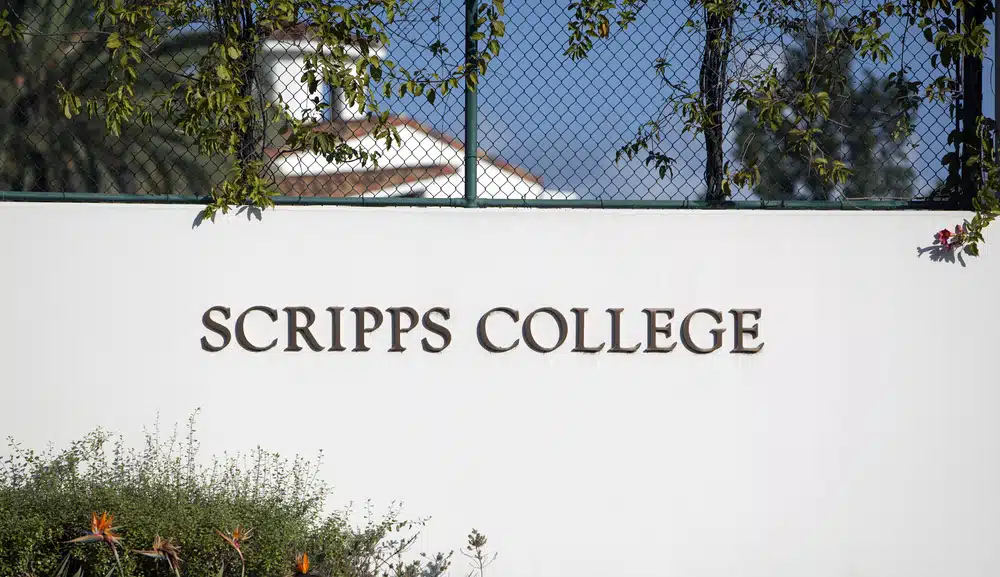
Applying to the Claremont Colleges means aiming for some of the most competitive schools in the country. Each of the seven colleges offers its own distinct programs, values, and admissions standards, but they all share a reputation for academic excellence and collaboration.
In this guide, you’ll learn about the latest Claremont Colleges acceptance rates, how they compare across campuses, and what makes each college stand out. If you’re planning to apply, understanding these numbers can help you build a stronger and more strategic application.
- Class of 2029 Claremont Colleges Acceptance Rates
- What Are Claremont Colleges?
- How to Get into Claremont Colleges
- Frequently Asked Questions
- Takeaways
Class of 2029 Claremont Colleges Acceptance Rates
The Claremont Colleges are a group of highly selective private institutions in Southern California. Together, they operate under a shared consortium model, offering students the benefits of small, specialized campuses with the resources of a larger university.
Each college maintains its own admissions process and academic culture, but all seven collaborate closely through cross-registration, shared facilities, and joint programs.
Below are the Class of 2029 Claremont Colleges acceptance rates, based on the latest data from each school’s official admissions or institutional research office.
| College | Overall Acceptance Rate | EA/ED Acceptance Rate | RD Acceptance Rate |
| Pomona College | 6.9% | 12.5% (2028) | 6.1% (2028) |
| Claremont McKenna College (CMC) | 9.6% (2028) | 23.4% (2028) | 7.2% (2028) |
| Harvey Mudd College | 12.7% (2028) | 16.2% (2028) | 12.1% (2028) |
| Pitzer College | 24% (2028) | 42.2% (2028) | 22.8% (2028) |
| Scripps College | 38.3% (2028) | 47.1% (2028) | 37.5% (2028) |
| Claremont Graduate University (CGU) | Officially undisclosed | Officially undisclosed | Officially undisclosed |
| Keck Graduate Institute (KGI) | Officially undisclosed | Officially undisclosed | Officially undisclosed |
Most rates listed reflect the Class of 2028 because certain colleges have not yet released official Class of 2029 data. These numbers remain the most recent verified figures available from each school’s institutional research or admissions office.
Regardless, each of these figures highlights how competitive the Claremont Colleges acceptance rates are—especially at Pomona, Claremont McKenna, and Harvey Mudd. While official data for Claremont Graduate University and Keck Graduate Institute are not published, both also maintain selective admissions that vary by program.
What Are Claremont Colleges?
The Claremont Colleges Consortium brings together seven distinguished institutions in Southern California: five undergraduate colleges and two graduate universities.
The consortium offers the personalized experience of a small liberal arts college with the academic depth and shared resources of a major research university. Students can take courses across campuses, use joint libraries, and participate in shared extracurriculars while benefiting from each college’s unique strengths.
Pomona College
Founded in 1887, Pomona College is the oldest and most selective member of the consortium. With an acceptance rate of only 6.9%, it’s known for rigorous academics and a strong commitment to undergraduate teaching.
Pomona offers over 600 courses each semester and more than 48 majors across the arts, humanities, social sciences, and natural sciences. The college emphasizes research and close faculty mentorship, with 94% of classes having fewer than 30 students.
Pomona also supports need-blind admissions for U.S. students and meets 100% of demonstrated financial need.
Claremont McKenna College (CMC)
Claremont McKenna College, founded in 1946, is recognized for its focus on leadership, economics, government, and public affairs. Its mission centers on preparing students for thoughtful and productive lives in business, law, and policy.
CMC offers 33 majors and 11 sequences (minors) with opportunities for real-world experience through the Kravis Leadership Institute and the Rose Institute of State and Local Government. Students also participate in internships and policy research through the Washington Program and Silicon Valley Program.
The college values civic engagement, analytical thinking, and global awareness.
Harvey Mudd College
Established in 1955, Harvey Mudd College is a premier STEM institution specializing in engineering, mathematics, computer science, and the physical sciences. Despite its technical focus, Harvey Mudd requires all students to complete a comprehensive Humanities, Social Sciences, and the Arts (HSA) curriculum to guarantee a balanced liberal arts education.
The college maintains one of the highest median starting salaries for graduates in the nation and boasts a student-faculty ratio of 9:1. Through the Clinic Program, students work on industry-sponsored research projects, bridging academic theory with real-world applications.
Pitzer College
Founded in 1963, Pitzer College is known for its progressive approach to education and focus on social responsibility. Its curriculum emphasizes environmental sustainability, social justice, and intercultural understanding.

Students design their own educational paths through self-designed majors, fieldwork, and study abroad opportunities—with nearly 80% of students studying off-campus before graduation. Pitzer is also recognized for its strong environmental initiatives, with LEED-certified buildings and the Robert Redford Conservancy for Southern California Sustainability.
The college’s flexible grading system and emphasis on dialogue-based learning promote collaboration and critical thinking.
Scripps College
Established in 1926, Scripps College is a leading women’s liberal arts institution dedicated to empowering women through rigorous academics and community engagement. Its hallmark Core Curriculum in Interdisciplinary Humanities challenges students to examine global issues through multiple perspectives.
Scripps offers over 50 majors in collaboration with the consortium and is known for small seminar-style classes that encourage discussion and analytical writing. The college’s historic campus, known for its Mediterranean-style architecture and sculpture gardens, is consistently ranked among the most beautiful in the nation.
Scripps students graduate with a strong foundation in the humanities and a commitment to leadership and equity.
Claremont Graduate University (CGU)
Founded in 1925, Claremont Graduate University is devoted entirely to graduate-level education. It offers master’s and doctoral programs across fields such as education, health, social sciences, business, and the arts.
CGU emphasizes transdisciplinary learning, which allows students to integrate insights from multiple disciplines. The Drucker School of Management, School of Educational Studies, and Center for Information Systems and Technology are among its most notable divisions.
With small seminar classes and close faculty mentoring, CGU promotes research that addresses real-world problems through innovation and applied scholarship.
Keck Graduate Institute (KGI)
Keck Graduate Institute, founded in 1997, focuses on preparing students for leadership in the life sciences and healthcare industries. KGI offers professional science master’s and doctoral programs that integrate biotechnology, engineering, and business.
Its signature programs include the Master of Bioscience (MBS) and Doctor of Pharmacy (PharmD). Students participate in industry partnerships through the Team Master’s Project, working directly with companies on real challenges in biotechnology and pharmaceuticals.
KGI’s curriculum is designed to equip graduates with both scientific expertise and business acumen essential for success in the biotech and healthcare sectors.
How to Get into Claremont Colleges
The Claremont Colleges acceptance rates reflect how selective and competitive these institutions are. Although each college has its own admissions process, they share a similar philosophy of holistic evaluation: one that values academic performance, intellectual engagement, leadership, and community involvement.
Understanding both the shared and unique elements of their admissions processes will help you present a stronger application.
Shared features among Claremont Colleges
All five undergraduate colleges—Pomona, Claremont McKenna, Harvey Mudd, Pitzer, and Scripps—use the Common Application and review applicants through a holistic admissions process. This means your academic record, essays, extracurricular activities, and recommendations are all considered together.

While each college reviews applications independently, students benefit from a shared academic ecosystem. You can cross-register for classes across campuses, access seven libraries, and participate in consortium-wide research, arts, and leadership programs. For example, a Pomona student can take a government course at CMC or a lab science at Harvey Mudd.
All five colleges are test-optional through at least Fall 2026. According to official admissions statements, strong academic performance in challenging coursework—such as AP, IB, or honors classes—remains the most important factor. Essays and recommendation letters provide context on your intellectual curiosity, resilience, and alignment with each college’s values.
Additionally, the Early Decision option is available at each undergraduate Claremont College, which offers higher admission chances for applicants who consider the school their top choice. Applying ED demonstrates strong interest and commitment, a factor often noted by admissions officers.
Differences in admissions criteria
Although the Claremont Colleges share a common liberal arts foundation, each institution evaluates applicants based on qualities that align with its distinct mission and academic focus. Understanding what each college values can help you present your strongest possible application:
Pomona prioritizes academic excellence, depth of thought, and a genuine curiosity for learning. The admissions team looks for students who have pursued the most challenging courses available to them and who thrive in discussion-based settings. Applicants who demonstrate intellectual engagement, empathy, and a desire to contribute to a diverse academic community are especially competitive.
Claremont McKenna College
CMC seeks students who have shown strong leadership, initiative, and interest in economics, government, or public affairs. The college looks for applicants who combine analytical ability with civic engagement and ethical reasoning. CMC values students who are motivated to make a positive difference through leadership and service, both on campus and beyond.
Pitzer College
Pitzer admits students who demonstrate creativity, independent thinking, and a commitment to social and environmental responsibility. The college evaluates how applicants engage with issues such as sustainability, equity, and community involvement. Students who show initiative in service, environmental activism, or social justice work often align closely with Pitzer’s values.
Scripps College
Scripps focuses on intellectual rigor, women’s leadership, and interdisciplinary learning. The college seeks applicants who think critically and engage thoughtfully with diverse perspectives. Scripps values students who will contribute meaningfully to its collaborative, all-women academic environment and who are prepared to take on leadership roles in their chosen fields.
While Pomona and Harvey Mudd are the most selective (both admitting fewer than 12% of applicants), Pitzer and Scripps have slightly higher acceptance rates while still maintaining strong academic expectations.
Harvey Mudd College

Harvey Mudd looks for applicants with exceptional academic performance in math and science who also appreciate the importance of the humanities and social sciences. Admissions officers value students who enjoy collaborative problem-solving and who can apply creativity and technical rigor to real-world challenges. Harvey Mudd seeks individuals who will contribute to both the technical and humanistic aspects of scientific advancement.
Tips for a strong application
If you want to stand out across the Claremont Colleges, focus on alignment and authenticity. Each college evaluates how well your interests and experiences fit with its mission and academic culture.
Here are specific strategies drawn from the consortium’s official guidance:
- Align your application with the college’s mission. For example, highlight your leadership and policy experiences if applying to CMC or your passion for STEM and collaboration if applying to Harvey Mudd.
- Show interdisciplinary curiosity. The consortium values students who bridge disciplines—such as combining environmental studies with economics or art with computer science.
- Consider applying Early Decision. Data from Pomona, CMC, and Scripps show significantly higher acceptance rates for ED applicants compared to Regular Decision.
- Write essays that reflect depth and self-awareness. Admissions officers at all Claremont Colleges cite the personal statement and supplemental essays as critical for understanding your character and purpose.
- Demonstrate collaboration and initiative. Whether through research, leadership roles, or community projects, show that you contribute meaningfully and work well with others.
The Claremont Colleges acceptance rates are low, but applicants who demonstrate genuine intellectual curiosity, social awareness, and clear fit with the consortium’s values have strong chances of admission.
Frequently Asked Questions
1. What Claremont College is the easiest to get into?
For the Class of 2028, Scripps College had the highest acceptance rate at 38.3%, followed by Pitzer College at 24%. These two colleges remain the most accessible within the consortium, though both still attract strong applicants with impressive academic and extracurricular backgrounds.
2. Which Claremont College is the hardest to get into?
Pomona College is the most selective, admitting just 6.9% of applicants. Claremont McKenna College follows at 9.6%, based on the Class of 2028 data, and Harvey Mudd College admitted 12.7% of applicants. These three colleges are among the most competitive liberal arts institutions in the country.
3. What makes the Claremont Colleges different from other liberal arts schools?
The Claremont Colleges Consortium offers a unique model that combines the intimacy of small liberal arts colleges with the resources of a larger university. Students can take classes across all seven campuses, participate in joint research, and use shared facilities such as libraries, dining halls, and student organizations. This academic and social flexibility distinguishes the consortium from most other liberal arts systems.
4. Do Claremont Colleges share admissions or financial aid offices?
No. Each college manages its own admissions and financial aid offices independently and makes separate admissions decisions. However, all undergraduate colleges use the Common Application and evaluate applicants through a holistic review process. Every undergraduate Claremont College also meets 100% of demonstrated financial need for admitted students.
5. How can I improve my chances of getting into a Claremont College?
To strengthen your application, focus on what aligns best with your chosen college’s values and academic strengths. Highlight your intellectual curiosity, leadership, and interdisciplinary interests in your essays. If you have a clear top choice, consider applying ED, since rates are significantly higher across the consortium—such as 12.5% ED at Pomona and 23.4% ED at CMC. Finally, show how you’ll contribute to the collaborative academic environment that defines the Claremont Colleges.
Takeaways
The Claremont Colleges acceptance rates reveal just how competitive this consortium is, with top schools like Pomona, Claremont McKenna, and Harvey Mudd admitting fewer than 13% of applicants. Here are some key insights to keep in mind as you consider applying:
- The Claremont Colleges acceptance rates vary widely, from 6.9% at Pomona College to 38.3% at Scripps College, showing how distinct each school’s admissions standards are.
- Pomona, CMC, and Harvey Mudd remain the most selective, while Pitzer and Scripps offer slightly higher odds for students who align with their missions and values.
- Each college follows a holistic admissions process, evaluating grades, essays, recommendations, and extracurricular impact rather than test scores alone.
- Applying Early Decision can significantly increase your chances of admission (Pomona’s ED rate is around 12.5%, and CMC’s is about 23.4%), especially if you’ve identified your best-fit college.
- If you want to strengthen your application for schools with low Claremont Colleges acceptance rates, consider working with a college admissions consultant who can help you create a compelling profile, refine your essays, and build a strategic application plan tailored to your dream school.