

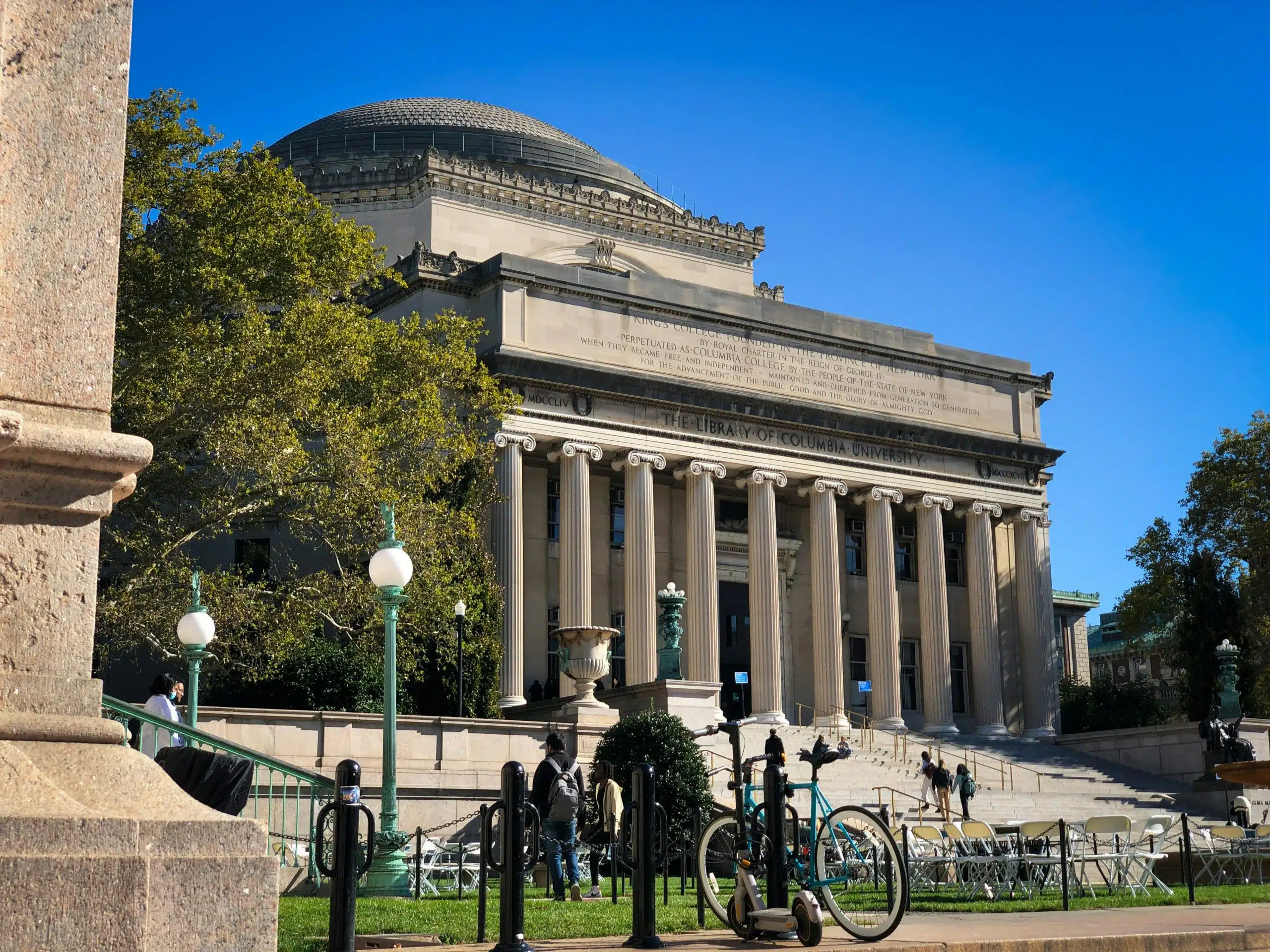
Columbia University’s cost of attendance for 2024–2025 is listed at $93,417, but that doesn’t mean you’ll be paying all of it. Most families don’t pay the full amount because of Columbia’s strong financial aid. In fact, a large portion of students attend at significantly reduced costs—or even tuition-free.
This guide breaks down what you’re really looking at when it comes to how much it costs to go to Columbia University, and how financial aid, family income, and extra fees shape what you’ll actually pay.
- How Much Does It Cost to Go to Columbia University?
- Housing Costs at Columbia
- Meal Plans and Dining Costs at Columbia
- Columbia University Financial Aid
- How to Apply for Financial Aid at Columbia
- Payment Options at Columbia
- Is the Columbia University Cost Worth It?
- Frequently Asked Questions
- Takeaways
How Much Does It Cost to Go to Columbia University?
Here’s the full breakdown of the Columbia University cost per year for undergraduates in 2024–2025:
| Expense Category | Cost |
| Tuition and Fees | $71,170 |
| New Student Fees | $675 |
| Housing and Food | $17,580 |
| Books, Personal Expenses, Transportation | $3,992 |
| Estimated Total | $93,417 |
This cost is what Columbia uses when calculating aid eligibility. If you’re a first-year living on campus, this is your official estimate.
Now if you’re calculating things by semester, tuition is charged at a flat rate of $34,000 per term, regardless of credit load. That brings the Columbia University cost per semester to about $46,708.50, once all fees and living costs are added.
Multiply the annual figure across four years, and the Columbia University cost for 4 years hits around $373,668—but again, that’s before aid.
Housing Costs at Columbia
Housing at Columbia can vary depending on whether you’re a first-year, upperclassman, or staying over the summer. While the total cost of attendance estimate already includes housing and food as a bundled figure, it’s helpful to see the actual breakdown—especially if you’re budgeting for optional sessions like summer housing or interim stays.
Here’s the breakdown of housing costs at Columbia:
| Student Type | Annual Housing Cost |
| First-Year Residents | $11,900 |
| Upperclass Residents | $13,222 |
These rates cover a full academic year in on-campus housing. All first-year students are required to live on campus, and many upperclassmen choose to stay in campus housing as well, though some move off-campus depending on preference and financial situation.
Meal Plans and Dining Costs at Columbia
Columbia doesn’t require a dining plan for all students, but if you’re living on campus, there’s a good chance you’ll opt into one. The dining plans are flexible, and they come with added perks like complimentary meals, Dining Dollars (used like cash at Columbia dining halls), and Flex (accepted both on- and off-campus for things like food delivery and local merchants).
Here are the key highlights:
- Dining Dollars are tax-free and roll over each year until graduation.
- Some plans focus on flexibility (term-based vs. weekly).
- Plans often include extra guest meals and bonus meals in case you run out.
- You can use Flex for late-night snacks, coffee off-campus, or even online food delivery.
Here’s a breakdown of Columbia’s dining plan options for 2025-2026:
| Plan Name | Meals Per Term | Dining Dollars | Flex | Cost Per Term |
| Plan A / Weekly | 14/week + 21 guest meals | $0 | $200 | $3,240 |
| Plan A / Term | 210 + 6 guest meals | $100 | $100 | $3,185 |
| Plan A / Meals Only | 210 + 6 guest meals | $0 | $0 | $2,971 |
| Plan B / Dining Dollars | 175 + 6 guest meals | $100 | $100 | $2,946 |
| Plan B / Flex | 175 + 6 guest meals | $0 | $200 | $2,946 |
| Plan C | 150 + 6 guest meals | $75 | $75 | $2,572 |
| Plan D | 100 + 4 guest meals | $0 | $125 | $1,781 |
| EZ 18 | 18/week + 21 guest meals | $0 | $100 | $3,874 |
| EZ 19 | 19/week + 21 guest meals | $75 | $0 | $3,550 |
| EZ 350 | 350 + 21 guest meals | $0 | $150 | $3,996 |
If you’re going to eat most of your meals on campus, Plan A Weekly or EZ 18/19 offer the most convenience. These are great for students who want peace of mind and don’t want to think too much about rationing meals.
Prefer flexibility? The Term-based plans let you choose when to eat throughout the semester, rather than being locked into a weekly limit.
If you’ll be cooking a lot or grabbing food off-campus, lower-cost plans like Plan C or Plan D might make more sense.
And remember: meal plans are an added cost on top of tuition and fees, so it’s smart to factor them into your actual budget.
Columbia University Financial Aid
Columbia runs one of the most generous financial aid programs in the country. Here’s what sets it apart:
- If your family earns under $150,000 (with typical assets), you may qualify for free tuition.
- If your family makes less than $66,000, you may have no expected parent contribution—that means tuition, housing, meals, and fees are fully covered.
- No loans are included in Columbia’s aid packages. Students are not expected to borrow to cover costs.
Columbia awards over $225 million in scholarships and grants each year. Here are some real financial aid stats you should know:
- 51% of incoming first-years receive Columbia grants.
- The average grant award is approximately $76,265.
- About 24% of students receive Pell Grants.
- Low-income first-years also get a $2,000 start-up grant to help with the transition.
And affordability doesn’t stop at financial aid. Columbia also helps you afford college life on campus and take full advantage of the city and your education. Here’s what else you get:
- 95% of students land at least one internship while they’re at Columbia.
- Free laundry is available in all Columbia residence halls (yep, you won’t need quarters).
- The Work Exemption Program gives grants to support unpaid or low-paid opportunities like internships, research, and community work.
- You’ll find hundreds of student jobs on campus, from working as a research assistant to helping with game-day operations.
- Through the Arts Initiative, you get free entry to over 20 museums in NYC.
- Columbia offers over 150 study abroad programs, and your financial aid travels with you.
Columbia clearly wants students to focus on their goals—not just on how to pay for the next meal or museum ticket.
How to Apply for Financial Aid at Columbia
If you’re planning to apply for aid, you’ll need to complete a few forms and submit documents by the deadline. Here’s a simple breakdown of what to submit:
Financial aid requirements
1. FAFSA
- Required for U.S. citizens and eligible noncitizens
- Used to determine eligibility for federal aid like Pell Grants and work-study
- Available starting October 1
- Columbia’s school code is 2116 (listed as “Columbia U: College & Engineering”)
- Required for both biological/adoptive parents
- If your parents are divorced or separated, each must complete a separate CSS Profile
- Step-parent info must also be included, if applicable
- Columbia doesn’t offer additional fee waivers, but the College Board may waive fees for eligible students

Required documents (submitted via IDOC)
Upload these through the College Board’s IDOC system:
- 2023 W-2 forms for student and both parents
- 2023 federal tax returns for student and parents (include all pages and schedules)
- 2023 business tax returns, if applicable (Form 1120, 1065, K-1s)
- Non-tax filer certification (if anyone didn’t file taxes)
- Trust documentation, if relevant
If you can’t get information from one parent, you can submit a Noncustodial Parent Waiver with an explanation and supporting documents.
If you’re receiving any outside scholarships, you’ll need to complete the Outside Scholarship and External Payment Form. This form should be submitted through the IDOC system once it becomes available.
Additionally, Columbia makes it clear that for security reasons, sensitive documents should not be sent via email. Always upload them securely through IDOC.
Payment Options at Columbia
Even with financial aid, you may still need to pay part of your bill. Columbia gives families several ways to handle those payments, whether in one go or spread out across the semester.
Direct payments
This is the simplest option: just pay your balance in full using Columbia’s online billing system. You can pay by bank transfer, credit card, or check.
Monthly payment plan
Columbia offers a monthly payment plan through Nelnet, allowing you to break your bill into smaller payments across the semester. There’s no interest, no credit check, and it’s not a loan. Just a small enrollment fee:
- $50 per year if enrolling annually
- $30 per term for fall or spring only
- Up to $30 fee if a payment gets returned
This plan is available for fall and spring only—not summer.
529 plans
Got a 529 college savings plan? You can use it at Columbia. You’ll need to contact your plan administrator to start the payment process. Most plans require enrollment verification, so Columbia recommends requesting payments 10 days after the semester begins. Funds can be sent to either a personal account or directly to the university.
Loan assistance
Columbia doesn’t include loans in your initial aid package, but if you still need help covering your bill, loans are an option.
Federal Direct Loans are available to all domestic students with a fixed interest rate of 6.53% for loans disbursed between July 1, 2024, and July 1, 2025. These loans are offered by the federal government and don’t require a credit check.
Undergraduates can typically borrow:
- $5,500 in their first year
- $6,500 in their second year
- $7,500 per year for junior and senior years
- The lifetime borrowing limit is $31,000 for dependent students
To put that in perspective, if you borrow $5,500 at 6.53% interest and repay it over 10 years, your monthly payment would be around $62, and you’d pay about $2,000 in interest over the life of the loan. It adds up—but it’s manageable, especially with a Columbia-level starting salary.
Private Loans may be used too, but Columbia recommends starting with federal loans first. They also offer a Suggested Lender List and support through the loan certification process.

Is the Columbia University Cost Worth It?
When you see a price tag near $93,000 per year, it’s natural to ask: is it really worth it? For most Columbia students, the answer is yes, especially when you look at the long-term value.
Strong career outcomes
Columbia boasts a career outcome rate of 88.8%, meaning nearly 9 out of 10 students are either employed, in grad school, or doing meaningful work like research or starting their own ventures shortly after graduation.
Here’s the breakdown:
- 83.1% are fully employed
- 2.6% go directly to graduate school
- 2.2% land internships
- Only 10.4% are still seeking opportunities
- The rest pursue fellowships, their own startups, or service projects
High starting salaries
The average annual base salary is $91,940, based on full-time positions. That kind of salary gives you a real shot at paying off any leftover costs quickly, and building a stable financial future early on.
Location, location, location
Want to stick around NYC after graduation? You’re not alone. 69.1% of Columbia grads stay in New York to work. The next most popular states include:
- California – 7.1%
- New Jersey – 5.7%
- Texas – 2.2%
- Washington, D.C. – 1.8%
- Others include Florida, Massachusetts, Virginia, Georgia, and Connecticut
Being in the heart of New York City gives Columbia students a huge leg up: internships, job interviews, networking events, and career fairs are all right outside your door.
Frequently Asked Questions
1. What is the Columbia University cost per year after aid?
While the sticker Columbia University cost per year is $93,417, students from families making less than $150,000 (with typical assets) may qualify for free tuition. Some students pay less than $5,000 per year, and those under $66,000 may have their full cost—tuition, housing, and meals—covered.
2. What is the Columbia University cost per semester?
Tuition alone is billed at a flat $34,000 per semester. Once you add in housing, meals, and other fees, the total Columbia University cost per semester can reach around $46,700, depending on your dining plan and other personal expenses.
3. What is the cost of Columbia University for 4 years?
If you multiply the annual sticker cost of $93,417 by four, the full Columbia University cost for 4 years adds up to roughly $373,668 before financial aid. With grants and scholarships, though, your actual cost could be much lower.
4. Is Columbia worth it for the cost?
Yes, Columbia is worth it for many students. With a career outcome rate of 88.8% and an average starting salary of $91,940, graduates see a strong return on investment. Plus, generous financial aid can significantly reduce what you actually pay.
Takeaways
If you’re considering Columbia, don’t let the sticker price scare you off. Here’s what really matters when you’re weighing the Columbia University cost:
- Most students don’t pay full price. Columbia’s financial aid program is incredibly generous, with over half of first-years receiving grants that average around $76,000 per year.
- Living and dining costs are flexible. Housing ranges from $11,900 to $13,222 depending on class year, and meal plans offer options from as low as $1,781 to nearly $4,000 per term depending on how much you plan to eat on campus.
- Plenty of payment options are available. From monthly installment plans to 529 savings and federal loans, you’re not locked into paying the full bill all at once.
- Columbia has strong career outcomes. With a 91K average starting salary and nearly 9 out of 10 grads employed or in grad school, the return on investment is undeniable.
- Want help building a cost-smart, Columbia-ready application? A college admissions consultant can help you maximize aid, craft standout materials, and feel confident in your college strategy.










