

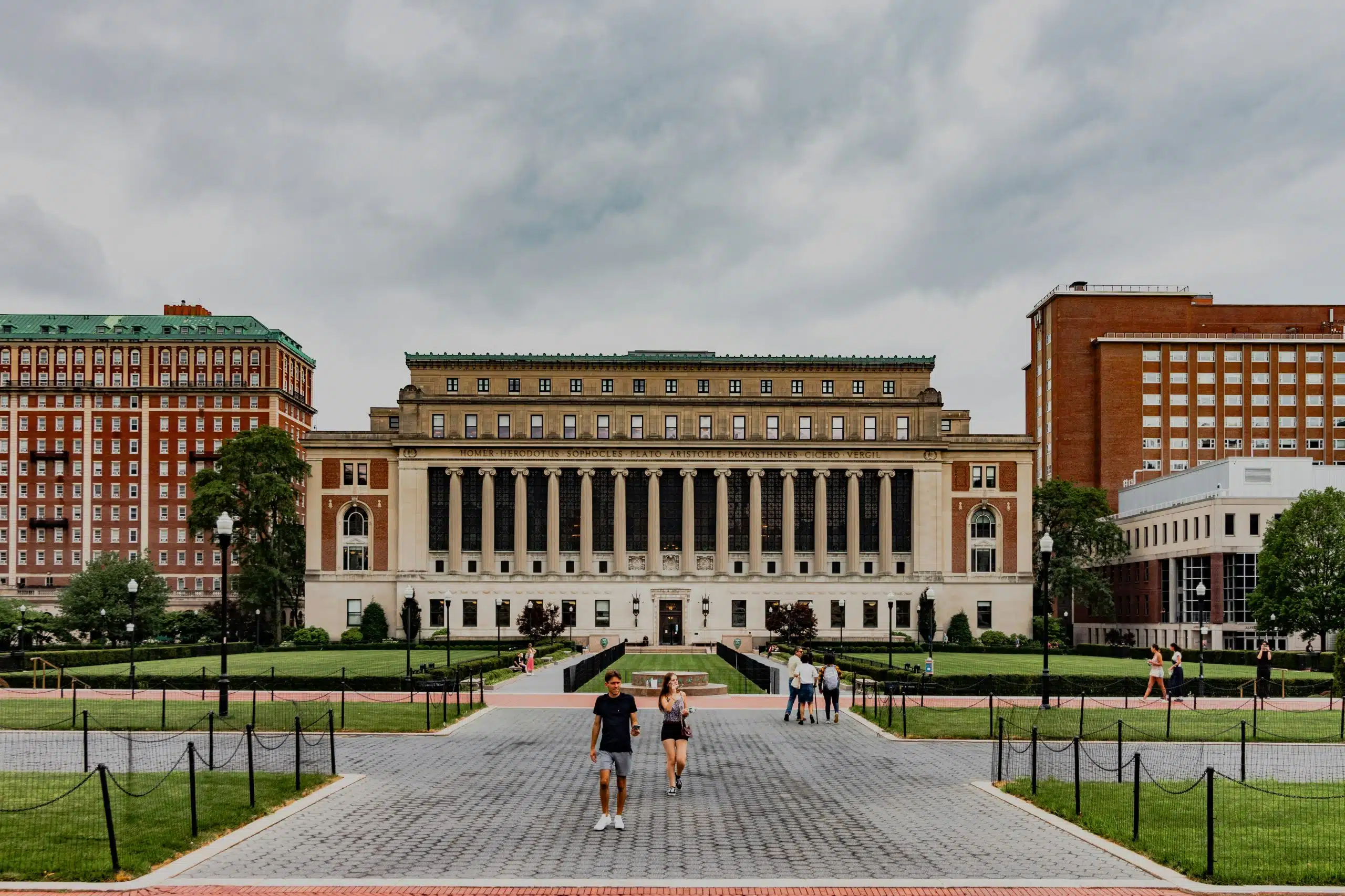
Columbia University is the fifth-oldest university in the U.S. Founded in 1754 in Lower Manhattan, the university moved to its current home in 1897. Today, its main campus sits at 116th Street and Broadway in Morningside Heights, a lively, urban neighborhood on the Upper West Side of New York City.
Unlike traditional college towns, Columbia is fully integrated into the city, which means your campus experience extends far beyond the gates. Just steps away, you’ll find restaurants, parks, museums, and subway lines that connect you to the rest of Manhattan and beyond.
In this guide, we’ll walk you through what Columbia’s campus looks like, how to get there, and what it’s like to live in the surrounding area. You’ll also get a sense of how studying in New York City shapes student life, from academics to internships to everyday experiences.
- Columbia University Campus Location
- Getting to Columbia University
- Living Near Columbia University
- Why You Should Visit Columbia University’s Campus
- Frequently Asked Questions
- Takeaways
Columbia University Campus Location
Columbia University’s main campus sits in Morningside Heights, one of New York City’s most concentrated academic areas. Within a few blocks, you’ll find Barnard College, Teachers College, and several other respected institutions, making Morningside Heights one of the most academically concentrated neighborhoods in the country. This concentration of schools means the area is busy year-round with students, classes, and campus events.
Columbia’s historic main campus consists of 71 buildings on 36 acres and is known for its cohesive Beaux-Arts design, originally planned by the architecture firm McKim, Mead & White, the same firm behind many of NYC’s most iconic buildings. The layout is compact and organized around a central quad, with landmarks like Low Memorial Library at the heart of campus. Because everything is relatively close together, it’s easy to walk between classes, dorms, libraries, and dining halls.
Beyond the official campus boundaries, the university owns and manages a large amount of housing in the surrounding area, including residence halls and apartment-style options for upperclassmen and graduate students.
Morningside Heights is generally considered a safe neighborhood, especially around campus where there is a visible campus security presence and regular patrols. Like any part of New York City, it’s still important to stay aware of your surroundings, but the area is well-trafficked by students, faculty, and local residents throughout the day.
Main campus landmarks
At the center of campus is Low Plaza, where Low Memorial Library sits at the top of a wide set of steps. It serves as the architectural centerpiece and now houses administrative offices rather than a working library. Right in front of it sits the Alma Mater statue, an iconic symbol of the university and one of the most photographed spots on campus.
Just across the main quad is Butler Library, the primary research library for undergraduates. It’s open late during the semester and becomes a go-to study spot, especially during midterms and finals. Many core humanities classes are also held in and around the building, so you’ll likely spend a lot of time here.
For science and engineering, Pupin Hall stands out. It’s a National Historic Landmark where important physics research took place, including work connected to the Manhattan Project, which many students will recognize from history class. Today, it houses the physics and astronomy departments and remains a key academic building for STEM students.
Student life is centered around Alfred Lerner Hall, the main student hub. Inside, you’ll find dining options, study areas, meeting rooms, and spaces for student organizations. It’s where many events, club activities, and day-to-day student interactions happen.
Beyond the main quad, the campus includes athletic facilities like the Dodge Fitness Center and several smaller green spaces where students gather between classes. If staying active or having outdoor space to unwind matters to you, these spots make it easy to recharge between a busy academic schedule.
What makes the campus distinctive is how these historic buildings and open areas are arranged in a compact, walkable layout, all set within the middle of New York City.

Columbia University’s other campuses and affiliated sites
In addition to its main campus in Morningside Heights, Columbia University operates several other campuses and specialized sites across and just outside New York City. Each serves a different purpose, from graduate education to research and athletics.
Just a few blocks north in West Harlem is the Manhattanville campus, a newer expansion that houses several graduate and professional programs. This is where you’ll find the Columbia Business School, along with research centers and academic buildings designed for interdisciplinary work. Many undergraduate students don’t have regular classes here, but they may visit for events, electives, or research opportunities.
Further uptown in Washington Heights is the Columbia University Irving Medical Center (CUIMC), which is closely connected to NewYork-Presbyterian Hospital. This campus is home to the medical, dental, nursing, and public health schools. It’s primarily used by graduate and professional students, though undergraduates interested in healthcare may engage with it through research or internships.
For athletics, Baker Athletics Complex is located in Inwood, at the northern tip of Manhattan. It includes fields and facilities for sports like football, soccer, baseball, and track. Student-athletes regularly travel here for practices and games.
Outside the city, about 20 miles north in Palisades, is the Lamont-Doherty Earth Observatory, a major research center focused on climate science, geology, and environmental studies. This site is mainly used by researchers and graduate students, though undergraduates may have opportunities to get involved through research programs.
Getting to Columbia University
Reaching Columbia University is straightforward thanks to its location in Morningside Heights and strong access to public transportation. For most students and visitors, the subway is the easiest way to get to campus, with direct connections from across New York City.
This section breaks down the main ways to get there, whether you’re visiting for the first time or commuting as a student.
Public transportation options
The easiest way to get to campus is by the Metropolitan Transportation Authority (MTA) subway. The New York City Subway 1 train stops at 116th Street–Columbia University, which places you right at the main entrance on Broadway. This is the most direct and commonly used stop for students and visitors.
In addition to the 1 train, nearby subway stations give you access to other lines. The 125th Street stations (served by the A, B, C, and D trains) are about a 10–15 minute walk from campus, making it easy to reach different parts of New York City without multiple transfers. Penn Station is about 20–30 minutes away by subway, while the 125th Street station on the Metro-North Railroad is even closer, roughly a 10–15 minute walk or a short bus ride to campus.
Several bus routes also run along Broadway and Amsterdam Avenue, with stops just steps from campus. These include major lines that connect uptown and downtown Manhattan, offering another convenient option if you prefer not to take the subway.
For getting around between Columbia’s different campuses, the university operates its own shuttle bus system. This is especially useful for traveling to places like the Columbia University Irving Medical Center in Washington Heights or the Baker Athletics Complex in Inwood.
Overall, public transportation is reliable and easy to use, and most students rely on it daily to get to class, internships, and other parts of the city.
Getting there by car or other means
Driving to Columbia University is possible, but it’s not the most practical option. Like most of Manhattan, parking in Morningside Heights is limited and can be expensive. Street parking is hard to find, and nearby garages fill up quickly, especially during the school year. If you’re visiting, it’s usually easier to rely on public transportation like trains or buses or a rideshare service.
For air travel, the three main airports serving New York City are John F. Kennedy International Airport, LaGuardia Airport, and Newark Liberty International Airport. From any of these, you can reach campus by a combination of train and subway, or by taxi or rideshare, depending on your budget and travel time.
Biking is another option some students use, especially for short distances around Manhattan. There are bike lanes along major streets, and city bike-share programs operate throughout the area. Rideshare services like Uber and Lyft are also widely available and often used for late-night travel or trips to places that are less convenient by subway.

Living Near Columbia University
Living near Columbia University means being part of a neighborhood that blends campus life with the pace of New York City. Morningside Heights sits between two major green spaces, Riverside Park and Morningside Park, giving students easy access to outdoor areas for walking, studying, or taking a break from classes.
The neighborhood has a mix of historic landmarks and everyday city life. Places like the Cathedral of St. John the Divine and Riverside Church help define the area’s character, while nearby streets are lined with cafes, casual restaurants, and small shops that students visit regularly.
Unlike a traditional college town, Morningside Heights is fully integrated into the city. You’ll see a mix of students, faculty, longtime residents, and professionals going about their day. Many students spend time close to campus during the week, but it’s just as common to explore other parts of the city on weekends or after class.
Overall, the area feels like a balance between a campus community and an independent city neighborhood. You get the structure and familiarity of campus, along with direct access to everything New York City has to offer.
Places to check out near Columbia University
There’s a lot to explore just steps from campus, whether you’re looking for a quick meal, a place to relax, or something to do after class.
For food and local favorites, spots like the Hungarian Pastry Shop and Tom’s Restaurant are longtime staples in Morningside Heights. You’ll also find plenty of casual restaurants, coffee shops, and takeout options along Broadway and Amsterdam Avenue that students rely on throughout the week.
If you want green space, Riverside Park and Morningside Park are both within walking distance. These are popular spots for running, studying outdoors, or just taking a break from campus.
For arts and culture, students often check out performances at the Miller Theatre or exhibitions at the Wallach Art Gallery. There are also museums and cultural institutions across New York City that are easy to reach by subway.
Why You Should Visit Columbia University’s Campus
Visiting Columbia University in person gives you a much clearer sense of what it’s actually like to study and live there. Morningside Heights and the broader New York City setting can feel very different in person than they do on a website. Some students find the energy of the city exciting and motivating, while others may find it overwhelming. A campus visit helps you figure out where you stand.
Walking through campus, sitting in on a class, or even just spending time in the surrounding neighborhood can confirm whether a school feels like the right fit. This kind of clarity is especially important when you’re building your college list, since you’ll ultimately need to choose an environment where you can see yourself thriving.
To plan your visit, check out Columbia’s official campus tour page. You’ll find information on in-person tours, information sessions, and virtual options if you can’t travel.
If you’re still figuring out how Columbia fits into your overall college list, getting expert guidance can make a big difference. Our Senior Editor College Application Program helps you build a strong, well-researched college list and develop a competitive application strategy across academics, extracurriculars, and essays.
By the time you visit a campus, you should already have a clear sense of why you’re considering it and how it fits into your goals. If you want support building that strategy, you can learn more or schedule a consultation with our team.
Frequently Asked Questions
1. What is Columbia University’s address?
The main campus of Columbia University is located at 116th Street and Broadway, New York, NY 10027, in Morningside Heights.
2. How big is Columbia University?
The main campus covers about 36 acres. While that may seem small compared to some universities, the compact layout makes it easy to get around. The university also operates additional campuses and facilities across New York City and nearby areas, such as Manhattanville and Washington Heights.
3. Can I visit Columbia University before applying?
Yes. Columbia offers campus tours and information sessions for prospective students. You can also explore the campus on your own or take a virtual tour if you’re unable to visit in person.
4. Is parking available at Columbia University?
Parking is very limited around campus. Street parking in Morningside Heights can be difficult to find, and nearby garages can be expensive. Most students and visitors rely on public transportation instead.
5. What landmarks are near Columbia University?
Nearby landmarks include Riverside Park, Morningside Park, the Cathedral of St. John the Divine, and Riverside Church, all within walking distance of campus.
Takeaways
- Columbia University’s main campus is located at 116th Street and Broadway in Morningside Heights, in the heart of New York City.
- Columbia operates additional campuses and sites, including Manhattanville, the Columbia University Irving Medical Center, the Baker Athletics Complex, and the Lamont-Doherty Earth Observatory.
- The campus is easy to reach using the subway, buses, commuter rail, or major New York City airports.
- Visiting campus in person gives you a clearer sense of whether Columbia’s environment and location are the right fit for you.
- Working with an admissions expert can help you build a strong college list and a more competitive overall application.










