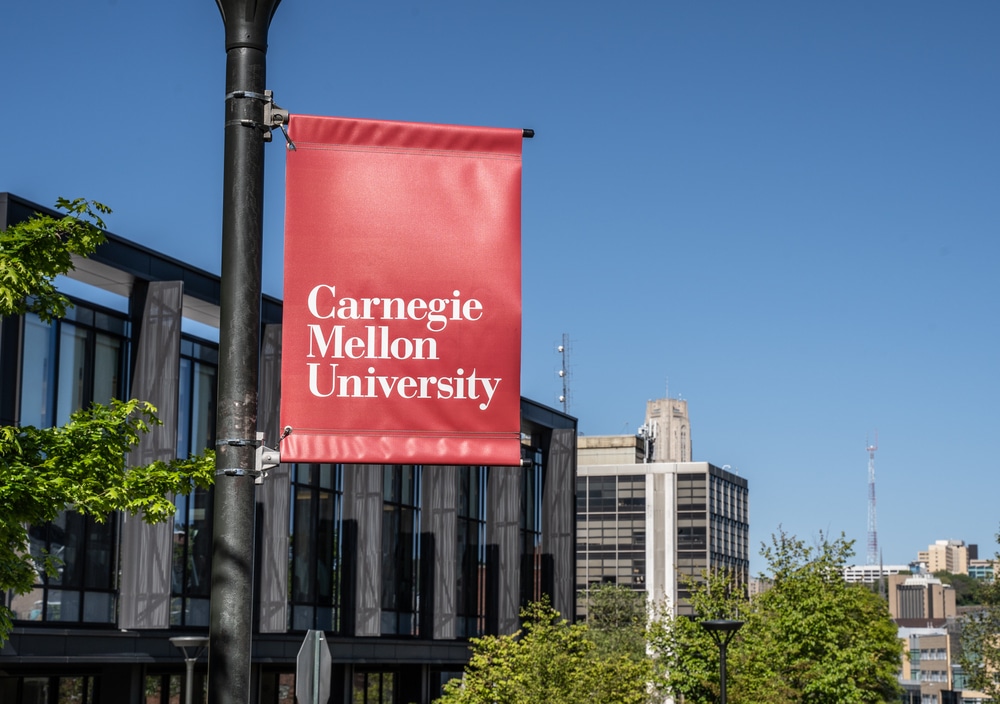
Sorting through your higher education options? Carnegie Mellon University (CMU) often shines as a top pick. And it’s no wonder—CMU is famous for its stellar academic programs and pioneering research, drawing students from all over the world.
In fact, U.S. News & World Report consistently ranks Carnegie Mellon among the top 25 national universities. This makes CMU a prestigious choice.
But like any big decision, it’s important to weigh the pros and cons of Carnegie Mellon to see if it’s the right fit for you. In this blog, we’ll dive into key questions like what makes CMU stand out, what campus life is really like, and what challenges you might come across.
- What Makes Carnegie Mellon a Good School?
- Pros of Carnegie Mellon University
- Cons of Carnegie Mellon University
- Is Carnegie Mellon a Good School for You?
- Frequently Asked Questions
- Takeaways

What Makes Carnegie Mellon a Good School?
Carnegie Mellon University, a private research university in Pittsburgh, Pennsylvania, is widely recognized for its computer science, engineering, and the arts programs. CMU’s emphasis on innovation and its strong ties to industry have made it an attractive option for students looking to excel in these fields.
CMU is organized into several renowned schools and colleges, each contributing to its reputation as a birthplace of innovation since its founding in 1900. These include:
- College of Engineering
- College of Fine Arts
- Dietrich College of Humanities and Social Sciences
- Heinz College of Information Systems and Public Policy
- Mellon College of Science
- School of Computer Science
- Tepper School of Business
Learning about Carnegie Mellon’s pros and cons will help you determine if the university’s strong points align with your personal goals when choosing a college.
Carnegie Mellon University’s rankings
The university consistently claims the top #1 spot in diverse fields in the U.S. News & World Report rankings. These fields include computer science, artificial intelligence (AI), management information systems (MIS), software engineering, and new media.
In 2023, CMU continued to solidify its reputation as a top-tier institution. The university was ranked #2 in undergraduate computer science by U.S. News & World Report. CMU also secured the #1 spot for its graduate program in Information Systems, showcasing its leadership in shaping the next generation of tech professionals.
CMU’s prestige isn’t limited to the national level, that’s why taking the time to carefully explore the Carnegie Mellon pros and cons is well worth it. These rankings underscore CMU’s status as a world-class institution:
- For 2024, U.S. News & World Report has ranked Carnegie Mellon University at #24 out of 439 National Universities.
- For their Graduate Information Systems, they stand at #1.
- Their Undergraduate Computer Science and Undergraduate Research and Creative Projects Programs are both ranked at #2 while they rank at #4 for Most Innovative Schools.
- The Hollywood Reporter places them at #4 for the World’s Best Drama School.
Moreover, CMU’s programs in engineering, business, and the arts have consistently ranked among the best and most prestigious universities in the U.S.

Competitive acceptance rate
CMU is known for its competitive nature, with an acceptance rate of just 11%. The student body is impressively diverse, with 16,779 students enrolled. Among the graduate students, 35% are from the U.S., while 65% are international, reflecting CMU’s global appeal.
Meanwhile, the diversity of the undergraduate population includes 76% U.S. students and 24% international students, further showcasing the university’s broad reach. The faculty at CMU is just as diverse, with 1,529 members, 85% of whom are from the U.S. and 15% from other countries.
Global community of students and alumni
The university is home to students from 126 countries and faculty members from 56 countries. This international presence enriches the campus experience, making it a dynamic and inclusive environment for learning and collaboration.
Moreover, CMU alumni, along with current and former faculty, have made significant contributions to the arts and entertainment industry, winning prestigious awards such as Academy Awards, Emmys, and Tonys.
According to their website, the notable accomplishments of their alumni and current/former faculty include:
- 58 Tony Awards
- 13 Academy Awards
- 146 Emmy Awards
- 13 Turing Awards
- 20 Nobel Laureates
- 65 Members of the National Academy of Engineering
- 20 Members of the National Academy of Sciences
- 6 Members of the National Academy of Medicine
Ready to explore the Carnegie Mellon pros and cons? Keep reading to find out more!

Pros of Carnegie Mellon University
From its world-class academic programs to its strong industry connections, CMU provides an environment where you can truly thrive. But like any decision, it’s important to weigh the Carnegie Mellon pros and cons to see if it’s the right match for you.
Academic excellence
One of the biggest advantages of Carnegie Mellon University is its academic excellence. CMU is known for its strong programs, especially in fields like computer science, engineering, and business.
CMU consistently boasts strong rankings both in the U.S. and globally. The university ranked #24 nationally and its global research reputation ranked #32 in the U.S. News & World Report 2024-2025 rankings.
It ranks #2 in undergraduate computer science programs according to U.S. News & World Report, with its AI, cybersecurity, software engineering, and mobile & web applications programs all ranked #1. In 2024, CMU’s computer science program was ranked #4 by Times Higher Education.
The university frequently ranks among the top institutions in these areas. With highly qualified faculty and pioneering research opportunities, you’ll find yourself at the forefront of an institution that values innovation.
The school’s emphasis on interdisciplinary learning means that you can combine different fields of study, providing a more well-rounded education. If you’re interested in blending technology with the arts or business with engineering, CMU offers a range of options to tailor your studies to your interests.
Culture of innovation
One great thing about Carnegie Mellon is its super innovative campus vibe. The university puts a lot into its cutting-edge facilities, like modern labs and creative spaces, so you get plenty of hands-on experience with the latest tech and research.
The campus is all about collaboration, too. There are tons of spots for group work or casual meetups, giving you lots of chances to connect with classmates and professors outside of class. If you love teamwork and learning from others, this place will feel like home.
For example, CMU’s CyLab, a leading security and privacy research institute, has produced prominent female cybersecurity experts. In a field often dominated by men, CMU stands out for its commitment to fostering women researchers.
Despite women making up less than 20 percent of the cybersecurity workforce in the U.S., CMU’s pioneering campus environment has cultivated female professionals across its divisions: CyLab, the CERT Division within its Software Engineering Institute, and the Information Networking Institute (INI). CMU’s campus not only leads in technological advancement but also provides opportunities for those eager to contribute to the field.
Career opportunities
Carnegie Mellon University’s strong connections to industry offer significant career advantages. The university’s extensive network includes leading companies and organizations in various fields. This network can open doors for internships, job placements, and networking opportunities that can be crucial as you start your career.
CMU excels not only in computer science but also in the arts. The university is listed among the top 10 costume design schools in the U.S. and boasts of famous alumni like Andy Warhol, Ethan Hawke, Ming-Na Wen, and Renée Elise Goldsberry. Truly, CMU offers opportunities for people from all walks of life.
CMU graduates often find their degrees give them a competitive edge in the job market. The university’s strong reputation, from the Oscars to the Nobel Prize, helps alumni secure high employment rates and attractive salaries.
According to CMU’s website, December 2022 and May 2023 graduates report an average salary of $144,010, with Information Networking Institute alumni earning between $80,000 and $235,000. CMU’s MBA program is also impressive, with 94% of graduates receiving job offers within three months. Top job titles include Software Engineer, Development Engineer, Freelance Actor, Associate, and Analyst.
Campus life
Carnegie Mellon’s campus life is full of energy and community. The university has tons of clubs, organizations, and activities, so no matter what you’re into—whether it’s performing arts, sports, or community service—you’ll find something that clicks.
The diverse student body makes the experience even richer, giving you the chance to connect with people from all kinds of backgrounds and perspectives.
Beyond its strong academics, CMU really focuses on student involvement through its many groups, creating a space where you can find others who share your interests and build connections outside of class.
CMU encourages involvement in service, civic engagement, and leadership development. Beyond personal growth, students can participate in intramural sports, club sports, and varsity sports. Explore their full list of student clubs and organizations to find the best fit for you.

Cons of Carnegie Mellon University
While the university offers numerous opportunities, your Carnegie Mellon pros and cons decision-making needs to include potential drawbacks as well. Understanding these challenges helps you make a well-informed decision about whether a university is the right fit for your educational and personal goals. Below, we explore some of the cons.
Cost
One downside of Carnegie Mellon is its high cost. Tuition and fees are pretty steep, with the total coming to $80,540. However, after factoring in aid and scholarships, the average student pays around $30,695 in net price.
However, CMU provides a range of scholarships and grants for students both in undergraduate and graduate schools. The university also works closely with families who qualify for financial aid to open access and affordability for deserving students. While financial aid and scholarships are available, they may not cover all costs, making it essential to consider how you will manage the financial commitment.
The high cost can be a barrier for some students in the US, particularly those who do not receive financial aid. Weigh this Carnegie Mellon pros and cons aspect carefully and explore all available financial support options before making a decision.
Academic pressure
Carnegie Mellon University is known for its rigorous academic programs, which can lead to considerable pressure and stress. The competitive environment and heavy workload might not be ideal for everyone. If you’re someone who prefers a more relaxed pace or struggles with high-pressure situations, the demanding nature of CMU’s programs could be a challenge.
Students often report that balancing academics with personal life can be difficult. The intensity of the coursework and the expectations can lead to stress and burnout if not managed well. Always prepare for the academic demands and have strategies for coping with stress.
While this is a common experience for students across the U.S., CMU offers extensive student support resources. The university provides easy access to care referral forms for emergency or immediate safety situations.
Student support and resources are also readily available on campus to focus on students’ social, physical, mental, and spiritual well-being. CMU’s commitment to promoting healthy connections between students and campus resources makes it an excellent support system for both undergraduate and graduate students to balance academics and personal life.
Campus location
Carnegie Mellon’s campus is located in Pittsburgh, where the weather can be quite diverse. Winters, in particular, can be harsh with cold temperatures and snow, which might be a downside if you’re not used to that climate.
Another challenge is housing—campus space is limited, and with a growing student population, securing on-campus housing can be competitive. While off-campus options exist, they come with challenges like longer commutes and higher rent. The average rent for an apartment near CMU is $1,095, with one-bedrooms around $1,301 and two-bedrooms at $1,280. Houses are pricier, averaging $1,300 per month.
Not just in evaluating Carnegie Mellon’s pros and cons, but location is a major factor when considering the best college choice for you. Always check if relocation to their residence halls, such as Morewood Gardens, Shirley Apartments, and Donner House, is possible so that you can gauge the convenience and practicality of campus living. Consider how the location aligns with your personal preferences and whether it supports your academic and lifestyle needs.

Is Carnegie Mellon a Good School for You?
The university’s strong academic programs and innovative environment make it a leading choice for many students. However, the high cost, academic pressure, and campus challenges might be significant factors to weigh. Learning about Carnegie Mellon’s pros and cons saves you time and helps you decide better.
To determine if Carnegie Mellon is a good school for you, think about your personal preferences and goals. Consider whether you thrive in a competitive and high-pressure environment and if you’re prepared to manage the financial aspects.
It’s also helpful to visit the campus, talk to current students and alumni, and evaluate how well the university aligns with your long-term objectives.
CMU graduates generally enjoy excellent career prospects, particularly in tech-related fields. The university’s strong industry connections, especially in Silicon Valley, make it easier for graduates to land high-paying jobs. However, the cost of tuition is high, so students need to weigh the financial commitment against the expected return on their degree.
Frequently Asked Questions
1. What is Carnegie Mellon best known for?
Carnegie Mellon is renowned for its strong programs in computer science, engineering, and fine arts. It has a reputation for fostering innovation and interdisciplinary research, particularly in technology and artificial intelligence. The university also excels in robotics, business, and design, making it a top choice for students pursuing a career in STEM fields or creative disciplines.
2. Is Carnegie Mellon a good fit for students interested in non-STEM fields?
Yes, while Carnegie Mellon is famous for its STEM programs, it also offers excellent programs in the arts, humanities, and social sciences. The School of Drama and the Heinz College for Public Policy are highly regarded. However, students in these fields might find that the university’s overall emphasis on technology and engineering can overshadow their areas of study.
3. What are the downsides of attending Carnegie Mellon?
One downside often cited by students is the heavy workload and high academic pressure. CMU’s rigorous programs can be demanding, leaving little time for extracurricular activities or socializing. The campus culture can also feel intense, as many students are highly driven, which may not appeal to everyone.
4. What is the return on investment (ROI) for Carnegie Mellon graduates?
CMU graduates generally enjoy excellent career prospects, particularly in tech-related fields. The university’s strong industry connections, especially in Silicon Valley, make it easier for graduates to land high-paying jobs. However, the cost of tuition is high, so it’s important for students to weigh the financial commitment against the expected return on their degree.
5. Is Carnegie Mellon University an Ivy League school?
No, Carnegie Mellon isn’t part of the Ivy League. The Ivy League is made up of eight schools in the Northeastern U.S.: Harvard, Yale, Princeton, Columbia, UPenn, Dartmouth, Brown, and Cornell.
That said, CMU is still highly respected worldwide, especially for its computer science, engineering, business, and arts programs. It’s known for its excellence and innovation in both education and research.
Takeaways
- Carnegie Mellon University is highly regarded for its top-tier programs in computer science, engineering, business, and the arts, consistently ranking among the best in the U.S. and globally.
- CMU has a rigorous academic culture with a low acceptance rate of 11% and a demanding workload, which can lead to stress and pressure for students.
- CMU’s international presence, diverse student body, and strong connections to industries, particularly in technology, provide students with excellent career opportunities and a robust global alumni network that includes Nobel laureates, members of the National Academy of Engineering, and Emmy awardees.
- While CMU offers great education and career prospects, the high tuition and living expenses, along with the harsh Pittsburgh winters and limited campus housing, may be challenging for some students.
If you’re curious about Carnegie Mellon University, it might be a good idea to chat with a college admissions consultant. They can give you personalized tips on how to get accepted and what it takes to do well there.