Swarthmore College Application Deadlines: Key Dates for 2025-2026

September 29, 2025

By Eric Eng

Founder/CEO of AdmissionSight
BA, Princeton University

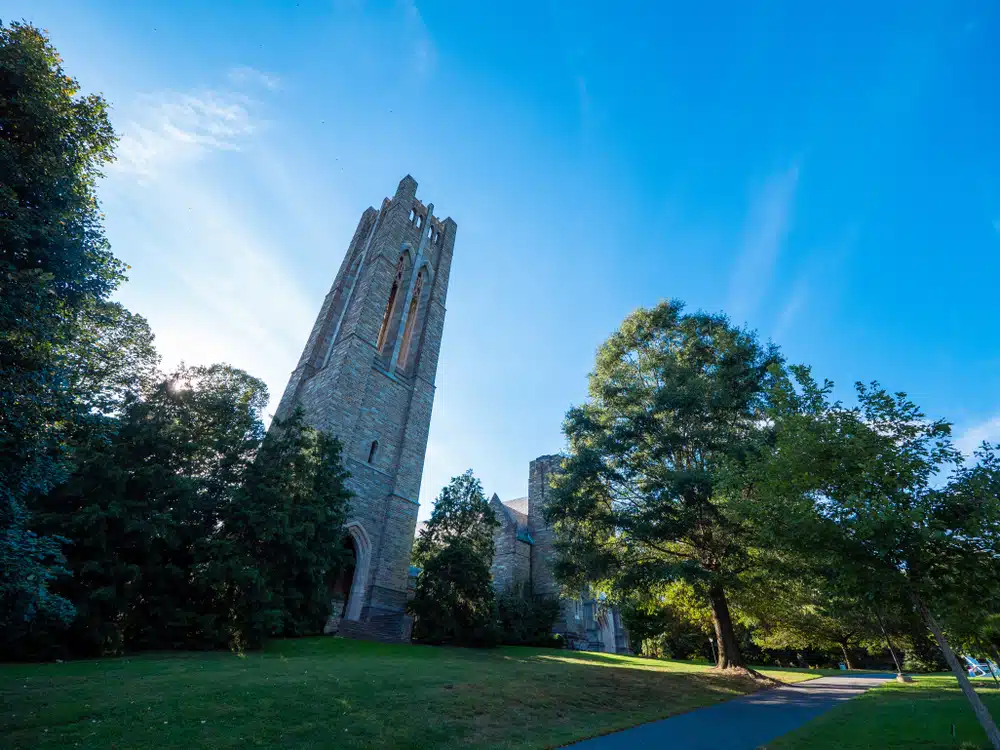
A photo of Swarthmore College and a reminder of the Swarthmore application deadline

Applying to Swarthmore College means planning ahead and carefully tracking your options for submission. Whether you’re considering Early Decision I, Early Decision II, or Regular Decision, staying on top of each Swarthmore College application deadline and financial aid requirement is essential for a successful application.

This guide also highlights key details for transfer applicants and provides a clear, step-by-step overview to help you navigate the entire admissions process with confidence.

When Is Swarthmore Application Due?

Swarthmore College offers multiple admissions pathways for first-year applicants. These include two rounds of Early Decision (a Fall Early Decision and a Winter Early Decision, both binding) and a Regular Decision round (non-binding).

Below is a quick overview of the key Swarthmore College application deadlines for each route:

Application Route Deadline
Early Decision I November 15
Early Decision II January 4
Regular Decision January 4

Swarthmore Early Decision Deadline

Swarthmore’s Early Decision (ED) plan is offered in two rounds. ED I occurs in the fall, and ED II in the winter of senior year. Below is a timeline of important Early Decision I dates for the 2025–2026 admissions cycle:

Date Event
August 1 Application opens
November 15 ED application deadline
Mid-December Decision notification

Meanwhile, here is the Early Decision II timeline:

Date Event
August 1 Application opens
January 4 ED II application deadline
Mid-February Decision notification

What is Swarthmore Early Decision?

Early Decision (ED) at Swarthmore is for students who are certain that Swarthmore College is their top choice academically, socially, and financially. Applying ED is a binding commitment: if admitted, you must enroll and withdraw all other applications, except in rare cases of financial need. In return, you get an earlier decision and may gain an advantage by showing strong interest.

Swarthmore offers two binding ED rounds: ED I, due in mid-November with December decisions, and ED II, due in early January with mid-February decisions. You may only apply ED to one school at a time, though you can apply elsewhere under non-binding (like Regular Decision) plans. Make sure to check the Swarthmore College application deadline so you submit on time.

Swarthmore Early Decision acceptance rate

For the Class of 2028, Swarthmore College’s Early Decision acceptance rate was 18.0%, with 220 students admitted out of 1,221 applicants. Although this rate is slightly higher than the previous two cycles, it continues a long-term decline, highlighting that Early Decision at Swarthmore is becoming increasingly competitive.

Swarthmore Regular Decision Deadline

Regular Decision is Swarthmore’s standard (and final) admissions round, and it has the latest deadline. This option is non-binding, giving you the flexibility to apply to multiple colleges and compare admission offers in the spring. Here is the timeline for Swarthmore’s Regular Decision in the 2025–2026 cycle:

Date Event
August 1 Application opens
January 4 Regular Decision deadline
By April 1 Decision notification
May 1 Reply deadline

What is Swarthmore Regular Decision?

Regular Decision (RD) at Swarthmore is the traditional, non-binding application route. Applications are due by early January, with decisions released in late March. Unlike Early Decision, you aren’t required to attend if admitted, giving you time to compare options and financial aid packages before College Decision Day on May 1.

RD is ideal if you need extra time to strengthen your application or aren’t ready to commit to one school early. Be sure to check the Swarthmore College application deadline to submit on time.

Swarthmore’s holistic review considers your academic record, standardized test scores (optional), extracurriculars, leadership, essays, recommendations, and fit with the college’s community and values. To stand out, show genuine interest in Swarthmore and highlight how you would contribute to campus life.

RD decisions fall into three categories:

  • Admit. You’re offered admission and, if applicable, a financial aid package. You have until May 1 to decide.
  • Deny. Admission is not offered, but you may consider reapplying as a transfer the following year.
  • Waitlist. You may be considered if spots open, but only a small number are admitted. Opt-in is required, and you should still secure another enrollment by May 1.

Swarthmore Regular Decision acceptance rate

For the Class of 2028, Swarthmore College’s Regular Decision acceptance rate was just 6.4%, with 755 admits from 11,844 applicants. While RD data for the Class of 2029 isn’t available yet, trends show this round remains highly competitive.

RD is often more challenging because Swarthmore’s Early Decision program fills a significant portion of the incoming class. With many spots already claimed by ED admits, the RD applicant pool faces tougher odds. Make sure to plan ahead and submit by the Swarthmore College application deadline to maximize your chances.

How to Apply to Swarthmore

Being organized and knowing the required materials will help you plan ahead and avoid last-minute stress. Below, we break down Swarthmore’s application requirements, followed by a step-by-step application process guide. All materials should be submitted by the appropriate Swarthmore College application deadline for the round you choose.

Swarthmore admission requirements

Prepare the following requirements in advance to make the process smoother for you:

  • Application and fee. Submit the Common Application, Coalition on Scoir, or QuestBridge Application. Swarthmore charges a $60 fee, with waivers available for eligible students through the SwatPass form. Include your required personal essay. Check your chosen Swarthmore College application deadline to ensure you submit on time.
  • Short answer essays. In addition to the main essay, respond to two short-answer questions (up to 250 words each) highlighting your background and intellectual interests.
  • Official high school transcript. Your counselor must submit transcripts covering grades 9–11 (and senior-year grades if available). GED results should be submitted if applicable. Mid-year senior grades are required for Regular Decision and deferred ED applicants. A final transcript is also required after graduation.
  • School report and recommendations. Submit a School Report plus two teacher recommendations from core academic subjects. One optional recommendation is allowed, but focus on quality over quantity.
  • Standardized tests (optional). Swarthmore is test-optional. You may submit SAT/ACT scores if desired, and self-reporting and superscoring are accepted. Non-native English speakers may need to demonstrate English proficiency unless exempt.
  • Mid-year and final reports. Counselors must send mid-year grades for RD and deferred ED applicants. All admitted students must later submit a final transcript as well.
  • Optional interview. Alumni or virtual interviews are optional and first-come, first-served. Not having an interview will not disadvantage your application.
  • Optional video response. Applicants may submit a two-minute video through the portal to share personal interests or show their personality.
  • Optional arts portfolio. Submit a portfolio showcasing exceptional talent in visual art, music, theater, dance, or writing via SlideRoom. Only submit if you have a strong, well-developed body of work.
  • Financial aid forms. If you need financial assistance, domestic students should submit FAFSA and CSS Profile by the relevant deadlines. International students may submit the CSS Profile after admission.

Swarthmore College students studying outdoors, highlighting the need to submit applications before the Swarthmore application deadline

Swarthmore application process

Applying to Swarthmore involves a series of steps and deadlines. Here is a step-by-step guide to help you stay on track and submit the strongest application possible:

1. Choose your application platform and round.

Decide whether you’ll apply Early Decision I, Early Decision II, or Regular Decision, and select your platform (Common App, Coalition/Scoir, or QuestBridge). Add Swarthmore College to your application and note the Swarthmore College application deadline for your round. QuestBridge applicants follow Match or RD guidelines.

2. Complete the application and essays.

Fill out all sections, including your personal essay and Swarthmore short-answer questions. Highlight your activities, leadership, and achievements. Have a trusted mentor review your work for clarity, but ensure it reflects your authentic voice.

If you need extra guidance, we offer personalized support to ensure your essays make you stand out in the admissions process.
3. Request recommendations and transcripts early.

Ask your counselor and teachers well in advance to submit letters, transcripts, and mid-year grades (for RD or deferred ED). Provide any supporting information, like a resume or brag sheet, and remind them of the deadline.
4. Submit your application on time.

Double-check all sections and essays. Pay the $60 fee or use a waiver. ED applicants must also submit the ED Agreement Form. Submit a day or two early to avoid technical issues.
5. Track your application.

Use the Swarthmore portal to monitor materials, upload optional supplements (video or arts portfolio), and check financial aid documents. Regularly check your email for updates.
6. Await your decision and plan next steps.

You’ll receive one of these decisions:

  • Admitted. ED admits are binding; RD admits have until May 1 to decide. Attend admitted student events if available.
  • Deferred. ED applicants moved to RD can update Swarthmore with mid-year grades or a brief letter of continued interest.
  • Waitlisted. Accept the waitlist if still interested, but secure another college by May 1.
  • Denied. Don’t be discouraged. Consider other schools or transferring in the future if you’re determined to attend Swarthmore.

Swarthmore Transfer Deadline

Each year, Swarthmore College admits a small number of transfer students for fall entry. Unlike some larger universities, Swarthmore does not offer a spring transfer cycle, meaning transfer admission is fall-only.

The timeline for transfer applicants is a bit later than first-year admissions:

Date Event
April 1 Transfer application deadline for fall enrollment
Mid-May Admissions decisions for transfer applicants are released

For the Class of 2028, Swarthmore did not admit any transfer students due to space limitations. Among 371 applicants, no offers were extended.

Transferring to Swarthmore is notoriously challenging primarily because of the limited number of openings. Most spaces are reserved for incoming first-year students, leaving very few, if any, spots for transfer applicants. In certain years—like 2024—there may be no transfer opportunities at all, making the process extremely competitive.

Transfer applications to Swarthmore are similar to first-year requirements, with a few additions. You must submit college transcripts, a College Report verifying academic and disciplinary standing, and at least one academic recommendation from a professor or advisor.

High school transcripts and standardized test scores remain optional. You may also need to submit a transfer statement highlighting your college achievements (GPA, activities) and explaining why Swarthmore’s curriculum, community, or opportunities better fit your goals. Research your intended major, as some programs may have limited transfer capacity, and contact the transfer admissions counselor with questions.

Financial aid is available for transfers; just submit the FAFSA and CSS Profile by April 1. After admission, Swarthmore’s Registrar evaluates which credits transfer toward your degree. Typically, transfer students are expected to spend at least four semesters (two years) in residence to earn a Swarthmore degree. Make sure to check the Swarthmore College application deadline when planning your submission.

Swarthmore College students studying outdoors, highlighting the need to submit applications before the Swarthmore application deadline

Swarthmore Financial Aid Deadline

It’s crucial to pay attention to financial aid application deadlines, as missing them could delay your aid package. Swarthmore aligns its aid form deadlines with the admissions rounds, so that if you are admitted, you can receive your aid offer at the same time as your acceptance.

Here are the key financial aid deadlines for 2025–2026:

Application Route Financial Aid Deadline
QuestBridge National College Match November 1
Fall Early Decision November 15
Winter Early Decision January 4
Regular Decision January 4
Transfer April 1

The deadlines above are only priority deadlines. If you submit by these dates, you’ll also receive your financial aid decision at the same time as your admission decision.

Swarthmore practices need-blind admissions for U.S. citizens, permanent residents, undocumented/DACA students, and eligible refugees/asylees graduating from a U.S. high school. This means your admission decision is made independently of your financial need.

The College meets full demonstrated need, ensuring that all admitted students can attend regardless of family resources. While families are expected to contribute what they can, Swarthmore fills any gap between costs and your ability to pay, covering 100% of determined need for eligible students.

Swarthmore’s financial aid is largely loan-free, composed of grants that don’t need to be repaid, along with part-time, campus-based work expectations. Families may choose to supplement with loans if necessary, but the College’s goal is to minimize debt for all students. Be sure to submit your aid documents by the Swarthmore College application deadline to maximize your eligibility for support.

Frequently Asked Questions

1. What if I miss the Swarthmore College application deadline?

If you miss the Swarthmore College application deadline, you won’t be able to submit your application for that admissions cycle, which means waiting until the following year to apply. Since Swarthmore doesn’t offer rolling admissions, late applications are not considered, so it’s important to plan ahead and submit all materials on time to keep your college goals on track.

2. Can I apply to other schools if I choose Swarthmore Early Decision?

Yes, you can apply to other schools if you choose Swarthmore Early Decision, but there are limits. Early Decision at Swarthmore is binding, so if you’re admitted, you must withdraw all other applications and commit to enrolling.

However, while waiting for your ED decision, you’re free to apply to other colleges under non-binding options like Regular Decision or Early Action (as long as those schools don’t have restrictive single-choice policies).

3. Does applying early improve my chances of getting in?

Yes, applying Early Decision can improve your chances of getting into Swarthmore. Because ED shows a strong commitment to the college, the admission rate for Early Decision applicants is typically higher than for Regular Decision.

However, it’s important to remember that the applicant pool is often very strong, so while your odds may improve statistically, you should only apply early if Swarthmore is truly your first choice and you’re ready to commit if admitted.

4. Do I need to submit SAT or ACT scores to apply to Swarthmore?

No, you don’t need to submit SAT or ACT scores to apply to Swarthmore. The college is test-optional, meaning you can decide whether or not to include standardized test scores in your application.

If you believe your scores strengthen your application, you can submit them; if not, you’ll still receive full consideration based on the other parts of your application—like your transcripts, essays, and recommendations.

5. Is financial aid available for international students?

Yes, Swarthmore College offers financial aid to international students and is committed to meeting 100% of demonstrated financial need for all admitted applicants, regardless of citizenship. Importantly, Swarthmore’s financial aid is loan-free, meaning packages consist of grants and work-study rather than loans.

International students must submit the required financial aid forms, such as the CSS Profile, along with supporting documentation to demonstrate their financial situation.

Swarthmore College students studying outdoors, highlighting the need to submit applications before the Swarthmore application deadline

Takeaways

  • Keeping track of every Swarthmore College application deadline, including financial aid submission dates, is crucial to ensure your application is complete, submitted on time, and as competitive as possible.
  • Regular Decision deadline is January 4.
  • Early Decision I deadline is November 15, while Early Decision II deadline is January 4.
  • Transfer application deadline for the Fall term is April 1.
  • Financial aid materials are due by November 15 for Early Decision I and January 4 for Early Decision II and Regular Decision.
  • If you want to stay on track and maximize your chances, a college admissions consultant can help you navigate every step of the process and meet all deadlines confidently.

Leave a Comment

Your email address will not be published. Required fields are marked *

Sign up now to receive insights on
how to navigate the college admissions process.

[bbp_create_topic_form]