When you’re looking at colleges, there’s a lot to consider. And if Wake Forest University is on your list, you’re probably wondering about the Wake Forest pros and cons. This university has a beautiful campus with a solid academic reputation, but like any school, there’s a lot more to think about before applying to Wake Forest.
In this guide, we’ll break down the major Wake Forest pros and cons, so you can get a clearer picture of what it’s really like to attend this school. Whether you’re a future Deac or just doing your college research, let’s get into the good and the not-so-good about Wake Forest University.
Pros of Wake Forest
Alright, let’s start with the good stuff. Wake Forest has a lot to offer, and if you’re considering this university, these Wake Forest pros might help tip the scales in its favor.
1. A solid academic reputation
If you’re wondering if Wake Forest is a good school, the answer is absolutely yes. When it comes to the Wake Forest pros and cons, its academic reputation is a major pro. The university is well known for its strong liberal arts programs and its commitment to providing a well-rounded education.
If you’re considering studying business, you’ll be glad to know that Wake Forest’s business school consistently earns top marks. The undergraduate business program is ranked #20 in the nation by Poets & Quants, while the Part-time MBA program ranks #19 nationally out of 241 schools, according to the U.S. News & World Report.
Additionally, their online MBA program ranks #25 in the U.S. This makes Wake Forest a great option for business students at any stage of their career.
What makes Wake Forest stand out even more is the small class sizes. With a 10:1 student-to-faculty ratio, you’re someone your professor will recognize and get to know. That means more personalized attention and better opportunities to ask questions and dig deep into your subject matter.
2. A beautiful campus that feels like home
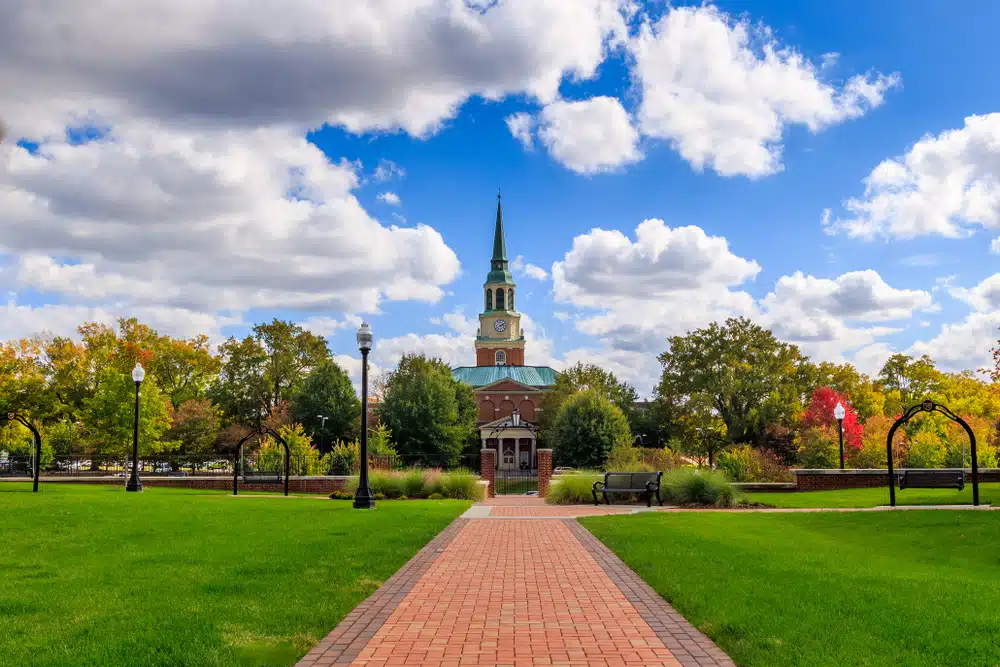
One of the best Wake Forest pros is its campus. If you love pretty campuses, this university is a dream. Wake Forest is located on a stunning hilltop in Winston-Salem, surrounded by nature, and filled with beautiful buildings. The scenery is so picturesque that you’ll probably feel like you’re walking through a movie set.
Whether it’s the huge trees, rolling hills, or the gorgeous quad, there’s no shortage of Instagram-worthy spots. The campus has that perfect combination of natural beauty and modern amenities that make it feel welcoming and serene.
If you’re wondering where to snap your next picture or find a peaceful spot to relax, here are some of the most iconic locations on Wake Forest’s campus that you won’t want to miss:

- The Quad. The heart of Wake Forest’s campus, the Quad is a spacious, grassy area surrounded by beautiful historic buildings. It’s perfect for outdoor studying, hanging out with friends, or just relaxing under the trees.
- Wait Chapel. A stunning, Gothic-style chapel with towering spires, Wait Chapel is one of the most iconic buildings on campus. It’s not only a place for reflection and religious services but also hosts concerts and other special events.
- The Worrell Professional Center. The Worrell Professional Center is home to the School of Law, and its modern, sleek design stands in contrast to the historic parts of campus. It’s known for its state-of-the-art classrooms and common areas, which are great for students looking to collaborate or grab a coffee in between classes.
- The Reynolda Gardens. Located next to the Reynolda House Museum of American Art, these beautiful gardens offer an escape from the hustle and bustle of campus life. With a variety of flowers, walking paths, and water features, the gardens are an ideal spot for a peaceful stroll or outdoor study session.
- The Benson University Center. The Benson University Center is the student hub of Wake Forest, where you’ll find dining options, study spaces, and a variety of campus activities. Whether you’re grabbing lunch with friends or attending a campus event, it’s a lively and central spot that plays a big role in campus life.
Beyond the looks, the campus is also incredibly welcoming. Students love how easy it is to make connections and feel at home here. Whether you’re studying outside on a sunny day or grabbing coffee with friends, you’ll find that the vibe is friendly and inclusive.
3. A close-knit, supportive community
Another one of the major pros among the Wake Forest pros and cons is the sense of community. With 5,471 undergraduate students, the university has that perfect balance between big and small. It’s large enough to offer plenty of activities and resources, but not so big that you feel like a faceless student in a huge crowd.
The community vibe is strong here. Professors know your name, and students are always willing to help each other out. Whether you’re in a study group or volunteering together, there’s a sense that everyone’s in it together.
Plus, the campus is full of clubs, intramural sports, and events where you can make new friends and get involved. With over 250 student organizations to choose from, there’s something for everyone, whether you’re into community service, arts, sports, or academic clubs.
If you like the idea of a supportive, collaborative environment, this is one of the big pros among the Wake Forest pros and cons you’ll love.
4. Excellent career services and internship opportunities
Let’s talk about post-graduation life for a second—because Wake Forest doesn’t just prepare you for college, it prepares you for your career. The university has fantastic career services that help students with everything from resume building to interview prep.

If you’re hunting for an internship or looking to make professional connections, Wake Forest has some strong ties with top companies and a wide alumni network to help open doors. Whether you’re aiming for a career in law, business, healthcare, or something else, Wake Forest offers plenty of internship opportunities and career resources.
And here’s the real kicker: 97% of Wake Forest University graduates find employment or graduate school placement within six months of receiving their degrees. That means you’ll be setting yourself up for success before you even graduate.
When it comes to the Wake Forest pros and cons, having a university that sets you up for post-graduate success is a pretty big pro.
Cons of Wake Forest
Of course, no university is perfect, and there are a few cons among the Wake Forest pros and cons that might make you think twice. Let’s get into what might not be as great about Wake Forest.
1. High tuition costs and financial aid struggles
One of the first cons among the Wake Forest pros and cons that most students notice is the cost. Let’s get real: Wake Forest is not cheap. The tuition alone is $67,642 annually, and when you add in housing, books, food, and personal expenses, the total cost of attendance is a hefty $91,266 per year.
That’s a serious price tag for most families, and while Wake Forest offers some financial aid, the merit-based scholarships aren’t as generous as other private universities. In fact, Wake Forest offers merit scholarships to fewer than 3% of first-year applicants, which makes it even more difficult for students to reduce their costs.
If you’re not in a position to secure significant financial aid, the price of admission could be a major con. You’ll want to think about how you’re going to manage those costs and whether the value of the education justifies the investment. For many, the high tuition rate is a tough pill to swallow.
2. Limited diversity on campus
When it comes to the Wake Forest pros and cons, diversity can be a point of concern. The enrolled student population at Wake Forest University is predominantly White, comprising 63.3% of the total student body.
Other racial and ethnic groups include 8.67% Hispanic/Latino, 7.77% Black/African American, 5.12% Asian, 4.35% with two or more races, and 0.123% American Indian or Alaska Native.
Compared to larger, more urban universities, this demographic makeup indicates limited racial and ethnic diversity. While the university has made efforts to increase diversity and inclusivity, it’s something to consider if you’re seeking a more multicultural college experience.
Students from various backgrounds have reported that the social scene can feel somewhat homogeneous, which might affect your overall experience.
3. Highly competitive admissions and academic environment
Another con to consider in the Wake Forest pros and cons is the intense competition both for admission and once you’re enrolled.

Getting into Wake Forest is no easy feat. For the Class of 2028, there were 18,735 applicants, and only 22% of them were admitted, meaning roughly 4,122 students were accepted. This makes Wake Forest highly selective, and the competition only intensifies from there.
Once you’re in, the academic pressure doesn’t let up. Wake Forest attracts high-achieving students, and it shows in the statistics. According to their latest Common Data Set, 84.5% of students admitted scored between 1400 and 1600 on the SAT, while 94.3% of admitted students had an ACT Composite score between 30 and 36.
On top of that, 91% of admitted students were in the top 25% of their graduating class. This means that you’re not only competing with some of the best students in the country to get in, but you’ll also be surrounded by highly motivated peers once you’re there.
This level of competitiveness can be a con for students who thrive in less high-pressure environments. While this academic rigor can certainly prepare you for success in your future career, it can also lead to stress and burnout for those who struggle with the constant pressure to perform at a high level.
Frequently Asked Questions
1. Is Wake Forest a good school?
Yes, Wake Forest is a good school. The university boasts a strong academic reputation, particularly in its business programs. Its undergraduate business program is ranked #20 by Poets & Quants, and the Part-time MBA program ranks #19 nationally by U.S. News & World Report. Additionally, the Online MBA program is ranked in the top 25 in the U.S.
2. How much is Wake Forest’s tuition?
Wake Forest’s tuition for the 2024-2025 academic year is $67,642. When you include housing, food, books, and other personal expenses, the total cost of attendance is around $91,266 per year. This makes Wake Forest one of the more expensive private universities, so it’s important to consider financial aid options and scholarships when planning your education.
3. What is Wake Forest’s acceptance rate?
Wake Forest’s acceptance rate is 22%. For the Class of 2028, there were 18,735 applicants, and only 4,122 students were admitted. This indicates a highly selective admissions process, so prospective students should make sure their applications are strong and well-rounded to increase their chances of acceptance.
4. Is Wake Forest test-optional?
Yes, Wake Forest is test-optional. The university has had a test-optional admissions policy since 2008, meaning applicants are not required to submit SAT or ACT scores. However, submitting strong test scores can still enhance an application, especially for students who feel their scores reflect their academic abilities. It’s important to note that approximately half (48%) of applicants choose to submit their test scores.
Takeaways
Now that you’ve got the pros and cons of Wake Forest, here’s a quick recap to help you make a more informed decision:
- Wake Forest is known for its strong academic programs, especially in business. The small class sizes and 10:1 student-to-faculty ratio make it easy to get personal attention from professors and dig deep into your studies.
- The campus is absolutely stunning, with the Quad, Wait Chapel, and the Reynolda Gardens offering plenty of peaceful spots to study, relax, or snap a few pics. You’ll definitely feel like you’re in a movie while walking around.
- With 250+ student organizations, Wake Forest offers a supportive, collaborative environment. Whether you’re into intramural sports, academic clubs, or volunteering, you’ll have lots of ways to get involved and make friends.
- While Wake Forest offers a great education, the cost of attendance can be steep, especially since merit-based scholarships are limited. Be sure to consider your financial aid options and whether the value of the education is worth the cost.
- If you’re feeling unsure or overwhelmed by the process, a college admissions consultant can guide you through the decision-making process and ensure you make the best choice for your future.