


The University of Texas at Austin (UT Austin) is a public flagship research university founded in 1883 in Austin, Texas. With around 43,000 undergraduates across 19 colleges and schools, it’s one of the largest universities in the U.S. and the largest in the University of Texas System.
UT Austin ranks #30 nationally and #7 among public universities (U.S. News 2026). Of 37 evaluated undergraduate programs, 24 placed in the national top 10. It’s also the first Texas university admitted into the Association of American Universities.
UT Austin’s reputation comes down to four things: elite academics at a public price, $1B+ in research, a vibrant college city, and deep Texas tradition. This guide covers all four so you can decide if UT Austin is the right fit for you.
- What Is UT Austin Best Known For?
- What Majors and Programs Is UT Austin Known For?
- How AdmissionSight Can Help You Get Into UT Austin
- Frequently Asked Questions
- Takeaways
What Is UT Austin Best Known For?
UT Austin has built its reputation on a handful of qualities that set it apart from other public universities. Here is a closer look at each one:
World-class programs at a public university scale
UT Austin holds the #1 spot among public universities in Texas and #7 nationally (U.S. News 2026), with 24 undergraduate programs placing in the national top 10.
Six of those rank in the top 5 in the country. In the McCombs School of Business, Accounting ranks #2, Marketing ranks #3, and Finance ranks #5. In the Cockrell School of Engineering, Petroleum Engineering ranks #2, while Chemical Engineering and Civil Engineering both rank #5.
That kind of breadth across business, engineering, computer science, natural sciences, and the arts is unusual at any public university, let alone one with 55,000 students, and it sits at the core of what the University of Texas at Austin is known for academically.
Research output and innovation
UT Austin brings in over $1.37 billion in research funding every year. It has more than 200 dedicated research centers and units, and its faculty and alumni include 13 Nobel laureates and 25 Pulitzer Prize winners.
The standout piece of its research infrastructure is the Texas Advanced Computing Center (TACC. It runs some of the most powerful supercomputing systems in the world, used by UT Austin researchers and institutions and government agencies across the country. Undergraduates at UT Austin have real access to research opportunities from early in their enrollment.
The Texas Longhorns and campus culture
If you attend UT Austin, you’re joining the Longhorn community. The football program plays in Darrell K Royal–Texas Memorial Stadium, which holds 100,000 people. The Longhorns have won more Big 12 conference titles in combined men’s and women’s sports than any other program in the conference, and the athletics program has racked up 68 national championships since 1949.
But it’s the traditions that really define campus culture. Bevo, UT’s live longhorn steer mascot, has been a game-day staple since 1916, handled by the Silver Spurs student organization. On the field, Smokey the Cannon has been firing every time the Longhorns score since 1953, operated by the Texas Cowboys student organization. Rounding it all out is “The Eyes of Texas,” a fight song written in 1903 that closes every sporting event and University ceremony to this day.
Austin as a college city
Austin is one of the most distinctive settings of any major public university in the country. It’s the Live Music Capital of the World, the state capital of Texas, and a major tech and startup hub all at once.
Apple, Google, Tesla, and Meta all have major operations in Austin. That directly translates into internship pipelines, networking, and post-graduation jobs, especially if you’re in tech, business, or engineering. And because Austin is the state capital, students in law, policy, and public affairs have direct access to the institutions shaping Texas and national governance.
For a full breakdown of campus and city life, check out our UT Austin campus and city guide.
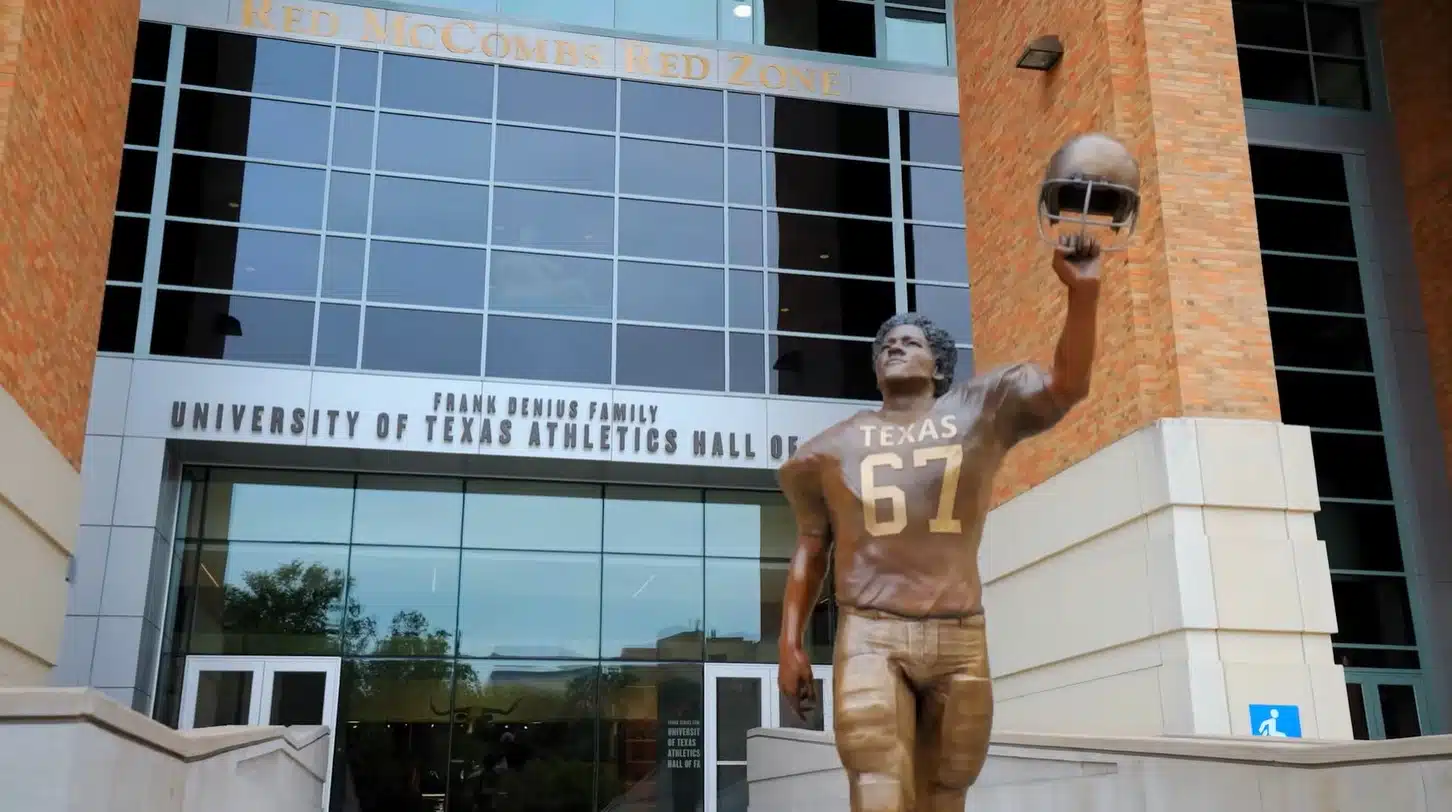
Hook ‘Em Horns, the Gutenberg Bible, and other fun facts
For a university this large and this storied, some of the best facts are hiding in plain sight. The Harry Ransom Center on campus holds one of only 49 surviving complete copies of the Gutenberg Bible, the first book ever printed with movable type in Western history. That same archive also contains the world’s first permanent photograph.
The Hook ‘Em Horns sign has a surprisingly humble origin. Harley Clark came up with it the night before a pep rally by messing around with shadow puppets, introduced it to the crowd the next day, and it went on to become one of the most recognized college symbols in the country.
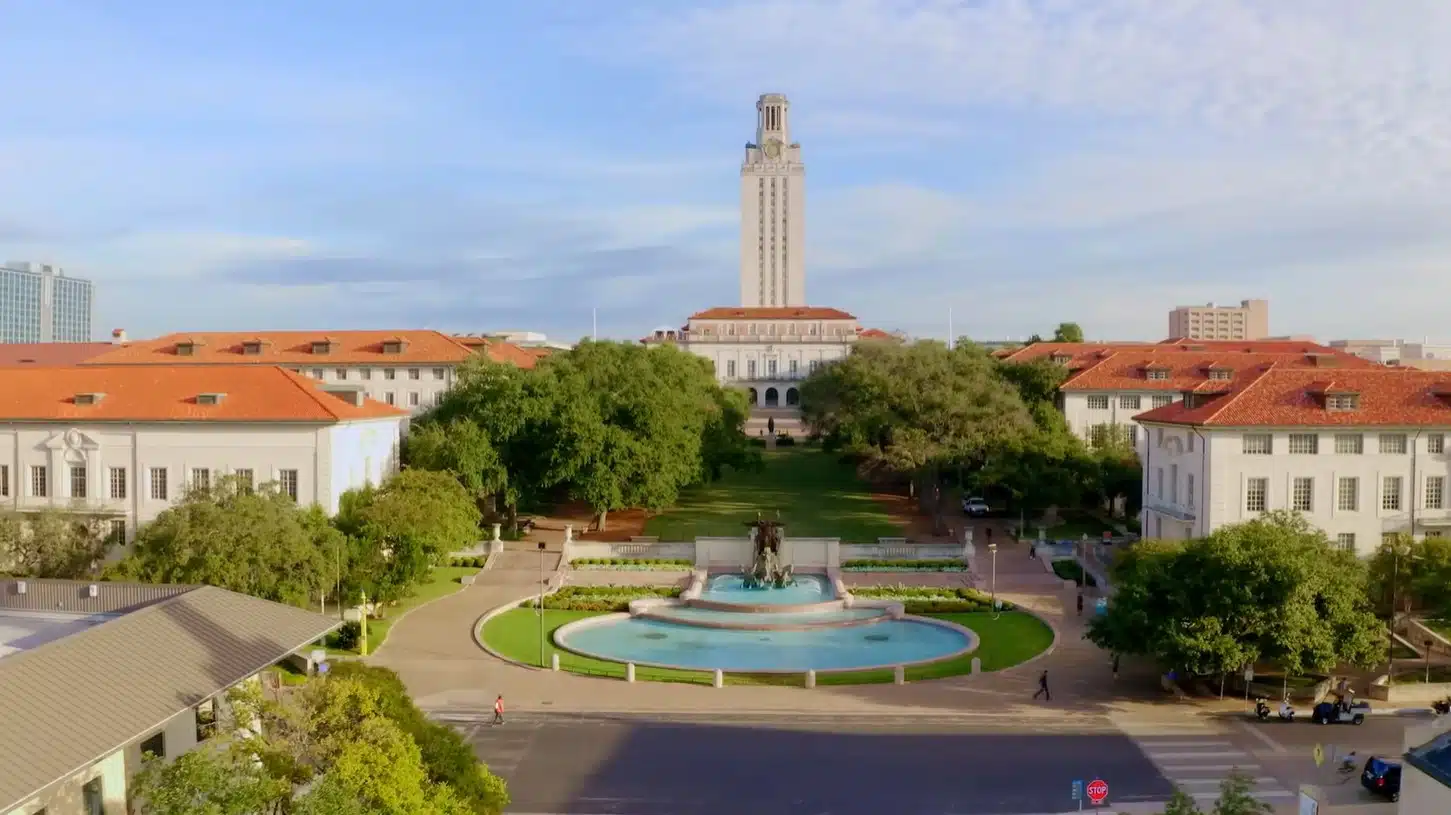
Then there’s the UT Tower, which stands 307 feet tall and sits at a higher elevation than the Texas State Capitol. Completed in 1937, it uses a system of lit office windows to display numbers on the Austin skyline, including a giant “1” every time the Longhorns win a national championship.
What Majors and Programs Is UT Austin Known For?
UT Austin offers more than 170 fields of study across 19 colleges and schools. Of the 37 undergraduate programs evaluated by U.S. News in 2026, 24 rank in the national top 10.
The strongest undergraduate majors
Here are the five best programs where UT Austin holds its strongest national rankings and what sets each one apart:
- Accounting in the McCombs School of Business is consistently cited as one of the strongest undergraduate accounting programs in the country, with a direct pipeline into the Big Four firms and a strong alumni network across Texas and nationally.
- Petroleum Engineering in the Cockrell School of Engineering reflects UT Austin’s deep ties to the Texas energy industry and its standing as the leading academic institution for energy research and workforce development in the U.S.
- Marketing, also in McCombs, features a curriculum that integrates data analytics, consumer behavior, and brand strategy, a natural fit given Austin’s concentration of major consumer tech and media companies.
- Chemical Engineering in the Cockrell School of Engineering carries research strengths in energy systems, biotechnology, and materials science, all supported by UT Austin’s proximity to Texas’s petrochemical and pharmaceutical industries.
- Computer Science specializes in AI and Theory, with strong placement into Austin’s rapidly expanding tech sector and national employers including Google, Apple, and Meta.
Signature programs and schools
The McCombs School of Business has six programs in the national top 10, making it one of the most highly ranked public business schools in the country. The Cockrell School of Engineering ranks #11 nationally for engineering programs at doctoral institutions, with strength across eight specialty rankings.
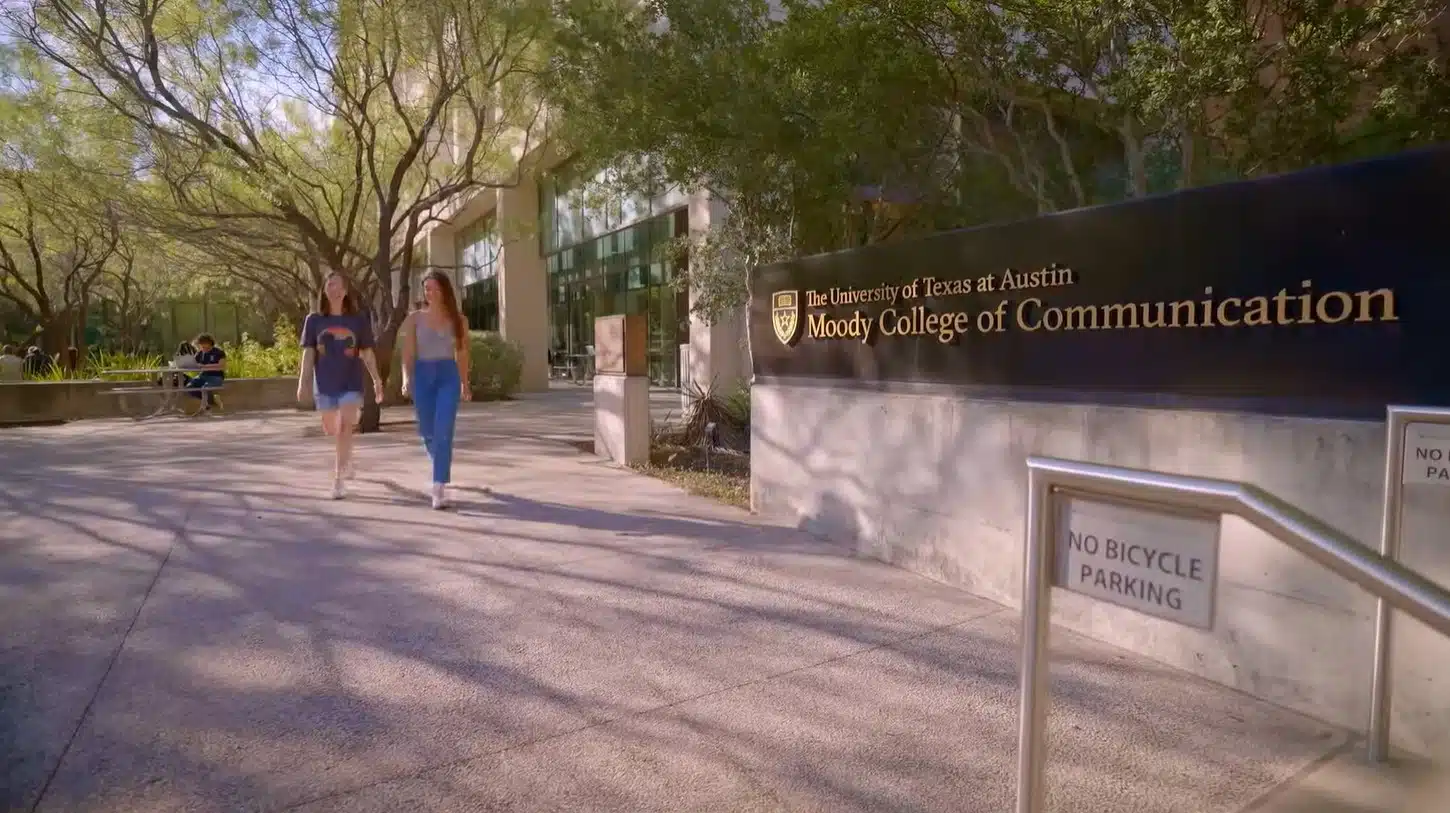
Beyond STEM and business, the Moody College of Communication houses one of the top journalism and advertising programs in the country, while the Steve Hicks School of Social Work and the LBJ School of Public Affairs round out a breadth of options that goes well beyond what most flagship universities offer.
It is also worth knowing about the Texas Advance Commitment program, which covers full tuition for Texas residents from families earning under $100,000 and provides partial support up to $125,000. For in-state students who qualify, the value relative to private universities with comparable rankings is significant.
How AdmissionSight Can Help You Get Into UT Austin
For the Class of 2029, UT Austin received more than 90,000 freshman applications and admitted 20,154 students, resulting in an acceptance rate of 22.2%.
One detail to keep in mind is the Texas Top 6% Rule, which automatically admits Texas residents who graduate in the top 6% of their high school class, filling a large portion of the incoming class before holistic review begins. For out-of-state applicants and Texas students outside that threshold, a strong and well-planned application becomes especially important.
For a full walkthrough of UT Austin’s requirements, deadlines, and essay strategy, our in-depth UT Austin application guide is a solid starting point. If you need expert, one-on-one support, our Senior Editor College Application Program offers personalized guidance backed by a strong track record of Ivy League and top-tier admissions outcomes.
Frequently Asked Questions
1. What is UT Austin most famous for?
UT Austin is most famous for its highly ranked programs in business and engineering, its status as a top public research university, its Longhorn athletics culture, and its location in Austin, which is one of the best cities in the country for tech, music, and opportunity after graduation.
2. What majors is UT Austin known for?
The strongest UT Austin programs are Accounting (#2), Petroleum Engineering (#2), Marketing (#3), Chemical Engineering (#5), Civil Engineering (#5), Finance (#5), and Computer Science (#9). McCombs School of Business and Cockrell School of Engineering are the two flagship schools, but strong programs exist across journalism, public affairs, social work, and the natural sciences as well.
3. What is UT Austin known for academically?
UT Austin is known for having 24 undergraduate programs ranked in the national top 10, membership in the Association of American Universities, and more than $1.37 billion in annual research expenditures. Undergraduates have access to research opportunities at one of the most research-active public universities in the country.
4. Is UT Austin a good school for out-of-state students?
Yes. Strong academics, a vibrant campus and city, and a nationally connected alumni network make it a compelling option. Just know that the Texas Top 6% Rule reserves a large portion of seats for qualifying in-state students, so out-of-state applicants are competing for a smaller pool.
5. How hard is it to get into UT Austin?
The acceptance rate for the Class of 2029 was 22.2%, with more than 90,000 applications received. Texas residents in the top 6% of their class are automatically admitted. For everyone else, holistic review applies and the competition for available spots is significant, particularly for out-of-state applicants.
Takeaways
- UT Austin is one of the few public universities where elite academic rankings and public university accessibility genuinely coexist, with 24 undergraduate programs in the national top 10 and six ranking in the top 5.
- UT Austin’s research output, anchored by more than $1.37 billion in annual funding and world-class infrastructure like TACC, gives undergraduates access to opportunities that are uncommon at a university of this size.
- Austin itself is as much a part of the UT experience as the campus, offering a rare combination of tech industry access, cultural energy, and proximity to state government that directly benefits students across nearly every field of study.
- For students weighing cost, the Texas Advance Commitment program makes UT Austin’s quality genuinely attainable for qualifying in-state families.
- If getting into UT Austin is your goal, our Private Consulting Program gives you one-on-one expert guidance through every stage of the application process, from building your college list to crafting essays that reflect your strongest self. It’s a focused, personalized approach designed for students who want to put their best application forward.










