

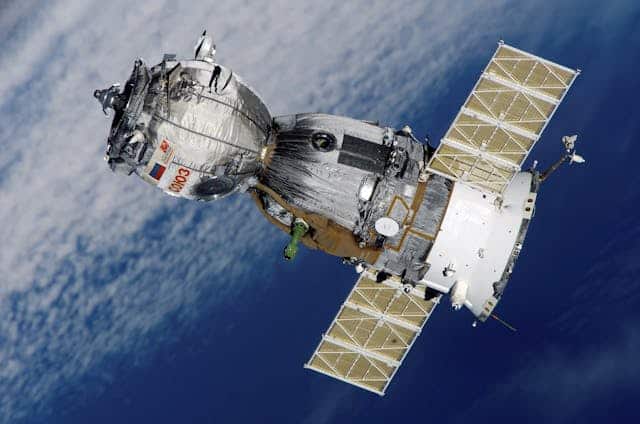
Imagine being part of real space experiments without leaving Earth. That’s exactly what Zero Robotics offers: a competition where students code satellites that actually operate aboard the International Space Station (ISS). It’s a hands-on way to get into space science while sharpening your skills in programming, problem-solving, and collaboration.
If that sounds exciting, you’re in the right place. This guide breaks down everything about joining Zero Robotics: what it’s about, how it works, and why it’s one of the most rewarding STEM adventures you can take on.
- What is Zero Robotics?
- Zero Robotics Awards and Recognition
- How to Qualify for Zero Robotics Finals
- How to Join Zero Robotics
- How to Succeed in Zero Robotics
- Zero Robotics 2025 Finalists and Top Scores
- Frequently Asked Questions
- Takeaways
What is Zero Robotics?
Zero Robotics is a one-of-a-kind international programming competition where students get to control real robots aboard the International Space Station (ISS). Yes, the actual ISS orbiting Earth. Designed by MIT and NASA, the competition brings coding and space exploration together in a way that feels more like sci-fi turned real life.
The program started as a small MIT project and has since evolved into a global STEM challenge for middle and high school students. It aims to teach teamwork, problem-solving, and software engineering through hands-on coding that directly impacts space research. What makes it stand out is that students don’t just simulate missions; they actually program SPHERES, which are free-flying satellites used by astronauts inside the ISS.

Here’s how it works:
- Competitions per year. Zero Robotics typically runs annually, with qualifying rounds online and a final round broadcast live from the ISS.
- Format. Students form teams to write algorithms that control the SPHERES in microgravity. Each round challenges them to optimize their code for precision, efficiency, and strategy.
- Programming. Using a web-based interface, teams code their SPHERES to complete tasks like navigating obstacles, docking, or collecting virtual resources—all within a simulated space environment before their programs are uploaded to the real robots.
- No prior experience needed. Beginners are welcome! Zero Robotics offers tutorials and mentorship from MIT and NASA experts to help students learn coding, physics, and teamwork along the way.
- Final showdown. In the championship round, the top teams’ codes are executed live on the ISS, while participants watch from Earth as astronauts narrate the match in real time.
A closer look at the SPHERES
SPHERES are an essential aspect of Zero Robotics, serving as the tiny robotic astronauts that bring student code to life aboard the International Space Station. These Synchronized Position Hold, Engage, Reorient, Experimental Satellites are roughly the size of a soccer ball and move by releasing short bursts of compressed gas. They might look small, but they play a huge role in helping astronauts test new technologies, from navigation systems to motion control in microgravity.
In the competition, these SPHERES become the stars of the show. After teams design and refine their code through online simulations that replicate how SPHERES move in space, the best programs make it to the final round. There, the actual satellites on the ISS run the students’ code in real time.
Astronauts aboard the station monitor the matches, offering commentary and feedback while the whole event is broadcast live back to Earth. High school teams usually compete in the fall, while middle school students get their turn during the summer, making Zero Robotics a truly out-of-this-world way to learn programming, teamwork, and problem-solving.
Ultimately, Zero Robotics is a coding contest that’s become a launchpad for future innovators. It gives students a front-row seat to the intersection of robotics, space science, and computer programming, proving that even from Earth, you can command robots among the stars.
Zero Robotics Awards and Recognition
Zero Robotics celebrates the creativity, precision, and teamwork that students bring to coding for real satellites aboard the International Space Station. The competition rewards both individual excellence and collaborative success, recognizing those who push the boundaries of programming, innovation, and problem-solving.
Here’s how teams and participants can earn recognition in the 2025–2026 season:
Individual Awards
For the best individual members, here’s what you can win:
- Innovation Medal (Gold, Silver, Bronze). Awarded to students who demonstrate outstanding performance in algorithm design, efficiency, and strategy throughout the competition.
- Leadership Recognition. Presented to students who display exceptional initiative in team coordination and problem-solving under pressure.
- Technical Achievement Award. Honors individuals who contribute original or highly effective coding solutions that improve mission success.

Team Awards
Here’s what the best teams can win:
- Alliance Performance Medal. Given to alliances that achieve the highest combined mission score and teamwork rating during simulation and live runs.
- Finalist Trophy. Awarded to teams whose code advances to the ISS Championship Round, where their programs are executed by SPHERES robots in orbit.
- MIT Spirit Award. Recognizes collaboration, persistence, and creativity during the final presentations at MIT.
Other Recognition
Zero Robotics also recognizes other top-performing teams:
- Live ISS Finalist Feature. Teams reaching the final round have their programs tested live on the International Space Station, with astronauts narrating the event.
- Global Impact Citation. Acknowledges schools and mentors who actively promote STEM learning and innovation through Zero Robotics.
- Hall of Orbit. Honors teams and individuals who have participated in multiple seasons with consistent excellence and innovation in space robotics.
How to Qualify for Zero Robotics Finals
To reach the Zero Robotics Finals, teams must progress through multiple stages that test coding ability, teamwork, and problem-solving under real-world conditions. The journey begins online, where participants program virtual satellites, and ends with top teams commanding SPHERES robots aboard the International Space Station.
Before you set your sights on the finals, here’s a quick look at who can join and how qualification works:
Eligibility
Zero Robotics welcomes high school students who are ready to take their coding skills literally into orbit.
To be eligible, you must:
- Be enrolled in a U.S. high school (grades 9–12) or an equivalent secondary education program during the competition season.
- Form a team (usually 5–10 students) with an adult mentor, coach, or teacher who will serve as the team lead.
- Register your team before the official deadline—registration for the 2026 season is open now through November 21, 2025.
- Participate in the online coding rounds, using the Zero Robotics web-based simulation platform to test and refine your code.
- Commit to all stages of the competition, including alliance coding phases and the final presentations if your team advances.
Once your team qualifies through the online rounds and meets all participation requirements, you’ll earn the chance to compete in the Zero Robotics Finals at MIT.
Required documents
Before joining Zero Robotics, make sure your team has everything ready for a smooth registration and participation process. The competition is student-led but guided by teachers, mentors, and coaches, so organizing your documents early makes the journey to the 2026 season much easier.
Here’s what you’ll need to prepare:
For registration (Now – November 21, 2025), you’ll need:
- Team Registration Form. Completed online through the official Zero Robotics portal. This includes basic team details, coach information, and school affiliation.
- Consent and Media Release Form. Required for all student participants (signed by parents or guardians if under 18).
- Code of Ethics Commitment. Each team member must agree to the competition’s integrity and collaboration policies before the season begins.
For online competition rounds (January – February 2026), you’ll need:
- Team Roster Confirmation. Coaches verify the final list of participating students before submitting any official code.
- School Verification. Some teams may be asked to confirm enrollment or submit proof of school affiliation.
For the ISS Finals at MIT (February 21, 2026), you’ll need:
- Travel and Participation Waivers. Teams advancing to the final round must complete additional forms for travel and on-site participation.
- Presentation Submission. Finalist teams submit a short presentation detailing their code development and design choices prior to the championship event.
Contest fees
Zero Robotics is free to join for all participating high school teams.
There are no registration or competition fees at any stage since MIT, NASA, and the ISS National Lab sponsor everything from the online coding rounds to the final event at MIT.
For finalist teams traveling to MIT, major expenses like lodging, meals, and event access are typically covered or subsidized by the program’s partners. Schools or families may only need to handle minor personal costs, such as local transportation or optional extras.
Registration deadline
The registration for Zero Robotics is on November 21, 2025. Each year, the competition follows a timeline that takes teams from registration and coding simulations to the grand finale aboard the International Space Station.
The 2025 season wrapped up earlier this year, and now it’s time to look ahead. Below is the 2026 schedule, featuring all the milestones and announcements for high school participants gearing up for the next Zero Robotics challenge.
| Date | Event | Description |
| Nov 21, 2025 | Registration Deadline | Registration for the 2026 Zero Robotics High School Tournament is open! Teams can sign up and begin forming alliances in preparation for the upcoming season. |
| Jan 9, 2026 | Game Concept & Manual Released | The new game theme for the season is revealed, along with the official rulebook and programming guide. |
| Jan 11, 2026 | Code of Ethics & Pre-Program Survey Due | Teams confirm participation by signing the ethics agreement and completing the pre-competition survey. |
| Jan 12, 2026 | Game Begins Online | The competition officially starts! Teams begin designing, coding, and testing their strategies in the online simulator. |
| Jan 19, 2026 | Team Name & Description Due | Teams submit their official name and a short description to appear on the competition portal. |
| Jan 23, 2026 | Practice Code Due | The first checkpoint—teams submit their initial program for review and feedback. |
| Jan 30, 2026 | Practice Code Feedback & Alliances Announced | Evaluations are released, and new alliances are formed for the next stage of coding. |
| Feb 13, 2026 | Final Code Due to MIT | Teams submit their polished, final version of the code for testing on the real SPHERES aboard the ISS. |
| Feb 18, 2026 | Code Development Presentation Due | Teams prepare a short presentation outlining their strategies, coding process, and lessons learned. |
| Feb 21, 2026 | Zero Robotics Finals at MIT | The season’s big finale! Finalist programs are executed live, with teams watching from MIT and satellite viewing locations worldwide. |
Aspiring participants should keep a close eye on the official Zero Robotics timeline to make sure they don’t miss any deadlines. Staying on top of these dates helps teams plan ahead, manage their coding milestones, and come fully prepared for each phase of the challenge.
How to Join Zero Robotics
Getting into Zero Robotics is all about teamwork, coding, and timing. Follow these steps to make sure you’re ready for the 2026 High School Tournament:
Step 1. Review eligibility and competition rules.
Timeline: Before registration opens
Start by reading through the official guidelines and eligibility requirements on the Zero Robotics website. Learn about team composition, age and school requirements, and how the coding challenges work. Coaches and mentors should also review the Code of Ethics and competition handbook to understand expectations and submission standards.
Step 2. Register your team online.
Timeline: Now through November 21, 2025
Form your team (typically 5–10 students) and register on the Zero Robotics competition portal. Each team needs a teacher or mentor to serve as the official coach. During registration, you’ll submit basic school and contact information, along with required forms such as the media release and ethics agreement.
Step 3. Start coding in the online simulator.
Timeline: January 12, 2026 – February 13, 2026
Once the new game is released, teams begin programming their virtual satellites through the online simulation platform. You’ll test your code, refine your algorithms, and collaborate with your alliance partners to improve your mission performance in microgravity conditions.
Step 4. Submit your code and presentations.
Timeline: February 13–18, 2026
Teams submit their final code to MIT for review and upload it to the SPHERES satellites aboard the ISS. Alongside the code, each team prepares a short presentation explaining their strategy, technical decisions, and lessons learned throughout this STEM competition.
Step 5. Compete in the Zero Robotics Finals.
Timeline: February 21, 2026
The top-performing alliances advance to the Zero Robotics Finals held at MIT. During the event, your code runs live on the actual SPHERES satellites aboard the ISS while astronauts commentate and teams watch from Earth. It’s the closest thing to being a real space mission engineer!

Joining Zero Robotics means solving real-world challenges, collaborating under pressure, and taking your creativity to new heights. The earlier your team prepares, the closer you’ll be to seeing your code fly in space.
How to Succeed in Zero Robotics
Thriving in Zero Robotics takes creativity, teamwork, and persistence. You don’t need to be a seasoned coder or robotics expert, just someone who loves solving problems and learning how things work in space. The competition is designed to teach real engineering and programming skills while keeping it fun and collaborative.
Here’s how you can prepare and perform your best in the 2026 season:
1. Understand what Zero Robotics is all about.
Before you start coding, get familiar with the competition’s mission. Zero Robotics challenges high school students to program SPHERES—mini satellites aboard the International Space Station. Each year’s game is unique, focused on solving a real-world challenge like navigation, resource collection, or energy efficiency in microgravity. The better you understand the game’s objectives, the better you can design your code.
2. Learn the format and rules.
Review the official 2026 competition manual as soon as it’s released on January 9, 2026. It covers how the online simulator works, scoring rules, alliance formation, and what’s allowed in submissions. Knowing these details early can save your team from technical issues or disqualifications later.
3. Get comfortable with the coding platform.
Zero Robotics uses a web-based simulation environment where you’ll write and test your code before uploading it for review. Take time to explore the interface: run test missions, tweak parameters, and learn how the SPHERES respond to different inputs. The more familiar you are with the simulation tools, the more confident you’ll be when deadlines arrive.
4. Practice teamwork and strategy.
Success in Zero Robotics takes writing perfect code and working together as a team effectively. Assign roles within your team (e.g., lead programmer, tester, documentation writer) and hold regular check-ins to discuss progress. During alliance rounds, collaboration becomes even more important since your code must work seamlessly with other teams’ strategies.
5. Analyze and improve continuously.
Use feedback from practice rounds to fine-tune your algorithms. When the Practice Code Feedback and Alliance Announcement is released on January 30, 2026, take note of what worked and what didn’t. Adjust your approach, test multiple strategies, and optimize for precision and efficiency.
6. Simulate real competition conditions.
Before submitting your final code on February 13, 2026, run full simulations under realistic conditions. Limit your testing time, avoid over-editing at the last minute, and make sure your code runs cleanly from start to finish. Treat every test like it’s happening aboard the ISS, and you’ll thank yourself when the real match runs live.
7. Keep learning and stay curious.
Zero Robotics is a competition that can be your stepping stone into aerospace, robotics, and computer science. After the season ends, review your team’s performance, read up on space technologies, and keep coding. The curiosity and persistence you build here can launch you toward even bigger goals, both on Earth and beyond.
Zero Robotics 2025 Finalists and Top Scores
Each year, the competition concludes with the Finals at MIT, where the top alliances’ codes are executed live in microgravity and scored based on performance, precision, and mission objectives.
Below are the final team scores and rankings from the 2025–2026 season, showcasing the best-performing teams from across the United States:
| Team/Alliance Name | Score |
| ISS Bots (Massachusetts) | 94.82 |
| Team Orbitron (Texas) | 91.47 |
| ZeroG Ninjas (California) | 90.15 |
| AstroCoders (New York) | 88.93 |
| Quantum Trajectory (Illinois) | 86.72 |
| The Space Coders (Florida) | 84.56 |
| RoboStratos (Virginia) | 83.11 |
| Team Zenith (Colorado) | 81.94 |
| Project SPHERE-X (Washington) | 80.33 |
| Aether Alliance (Michigan) | 79.25 |
Special Awards
In addition to overall rankings, Zero Robotics recognizes teams for excellence in innovation, collaboration, and creative coding.
| Award | Recipient |
| Best Algorithm Design | ISS Bots (Massachusetts) |
| Best Alliance Coordination | Quantum Trajectory (Illinois) |
| Innovation in Strategy Award | ZeroG Ninjas (California) |
| Spirit of Zero Robotics Award | AstroCoders (New York) |
Frequently Asked Questions
1. Who can participate in Zero Robotics?
Any U.S. high school student can join the Zero Robotics competition. Teams are usually made up of 5 to 10 students, guided by a teacher or mentor who serves as the coach.
2. What happens if my team performs well?
Top-performing teams from the online rounds advance to the Zero Robotics Finals held at MIT, where their code is uploaded and executed on real SPHERES satellites aboard the International Space Station. Astronauts oversee the matches while teams watch live from Earth.
3. How is Zero Robotics structured?
The 2026 competition begins with online simulations, where teams write and test code in a virtual environment. After multiple coding phases, the finalists’ programs are sent to the ISS for the final round.
4. Is Zero Robotics a prestigious competition?
Absolutely. Zero Robotics is one of the most respected STEM competitions in the United States, backed by MIT, NASA, and the ISS National Lab. Participation demonstrates strong skills in coding, critical thinking, and real-world problem solving—qualities highly valued by universities and research programs.
5. How valuable is excelling in Zero Robotics for college admissions?
Excelling in Zero Robotics is a Tier 1 extracurricular activity, recognized nationally for its intensity and prestige. Competing in the finals at MIT, where students’ code runs on real satellites aboard the International Space Station, demonstrates exceptional skill in coding, teamwork, and innovation, qualities that top universities highly value in STEM applicants.
Takeaways
- Competing in Zero Robotics shows that you can design, code, and optimize algorithms that control real satellites under real-world constraints.
- The 2026 season runs from January through February, with online rounds starting in January and the finals at MIT on February 21, 2026.
- Top finalists see their code executed aboard the International Space Station, proving their ability to solve problems creatively and collaboratively in a high-pressure environment.
- These competitors demonstrate advanced coding, systems thinking, and teamwork that make them stand out among STEM students nationwide.
- A college application editor can help you present your Zero Robotics experience in a way that highlights your technical innovation, leadership, and recognition in a Tier 1 national STEM competition.










