

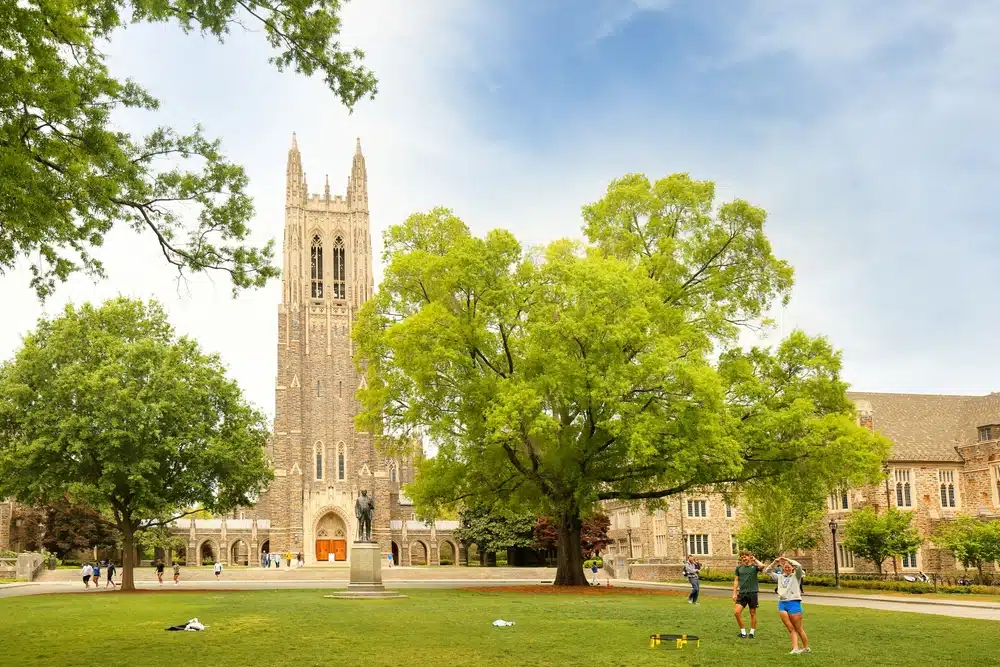
Located in Durham, North Carolina, Duke University is home to about 6,600 undergraduates and 10,000 graduate students. Ranked #10 among national universities by the U.S. News & World Report, Duke is recognized for its excellence, but what truly defines Duke University’s campus life is the unique combination of academic rigor, school pride, and a lively, close-knit campus.
Whether you’re admiring the iconic Duke Chapel, spending time outdoors in the 8,600-acre Duke Forest, or joining the passionate Cameron Crazies at basketball games, campus life at Duke is always full of energy. Let’s explore what Duke University’s campus life is really like, from academics to extracurriculars, dining, housing, and more.
- Academics and Campus Culture
- Dining at Duke
- Safety and Wellness at Duke
- Interesting Facts about Duke University
- Pros and Cons of Duke University
- What Makes Duke Unique?
- Frequently Asked Questions
- Takeaways
Academics and Campus Culture
Duke’s academic environment is known for its rigorous yet supportive approach that allows students to engage deeply with their subjects while exploring various disciplines. With a 5:1 student-to-faculty ratio, students at Duke benefit from small class sizes that ensure they receive personalized attention from their professors.

The university is divided into two main undergraduate schools:
Trinity College of Arts & Sciences
This undergraduate school offers a wide array of liberal arts programs with over 50 majors, including:
- Psychology
- Economics
- Public Policy
- Environmental Science
- History
- Political Science
- Biology
- English
Pratt School of Engineering
This undergraduate school is known for its innovation and hands-on learning, with programs in:
- Biomedical Engineering
- Civil Engineering
- Electrical and Computer Engineering
- Environmental Engineering
- Mechanical Engineering
School clubs
Beyond academics, Duke’s supportive environment extends to a rich array of extracurricular activities. While you immerse yourself in rigorous coursework, you also have the opportunity to join over 600 student clubs and organizations that make campus life vibrant. A few highlights of Duke University’s campus life include:
- Duke Chronicle. The student newspaper has been around since 1905. It gives students a platform to cover news, opinions, and campus events.
- Duke Student Government (DSG). This organization represents student interests. It organizes events and works to improve various aspects of campus life.
- Duke Dance Marathon. This annual charity event raises funds for children’s hospitals. It combines a good cause with great energy, making it a popular part of campus life.
- Duke Outing Club. For outdoor enthusiasts, this club offers activities like hiking, kayaking, and other adventures in the beautiful landscapes of North Carolina.

These groups are a big part of what makes Duke University’s campus life so engaging. There’s always something happening, whether it’s a big event or smaller gatherings that bring students together.
Dining at Duke
When it comes to food, Duke University’s campus life offers a wide variety of options. Whether you’re grabbing a quick snack between classes or enjoying a sit-down meal with friends, Duke has you covered. Here are some examples of the dining options available on campus:
The Brodhead Center (West Campus)
A major dining hub for upperclassmen and visitors, the Brodhead Center offers a range of eateries, including:
- Tandoor. This Indian eatery serves authentic Indian dishes like chicken tikka masala and fresh naan.
- Gyotaku. This eatery is a favorite for sushi lovers. They offer fresh rolls, sashimi, and poke bowls.
- Il Forno. This eatery specializes in wood-fired pizzas and Italian comfort food like pasta and calzones.
- Farmstead. A farm-to-table concept that focuses on fresh, seasonal ingredients with a rotating menu.
- The Devil’s Krafthouse. This pub-style spot is great for burgers, sandwiches, and local brews.
West Union (West Campus)
Another popular spot for upperclassmen, West Union provides grab-and-go options and international cuisine, including:
- La Montaña. A Latin American eatery offering tacos, burritos, and rice bowls with fresh toppings.
- Cafe. A quick stop for coffee, pastries, and light bites, perfect for a morning pick-me-up or late-night snack.
- Sazón. Specializing in flavorful Mediterranean fare like falafel wraps, hummus bowls, and kebabs.
The Marketplace (East Campus)
This is the primary dining hall for first-year students, offering all-you-can-eat meals and various cuisines. The Marketplace serves:
- Made-to-order stir-fry stations with fresh vegetables and protein options.
- Salad bars stocked with seasonal produce and a variety of dressings.
- Comfort food options like mac and cheese, roast chicken, and mashed potatoes.
- Vegan and vegetarian meals to accommodate different dietary needs.

Besides those on campus, one of the perks of Duke University’s campus life is the proximity to food points at nearby restaurants, so that’s another option. With such a diverse range of dining options, you’ll have plenty of choices to suit your preferences, dietary needs, and busy schedule.
Safety and Wellness at Duke
Campus safety is a priority at Duke, with the Duke University Police Department (DUPD) providing 24/7 services, including campus patrols and emergency response. The Blue Light emergency system and a comprehensive campus alert system ensure that you’ll always feel safe.
Duke’s focus on wellness extends to mental health support through the Student Wellness Center, which offers counseling, workshops, and resources for managing stress and maintaining balance in Duke University campus life.
Interesting Facts about Duke University
Duke University has no shortage of fascinating facts contributing to its rich campus life and academic excellence. From its historic landmarks to unique programs, here are some interesting details that set Duke University’s campus life apart:
Krzyzewskiville (K-Ville)
If you’ve ever heard of Duke basketball, you’ve likely heard of Krzyzewskiville or K-Ville for short. Named after legendary Duke basketball coach Mike Krzyzewski, this tradition has been a hallmark of Duke University’s campus life for decades. Students set up tents outside Cameron Indoor Stadium weeks in advance each year to secure their spots for major basketball games, especially those against their archrival, the University of North Carolina (UNC).
During the basketball season, you might find up to 1,200 students camping in K-Ville for games, forming a tent city on Duke’s campus. The process is highly organized, with specific rules for camping out, known as “tenting.” For example, you’d have to check in periodically to stay in line for tickets. The longest tenting period lasts 39 days, and it’s all part of the unique, high-energy school spirit that defines Duke University’s campus life.
Duke Lemur Center
One of the most unique features of Duke University is its Duke Lemur Center. This facility is the largest sanctuary for lemurs in the world, with over 200 lemurs from 14 different species. Established in 1966, the center is a sanctuary and a hub for scientific research and conservation.
Students and faculty at Duke get the opportunity to participate in groundbreaking research on lemur behavior, genetics, and ecology. The Lemur Center also offers educational tours and allows the wider community to engage with this extraordinary aspect of Duke University’s campus life.
The center’s conservation work is focused on protecting these endangered animals, primarily native to Madagascar, which makes it a critical resource for both the scientific community and the lemur population.
Duke Chapel
The Duke Chapel is one of the most iconic buildings on campus and a key part of Duke University’s campus life. Built between 1930 and 1932, the chapel stands 210 feet tall, and its Gothic architecture is reminiscent of European cathedrals, even Hogwarts. The chapel is a place of worship and a hub for cultural events, including concerts, weddings, and university ceremonies.
The 77-bell carillon, housed in the chapel tower, rings across campus and adds a musical touch to life at Duke. Students often use the chapel as a study spot or simply a quiet place to reflect. The Duke Chapel has seating for 1,800 people and frequently hosts events ranging from academic lectures to interfaith services.
Duke Forest
Covering over 7,050 acres, Duke Forest is a research and recreational area managed by the university. Located just a short drive from the main campus, Duke Forest is an outdoor laboratory for scientific research in ecology, forestry, and environmental science.
It’s a great escape from the rigors of academic life. You’ll often find students hiking, biking, or jogging on the forest’s many trails. The forest also supports a variety of wildlife, including deer, owls, and even coyotes. As part of Duke University’s campus life, Duke Forest offers you a way to connect with nature while contributing to the university’s environmental research initiatives.

Cameron Indoor Stadium
One of the most famous basketball arenas in the world, Cameron Indoor Stadium has been the home of Duke’s men’s and women’s basketball teams since 1940. With a seating capacity of 9,314, it’s one of the smallest arenas in Division I basketball, but that only adds to the intense atmosphere. Cameron Crazies, Duke’s student supporting section, are known for their creativity and enthusiasm, often dressing in blue-and-white face paint, wigs, and costumes.
Cameron Indoor Stadium is a vital part of Duke University’s campus life, with tickets to home games being some of the most coveted in college sports. Students, alumni, and even visiting teams acknowledge the stadium’s electric atmosphere, particularly during the famed Duke-UNC rivalry games, which are among the most watched college basketball matchups in the U.S.
The Duke Blue Devils
Duke’s mascot, the Blue Devil, has a unique origin. The name comes from the Chasseurs Alpins, a group of French soldiers known as “Les Diables Bleus” (The Blue Devils) during World War I. Duke’s athletic teams adopted the name in the 1920s as a nod to their fierce competitive spirit.
Today, the Blue Devils are renowned for their success in college athletics, especially in basketball. The men’s basketball team, coached by Mike Krzyzewski from 1980 to 2022, has won five NCAA championships and produced numerous NBA stars, including Kyrie Irving and Zion Williamson. The school’s commitment to athletics is a big part of Duke University’s campus life, and students take great pride in cheering on their teams.
Research powerhouse
Duke is often referred to as a research powerhouse, and for good reason. The university spent approximately $1.39 billion on research and development for 2023, placing it among the top 10 universities in the U.S. in terms of research funding.
One particularly impressive research facility is the Duke Human Vaccine Institute, which has been at the forefront of developing vaccines for diseases like HIV and influenza. This focus on cutting-edge research extends across Duke’s many disciplines, from medicine and engineering to environmental studies.
Duke’s fascinating history, traditions, and unique resources create an experience like no other. But these interesting aspects are just one part of Duke University’s campus life. When considering a school like Duke, weighing both the exciting features and the challenges you might face is essential.
Pros and Cons of Duke University
Like any university, Duke has its strengths and challenges. Here’s a breakdown of the pros and cons to help you get a clearer picture of what Duke University’s campus life offers:
Pros
- Strong academics. Duke offers a 5:1 student-to-faculty ratio, which ensures small class sizes and personalized attention. This creates a robust academic support system that encourages personalized learning.
- Extensive research opportunities. Students have access to well-funded research projects across various disciplines. Early involvement in research helps you gain hands-on experience and build their resumes.
- Vibrant campus life. With over 600 student organizations, there are countless ways to get involved. This provides opportunities for personal growth, leadership, and building lasting friendships.
- Beautiful campus. Duke’s stunning campus features iconic landmarks like Duke Chapel and Duke Forest. The aesthetic appeal adds to the overall student experience and offers serene and vibrant spaces.
Cons
- High cost of attendance. Duke’s tuition and fees total around $81,488 per year, estimated at around $325,952 for four years. The financial burden can be a major consideration for students without significant aid.
- Competitive environment. The academic atmosphere can feel intense, especially for students not used to high expectations. It can sometimes be overwhelming for those looking for a more relaxed academic pace.
- Social scene dominated by Greek life. Greek organizations play a prominent role in social activities, which may not appeal to all students. Those who prefer non-Greek social scenes may feel left out or find fewer options.
While it offers a rich combination of academic and social opportunities, it’s important to consider both the pros and cons of Duke University. With this in mind, let’s explore what makes Duke University’s campus life stand out and why it might be the right choice for you.
What Makes Duke Unique?
What makes Duke unique is its ability to offer both world-class academics and an enriching campus experience. Duke is a strong choice if you’re looking for a university where you can challenge yourself intellectually while still enjoying a well-rounded social life. The university’s interdisciplinary approach encourages you to explore multiple fields of study, which allows you to shape your education according to your interests and goals.

Beyond academics, Duke’s supportive community and vibrant campus life help you develop holistically as a person. Whether you’re engaging in research, participating in one of over 600 student organizations, or getting involved in service projects, Duke provides countless opportunities to grow personally and professionally. With its academic rigor, community spirit, and real-world opportunities, Duke prepares you for both a career and life beyond college.
Frequently Asked Questions
How do many people go to Duke?
Duke University is home to approximately 6,700 undergraduate students and 10,000 graduate students. This relatively small student body contributes to the close-knit feel of Duke University’s campus life, where making meaningful connections with peers and professors is easy.
How much does it cost to go to Duke University for four years?
The total estimated cost of attending Duke University for one year, including tuition, room, board, and fees, is around $81,488. Over four years, this amounts to approximately $325,952.
What is student housing like at Duke?
First-year students live on East Campus in residence halls, while upperclassmen move to West Campus or Central Campus. Housing promotes a strong community, and students can participate in the residential college system, which encourages close peer interactions and faculty engagement.
What extracurricular opportunities are available at Duke?
Duke offers over 600 student organizations, including academic, cultural, athletic, and service groups. Students can participate in research, student government, arts, and community service projects, providing a well-rounded experience.
What is Duke’s campus like?
Duke’s 8,600-acre campus is known for its Gothic architecture and natural beauty, including landmarks like the Duke Chapel and Sarah P. Duke Gardens. The campus provides a serene yet active environment for academic and social activities.
Takeaways
As you consider Duke University’s campus life, here are the key takeaways to keep in mind:
- Duke offers a close-knit community where you can enjoy small classes and personalized attention, thanks to its 5:1 student-to-faculty ratio.
- Academically, Duke is a powerhouse, providing students with ample research opportunities and a rigorous environment that encourages growth and innovation.
- Duke’s campus life is buzzing with energy, offering over 600 student organizations to help you dive into leadership, service, and extracurricular activities.
- The 8,600-acre campus combines beautiful Gothic architecture with outdoor spaces like Duke Forest, creating the perfect setting for both study and relaxation.
- Duke’s athletic culture is legendary, with the men’s basketball team and the excitement of the Cameron Crazies adding an extra layer of fun and school spirit.
- Working with a college admissions consultant can make all the difference if you want to boost your chances of getting into Duke. AdmissionSight offers personalized support to guide you through the application process.










