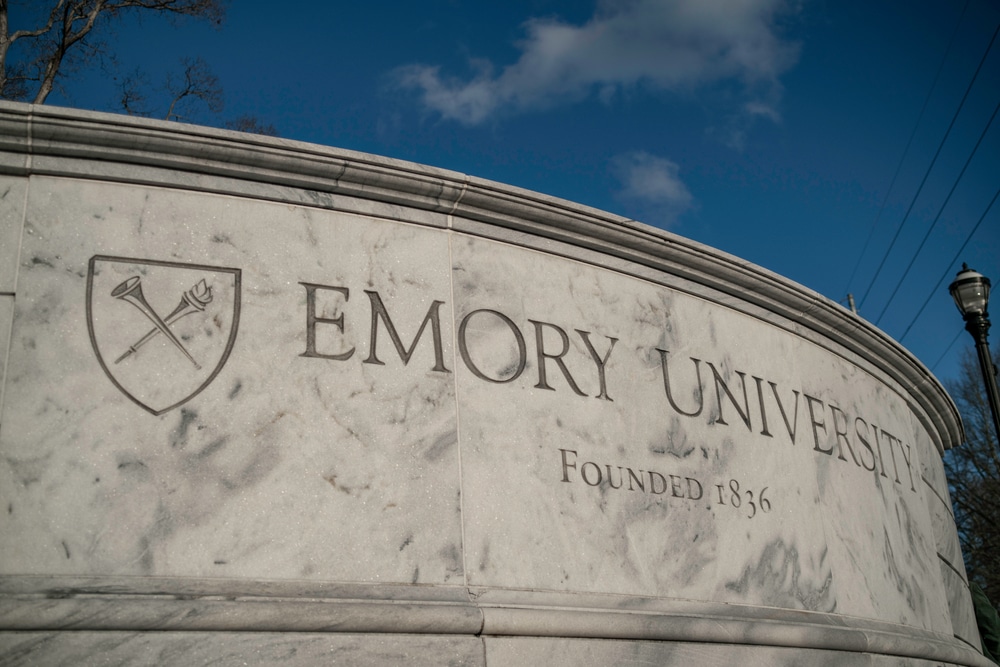
Emory University is a highly-ranked private research school in Atlanta, Georgia. In the 2024 U.S. News & World Report Best Colleges list, it’s proudly sitting at the 24th spot among the top universities in the country. However, the school’s ranking should not be the only factor you base your decision on. We highly recommend looking at the Emory University pros and cons to understand better whether this private research university is the best for you.
In this blog, we list the pros and cons of attending Emory to help you decide whether this top-notch university aligns with your personal and academic goals. Evaluating Emory University pros and cons can provide valuable insights into your decision-making process.
- Pros of Emory University
- Cons of Emory University
- Should You Go to Emory?
- Is Emory Difficult to Get Into?
- Frequently Asked Questions
- Takeaways
Pros of Emory University
Let’s talk about the pros of attending Emory University. These include the university’s academic practice, location, generous endowment, and its world-class research landscape.
Excellent academic practice and network
One of Emory’s biggest strengths is its academic reputation. It’s regularly ranked among the top universities in the U.S. by sources like U.S. News & World Report.
A standout feature of Emory’s academics is its core requirements. No matter what you major in, you’ll take courses in writing, math, natural sciences, social sciences, and humanities. This helps ensure that you graduate with a broad range of knowledge and skills, which is a significant point when evaluating Emory University pros and cons.
In addition, Emory offers more specialized programs. For example, the Goizueta Business School has a strong business curriculum with courses in areas like accounting, finance, marketing, and operations. Meanwhile, the Rollins School of Public Health provides programs in fields like epidemiology, global health, and health policy. These specialized programs are essential factors for students considering careers in business or public health.

One of the biggest advantages of studying at Rollins is its strong partnerships with top medical institutions, particularly the U.S. Centers for Disease Control and Prevention (CDC), which is right next door. This proximity provides students with opportunities for internships, research collaborations, and networking with some of the leading public health professionals in the world.
In addition to the CDC, Rollins has partnerships with Emory’s healthcare network, including Emory University Hospital and Grady Memorial Hospital, two of the largest and most respected hospitals in the Southeast. These partnerships are an important consideration when weighing Emory University pros and cons for students in the healthcare field.
Location in Atlanta
One of the best things about going to Emory is being in Atlanta. You really get the best of both worlds: a tight-knit campus vibe with all the perks of a big city just minutes away. This is an important factor when thinking about Emory University pros and cons, as the location offers great opportunities for internships and jobs.
Atlanta is overflowing with internships and job opportunities, especially in areas like healthcare, business, and tech. Emory students have scored internships at places like the CDC, Delta, Coca-Cola (which is headquartered here), and even local startups.
Plus, with big companies like UPS, Home Depot, and Coca-Cola right in the city, there are tons of business functions to explore beyond just finance and consulting. If you’re into premed, prelaw, or business, the opportunities in Atlanta are endless. This access to large corporations is another point to consider.
Impressive endowment
The Business Journal reported that Emory University is the wealthiest school in Georgia, with an impressive endowment of over $11 billion as of 2022. This financial strength plays a major role in the Emory University pros and cons, as it allows for substantial financial aid, research funding, and more.
Nationally, Emory ranks as the 11th-wealthiest university in the U.S. The endowment is a big deal because it helps fund things like financial aid for students, groundbreaking research, faculty positions, and student scholarships. It plays a major role in attracting top talent—both students and professors—and ensures the university can keep its teaching, research, and healthcare missions going strong.
For students, this wealth translates into real benefits. Emory offers a no-loan financial aid package for all first-degree domestic, DACA, and undocumented students with demonstrated financial need. About 52% of Emory undergrads receive some form of financial assistance, with an average grant/scholarship amount of $53,090. In total, Emory awards an average of $236 million in grants and scholarships to undergraduates every year. This is all possible because of the massive endowment that the university maintains.
World-class research opportunities
Emory University is a great place to dive into serious research, no matter what you’re studying. If you’re passionate about research, Emory offers some of the best resources and programs in the country.

The university has strong partnerships with major institutions like the American Cancer Society, Yerkes National Primate Research Center, and The Carter Center. For example, Emory works closely with the American Cancer Society (based in Atlanta) on cancer research, including studies on prevention, treatment, and survivorship. These research partnerships are key when considering Emory University pros and cons.
Emory also houses incredible research centers:
- The Winship Cancer Institute, Georgia’s only National Cancer Institute-designated Comprehensive Cancer Center, leads hundreds of clinical trials and research in immunotherapy, genetics, and radiation oncology.
- The Emory Vaccine Center is one of the world’s largest academic vaccine centers. It played a key role during the Ebola outbreak and continued research on HIV/AIDS, influenza, and COVID-19.
- The Center for AIDS Research (CFAR) at Emory is another central research hub working on HIV/AIDS prevention, treatment, and cures.
When it comes to funding, Emory is well-supported. In 2023 alone, the university received over $500 million in research funding, with much of it coming from big names like the National Institutes of Health (NIH) and the National Science Foundation (NSF). This level of funding is another advantage in the Emory University pros and cons, as it helps support more research in many fields.
While Emory is known for its strengths in healthcare and public health, research opportunities are available in many other fields too. The Emory Center for Digital Scholarship backs projects in the humanities, social sciences, and arts, using digital tools to explore everything from history to media.
Cons of Emory University
How about the cons of attending Emory University? These include the university’s expensive tuition, Atlanta’s intense weather all year round, limited transportation within the school’s vicinity, and the limited sports culture at Emory.
Expensive annual tuition
Like most private schools, Emory isn’t cheap. While there is financial aid available, covering the full cost can still be tough for some students.
The estimated direct costs—what you’ll directly pay for—include tuition, fees, housing, and food. Tuition is around $59,920, fees are $854, housing comes in at about $11,038, and food is estimated at $7,934. When thinking about Emory University pros and cons, the high tuition costs are definitely something to keep in mind.
On top of those, there are also indirect costs to think about. These are things like personal expenses (about $1,570), which include clothes, entertainment, and personal care. You’ll also need books and supplies, estimated to cost around $1,250, and travel and transportation expenses, roughly $1,056 (especially if you’re commuting or traveling home during breaks).
All together, when you add up both the direct and indirect costs, the total estimate to attend Emory comes to around $83,702. It’s a good idea to keep this in mind when planning for your time at Emory, as this gives you a full picture of what expenses you might encounter.
Intense weather
Atlanta’s weather can definitely be a downside for some students, especially if you’re not used to the heat. This is another point to consider in the Emory University pros and cons. Summers here can get pretty intense, with temperatures often hitting the 90s, and the humidity makes it feel even hotter.

Atlanta also experiences severe weather. Thunderstorms are common, especially in the spring and summer, and occasionally, there are tornado warnings. The unpredictable weather can be another con in the Emory University pros and cons. While this does not happen all the time, storms can be intense, with heavy rain and lightning, sometimes causing flash floods or power outages.
For students who aren’t used to this kind of weather, it can be a bit of an adjustment!
Limited transportation
Getting around at Emory can be a bit tricky, especially if you don’t have a car. This transportation challenge is often cited in the Emory University pros and cons. While the campus itself is walkable, public transportation in Atlanta isn’t as widespread or reliable as it is in some other cities. This can be frustrating for students who don’t have their own cars and want to explore the city or just get around easily.
Parking is another big challenge. As a freshman, you’re not allowed to have a car on campus, which might limit your options for getting off campus unless you rely on rideshares or shuttles. Once you’re a sophomore and can bring a car, parking is pricey—around $300 per semester or year (depending on the plan), which adds up quickly. These transportation limitations are key factors when weighing Emory University pros and cons.
Even with a parking pass, there are restrictions. You can only park in one assigned garage, so if you live at Clairmont (Emory’s upperclassmen housing a couple of minutes from the main campus), you can’t park on the main campus where classes are unless it’s after hours or you pay for parking that day. And unfortunately, you can’t buy two parking passes either. This applies to both students and employees, who also have to pay these high prices.
These transportation limitations make getting around, whether by car or public transport, a bit of a hassle for students at Emory.
Limited sports culture and energy
If you’re someone who’s really into college sports and looking for that big-game, tailgating experience, Emory might feel a bit underwhelming. This is another con in the Emory University pros and cons list. Emory is much more focused on academics than athletics, so you won’t find the same level of excitement or school spirit around sports as you would at larger schools with major football or basketball programs.

While Emory does offer a range of varsity and club sports, like soccer, basketball, and tennis, they’re not a huge part of campus life. You won’t see massive crowds at games or big rivalry matchups that get the whole school buzzing. The lack of a strong sports culture is something to think about in the Emory University pros and cons.
The student body tends to prioritize academics and other extracurricular activities, so if a strong sports culture is something you’re looking for, Emory might not fully deliver in that area. You’ll still find ways to be active and participate in sports, but the overall energy just isn’t the same as what you’d experience at schools with powerhouse athletic programs.
Should You Go to Emory?
All in all, here is a list of the pros and cons of getting into Emory University:
| Pros | Cons |
| Excellent academic practice and network | Expensive annual tuition |
| Location in Atlanta | Intense weather |
| Impressive endowment | Limited transportation |
| World-class research opportunities | Limited sports culture and energy |
As a student, it’s all about making the most of Emory’s strengths while managing its challenges. If you’re drawn to Emory for its academic programs, take full advantage of the connections with places like the CDC or Atlanta-based companies for internships and networking. For financial concerns, make sure to explore all your aid options, including Emory’s no-loan packages, and budget carefully for indirect costs like books and personal expenses.
When it comes to transportation, if you don’t have a car, rely on rideshares, shuttles, or consider living close to campus to make getting around easier. Finally, if you’re looking for a more vibrant sports culture, you can still get involved in club or intramural sports to stay active and meet new people.
Is Emory Difficult to Get Into?
Getting into Emory is definitely competitive, but it’s not impossible if you’re prepared and have strong application materials. The university clocked in at a 14.5% acceptance rate for the Class of 2028. The school looks for students who are not only academically strong but also well-rounded, with solid extracurriculars and personal achievements. This selectivity is another factor in the Emory University pros and cons.
Here’s a quick breakdown of the numbers:
- The average GPA for admitted students is 3.89 (unweighted), so they’re looking for students who have done well in intensive courses.
- For standardized tests, Emory is test-optional, but for those who submit scores, the middle 50% SAT range is typically 1500-1560 with the average SAT score clocking in at 1530. The ACT range is around 32-34, with the average at 33.
- In terms of coursework, Emory values a challenging high school curriculum, so taking honors, AP, or IB classes can really help your application stand out.

Ultimately, Emory looks for students who have interesting extracurriculars, leadership roles, or a unique perspective. The school’s holistic admissions process means they’re considering your essays, recommendations, and what you’ve done outside the classroom just as much as your grades and test scores.
So, while academics are important, showing who you are as a person matters too. This holistic approach should also be considered when weighing Emory University pros and cons.
Frequently Asked Questions
1. Is Emory University public or private?
Emory University is a private research university. It operates independently of state funding and is primarily supported by tuition, private donations, and its own endowment. Private research universities focus heavily on conducting high-level research alongside teaching and offer both undergraduate and graduate degrees.
2. What major is Emory University known for?
Emory University is known for several strong majors, but here are three standout programs:
- Business. Emory’s Goizueta Business School offers a highly ranked undergraduate business program. Students can major in areas like finance, marketing, and management, with plenty of internship and networking opportunities thanks to its connections with Atlanta’s business community.
- Biology/Pre-med. Emory is renowned for its biology and pre-med programs, partly due to its proximity to the CDC and its strong focus on healthcare. Many students choose these majors as a stepping stone to medical school or careers in research. This proximity to healthcare-related resources is something to consider in Emory University pros and cons.
- Public health. The Rollins School of Public Health is one of the top public health schools in the country. Students here engage in cutting-edge research and internships with global health organizations, tackling issues like epidemiology, health policy, and global health.
3. Is off-campus housing popular at Emory?
Yes, off-campus housing is fairly popular at Emory, especially among upperclassmen and graduate students. While many underclassmen live in on-campus housing, juniors, seniors, and grad students often choose to live off-campus in nearby neighborhoods like Druid Hills, Decatur, and Virginia-Highland.
These areas offer housing options, from apartments to houses, and give students more independence. Considering Emory University pros and cons for housing, students should think about their preferences for on-campus versus off-campus living.
Takeaways
Emory’s academic structure ensures that students graduate with a well-rounded education, as all students must complete courses across various fields like writing, math, and sciences. This holistic approach provides a strong foundation for diverse career paths.
- Emory’s proximity to the CDC and partnerships with Emory’s healthcare network make it a top choice for students pursuing public health, healthcare, or medical careers.
- Emory’s impressive $11 billion endowment funds research and academic programs and also provides substantial financial aid, including no-loan packages for students with demonstrated need.
- Despite its many strengths, Emory comes with high tuition costs and transportation limitations. Students without cars may find it challenging to navigate Atlanta, and on-campus parking is expensive.
- In an ideal world, Emory University will always be a perfect choice as a consistent top-ranked school. However, that decision will depend on your goals and strengths as a student. To help you identify and improve your chances of admission, consult an expert in college admissions. They can provide a better and more detailed look and insights about Emory.