


NYU vs UCLA is one of those classic East Coast vs. West Coast college debates that always sparks conversation. Both schools carry serious academic prestige, attract ambitious students, and foster vibrant campus communities. The real difference comes down to the atmosphere: NYU’s fast-paced, city-immersed experience in New York versus UCLA’s traditional, sun-soaked campus life in Los Angeles.
In this blog, we’ll break down acceptance rates, costs, rankings, academics, and student life so you can decide whether the fast-paced energy of New York City or the classic campus vibe of Los Angeles is the right fit for you.
- NYU vs UCLA: Acceptance Rates
- NYU vs UCLA: Rankings
- NYU vs UCLA: Academics
- NYU vs UCLA: Campus Life
- NYU vs UCLA: Cost of Attendance
- NYU vs UCLA: Financial Aid and Scholarships
- Final Verdict: NYU vs UCLA
- Frequently Asked Questions
- Takeaways
NYU vs UCLA: Acceptance Rates
If you’re trying to choose between the New York University and University of California, Los Angeles, a good starting point is to look at their acceptance rates. These figures show how competitive each school is and give you a sense of your chances in the latest admissions cycle.
Here’s a look at each school’s acceptance rate for the Class of 2028:
| School | Total Applications | Total Accepted | Acceptance Rate |
| NYU | 118,000 | 9,440 | 8% |
| UCLA | 146,276 | 13,114 | 9% |
NYU comes out as slightly more selective than UCLA. For the Class of 2028, NYU received about 118,000 applications and admitted 9,440 students, giving it an acceptance rate of 8%. UCLA, meanwhile, had an even larger pool of 146,276 applicants and admitted 13,114 students, which translates to a 9% acceptance rate.
Looking at the past three years, both NYU and UCLA have remained highly competitive for applicants:
- NYU admitted 12.5% of applicants for the Class of 2026, then dropped to 9.4% for the Class of 2027, and went down again to 8% for the Class of 2028.
- UCLA admitted 8.6% for the Class of 2026, inched up slightly to 8.7% for the Class of 2027, and then rose to 9% for the Class of 2028.
The trend shows NYU becoming more selective each year as applications climb, making it harder and harder to get in. UCLA, meanwhile, has kept its admit rate fairly steady in the high-8% to 9% range, reflecting consistent demand and competition without the sharp year-to-year drop NYU has seen.
If you’re aiming for NYU, you’ll be competing against a massive applicant pool and increasingly selective odds. UCLA, on the other hand, draws an even larger number of applicants, but its admit rate has stayed relatively steady.
In both cases, you’ll need an application that tells a compelling story, shows clear purpose, and proves you can thrive in either the fast-paced energy of New York City or the dynamic campus life of Los Angeles.
NYU vs UCLA: Rankings
Rankings aren’t the full picture, but they do offer a quick way to compare two powerhouse schools like NYU and UCLA. They factor in academics, research output, reputation, and career outcomes, giving you a sense of how each university measures up on both national and global stages.
Here’s a look at how NYU and UCLA stack up across three of the most recognized ranking systems:
| Ranking Source | NYU | Carnegie Mellon |
| U.S. News (National) | #30 | #15 |
| Times Higher Ed (World) | #33 | #18 |
| QS World University Rankings | #55 | #45 |
Here’s what these rankings say about each school:
U.S. News (National Rankings)
- NYU: #30
- UCLA: #15
In the U.S. News national rankings, UCLA holds the stronger position at #15, while NYU comes in at #30. This shows UCLA’s strength in areas like graduation outcomes, faculty resources, and overall academic reputation within the U.S. Both are respected nationwide, but UCLA’s higher rank gives it an edge in visibility.
Takeaway: If national prestige is your main focus, UCLA comes out ahead.
Times Higher Education (World University Rankings)
- NYU: #33
- UCLA: #18
The Times Higher Education rankings weigh research output, global reach, and teaching quality. UCLA lands at #18, significantly higher than NYU’s #33. Both enjoy strong reputations internationally, but UCLA’s ranking points to broader recognition in the global academic space.
Takeaway: For international reputation, UCLA holds the advantage.
QS World University Rankings
- NYU: #55
- UCLA: #29
The QS system emphasizes academic reputation, employer perception, and international diversity. Here, UCLA places at #29, well ahead of NYU at #55. This gap suggests UCLA has stronger global name recognition and employer reputation.
Takeaway: If you’re looking at global opportunities and brand strength, UCLA gives you more leverage.
NYU vs UCLA: Academics
Both NYU and UCLA offer world-class academics, but the experience you’ll get at each is distinct.
At NYU, the education is deeply tied to the energy and resources of New York City, giving you flexibility and real-world opportunities in nearly every field. At UCLA, you’ll find a more traditional campus setting with a wide range of strong programs, especially in the sciences, engineering, arts, and humanities, all within the dynamic backdrop of Los Angeles.
NYU academics
At NYU, the College Core Curriculum grounds you in the liberal arts and sciences while giving you the freedom to explore electives tied to your interests. You’ll take courses in writing, science, culture, and a foreign language, with plenty of flexibility to shape your academic path.
Some of NYU’s most popular majors include:
- Film and acting
- Business
- Psychology
- Politics and international relations
- Journalism
The student-to-faculty ratio is 8:1, and nearly 59% of classes have fewer than 20 students. While you may begin with larger lecture-style courses, advanced classes tend to be smaller, offering more interaction with professors and classmates.

UCLA academics
At UCLA, students complete general education requirements across foundational areas such as writing, quantitative reasoning, and diversity studies, while diving into one of the university’s 140+ majors. The campus is especially known for its strength in the sciences, engineering, social sciences, and the arts.
Some of UCLA’s most popular majors include:
- Economics
- Psychology
- Sociology
- Political science
- Biology
UCLA has a student-to-faculty ratio of 18:1, with about half of undergraduate classes having fewer than 20 students. Large lectures are common in the first year, but smaller upper-division courses provide the chance to work closely with faculty and peers.
NYU vs UCLA: Campus Life
Both NYU and UCLA promise exciting student experiences, but the settings are worlds apart. NYU places you in the heart of New York City, where the campus blends seamlessly with the city streets. UCLA, on the other hand, offers a classic college-town vibe within a sprawling Los Angeles campus, complete with palm trees, sports culture, and a more traditional residential setup.
Here’s how they compare:
NYU campus life
At NYU, your campus is the city itself. Most first-year students live in residence halls in Greenwich Village or Brooklyn Heights, where classrooms, housing, and New York’s energy all blend together.
Here’s a glimpse of student life at NYU:
- With over 300 student-run clubs from business and politics to the arts and unique niche interests you’ll have plenty of ways to get involved. And if nothing fits, you can easily start your own.
- NYU operates three major fitness centers, offering everything from cardio and weight equipment to courts and group classes like yoga and Zumba. Intramural and recreational activities are easy to fit into your schedule.
- Each year, about 9,000 students join intramural sports like ultimate frisbee or dodgeball, while 24 club teams provide a chance for more competitive play.
- Dining options stretch across Manhattan and Brooklyn, with meal plans designed to stay flexible as students move off campus.
- Above all, New York City becomes your extended campus, museums, theaters, restaurants, internships, and cultural events are always just steps away.
UCLA campus life
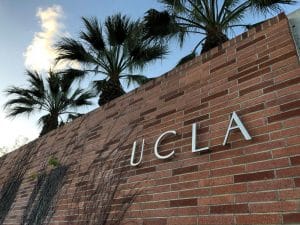
Campus life at UCLA offers the classic West Coast college experience with a sprawling, palm-tree-lined campus in Los Angeles. The architecture mixes historic brick buildings with modern facilities, and the central campus makes it easy to get around on foot or by bike.

Here’s what to expect at UCLA:
- With over 1,000+ student organizations, you’ll find groups for everything—from academics, service, and politics to cultural clubs, performing arts, and niche hobbies.
- School spirit runs high at UCLA. From Division I athletics and packed basketball games at Pauley Pavilion to spirited events like Spring Sing, campus life is full of tradition and pride.
- Campus recreation is top-notch, with multiple fitness centers, pools, intramural leagues, and plenty of outdoor activities thanks to LA’s year-round sunshine.
- Most freshmen live in the “Hill” residential community, where dorms, dining halls, and student activities are all within walking distance.
- Dining at UCLA is nationally ranked, offering award-winning dining halls, diverse food courts, and flexible meal plans to fit any schedule.
NYU vs UCLA: Cost of Attendance
Paying for college is one of the biggest investments you’ll make, so understanding the cost breakdown is key before making a decision. When comparing schools like NYU and UCLA, it helps to look at the full cost of attendance—including tuition, housing, meals, and fees—to see what you and your family might expect each year.
Here’s what one year at each school typically looks like in terms of cost:
| School | Total Cost of Attendance |
| NYU | $96,988 |
| UCLA | $43,137 (California residents) |
Here’s the breakdown of NYU’s total cost of $96,988 for one year:
- $65,622 for tuition
- $25,516 for housing and meals
- $1,470 for books and supplies
- $2,366 for transportation
- $2,014 for personal expenses
Here’s the breakdown of UCLA’s total cost of $43,137 (CA residents) for one year:
- $15,700 for university fees
- $18,960 for food and housing
- $1,680 for books, course materials, supplies, etc
- $857 for transportation
- $2,361 for personal expenditure
- $3,579 for health insurance
Here’s the breakdown of UCLA’s total cost of $80,739 (CA residents) for one year:
- $37,602 for nonresident supplemental tuition
- $15,700 for university fees
- $18,960 for food and housing
- $1,680 for books, course materials, supplies, etc
- $857 for transportation
- $2,361 for personal expenditure
- $3,579 for health insurance
The figures show that NYU is significantly more expensive than UCLA. NYU’s estimated cost of attendance is about $96,988, while UCLA comes in at $43,137 for California residents and $80,739 for nonresidents.
That’s a gap of more than $53,000 per year for in-state students and about $16,000 per year for nonresidents. Over four years, those differences add up to well over six figures for California residents and around $64,000 for nonresidents.
NYU vs UCLA: Financial Aid and Scholarships
College is a significant financial investment, and both NYU and UCLA understand that many students will need help covering costs. Each school offers a combination of financial aid options—including scholarships, grants, work-study, and loans.
Understanding how NYU and UCLA structure their aid can give you a clearer picture of the type of support you might expect and how affordable your education could become.
NYU financial aid and scholarships
Almost half of NYU undergraduates receive some form of financial support. In the 2022–2023 academic year, more than 13,500 students were awarded aid, with the average package totaling about $40,263.
Here’s how financial aid typically works at NYU:
- Grants and scholarships can come from NYU itself, government programs, or private sources, and they don’t need to be repaid.
- Federal loans are available with lower interest rates and repayment beginning after graduation.
- Private loans may help cover additional costs, though terms depend on the lender.
- Work-study opportunities give students the chance to earn money through on-campus jobs or approved community positions.
- External scholarships you secure on your own can also be applied toward your NYU aid package.
To qualify for aid, students must submit both the FAFSA and the CSS Profile.
UCLA financial aid and scholarships
UCLA emphasizes affordability, especially for California residents, and offers a wide range of financial aid options. Each year, nearly two-thirds of UCLA undergraduates receive some type of financial assistance, with many qualifying for need-based aid that significantly lowers the cost of attendance.
Here’s how financial aid typically works at UCLA:
- Grants and scholarships may come from UCLA, the University of California system, state programs like Cal Grants, or private organizations. These awards do not need to be repaid.
- Federal loans are available to most students, with flexible repayment plans that begin after graduation.
- Work-study jobs let students earn money through part-time employment, either on campus or with approved off-campus employers.
- Outside scholarships that students secure on their own can be added to their UCLA financial aid package.
To apply for aid, California residents must complete the FAFSA or the California Dream Act Application (for undocumented students), while nonresidents must file the FAFSA.
Final Verdict
Choosing between NYU and UCLA ultimately depends on the kind of college experience you’re looking for and the environment where you’ll succeed. Both are top-tier universities, but they offer very different settings and opportunities:
Choose NYU if you want to:
- Live in the heart of New York City, where your campus blends right into Manhattan and gives you nonstop access to the city’s energy.
- Have world-class professional opportunities, with internships, global companies, and cultural institutions right at your doorstep.
- Benefit from a strong global reputation, as NYU is well-known worldwide and opens doors for careers and graduate studies abroad.
- Have extensive study-abroad options, since NYU’s international network makes it easy to expand your education beyond the U.S.
- Gain networking potential, connecting with leaders and professionals across industries from day one.
Choose UCLA if you want to:
- Be part of a traditional campus community, enjoying a vibrant residential life and a true college-town atmosphere.
- Have access to top-ranked academics, with strong programs across a wide range of disciplines.
- Benefit from excellent research opportunities, working alongside faculty on groundbreaking projects.
- Experience nationally recognized athletics, with plenty of school spirit and events that bring the community together.
- Study in Los Angeles, just minutes from Hollywood, tech hubs, and Southern California’s creative industries.
Both schools are highly competitive and attract ambitious, driven students. NYU is more expensive and admits a smaller percentage of its applicants, while UCLA is more affordable (especially for California residents) and admits a massive applicant pool while maintaining strong selectivity.

In the end, your decision should reflect whether you see yourself thriving in the fast-paced, global energy of New York City or the sunny, campus-centered culture of Los Angeles.
Frequently Asked Questions
1. Which is harder to get into, NYU or UCLA?
NYU is slightly harder to get into than UCLA based on the most recent acceptance rates. For the Class of 2028, NYU admitted just 8% of its 118,000 applicants, while UCLA admitted about 9% from a pool of more than 146,000 applicants. While both are extremely competitive, NYU’s lower admit rate makes it the more selective option, though UCLA draws the largest applicant pool of any university in the country.
2. Which is more affordable, NYU or UCLA?
UCLA is more affordable than NYU, especially for California residents. For the 2024–2025 school year, UCLA’s estimated cost of attendance is about $43,137 for in-state students and $80,739 for nonresidents, while NYU’s cost comes to around $96,988. That means NYU is roughly $53,000 more expensive per year for California residents and about $16,000 more expensive for nonresidents.
3. Which is better overall, NYU or UCLA?
Neither school is better overall—it depends on the experience you want. NYU offers a fast-paced city life with global opportunities and study-abroad options, while UCLA provides a classic campus community, top academics, big-time athletics, and the perks of Los Angeles.
Takeaways
- NYU is slightly more selective, admitting 8% of applicants compared to UCLA’s 9%.
- Both schools are highly ranked, but UCLA edges out NYU in most national and global rankings, with UCLA at #15 in U.S. News compared to NYU at #30. UCLA also ranks higher in THE and QS world rankings.
- UCLA is far more affordable, especially for California residents. In-state students pay around $43,137 per year compared to NYU’s $96,988. Even for nonresidents, UCLA’s $80,739 is still lower than NYU’s cost.
- Choose NYU if you want the nonstop energy of New York City, access to global opportunities, and a strong international reputation with plenty of study-abroad options.
- Choose UCLA if you prefer a traditional campus community with strong academics, powerhouse athletics, and the creative and professional perks of Los Angeles.
- Deciding between NYU vs UCLA? Work with a college admissions expert who can help you craft an application that fits what each school values most.










