


The whole Princeton vs. Caltech rivalry? Yeah, it’s not really a thing. Unlike Harvard vs. Yale or Stanford vs. Berkeley, these two don’t have a long-standing competition. That said, it’s easy to compare them—after all, they’re both powerhouse schools.
Princeton holds the top spot on the U.S. News Best National Universities of 2025 list, while Caltech sits at #6. When it comes to selectivity, Caltech’s acceptance rate for the Class of 2028 hit an insanely low 2.3%, while Princeton’s acceptance rate was 4.6%—still crazy competitive. So, yeah, you’ll hear their names mentioned together a lot.
But between Princeton and Caltech, which one is actually better? Let’s find out. In this blog, we’ll break down how these two elite schools stack up in important areas such as academics, research opportunities, campus life, and career prospects. We’ll look at what makes each university unique and help you determine which one might be better for you.
- Princeton vs Caltech: A Quick Overview
- Princeton vs Caltech: Acceptance Rate
- Princeton vs Caltech: Rankings
- Princeton vs Caltech: Admission Requirements
- Princeton vs Caltech: Cost of Attendance
- Princeton vs Caltech: Financial Aid and Scholarships
- Princeton vs Caltech: Popular Majors and Courses
- Final Verdict
- Frequently Asked Questions
- Takeaways
Princeton vs Caltech: A Quick Overview
Picking a university is no walk in the park. You have to think about the pros and cons, consider the costs, choose the right courses, and sort through what feels like a never-ending list of schools. But once you’ve narrowed it down to two, that’s when things get really tough.
Before we dive into the details, let’s take a quick look at both of these top universities:
Princeton University
Princeton University has been around since 1746, making it one of the oldest and most respected universities in the U.S. It was originally called the College of New Jersey and started in Elizabeth, New Jersey, before moving to Princeton in 1756.
Over time, this small colonial school grew into a world-class research institution known for its academic excellence and influential alumni. One of its former university presidents, Woodrow Wilson, even went on to become the 28th President of the United States.
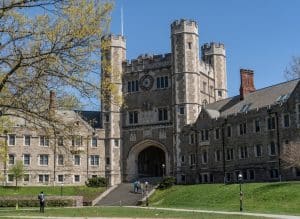
Princeton has made huge contributions to fields like mathematics, physics, economics, and public policy. It has been home to some of the greatest minds in history, including Albert Einstein, who worked at the nearby Institute for Advanced Study, and John Nash, whose work in game theory earned him a Nobel Prize.
The university is also a leader in scientific research, with institutions like the Princeton Plasma Physics Laboratory driving innovation in science and engineering.
Some of the most influential people in the world have walked Princeton’s halls. Its alumni include U.S. Presidents James Madison and Woodrow Wilson, Amazon founder Jeff Bezos, former First Lady Michelle Obama, and Supreme Court Justices Sonia Sotomayor and Elena Kagan.
California Institute of Technology (Caltech)
Caltech started out in 1891 as a small vocational school called Throop University in Pasadena, California. It wasn’t until the early 20th century that it began its transformation into a science and engineering powerhouse. A big reason for this shift was George Ellery Hale, an influential scientist who helped shape its focus on cutting-edge research.
Over time, Caltech became a magnet for some of the smartest minds in the world, especially in physics, chemistry, and engineering. Despite its small size, it now ranks among the most prestigious research institutions on the planet.

Caltech is known for its major contributions to astronomy, physics, and space exploration. It runs NASA’s Jet Propulsion Laboratory (JPL), which has led missions to Mars and beyond. Many breakthroughs in quantum mechanics, seismology, and artificial intelligence have ties to Caltech’s research.
When it comes to famous alumni, Caltech’s list is packed with game-changers. Richard Feynman, Kip Thorne, and Linus Pauling—all Nobel Prize winners—were part of the Caltech community. The school has also produced tech innovators like Intel co-founder Gordon Moore and Elon Musk, who studied there before transferring.
Princeton vs Caltech: Acceptance Rate
Princeton and Caltech are just two of many top universities with insanely low acceptance rates. Although getting in is not impossible, it remains to be tough. Every year, the best students from all over the world apply, and only a small handful make the cut. The competition is intense, and with so many talented applicants, the odds are never in anyone’s favor.
For the Class of 2028, Princeton clocked in a 4.6% acceptance rate. They received 40,468 applications while accepting only 1,868. Caltech, on the other hand, reported an even lower acceptance rate at 2.3%. Only 315 got accepted out of a 13,863 applicant pool—a crazy competition!
Caltech’s ultra-low acceptance rate comes down to a few key factors. First, it’s a tiny school with an undergraduate population of just around 1,000 students; it simply doesn’t have many spots to offer. Compare that to other top universities, and Caltech’s size makes it one of the most exclusive schools in the world.
Second, its focus is incredibly specialized. Unlike larger universities that accept students across a broad range of majors, Caltech mainly looks for those who excel in STEM (science, technology, engineering, and math). If you want an admission ticket to one of these schools, your application needs to be stellar.
Princeton vs Caltech: Rankings
Want to know how prestigious a university is? One of the easiest ways is to check its rankings. There are tons of organizations that rank schools based on things like academic reputation, research output, and faculty quality. It’s a great way to see how your dream school stacks up against the competition.
Let’s take a look at how Princeton and Caltech have ranked over the past three years according to Times Higher Education, QS World University Rankings, and U.S. News & World Report—three of the most trusted sources for university rankings. These lists aren’t everything, but they do give you a good idea of how these schools are viewed on a global and national scale.
| World Rankings | Princeton | Caltech |
| Times Higher Education 2025 | #4 | #7 |
| Times Higher Education 2024 | #6 | #7 |
| Times Higher Education 2023 | #7 | #6 |
| QS World University Rankings 2025 | #22 | #10 |
| QS World University Rankings 2024 | #17 | #15 |
| QS World University Rankings 2023 | #16 | #6 |
| US News Best National University Rankings 2025 | #1 | #6 |
| US News Best National University Rankings 2024 | #1 | #7 |
| US News Best National University Rankings 2023 | #1 | #9 |
Princeton and Caltech are both top-tier universities, but they shine in different ways depending on the ranking system. Times Higher Education rankings show Princeton climbing from #7 in 2023 to #4 in 2025, while Caltech has held steady at #7 for the past two years.
Over at QS World University Rankings, Caltech consistently comes out ahead, ranking as high as #6 in 2023 and landing at #10 in 2025, while Princeton has dropped from #16 to #22 in the same period. On the U.S. News Best National University Rankings, though, Princeton dominates, holding the #1 spot for three years straight, while Caltech has stayed between #6 and #9.
Still, rankings aren’t everything. They give you a general idea of a school’s reputation, but they don’t tell the whole story. The best school for you isn’t just the one that ranks highest—it’s the one that fits your goals, interests, and learning style.

Things like campus culture, class size, available majors, research opportunities, and career support should all factor into your decision. At the end of the day, you want a school that challenges you, excites you, and helps you grow—not just one that looks good on paper.
Princeton vs Caltech: Admission Requirements
Let’s break down what it takes to get into Princeton and Caltech. Both are top-ranked universities, but their admission requirements are a bit different because they focus on different strengths, academic approaches, and the kind of students they look for.
While Princeton values a well-rounded student with strong leadership and intellectual curiosity, Caltech prioritizes those with a deep passion for STEM and exceptional problem-solving skills.
Here are Princeton’s and Caltech’s admission requirements:
| Application Requirement | Princeton | Caltech |
| Application Platforms | Common Application
Coalition Application QuestBridge Application |
Common Application
QuestBridge Application |
| Application Fee | $70 or fee waiver available | $75 or fee waiver available |
| Standardized Tests | Test optional
Average test scores: 1510-1560 (SAT), 34-35 (ACT) |
Requires test scores for the Class of 2029
Average test scores: 1530-1570 (SAT), 35-36 (ACT) |
| High School Coursework Recommendations | 4 years of English
4 years of mathematics (including calculus for engineering applicants) 4 years of one foreign language At least 2 years of laboratory science (including physics and chemistry for engineering applicants) At least 2 years of history |
4 years of math, including calculus
1 year of physics 1 year of chemistry 1 year of biology (recommended) 4 years of English 2 years of history and/or social sciences (3+ years recommended) |
| GPA | no minimum requirements
Average GPA: 3.94 |
no minimum requirements
Average GPA: 4.2 |
| Letters of Recommendation | 1 counselor recommendation
2 teacher recommendations from core academic subjects |
2 teacher recommendations:
1 from a math or science teacher 1 from a humanities or social sciences teacher |
| Supplemental Essays | Princeton-specific questions
Graded written paper |
Caltech-specific essay prompts |
| Application Deadlines | Single-Choice Early Action: November 1
Regular Decision: January 1 |
Restrictive Early Action: November 1
Regular Decision: January 3 |
To apply to Princeton or Caltech, you’ll need to submit a solid application, but the requirements differ slightly between the two. Princeton is test-optional, meaning you can submit SAT or ACT scores, but it’s not required. Caltech will now require test scores for the Fall of 2025 admission cycle, but it previously had a test-blind policy, meaning they didn’t consider scores at all.
If you do submit, strong scores will help—historically, competitive applicants at both schools have SAT scores in the 1500+ range and ACT scores around 33-36. Neither school has a strict GPA cutoff, but admitted students typically have near-perfect grades, so keeping your GPA as high as possible is important.
If you’re aiming for Princeton or Caltech, your extracurriculars can make a huge difference in your application. Both schools want to see what you’re passionate about, how committed you are, and the impact you make—but they look for different types of activities.
At Princeton, leadership and a well-rounded approach matter a lot. They love students who take initiative, lead clubs, start projects, and get involved in their communities. Running for student government, organizing a Model UN event, leading a school newspaper, or excelling in speech and debate are all great ways to stand out.

Caltech, on the other hand, is all about STEM. They’re looking for students who love problem-solving, research, and hands-on science. Competing in math Olympiads, coding competitions, robotics, or science fairs like Regeneron ISEF can give you a strong edge.
No matter which school you’re aiming for, showing real passion and impact is what matters most. Pick activities that challenge you, excite you, and let you make a difference—that’s what will set you apart.
If you need a step-by-step guide to getting into Princeton or Caltech, we’ve put together up-to-date resources to help you craft a standout application:
Princeton vs Caltech: Cost of Attendance
Applying to top-tier schools like Princeton and Caltech is a big financial commitment. Both offer world-class education, but tuition and other expenses can add up quickly. That’s why it’s important to understand the costs before making a decision.
Let’s break down the estimated cost of attendance for Princeton and Caltech for the 2024-2025 academic year:
| School | Tuition and Fees | Living Costs (housing, food, transportation etc.) | Total |
| Princeton | Tuition: $65,210
Fees: $288 |
Housing: $12,450
Food: $8,720 Books: $250 Miscellaneous fees: $4,050 |
$90,878 |
| Caltech | Tuition: $65,622
Fees: $2,586 |
Housing: $12,105
Food: $8,886 Books/course materials: $1,428 Personal Expenses: $3,285 |
$93,912 |
When it comes to Princeton vs. Caltech, it’s not just about ranking. It’s about finding the right balance between your budget and your goals.
Princeton vs Caltech: Financial Aid and Scholarships
Princeton and Caltech are both expensive schools, but they offer strong financial aid programs to help make their education more accessible.
At Princeton, financial aid is among the best in the country. The university follows a need-blind admissions policy, meaning your ability to pay has no impact on your chances of getting in. They also have a no-loan policy, so all financial aid is given through grants, not loans, meaning you won’t graduate with debt. For many students, this aid covers full tuition and even living expenses based on their family’s financial situation
Caltech also offers generous financial aid, especially for STEM students who need support. Like Princeton, they follow a need-blind policy for U.S. applicants and meet 100% of demonstrated financial need. While Caltech’s financial aid program includes grants, scholarships, and work-study options, students should be prepared for the higher cost of living in California compared to Princeton’s New Jersey location.

Here are some financial aid and scholarships available at both schools:
Financial aid and scholarships at Princeton
- Need-based financial aid grants. Princeton makes sure money isn’t a barrier to getting a top-tier education. They cover 100% of demonstrated financial need through grants—no loans involved.
- Stamps Scholarship. Princeton teams up with the Stamps Scholars Program to offer merit-based scholarships. On top of tuition support, this scholarship gives you extra funds for research, travel, and other enrichment activities to help you make the most of your education.
- Davis United World College Scholars Program. If you’re a graduate of a United World College (UWC), this scholarship could help cover your tuition at Princeton.
- QuestBridge National College Match Scholarship. Princeton partners with QuestBridge to offer full four-year scholarships to high-achieving students from low-income backgrounds.
Financial aid and scholarships at Caltech
- Need-based grants and scholarships. Caltech makes sure cost isn’t a roadblock for students who need financial help. They cover 100% of demonstrated financial need through grants and scholarships.
- Stamps Scholarship. If you’re a high-achieving student, the Stamps Scholars Program at Caltech could be a great opportunity. This merit-based scholarship not only helps with tuition but also gives you extra funds for things like research projects, internships, and other academic experiences.
- Federal and State Grants. If you qualify, you can get additional financial help through Pell Grants (federal aid) and Cal Grants (for California residents).
Princeton vs Caltech: Popular Majors and Courses
Princeton and Caltech may be smaller than some universities, but they offer a wide range of world-class courses that attract top students from around the world. Princeton is known for its strong liberal arts curriculum, while Caltech focuses heavily on STEM and cutting-edge research.
Here’s a quick look at some of the most popular and highly regarded courses these two prestigious schools have to offer:
Top programs at Princeton
Princeton University is all about academic excellence and a well-rounded education. It has some of the best programs out there, covering everything from STEM to social sciences and the humanities. Here are some of Princeton’s top programs as reported by US News.
- Mathematics
- Economics
- Public and International Affairs
- Engineering
- Computer Science
- History
- Physics
- Molecular Biology
Top programs at Caltech
Caltech is a top-tier school for science and engineering known for its challenging academics, cutting-edge research, and small but incredibly talented student body. If you love diving into big ideas, solving tough problems, or pushing the boundaries of technology, this is the place for you. Here are Caltech’s top programs:
- Physics
- Computer Science
- Electrical Engineering
- Mechanical Engineering
- Chemical Engineering
- Biology
- Geology
- Astrophysics
Final Verdict
Princeton and Caltech are both world-class universities, but they offer completely different experiences. Princeton is all about a well-rounded education, with a strong focus on small class sizes, liberal arts, and top-tier undergraduate teaching. It’s primarily known for public policy, economics, mathematics, and the humanities, and its alumni list includes U.S. presidents, Supreme Court justices, and top business leaders.

Caltech, on the other hand, is a STEM powerhouse where the focus is on science, engineering, and cutting-edge research. With one of the smallest student bodies among top schools, you’ll get direct access to world-renowned professors and high-tech labs. Caltech is home to Nobel Prize winners, NASA scientists, and tech pioneers, and its programs push students to take on real-world scientific and technological challenges.
So, which one is better? It depends on what you want. If you love exploring different academic fields and engaging in deep intellectual discussions, Princeton might be the perfect fit. But if you’re all about solving complex equations, experimenting in labs, and working on groundbreaking discoveries, Caltech is hard to beat.
Either way, you’ll be surrounded by brilliant minds, incredible opportunities, and a future full of possibilities.
Frequently Asked Questions
1. Which is better: Caltech or Princeton?
Princeton and Caltech are both top universities, but the best choice depends on your goals. Princeton offers a well-rounded Ivy League experience with strong programs in humanities, social sciences, and math. Caltech is a STEM powerhouse, perfect for those passionate about research, engineering, and science. Your decision should be based on your academic interests and preferred learning environment.
2. Is Caltech better than the Ivy League?
Caltech isn’t in the Ivy League, but it outshines Ivy schools in STEM with top-tier research, faculty, and innovation. It has a smaller student body, lower acceptance rate, and more intense STEM programs. Meanwhile, the Ivy League offers broader academics, larger networks, and strong humanities and business programs. The best choice depends on your goals.
3. Is Princeton more prestigious than MIT?
Princeton and MIT are both prestigious but excel in different areas. Princeton is known for its Ivy League status and strengths in humanities and social sciences, while MIT dominates STEM, technology, and innovation. MIT ranks higher globally in STEM, while Princeton offers a stronger liberal arts and undergraduate experience. The better choice depends on your field and career goals.
Takeaways
Princeton and Caltech are both top-tier universities, but they offer completely different experiences. Princeton excels in liberal arts, social sciences, and public policy, while Caltech is a STEM powerhouse that focuses on scientific research and engineering.
- Caltech is slightly more selective, with an acceptance rate of 2.3%, compared to Princeton’s 4.6%.
- In rankings, Princeton consistently holds the #1 spot in U.S. News’ Best National Universities due to its strong liberal arts focus and excellence in public policy, economics, and mathematics.
- Caltech ranks higher globally in STEM fields, excelling in physics, engineering, and cutting-edge scientific research.
- Caltech is slightly more expensive than Princeton, with a total estimated annual cost of $93,912 compared to Princeton’s $90,878, mainly due to higher fees and personal expenses.
- If you’re aiming for either school, doing your research and working with a college admissions expert can help you put together a strong application and boost your chances of getting in.










