

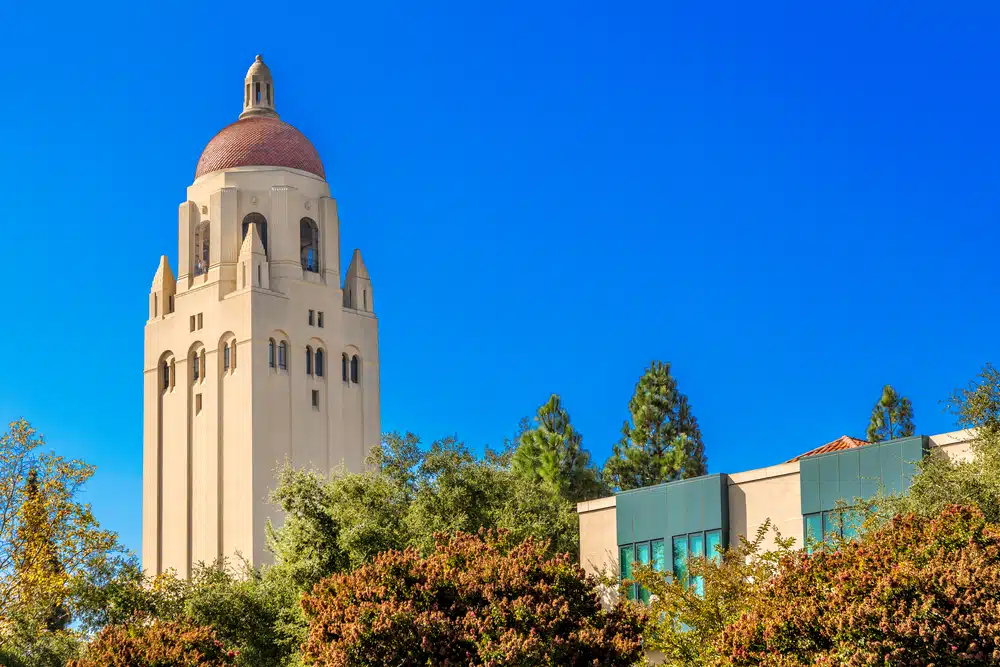
Located in the heart of Silicon Valley, Stanford University is renowned for its academic excellence, innovative research, and strong ties to the tech industry. According to U.S. News & World Report, Stanford University is ranked #3 among the Best Global Universities in 2024, making it a dream school for many students.
However, as with any prestigious institution, there are pros and cons of Stanford University to consider when deciding if it’s the right fit for you. When evaluating the pros and cons of Stanford University, it’s essential to weigh these aspects to determine if they align with your academic and personal goals.
- Pros of Stanford University
- Cons of Stanford University
- What Majors is Stanford Known For?
- Frequently Asked Questions
- Takeaways
Pros of Stanford University
Academic excellence
Stanford University has earned its reputation as one of the top academic institutions globally. With rigorous programs in engineering, computer science, business, and many other fields, the university consistently ranks among the best in various academic rankings.
According to the QS World University Rankings 2024, Stanford is ranked #5 globally. This reflects its commitment to academic excellence. The university’s curriculum challenges students intellectually while promoting a deep understanding of their chosen disciplines.
Stanford ensures students are well-equipped to deal with complex issues both during their studies and in their future careers by emphasizing critical thinking, innovation, and problem-solving, making this a definite pro in the pros and cons of Stanford University.
Stanford University student-to-faculty ratio
When evaluating the pros and cons of Stanford University, you’ll find that the student-to-faculty ratio is a key metric. Stanford University’s student-to-faculty ratio is 6:1, one of the lowest among top universities.
This low ratio ensures that you’ll have the opportunity for close interactions with professors, access to mentorship, and a more personalized academic experience. Smaller class sizes allow for more in-depth discussions, collaborative projects, and direct support from faculty.

Cutting-edge research opportunities
Stanford is a research powerhouse, with over $1.69 billion in sponsored research funding annually, placing it among the top research universities worldwide. The pros and cons of Stanford University include the vast research ecosystem, which spans fields such as artificial intelligence, biomedical engineering, environmental science, and social sciences.
As a student at Stanford, you’ll have the opportunity to participate in groundbreaking research projects, often working alongside leading experts in your field. For example, the Stanford Artificial Intelligence Laboratory (SAIL) is at the forefront of AI research, contributing to advancements that shape the future of technology.
Additionally, Stanford’s proximity to Silicon Valley means that students can collaborate with industry leaders, gaining practical experience that complements their academic studies. This research experience enhances your academic credentials and positions you for success in competitive job markets or further academic pursuits.
When considering the pros and cons of Stanford University, the availability of research opportunities is a critical factor.
Prime location in Silicon Valley
Stanford’s strategic location in the heart of Silicon Valley, the global center of technology and innovation, offers students unparalleled access to internships, job opportunities, and networking.
Silicon Valley is home to tech giants like Google, Apple, Facebook, and Tesla, as well as thousands of startups and venture capital firms. This proximity provides Stanford students unique opportunities to gain real-world experience through internships, co-op programs, and part-time jobs.
For instance, many Stanford students intern at leading tech companies, often securing full-time positions before graduation. The university also hosts numerous career fairs, networking events, and speaker series, where students can connect with industry professionals and alumni.
This direct access to Silicon Valley enhances your career prospects and immerses you in a culture of innovation and entrepreneurship, where the next big idea is always around the corner.
The pros and cons of Stanford University in terms of location are heavily influenced by its proximity to Silicon Valley, which can be a deciding factor for many students.
Diverse and supportive community
Stanford University prides itself on its diverse and inclusive community, attracting students from all 50 states and over 90 countries. This diversity enriches the campus experience and exposes students to different cultures, perspectives, and ideas.
The university offers numerous resources to support students’ academic and personal growth, including cultural centers, mental health services, academic advising, and career counseling.
Stanford’s Office of the Vice Provost for Student Affairs, for example, provides a range of services to help students navigate their academic journey and maintain a healthy work-life balance.
Stanford’s commitment to diversity is also reflected in its financial aid policies. The university ensures financial barriers do not prevent students from attending by meeting 100% of the demonstrated needs of all admitted students.
The result is a vibrant, collaborative environment where students can thrive both academically and personally, building lasting relationships and networks. The pros and cons of Stanford University regarding community and diversity are significant factors to consider.

Strong alumni network
Stanford’s alumni network is one of the most influential in the world, with graduates excelling in various fields such as technology, business, law, medicine, and the arts. The university’s alumni include numerous 58 Nobel laureates, 29 Turing Award winners, Fortune 500 CEOs, and government leaders:
- Larry Page is the co-founder and former CEO of Google. He played a pivotal role in revolutionizing the internet and search engine technology.
- Eric Cornell received the Nobel Prize in Physics in 2001 for his groundbreaking work on Bose-Einstein condensates, a new state of matter.
- Reed Hastings is the co-founder and CEO of Netflix. He transformed the entertainment industry by creating one of the world’s leading streaming services.
- Sandra Day O’Connor was the first woman appointed to the U.S. Supreme Court. She served as a key figure in American law and justice.
- Herbert Hoover served as the 31st President of the United States. He led the country during the onset of the Great Depression and was a prominent humanitarian.
- Vinton Cerf is widely known as one of the “fathers of the internet” and received the Turing Award in 2004 alongside Robert Kahn for their work on TCP/IP protocols that underpin the internet.
The Stanford Alumni Association offers various programs and resources to help graduates stay connected, including regional chapters, online networking platforms, and career development services.
For current students, this network provides invaluable opportunities for mentorship, internships, and job placements. For example, Stanford alumni often return to campus to speak at events, serve as mentors, or recruit students for their companies.
The strong sense of community among Stanford alumni means that, as a graduate, you’ll have access to a global network of professionals who can support your career growth and guide your professional journey.
Evaluating the pros and cons of Stanford University should include understanding the powerful alumni network and the opportunities it presents.
Interdisciplinary opportunities
One of Stanford’s distinctive features is its emphasis on interdisciplinary studies, encouraging students to explore the connections between different fields. This approach reflects the university’s belief that complex global challenges require solutions that draw on multiple disciplines.
You can combine majors and minors at Stanford or even design your own interdisciplinary program. For instance, the Stanford d.school (Hasso Plattner Institute of Design) brings together engineering, business, humanities, and social sciences students to collaborate on innovative projects.
Whether you’re interested in the intersection of technology and ethics, the role of design in social innovation, or the impact of policy on environmental sustainability, Stanford provides the flexibility and resources to pursue your interests holistically.
The pros and cons of Stanford University in terms of academic flexibility are crucial considerations for students looking to tailor their education to their specific interests.
Cons of Stanford University
High cost of attendance
Attending Stanford University is a significant financial commitment, with the total cost of attendance—including tuition, fees, room, and board—exceeding $75,000 per year.
While Stanford offers generous financial aid packages, with the average scholarship covering about 70% of the cost for those who qualify, the remaining expenses can still burden many families. It’s important to consider your financial situation carefully and explore all available funding options, including scholarships, grants, work-study programs, and loans.
Additionally, living in the Bay Area, one of the most expensive regions in the United States, adds to the financial pressure. The cost of housing, transportation, and everyday expenses can quickly add up. This makes it essential to budget wisely.
Additionally, living in the Bay Area, one of the most expensive regions in the United States, adds to the financial pressure. The cost of living in the area is 23% higher than the state average and 71% higher than the national average. Housing, transportation, and everyday expenses can quickly add up. This makes it essential to budget wisely.
Despite these challenges, many students find that the long-term benefits of a Stanford education—such as career opportunities and earning potential—outweigh the initial financial investment. Understanding the pros and cons of Stanford University includes acknowledging the significant financial investment required.
Intense academic pressure
Stanford’s academic environment is highly competitive, particularly in STEM fields, where students often face rigorous coursework, demanding projects, and high expectations. The pressure to excel can be motivating but overwhelming, pushing students to perform at their best while leading to stress and burnout.
According to a recent study from Stanford, a substantial number of students reported experiencing high levels of academic stress. Many identified the university’s fast-paced quarter system as a significant factor contributing to their stress, highlighting the challenges of keeping up with the intensive academic schedule.

The quarter system condenses a full course load into ten weeks and requires students to stay on top of their studies and manage their time effectively. If you’re not prepared to handle the demands of a top-tier university, this pressure could impact your overall experience and well-being.
Developing strong study habits, seeking support when needed, and maintaining a healthy balance between academics and personal life is crucial. The pros and cons of Stanford University in terms of academic pressure are vital factors to weigh when considering your fit for the institution.
Limited social life
While Stanford offers a vibrant campus life with over 600 student organizations, numerous events, and a wide range of extracurricular activities, some students find that the intense focus on academics and career development leaves little time for socializing.
Additionally, the university’s location in Silicon Valley, where many students pursue internships and part-time jobs, often means that weekends and breaks are spent working rather than relaxing. For some students, this can lead to feelings of isolation or burnout as they struggle to find time for hobbies, friendships, and relaxation.
It’s important to be proactive in managing your time, setting aside periods for social activities, and seeking out communities and groups that align with your interests and values. The pros and cons of Stanford University include considering how the academic rigor may impact your social life.
Bureaucratic challenges
As with any large institution, Stanford’s administrative processes can be frustrating and time-consuming. Whether registering for classes, securing housing, dealing with financial aid, or accessing campus resources, you might face red tape needing determination and patience.
For example, Stanford’s housing system, while comprehensive, is highly competitive, and securing your preferred accommodation can be challenging. Similarly, the financial aid application process can be complex, with multiple forms and deadlines to manage.
Students have reported delays in processing requests, difficulties communicating with administrative offices, and challenges in resolving course registration or academic advising issues.
The pros and cons of Stanford University in this regard involve recognizing that while the university offers extensive resources, accessing them efficiently may require going through layers of bureaucracy.
High expectations in the tech industry
Given Stanford’s strong ties to Silicon Valley, there is an expectation that students will pursue careers in technology, entrepreneurship, or related fields. This expectation can be both an advantage and a limitation.
For students passionate about tech or business, Stanford offers unparalleled opportunities to connect with industry leaders, start their own companies, or join innovative startups. However, this tech-centric environment can feel restrictive for students interested in pursuing careers outside of these fields—such as the humanities, social sciences, or the arts.
The pressure to conform to the dominant career paths may lead some students to question their choices or feel out of place. The pros and cons of Stanford University in this area involve weighing the incredible opportunities in tech against the potential constraints on those with different career aspirations.
Geographic isolation
While Stanford’s location in Silicon Valley offers many advantages, some students might find the campus somewhat isolated from major cultural and urban centers. Unlike universities located in large cities such as New York or Los Angeles, Stanford is situated in a suburban area where the primary focus is on the tech industry and academia.
This geographic isolation could be seen as a drawback for students who thrive in a bustling city environment, with access to diverse cultural experiences, concerts, theaters, and vibrant nightlife.
The pros and cons of Stanford University regarding its location vary. At the same time, some may appreciate the serene, focused environment of Palo Alto, while others might miss the energy and opportunities that come with living in a major metropolitan area.
The school’s location is a crucial aspect to consider when evaluating the pros and cons of Stanford University and determining if the environment aligns with your lifestyle preferences.
Weather considerations
California’s mild climate is often seen as a benefit, but some students might miss the seasonal changes in other parts of the country. Stanford enjoys sunny, temperate weather most of the year, which is ideal for outdoor activities and maintaining an active lifestyle.

However, the consistent climate might feel monotonous for those who enjoy experiencing all four seasons, including snowy winters and colorful autumns. The lack of distinct seasons could be a drawback if you prefer a more varied climate or enjoy winter activities like skiing and snowboarding.
The pros and cons of Stanford University when it comes to weather are largely subjective, depending on your personal preferences for climate. While many students relish the idea of year-round sunshine, others might find themselves longing for the seasonal diversity they left behind.
What Majors Is Stanford Known For?
When weighing the pros and cons of Stanford University, you’ll find that the university offers a wide range of majors. Here are the majors Stanford is known for:
- Computer science. As one of the most popular and highly regarded majors at Stanford, computer science is a key focus of the university. You’ll have opportunities for research and internships in Silicon Valley, which is a significant pro when you analyze the pros and cons of Stanford University.
- Engineering. Stanford’s engineering programs, particularly in electrical, mechanical, and bioengineering, are among the best in the world. The strength of these programs is a major factor in the pros and cons of Stanford University, especially if you’re pursuing a career in engineering.
- Business. The Stanford Graduate School of Business is renowned for its MBA program and is a top choice for students like you who aspire to leadership roles in various industries.
- Humanities and social sciences. While STEM fields dominate, Stanford also has strong psychology, political science, and history programs. This reflects its commitment to providing you with a well-rounded education.
What other majors does Stanford offer?
Aside from the majors Stanford is known for, there’s a broad spectrum of other majors it offers across seven schools:
- School of Engineering. Stanford offers majors such as computer science, electrical engineering, and bioengineering. For example, as a computer science major, you can specialize in areas like artificial intelligence or cybersecurity.
- School of Humanities and Sciences. This school provides majors such as psychology, political science, and biology. In psychology, you might focus on cognitive neuroscience, while political science offers specializations in international relations or American politics.
- School of Earth, Energy & Environmental Sciences. Stanford provides majors like geology and environmental science. Students in environmental science can concentrate on areas such as climate change or conservation biology.
- Graduate School of Business. The Graduate School of Business offers a top-tier MBA program with options to focus on finance, entrepreneurship, or social innovation.
- School of Medicine. Stanford offers a variety of pre-medical and medical-related programs. For instance, in human biology, you might focus on global health to prepare for a career in medicine.
Frequently Asked Questions
-
What is Stanford University best known for?
Stanford University is best known for its excellence in STEM, particularly engineering and computer science. It’s also highly regarded for its Graduate School of Business, which is one of the top MBA programs in the world.
-
How competitive is admission to Stanford University?
Admission to Stanford University is extremely competitive. The acceptance rate typically hovers around 4-5%, making it one of the most selective universities in the world. Successful applicants typically have outstanding academic records, high standardized test scores, and impressive extracurricular achievements.
-
What financial aid options are available at Stanford University?
Stanford University offers a range of financial aid options, including need-based scholarships, grants, work-study programs, and student loans. The university meets 100% of the demonstrated financial need for all admitted students, making it possible for students from various financial backgrounds to attend.
-
How does Stanford University support career development?
Stanford University offers extensive career development support, including internships, co-op programs, career fairs, and networking events. Its location in Silicon Valley provides students direct access to top tech companies and startups, enhancing their career prospects.
-
What housing options are available for Stanford students?
Stanford provides various housing options, including traditional dormitories, theme houses, and off-campus apartments. Housing is guaranteed for all undergraduates for four years, and the university also offers graduate student housing. However, securing preferred housing options can be competitive due to high demand.
-
What does Stanford University specialize in?
Stanford University is renowned for its strength in various disciplines, particularly STEM. The School of Engineering is consistently ranked among the best globally, with top computer science, electrical engineering, and bioengineering programs. Additionally, Stanford’s Graduate School of Business attracts students aiming for leadership in the business world.
Takeaways
- Stanford’s rigorous academic programs, particularly in STEM and business, make it an excellent choice if you’re looking for a world-class education.
- Stanford’s location in Silicon Valley offers exceptional internships, networking, and career development opportunities in the tech industry, providing direct access to industry leaders.
- The academic environment at Stanford is highly competitive, so it’s essential to be prepared for the challenges and pressure that come with attending such a prestigious institution.
- If you’re still unsure whether Stanford is the university for you, working with a college admissions consultant can help you with the process. With personalized support from AdmissionSight, you can feel confident in making the best choice for your future.










