

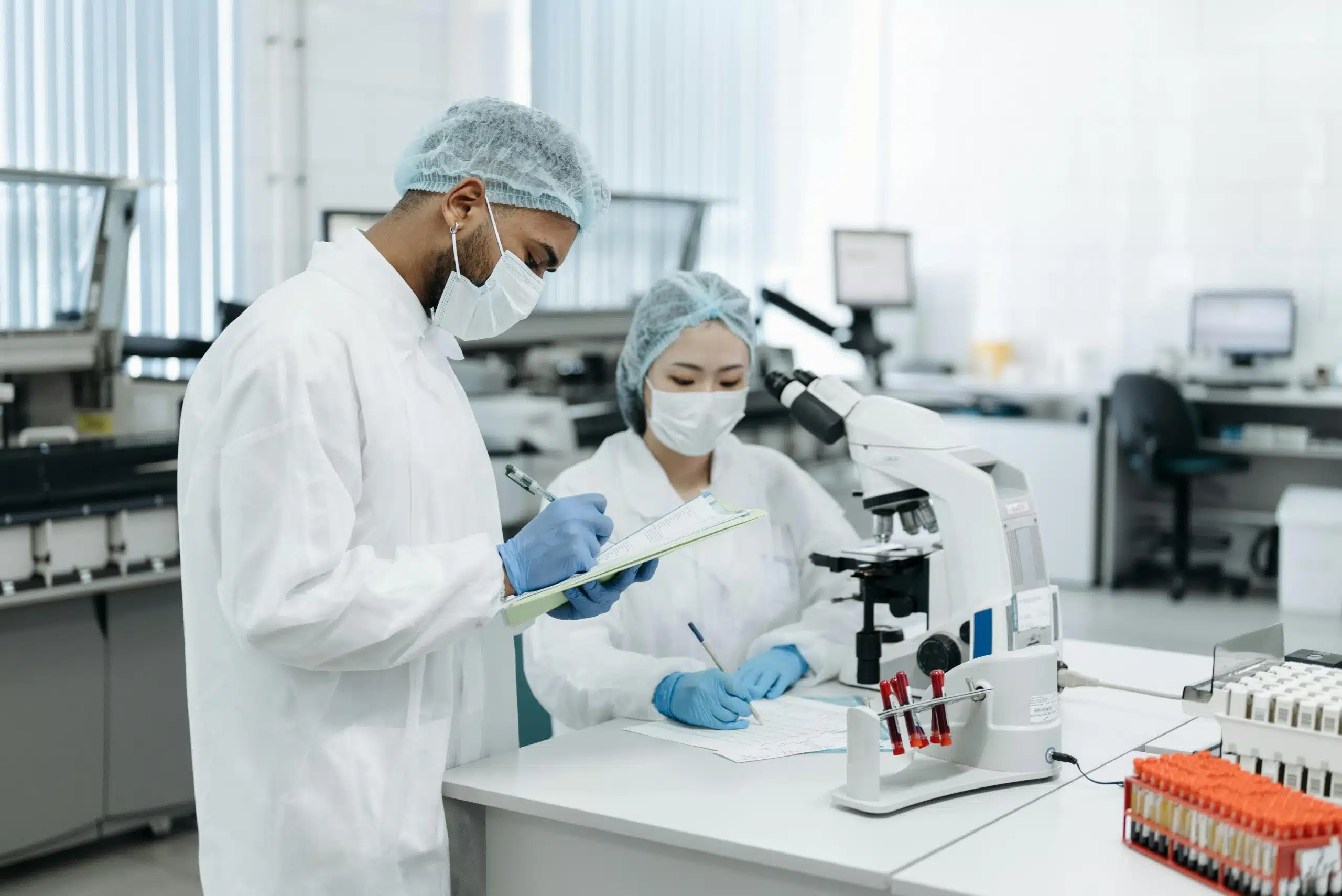
Summer medical research programs give you the chance to explore medicine hands-on before college. These programs let you step inside real labs, work with experienced researchers, and see how science connects to patient care. If you’re curious about medicine or want to test whether a STEM career is right for you, these programs offer an early yet meaningful start.
In this blog, you’ll learn about the best summer medical research programs for high school students and what makes each one worth exploring.
- Best Summer Medical Research Programs for High School Students
- Stanford Institutes of Medicine Summer Research Program (SIMR)
- Summer Science Program (SSP)
- Genomics Research Internship Program at Stanford (GRIPS)
- National Institutes of Health Summer Internship Program (NIH SIP)
- Broad Summer Scholars Program (BSSP)
- Summer Science Research Program (SSRP)
- Mayo Clinic Science Program for the Advancement of Research Knowledge (SPARK)
- Children’s Hospital Colorado – Summer Child Health Research Internship
- Roswell Park College Summer Research Experience in Cancer (SURE-CAN)
- Scripps Research Translational Institute (SRTI)
- Simons Summer Research Program
- UCSB Research Mentorship Program (RMP)
- Boston University Research in Science & Engineering (RISE)
- UCSC Science Internship Program (SIP)
- Rosetta Institute of Biomedical Research
- Frequently Asked Questions
- Takeaways
Best Summer Medical Research Programs for High School Students
Below is an overview of 15 of the best medical research programs for high school students. You’ll find options at major universities, hospitals, and research institutes across the country. Some focus on biology and chemistry, while others introduce you to biomedical engineering, clinical research, or public health.
| Rank | Summer Medical Research Program | Location | Dates |
| 1 | Stanford Institutes of Medicine Summer Research Program (SIMR) | Stanford University, Stanford, California | June 8–July 30, 2026 |
| 2 | Summer Science Program (SSP) | Multiple campuses | Vary by campus, generally late June to early August |
| 3 | Genomics Research Internship Program at Stanford (GRIPS) | Stanford University, Stanford, California | June 15–August 6, 2026 |
| 4 | National Institutes of Health Summer Internship Program (NIH SIP) | Multiple NIH campuses, including the main campus in Bethesda, Maryland | June-August 2026 |
| 5 | Broad Summer Scholars Program (BSSP) | Broad Institute of MIT and Harvard, Cambridge, Massachusetts | June 29–August 7, 2026 |
| 6 | Summer Science Research Program (SSRP) | The Rockefeller University, New York City, New York | June 22–August 6, 2026 |
| 7 | Mayo Clinic Science Program for the Advancement of Research Knowledge (SPARK) | Mayo Clinic, Jacksonville, Florida | June 2–December 3, 2026 |
| 8 | Children’s Hospital Colorado – Summer Child Health Research Internship | Children’s Hospital Colorado and the University of Colorado Anschutz Medical Campus | June 1–July 31, 2026 |
| 9 | Roswell Park College Summer Research Experience in Cancer (SURE-CAN) | Roswell Park Comprehensive Cancer Center, Buffalo, New York | June 1–August 7, 2026 |
| 10 | Scripps Research Translational Institute (SRTI) | Scripps Research, La Jolla, California | June 1–August 7, 2026 (10 weeks); or June 15–August 7, 2026 |
| 11 | Simons Summer Research Program | Stony Brook University, Stony Brook, New York | June 29–August 7, 2026 |
| 12 | UCSB Research Mentorship Program (RMP) | UCSB, Santa Barbara, California | June 15–July 31, 2026 |
| 13 | Boston University Research in Science & Engineering (RISE) | Boston University, Boston, Massachusetts | June 28–August 7, 2026 (Residential); June 29–August 7, 2026 (Commuter) |
| 14 | UCSC Science Internship Program (SIP) | Online and in-person at UCSC, Santa Cruz, California | June 15–19, 2026 (Online Research Week); June 22, 2026 (SIP 2026 Kickoff); June 22–August 7, 2026 (In-Person Research Weeks); August 8, 2026 (Presentation Day) |
| 15 | Rosetta Institute of Biomedical Research | Online and in-person at multiple campuses, including UC Berkeley, UC San Diego, and Columbia University | Vary by campus, generally late May to mid August |
Let’s discuss each program one by one.
1. Stanford Institutes of Medicine Summer Research Program (SIMR)
- Dates: June 8–July 30, 2026
- Location: Stanford University, Stanford, California
- Cost: Application fee is $40 with waivers available, and the program is free for all participants with a minimum $500 stipend.
The Stanford Institutes of Medicine Summer Research Program (SIMR) is one of the most prestigious summer medical research programs for high school students. It’s an eight-week experience for juniors and seniors who want real exposure to biomedical research. You’ll work in a Stanford lab, learn core research techniques, join safety training sessions, and present your findings at a final poster session.
SIMR runs on Stanford’s campus and places you in a research group where you help with ongoing projects. You’ll practice data collection, basic lab methods, and scientific communication while receiving guidance from faculty and graduate mentors.
The program lets you choose from eight research tracks, including:
- Immunology
- Cancer Biology
- Stem Cell Biology
- Neuroscience
- Cardiovascular Science
- Genetics
- Bioinformatics
- Bioengineering
SIMR is highly selective, admitting about 50 students each year. Applicants usually need to be rising juniors or seniors, at least 16 years old, and enrolled in a U.S. high school. Materials often include transcripts, recommendations, and short essays about your interest in research.
For more information on how to apply for this program, read our detailed guide to SIMR.
2. Summer Science Program (SSP)
- Dates: Vary by campus, generally late June to early August
- Location: Multiple campuses
- Cost: Fees are based on family income, with free attendance for many students under about $75,000, partial discounts up to $140,000 and above, and a maximum program cost of $9,800.
The Summer Science Program (SSP) is one of the most prestigious STEM experiences for high school students, and its outcomes reflect that. A significant share of SSP alumni go on to Ivy League and top-tier universities, which shows how well the program prepares you for competitive college admissions.
SSP offers five research areas, including astrophysics, biochemistry, bacterial genomics, synthetic chemistry, and cell biology. Each course centers on a real scientific problem, and you work in small teams to learn the tools used in professional labs and complete a research project from start to finish. The program lasts about five weeks and is fully residential, with host campuses including Purdue University, New Mexico State University, and Colby College.

To apply, you must be a high school junior who will be at least 15 years old but not yet 19 during the program. SSP is selective, so strong grades and teacher evaluations will help your application stand out.
To learn more about how SSP works, read our detailed guide to the Summer Science Program.
3. Genomics Research Internship Program at Stanford (GRIPS)
- Dates: June 15–August 6, 2026
- Location: Stanford University, Stanford, California
- Cost: Free
The Genomics Research Internship Program at Stanford (GRIPS) is an eight-week experience that lets Bay Area high school students work inside a Stanford genetics lab. You’ll spend about 20 hours per week on hands-on genomics projects guided by a faculty mentor or postdoctoral researcher. Many projects connect to applications in genetic testing, bioinformatics, or precision medicine, so you learn tools used in actual research labs.
The program combines lab work with weekly workshops, career panels, and small group discussions. You meet with your mentor throughout the summer to review progress and learn how to troubleshoot experiments. Students must commit to the full schedule, which is four hours per day, five days per week, typically from 9:00 in the morning to 1:00 in the afternoon.
To be eligible, you must:
- Live in Alameda, San Francisco, San Mateo, Santa Clara, or Santa Cruz counties
- Be 16 or older by the start of the internship
- Have background knowledge in biology, chemistry, or computer programming
- Have an unweighted GPA of at least 3.0
GRIPS is free and highly selective, placing it among the most competitive Stanford high school internships available to local students. You typically apply with transcripts, recommendations, and written responses about your interest in genomics and research.
4. National Institutes of Health Summer Internship Program (NIH SIP)
- Dates: June-August 2026
- Location: Multiple NIH campuses, including the main campus in Bethesda, Maryland
- Cost: Free program with stipends that vary each year based on education level
The NIH High School Summer Internship Program is one of the most respected research opportunities for high school students in the country. It places participants in biomedical and behavioral science labs across the National Institutes of Health, where interns work directly with leading researchers on ongoing scientific projects.
Each intern joins a specific lab and contributes to research under the guidance of a principal investigator (PI). Many students collect data, run experiments, assist with computational analysis, and even contribute to abstracts or publications. The program also offers seminars, skill-building workshops, and networking events that help you explore scientific careers.

The program typically lasts about eight weeks from mid-June to early August. Note that to be eligibile, you must be enrolled at least half-time as a high school senior at the time of application and must graduate before the internship begins.
If you’re curious about how this program works, check out our blog on NIH SIP.
5. Broad Summer Scholars Program (BSSP)
- Dates: June 29–August 7, 2026
- Location: Broad Institute of MIT and Harvard, Cambridge, Massachusetts
- Cost: Free to attend with no application fee, plus a $3,600 stipend for all participants
The Broad Summer Scholars Program (BSSP) gives high school students the chance to work on research at the Broad Institute. Over six weeks, you’re matched with a Broad scientist and complete an original project in fields such as cancer biology, infectious disease, chemical biology, psychiatric disease, or computational biology. This structure makes BSSP one of the most academically rigorous summer medical research programs for high school students.
Beyond the lab, BSSP includes scientific talks, college and career sessions, and a final poster presentation where you share your research with Broad scientists. The program also hosts social events and a college fair, giving you a balanced mix of learning and community.
Applicants must meet these requirements:
- Be a rising senior in high school
- Attend a high school in the Greater Boston area
- Earn at least a B in math and science classes
- Be a U.S. citizen, permanent resident, or non-citizen with valid work authorization
- Show a strong interest in science, even without prior research experience
Every admitted student receives a stipend, and there’s no fee to apply or attend.
6. Summer Science Research Program (SSRP)
- Dates: June 22–August 6, 2026
- Location: The Rockefeller University, New York City, New York
- Cost: Free
The Summer Science Research Program (SSRP) at Rockefeller University is a team-based, mentored research experience for high school juniors and seniors. SSRP scholars spend about 35 hours per week working on scientific questions under the guidance of research trainees.
About 32 students are selected and placed into four research teams, each with 8 to 10 scholars and at least three dedicated mentors. Research topics are based on the expertise and interests of the team leaders, and SSRP tries to place each scholar on a team that matches their scientific goals.

While each team’s daily schedule looks different, the general flow of the program looks like this:
- Week 1. Introduction to the team topic and basic research techniques, plus lab norms and safety
- Week 2. Scholars choose a specific research question related to the team topic
- Weeks 3 to 5. Explore the research question with guidance from team leaders and scientist mentors
- Weeks 6 and 7. Analyze data and design a research poster to present at the end of program symposium
Overall, SSRP stands out among summer medical research programs for high school students because it offers structured lab time, close mentorship, and a clear week-by-week plan for completing a research project.
7. Mayo Clinic Science Program for the Advancement of Research Knowledge (SPARK)
- Dates: June 2–December 3, 2026
- Location: Mayo Clinic, Jacksonville, Florida
- Cost: Free
The Mayo Clinic SPARK Program gives high school juniors and seniors in Duval and St. Johns counties the chance to work in real research labs at one of the nation’s top medical centers. Each scholar is paired with a Mayo Clinic mentor who guides them through experiment planning, data review, and project development.
SPARK scholars also attend seminars, meet research teams across campus, and prepare a final project they later submit to regional or state science fairs. Many students earn awards for their work, and a large number continue into STEM majors after graduation.
SPARK offers research opportunities across several specialties:
- Biochemistry and molecular biology
- Drug development
- Epidemiology
- Immunology
- Cancer biology
- Artificial intelligence
- Neuroscience
- Regenerative sciences
Participation requires a commitment of at least 25 hours per week in the summer, plus additional scheduled time during the school year.
With its strong mentorship and access to world-class labs, SPARK stands out as one of the most competitive summer medical research programs for high school students in Florida.
8. Children’s Hospital Colorado – Child Health Research Internship
- Dates: June 1–July 31, 2026
- Location: Children’s Hospital Colorado and the University of Colorado Anschutz Medical Campus
- Cost: No program fees; interns receive a $4,400 summer stipend to support living expenses
The Children’s Hospital Colorado – Child Health Research Internship is a nine-week program for high school seniors who are at least 18 years old. It’s run by the University of Colorado School of Medicine’s Department of Pediatrics and places students in research labs focused on child health. Interns work directly with faculty and research staff on projects that support pediatric science and clinical discovery.

Throughout the summer, students join a weekly research lecture series, learn how to work in a professional lab environment, and receive guidance as they develop their own project. By the end of the program, every intern submits a written summary of their work and presents their findings through either a poster or a PowerPoint talk.
All students must be Colorado residents and available for the full nine weeks. With a $4,400 stipend and no program fees, it’s a strong option for high school seniors who want hands-on experience in child health research before starting college.
9. Roswell Park College Summer Research Experience in Cancer (SURE-CAN)
- Dates: June 1–August 7, 2026
- Location: Roswell Park Comprehensive Cancer Center, Buffalo, New York
- Cost: Free to attend; some students may receive subsistence allowances based on eligibility and available funding.
The Roswell Park SURE-CAN Program offers high school students a six-week introduction to cancer research at one of the nation’s leading cancer centers. Interns work with Roswell Park scientists and gain exposure to real laboratory methods, emerging technologies, and the scientific process behind modern cancer research.
During SURE-CAN, you’ll follow a structured curriculum that combines lab work, classroom learning, and professional development. Here’s what you can expect:
- Hands-on wet lab or dry lab research guided by Roswell Park scientists
- Introductions to cancer biology, imaging, genomics, and emerging AI tools
- Training in basic statistics, research ethics, and rigor in scientific practice
- Insights into how physics, engineering, and math contribute to cancer research
- Seminars and professional development focused on scientific communication
- A final poster presentation where you share your research findings with the Roswell Park community
This curriculum gives you a close look at careers in cancer science, engineering, medical imaging, IT, and health research. To qualify, you must be a current high school junior (class of 2027), live in Western New York, and be at least 15 years old by the start of the program.
10. Scripps Research Translational Institute (SRTI)
- Dates: June 1–August 7, 2026 (10 weeks); or June 15–August 7, 2026
- Location: Scripps Research Translational Institute, La Jolla, California
- Cost: Free; funding for paid positions is TBD, but unpaid research placements for school credit will still be available.
The Scripps Research Translational Institute (SRTI) focuses on translational research that connects lab discoveries to medical applications. Much of the work centers on personalized medicine, genomics, digital health, and how technology can be used to understand disease.
SRTI offers two internship tracks, both designed to prepare students for careers in health science, computer science, statistics, or biomedical research. The Student Research Internship Program is a 10-week experience for high school, undergraduate, and graduate students. Interns work with a primary mentor, join ongoing research projects, and learn how translational research is used to study health and disease.
The Medical Student Research Internship Program is an 8-week track where participants design an independent project, attend seminars, join journal clubs, and gain limited clinical exposure with a physician-scientist mentor.
All interns must be at least 16 years old. The institute accepts around 40 students each summer, making it a competitive choice for motivated students who want hands-on experience in medical and data-driven research.
11. Simons Summer Research Program
- Dates: June 29–August 7, 2026
- Location: Stony Brook University, Stony Brook, New York
- Cost: No tuition or program fees; but students cover their own dining, transportation, and optional residential housing (estimated at $2,450 for Summer 2026).
The Simons Summer Research Program gives high-achieving high school students the chance to work on research projects in science, math, or engineering at Stony Brook University. You apply during junior year and attend the program the summer before senior year. Once admitted, you’re matched with a faculty mentor, join an active research group, and take responsibility for a specific project during the six-week program.
Simons Fellows spend at least four hours per day on research, either independently or alongside their team. You’ll learn lab techniques, use research tools, and see what day-to-day work looks like at a major research university. The program also includes weekly faculty talks, skill-building workshops, campus tours, and special events that help you explore STEM fields.
At the end of the summer, you present a written abstract and a research poster at the final symposium, where students also receive a stipend award.
If you want to see how it compares to other summer medical research programs for high school students, check out our blog on the Simons Summer Research Program.
12. UCSB Research Mentorship Program (RMP)
- Dates: June 15–July 31, 2026
- Location: UCSB, Santa Barbara, California
- Cost: $13,274 for residential students; $5,675 for commuters
The UCSB Research Mentorship Program (RMP) is a competitive six-week research experience that lets high school students conduct university-level research. You’re paired with a graduate student, postdoc, or faculty mentor and spend the summer learning lab techniques, analyzing data, and contributing to a defined research project.

The program also includes GRIT Talks, a lecture series where UCSB researchers discuss their work and give students a deeper look into academic research paths.
RMP offers projects across many fields, and students interested in medicine or biomedical sciences can choose from options such as:
- Biochemistry
- Biology
- Chemistry
- Ecology
- Marine Biology
- Neuroscience
- Psychology
- Statistics
Admissions are highly selective. The acceptance rate is typically 4% to 6%, and many students who complete RMP go on to attend Ivy League and other top universities.
For more information on how to apply for this program, read our detailed guide to USCB RMP.
13. Boston University Research in Science & Engineering (RISE)
- Dates: June 28–August 7, 2026 (Residential); June 29–August 7, 2026 (Commuter);
- Location: Boston University, Boston, Massachusetts
- Cost: Commuter tuition ~ $6,185; residential tuition ~$9,785 including housing and meals.
The Boston University RISE program is a six-week summer research experience for high school juniors who want to explore advanced STEM fields on a college campus. You spend the summer working in BU labs, learning technical skills, and experiencing daily life at a major research university in Boston.
Students can choose between two formats:
- The internship track places you in a BU laboratory for 40 hours per week, where you work alongside faculty, graduate students, or postdocs on ongoing research. You learn lab techniques, contribute to projects, and present your work at the program’s final poster symposium.
- The practicum track focuses on computational neurobiology or data science and blends morning lectures with afternoon group research. Practicum students also visit local biotech and pharmaceutical companies to see how STEM careers look in industry settings.
Both tracks emphasize collaboration, scientific thinking, and professional development.
Boston University RISE is known for being highly selective. While BU doesn’t release official acceptance numbers, about 190 students were admitted in 2025, suggesting a competitive acceptance rate likely in the 8–10% range.
To explore this research program more deeply, read our detailed guide to BU Rise.
14. UCSC Science Internship Program (SIP)
- Dates: June 15–19, 2026 (Online Research Week); June 22, 2026 (SIP 2026 Kickoff); June 22–August 7, 2026 (In-Person Research Weeks); August 8, 2026 (Presentation Day)
- Location: Online and in-person at UCSC, Santa Cruz, California
- Cost: $68 application fee, $750 non-refundable deposit, and $4,250 tuition for the full program
The UCSC Science Internship Program (SIP) is among the most selective summer medical research programs for high school students. The program begins with a week of online preparation before students arrive on campus for nine weeks of in-person research. It ends with a formal presentation day, where interns share their findings with peers, mentors, and the wider UCSC community.
Students work directly with research labs across a wide range of fields. SIP projects can fall under subjects such as:
- Biomolecular Engineering
- Chemistry and Biochemistry
- Computer Science
- Ecology and Evolutionary Biology
- Electrical Engineering
- Molecular, Cell, and Developmental Biology
- Microbiology and Environmental Toxicology
- Physics
- Psychology
During the program, you complete reading assignments, join lab meetings, and carry out hands-on or computational research as part of your selected project.
The UCSC SIP is highly selective, and although the exact acceptance rate isn’t published, the program receives many more applications than available spots. SIP also has a strong record of supporting young women in STEM. Around 60% of past participants have been female, and the program typically maintains a 3:2 ratio of girls to boys.
If you’re curious about how the program works, check out our blog on UCSC SIP.
15. Rosetta Institute of Biomedical Research
- Dates: Vary by campus, generally late May to mid August
- Location: Online and in-person at multiple campuses, including UC Berkeley, UC San Diego, and Columbia University
- Cost: Residential workshops cost $3,680, commuter spots cost $2,280, and online workshops range from $490 to $1,070.
The Rosetta Institute of Biomedical Research offers advanced biomedical workshops for high school students. Programs are taught by PhD-level instructors and take place online or at top universities, including UC Berkeley, UC San Diego, Columbia University, and University College London.
Students can choose from several university-based workshops that provide intensive training in subjects such as:
- Molecular Neuroscience
- Molecular Biology of Cancer
- Developmental Biology
- Molecular Biology of Aging
- Molecular Immunology
- Bioinformatics
Rosetta also offers flexible online workshops that make advanced topics more accessible. These include:
- Introduction to Cellular and Molecular Medicine
- Medicinal Chemistry
- FutureMD
- Medical Bioinformatics
The online options run about two hours per day and work well for students who want foundational skills before pursuing research.
Students ages 11 to 18 can apply, depending on the workshop. Biology experience is helpful but not required. To apply, you must submit an online application and maintain good academic standing. In-person workshops require one recommendation letter, but online programs do not. Rosetta reviews applications on a rolling basis and sends decisions as they’re made.
Rosetta’s mix of in-person and online options makes it one of the more versatile summer medical research programs for high school students, especially for those interested in molecular biology, bioinformatics, and medical research pathways.
Frequently Asked Questions
1. What is considered the most prestigious medical research program for high school students?
Programs like SIMR at Stanford, SSP, and the Broad Summer Scholars Program are often seen as the most prestigious because they offer lab experience, strong mentorship, and very selective admissions. These programs regularly send students to top STEM colleges.
2. Do these programs require previous research or lab experience?
Not always. Many summer medical research programs for high school students accept beginners as long as you show strong academic preparation and genuine interest in science. Programs look for curiosity, motivation, and solid performance in math and science classes.
3. Are there virtual medical research programs available?
Yes. Some institutions still offer online or hybrid options. Programs like Rosetta Institute and UCSC SIP often include online options, and several universities run remote research preparation before in-person sessions.
4. How competitive are high school medical research programs?
Most are very competitive, especially fully funded programs. Acceptance rates for top options can fall between 3% and 15%, depending on the year. Strong grades, thoughtful essays, and clear interest in research help your chances.
5. Can medical research programs improve my college application?
Yes. Completing a medical research program shows colleges you can handle advanced work, commit to long projects, and think like a scientist. These experiences strengthen your application, especially if you plan to study biology, neuroscience, engineering, or medicine.
Takeaways
- Summer medical research programs for high school students give you lab experience, teach you how to work with scientific tools, and help you understand what research in medicine and biology looks like day to day.
- Top choices such as Stanford SIMR, NIH SIP, SSP, and Mayo Clinic SPARK offer structured research training and close mentorship, making them some of the most respected opportunities available.
- Picking programs that match your interests and staying engaged throughout the summer helps you build stronger STEM skills, produce meaningful work, and create a research background that supports competitive college applications.
- If you want help choosing programs that fit your goals or preparing strong applications, consider working with an admissions expert who can guide you through the entire process.










