If you’re a student with big dreams in biomedical research, the NIH Summer Internship Program (NIH SIP) might just be your thing. Think about it: working in world-class NIH labs, one-on-one mentorship from leading scientists, and the chance to get into real research that could shape your career.
This guide is your go-to resource for everything about the NIH SIP program. We’ll cover what NIH SIP is all about, how to get in, key dates you can’t miss, and why joining this prestigious program can be a game-changer.
- What Is the NIH SIP?
- NIH SIP Acceptance Rate
- NIH SIP Application Deadline
- NIH SIP Requirements
- How to Get into the NIH SIP
- Why Join the NIH SIP?
- Frequently Asked Questions
- Takeaways
What Is the NIH SIP?
The NIH Summer Internship Program is one of the most respected research internships in the country. Organized by the National Institutes of Health, it brings together students from colleges, universities, and professional schools to work side by side with leading scientists on research projects in the biomedical and behavioral sciences.
Interns in NIH SIP are assigned to a specific lab or research group under the supervision of a principal investigator. Each student contributes to real-world research that often results in data presentations or, in some cases, publications. The program also includes seminars, career development workshops, and networking events with scientists and other interns.
Beyond the lab, interns can attend NIH lectures, scientific conferences, and skill-building sessions such as resume writing or graduate school preparation. These experiences give students technical training and a better understanding of scientific careers.
The program runs for roughly eight weeks, typically from mid-June to early August. For 2025, it was scheduled to take place from June 16 to August 8, 2025. Participants were expected to join full-time research projects at NIH campuses across the United States, with the main site located in Bethesda, Maryland.
However, the 2025 NIH SIP was canceled due to ongoing federal funding limitations that affected the scheduling and hiring timeline. The NIH announced that the program would return in 2026, with updated details to be released in late 2025. Even with the pause, understanding the program’s structure and requirements can help future applicants prepare early for upcoming cycles.
NIH SIP Acceptance Rate
NIH does not officially publish acceptance rates for its summer programs. The only available figures come from older data and credible secondary sources, which still provide a good sense of how competitive the program is.
According to NIH reports, about one in every eight applicants to the Summer Internship Program is selected. In 2010, more than 6,700 applications were submitted, and approximately 1,200 interns were accepted across all NIH campuses, including returning participants. A later report from 2017 noted that around 7,500 completed applications were received, with about 1,350 students selected to participate.
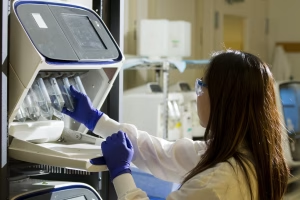
While these numbers aren’t recent, they show that the acceptance rate has consistently hovered around 15% to 17%. Given the program’s continued popularity and limited lab space, it’s reasonable to assume that the NIH SIP remains highly competitive today.
Selection depends on matching applicants with available mentors, so acceptance rates can vary slightly by year and by institute. Still, being chosen for NIH SIP is a major accomplishment that reflects both academic strength and genuine curiosity about scientific research.
NIH SIP Application Deadline
Applications for NIH SIP usually open in mid-November and close in mid-February. For the 2025 program, the deadline was February 19, 2025, at noon Eastern Time.
It’s crucial to submit your application early, since selections happen on a rolling basis. Many researchers begin reviewing applications and extending offers as early as January. Waiting until the last week can lower your chances because some labs may already be full.
Notification and other key dates
Applicants typically start hearing back from potential mentors between January and March. By April, most selections are complete. Once accepted, interns and their mentors coordinate start dates based on academic calendars. For 2025, most labs planned start dates between May 19 and June 2, with all interns finishing by early August.
The NIH also hosts a Summer Poster Day in early August, where interns present their research findings to peers and faculty. It’s one of the highlights of the program, offering a platform to share your work with the wider NIH community.
NIH SIP Requirements
To apply for the NIH SIP, you must meet certain eligibility standards and prepare several key documents.
Eligibility
To qualify for NIH SIP, you must:
- Be a U.S. citizen or permanent resident.
- Be 18 years old or older by the program’s start date.
- Be enrolled at least half-time in high school, college, graduate, or professional school at the time of application.
- Plan to continue your education after the summer internship.
The program accepts students from a variety of fields, including biology, chemistry, psychology, computer science, physics, engineering, and public health. While most interns come from STEM backgrounds, NIH encourages applicants from any discipline connected to biomedical or health sciences.
All accepted interns must also pass a federal background check and have health insurance coverage during their stay.
Required documents
The NIH SIP application is completed online through the NIH Application Center. You’ll need to prepare the following materials:
- Application form. Fill out the online form with your educational background and basic information.
- Resume or CV. Include your academic history, research experience, technical skills, and extracurricular involvement.
- Transcript or course list. You can upload an unofficial transcript or enter your coursework manually.
- Personal statement. This is your main essay explaining your research interests, previous experience, and goals. You’ll describe how NIH SIP fits into your academic or professional path.
- Two recommendation letters. Referees should be teachers, professors, or mentors who can speak to your academic ability, work ethic, and curiosity.

Program costs
There are no tuition or participation fees, and interns do not pay to take part in the program. However, housing, meals, and transportation are not covered. Interns are responsible for finding their own accommodations and commuting to their assigned lab.
NIH SIP is a paid internship, and participants receive a monthly stipend that varies depending on education level, experience, and the specific NIH institute or center they’re assigned to.
The exact amount can differ slightly across branches, but figures from the National Institute of Environmental Health Sciences (NIEHS) provide a good general idea of what interns typically earn. As of May 2023, monthly stipend levels at NIEHS were approximately:
- High school students. These interns generally earn between $2,530 and $2,840 per month, depending on whether they have graduated from high school at the time of participation.
- Undergraduate students. Those who have completed one to three or more years of college usually receive between $3,010 and $3,310 per month, with the rate increasing based on the number of years completed.
- Graduate students. Interns enrolled in graduate programs typically receive between $3,480 and $4,190 per month, with higher stipends awarded to students who have completed more years of graduate study.
Stipends are adjusted periodically, so future cycles may see higher rates.
NIH provides guidance and resources to help with housing searches, and many interns share short-term rentals or university dorms during the summer to reduce costs.
Despite the living expenses, NIH SIP remains one of the most accessible summer research opportunities in the country. The combination of competitive stipends, no program fees, and access to top-tier facilities makes it a financially feasible and academically rewarding option for aspiring researchers.
How to Get into the NIH SIP
Getting into the NIH SIP isn’t easy, but it’s definitely possible with the right preparation. Since everything is handled online, the process is straightforward, but each step matters if you want to stand out among thousands of applicants.
Here’s a practical guide to help you through every stage of the NIH SIP application and give you the best chance of being selected by a mentor.
Step 1: Set up your application account.
Start by visiting the official NIH SIP application portal. Once the application period opens in mid-November, create your account, fill in the requested details, and verify your email. From there, you can log in anytime to continue working on your application before submitting it.
As you complete each section, save your progress frequently to prevent data loss. When uploading materials like transcripts or recommendation letters, stick to PDF format to ensure smooth submission and easy readability for NIH reviewers.

Remember that applications are reviewed on a rolling basis, meaning mentors can start reaching out as soon as your submission is live. The earlier you apply, the better your chances of being noticed.
Step 2: Write a strong personal statement.
Your personal statement is one of the most important parts of your NIH SIP application. Unlike a generic essay, this is your chance to show mentors why you’re passionate about research and how your interests align with the NIH’s mission.
What to include in your essay:
- Explain your specific research interests and what drew you to them. Avoid broad statements like “I like science” and instead describe what excites you. For example, discuss your interest in neuroscience, genetics, or epidemiology.
- Highlight any relevant experiences, such as lab courses, research assistant work, or science fairs, and explain what you learned from them.
- Mention your future academic or career goals and how NIH SIP would help you develop the skills to reach them.
- Keep your tone sincere and reflective. Mentors want to see curiosity, initiative, and a genuine interest in learning.
Tips for a standout statement:
- Keep it concise and well-organized. NIH SIP reviewers appreciate clarity.
- Proofread carefully to avoid grammatical mistakes.
- Ask a teacher, professor, or mentor to read your draft and offer feedback before submission.
If you’re preparing for NIH SIP or other competitive research programs, our Summer Program Applications service can help you create polished, professional materials that stand out. From essays to mentor outreach, we can guide you through every step of the application process—so you can present your strongest self.
Step 3: Choose your recommenders wisely.
You’ll need two recommendation letters for your NIH SIP application. These should come from instructors, advisors, or research mentors who can comment on your academic strengths, scientific potential, and character.
Give your recommenders plenty of time (ideally at least a month) to prepare their letters. Provide them with a copy of your resume, a summary of your interests, and information about the NIH SIP program so they can write personalized recommendations.
While strong grades help, a powerful recommendation that speaks to your work ethic or research skills can make your application stand out.
Step 4: Contact NIH investigators directly.
Unlike many other programs, NIH SIP allows—and even encourages—applicants to reach out directly to investigators whose research interests match their own. After you submit your application, explore the NIH Intramural Research Program directory to find scientists working in your area of interest.
When you email a potential mentor:
- Keep your message short and professional.
- Introduce yourself, mention your field of study, and express your interest in their specific research.
- Reference your NIH SIP application and explain how your goals align with their lab’s work.
This step is optional but highly recommended. Many interns are selected because they took the initiative to contact a mentor early.
Step 5: Finalize and submit your application early.
The NIH SIP application deadline for 2025 was February 19, 2025, at noon Eastern Time. Late submissions aren’t accepted under any circumstances, so plan to finish well ahead of time.

Before submitting, double-check your documents to make sure everything is complete. Early submission can increase your chances, as mentors start reviewing and selecting applicants before the deadline.
Once you hit “Submit,” your application will be visible to NIH investigators, and you can begin contacting labs to express interest. Expect to start hearing back between January and March, as selections are made on a rolling basis.
Step 6: Prepare for potential interviews or mentor communication.
If a mentor reaches out to you after reviewing your NIH SIP application, treat it like a mini-interview. Most NIH investigators will contact you by email to schedule a short virtual or phone conversation about your background, interests, and potential fit in their lab.
These discussions are often informal, but preparation still matters. Before the call, take time to read about the investigator’s recent research. Look up their publications or lab focus on the NIH website so you can talk about how your interests align.
When speaking with a mentor:
- Be ready to discuss your academic background and previous lab or research experience.
- Explain what excites you about their specific area of study.
- Ask thoughtful questions about the lab’s current projects or the techniques you might learn.
You don’t need to know everything about the topic, but showing genuine curiosity and preparation goes a long way. Mentors value students who are proactive, responsible, and eager to learn.
After your conversation, follow up with a short thank-you email. Express appreciation for their time and reaffirm your enthusiasm for joining their lab. Small gestures like this help you leave a positive impression and demonstrate professionalism.
Why Join the NIH SIP?
From hands-on research to high-level mentorship, the NIH Summer Internship Program offers an unmatched opportunity to work directly with leading scientists in the biomedical field. If you are serious about pursuing a research career or exploring graduate or medical school, NIH SIP provides training and exposure that few summer programs can offer.
1. Research experience
The NIH SIP places you in an active research environment where you work side by side with NIH investigators on real scientific projects. You will not just be observing but contributing to meaningful research. Whether your interests are in neuroscience, genetics, immunology, or computational biology, you will gain practical experience with the methods and equipment used in cutting-edge biomedical studies.
Interns also get to present their findings at the Summer Poster Day, where participants share their work with scientists, mentors, and peers. This opportunity strengthens both your technical and communication skills, which are valuable for college, graduate school, or professional careers.
2. Mentorship and professional guidance
Each NIH SIP intern is paired with a principal investigator or senior scientist who acts as a mentor throughout the program. Mentors help you navigate research challenges, build your scientific reasoning, and discuss academic or career paths.

In addition to lab mentorship, interns can join career workshops, graduate school panels, and networking sessions. These activities connect you with professionals across science and medicine. Many past interns stay in touch with their mentors after the program, which often leads to continued guidance, collaboration, or recommendation letters.
3. Resume and graduate school boost
Listing the NIH SIP on your resume signals that you have thrived in a rigorous research environment. Admissions committees and employers recognize the program’s prestige and competitiveness, and participating shows that you can handle complex projects, work well in teams, and produce meaningful results.
For students aiming for graduate or medical school, NIH SIP provides an advantage because it demonstrates your readiness for advanced study and your ability to work within one of the most respected scientific institutions in the world.
4. Financial accessibility
Unlike many elite research programs that charge participation fees, the NIH SIP is completely free to join, and all interns receive a monthly stipend. The stipend amount varies by education level and institute, ensuring that students from a wide range of backgrounds can afford to take part.
Although housing and meals are not covered, the paid nature of the program makes it one of the most accessible opportunities in STEM. Combined with the experience and mentorship you gain, it is a financially practical and academically rewarding choice for students who want to grow in the field of biomedical research.
Frequently Asked Questions
1. How much is the NIH SIP stipend?
NIH SIP interns receive a monthly stipend that depends on their education level and how far they are in their studies. Based on 2023 rates from the NIEHS, high school students typically earn between $2,530 and $2,840 per month, undergraduates earn $3,010 to $3,310, and graduate students receive $3,480 to $4,190. These amounts can vary slightly between NIH institutes, but they give a good estimate of what interns can expect.
2. Can international students apply to the NIH SIP?
Unfortunately, no. The NIH SIP is only open to U.S. citizens and permanent residents. International students are not eligible to apply for this specific program. However, the NIH offers other training opportunities for international applicants through different fellowships and research programs.
3. How much does it cost to join the NIH SIP?
There are no fees to participate in the NIH SIP. The program is entirely free, and interns receive a monthly stipend for their work. However, NIH does not cover housing, meals, or transportation, so interns must arrange their own accommodations. Many participants choose to share apartments or short-term rentals to keep costs manageable.
4. When is the NIH SIP application deadline?
For the 2025 cycle, the NIH SIP deadline was February 19, 2025, at noon Eastern Time. The NIH reviews applications on a rolling basis, so submitting early gives you a better chance of being considered before all available positions are filled. Late submissions are not accepted under any circumstances.
Takeaways
The NIH Summer Internship Program is one of the most prestigious and competitive summer research opportunities for students interested in biomedical science. Here are five key takeaways to keep in mind:
- The NIH SIP is highly competitive, with thousands of applicants each year and only about one in eight students accepted. Getting in takes preparation, persistence, and a strong application.
- For about eight weeks, you will work on real research projects alongside NIH scientists, gaining practical lab experience in fields such as neuroscience, genetics, immunology, and computational biology.
- The program is fully funded, and all interns receive a monthly stipend based on their education level. Although housing and travel costs are not covered, the financial support makes it accessible to many students.
- Standing out means focusing on the basics: writing a clear personal statement, securing strong recommendations, and reaching out to potential mentors early to express genuine research interest.
- If you want to strengthen your profile, an Extracurricular Planning service can help. It will guide you in choosing and developing activities that align with your academic interests and highlight your unique strengths, making your application stand out to programs like NIH SIP and top universities.