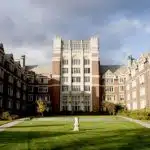
If you’re passionate about filmmaking, screenwriting, animation, or game design, consider the USC School of Cinematic Arts Summer Program. Recently ranked the #1 U.S. film school in 2025 by The Hollywood Reporter, USC offers a summer experience that combines hands-on projects, college-level classes, and opportunities to learn directly from industry professionals.
This blog will cover everything you need to know about the summer program: dates, requirements, acceptance rate, fees, how to apply, and why joining could be the best move you make toward a creative career.
- What Is the USC School of Cinematic Arts Summer Program?
- USC School of Cinematic Arts Summer Program Acceptance Rate
- USC School of Cinematic Arts Summer Program Application Deadline
- USC Cinematic Arts Summer Program Requirements
- How to Get into the USC School of Cinematic Arts Summer Program
- Why Join the USC School of Cinematic Arts Summer Program?
- Frequently Asked Questions
- Takeaways
What Is the USC School of Cinematic Arts Summer Program?
The USC School of Cinematic Arts Summer Program is a six-week, college-level experience where you can explore filmmaking, screenwriting, editing, producing, animation, and game design—all while earning transferable USC credits.
Hosted at the USC School of Cinematic Arts in Los Angeles, the program welcomes students ages 16 and older from all over the world. You’ll learn from USC faculty and working industry professionals, use professional-grade equipment, and walk away with projects you can add to your portfolio and even highlight in your college applications.

This program lets you choose courses that match your passions and career goals. Here’s the list of the classes you can join:
- Filmmaking and production. If you want hands-on experience behind the camera, you can take courses like Digital Cinematography, Documentary Filmmaking, or the more immersive Filmmaking Intensive. Genre lovers can experiment in Horror Film Production or Poetic Filmmaking. There are also industry partnerships like the USC Warner Bros. Producing and Directing Class, which gives you a Hollywood-level experience.
- Screenwriting. Love storytelling? You can choose courses such as Writing Blockbuster Features, Writing the Comedy TV Series, Writing the Dramatic TV Series, Writing the First Draft Feature Screenplay, or Writing the Short Screenplay. These classes help you develop scripts and ideas you can continue to refine long after the program ends.
- Editing and producing. If post-production or producing excites you, options include Digital Editing with Avid, Producing and Directing Your First Indie Feature, and The Insider: Launching Your Career in Film and Television. These classes give you the skills to shape raw ideas into finished, professional projects.
- Game design and animation. For students who love interactive storytelling, courses like Essentials of Game Design and Creating Storyboards for Animation, Film, and Television let you experiment with character design, gameplay, and visual storytelling.
USC School of Cinematic Arts Summer Program Acceptance Rate
While USC doesn’t publish official acceptance numbers for the summer program, it is selective but not as competitive as full-time USC admission. Each course typically has around 15-21 seats (depending on the course), and the program draws motivated applicants from across the globe.
By comparison, the USC School of Cinematic Arts acceptance rate for degree programs is famously low—around 3% for undergraduates—making it one of the hardest but best film schools to get into in the U.S. The summer program, however, is more accessible, especially if you demonstrate genuine passion and commitment.
USC School of Cinematic Arts Summer Program Application Deadline
Joining the USC Cinematic Arts Summer Program is all about staying on top of the deadlines. Applications for 2025 officially open on December 15, 2024, and spots are filled on a rolling admission basis, so the earlier you apply, the better your chances of getting into your preferred course.
Here are the deadlines you need to know:
| Applicant Type | Application Deadline |
| General U.S. students | April 30, 2025 |
| International students | March 15, 2025 |
| International students on an F-1/I-20 from another school | March 31, 2025 |
| Permanent residents and students with other valid visas (J-1, O-1, E-2) | April 30, 2025 |
Notification and other key dates
Here are the other important dates you need to remember:
- Admission decisions. Expect to hear back within about 4 weeks of submitting a complete application.
- Commitment deposit. Once admitted, you’ll need to secure your spot by paying a non-refundable $750 deposit within 5 business days.
- Tuition and housing deadline. All program and housing fees must be paid in full by June 20, 2025, or you risk losing your place.
- Mandatory orientations. Virtual and in-person orientations run between June 3–21, 2025 depending on your program and student status (general, international, or production track).
- Program dates. Classes officially begin on June 23, 2025, and wrap up on August 1, 2025.
Tip for students: If you’re hoping to apply for the 2026 summer cohort, expect the application to open around December 15, 2025, with deadlines falling in March–April 2026. Since admission is rolling and seats are limited (usually around 20 per class), applying early is the best way to maximize your chances.
USC Cinematic Arts Summer Program Requirements
If you’re excited about spending your summer at USC learning the art of film, TV, or game design, here’s what you’ll need to know before applying. From who can join, to what documents you’ll need, to how many classes you can take—this application guide breaks it down for you.
Eligibility
The program is open to U.S. and international students. You need to be 16 years or older by June 15, 2025. Students ages 16–17 are considered pre-college participants, while those 18 and older are considered adult participants.
One big rule: if you’re already a USC/SCA student, you can’t enroll. These summer classes are meant for visiting students only.
Required documents
Your application needs to show off your personality and creativity. Here’s what’s required:
- Intro video (30–60 seconds). A short clip where you introduce yourself, share why you want to join, and talk about your goals.
- Personal statement (500 words). An essay about your background, what inspires you, and the kinds of stories or games you’d love to create.
- Creative writing sample (300 words). A character sketch that shows your ability to build a unique personality on the page.
- Recommendation form. Filled out by a teacher, counselor, or employer who knows your work ethic and creativity.
- Transcript. Only required if you’re applying as a pre-college student (ages 16–17).
If you’re applying from outside the U.S., there are a few more requirements:
- English tests. USC accepts TOEFL (100+), IELTS (7.0), Duolingo (120), PTE (65), SAT EBRW (650), or ACT English (25). If you already study in an English-speaking school, you may be exempt.
- Visa. Most students will need an F-1 visa. USC provides the I-20 form once you’re admitted and show proof of funding.
- Visa fees. USC I-20 Processing Fee ($350), SEVIS I-901 Fee ($350), Visa Application Fee (about $182, varies by country).
- Proof of funding. You’ll need to show you can cover tuition plus at least $3,500 in living expenses with a bank statement or letter.
Program costs
Here’s what you can expect to pay (before financial help from outside scholarships):
| Item | Cost |
| Tuition | $2,354 per unit (4-unit course: $9,416; 8-unit course max: $18,832) |
| Program fee | $300 |
| Health center fee | $175 (mandatory) |
| Commitment deposit | $750 (non-refundable, applied toward tuition) |
| Housing | Pre-college (16–17): $2,107–$2,967 + $500 security deposit; Adults (18+): $975–$1,600 per month |
| USC health insurance | $306 (optional, if you don’t already have coverage) |
| Production courses insurance | $250 premium + $1,000 deductible (if used) |
Unfortunately, USC doesn’t offer direct financial aid for summer program students. Still, you can apply for outside scholarships and grants.
How to Get into the USC School of Cinematic Arts Summer Program
Applying to the USC Cinematic Arts Summer Program might feel like a lot at first, but breaking it into clear steps makes the process much easier. Here’s a full SCA summer program admission process to walk you through it.
Step 1: Pick the right application.
The SCA Summer Program has four application types, and choosing the right one is your very first step. The options are:
- U.S. Citizen 18+. You’re a U.S. citizen who will turn 18 by June 1 of the program year.
- U.S. Citizen Pre-College (16–17). You’re a U.S. citizen who will turn 16 by June 15, but not 18 before June 1. For example, if your 18th birthday is before June 1, this isn’t the right form. If your birthday falls on or after June 1, it is.
- International 18+. You’re not a U.S. citizen and will be at least 18 by June 1.
- International Pre-College (16–17). You’re not a U.S. citizen, will turn 16 by June 15, and won’t turn 18 before June 1.
Be sure to read the application types carefully. Submitting the wrong application type could hold up your admission. Once you’ve chosen, you’ll be directed to the portal to create an account and get started.
Step 2: Prepare your creative materials.
Your application requires three creative pieces: an introductory video (30–60 seconds), a personal statement (500 words), and a creative writing sample (300 words). These are your chances to stand out.
Start early so you have time to brainstorm, draft, and polish. Here are some tips:
- For the video, keep it simple. Just you, talking directly to the camera about why you want to join and what your goals are.
- For the personal statement, share experiences that shaped your creativity and explain the kinds of stories or games you want to tell.
- And for the writing sample, focus on building a vivid, original character instead of sticking to clichés.
Remember: they’re looking for your voice, not a copy of someone else’s.
Step 3: Request your recommendation.
You’ll need one recommendation form, filled out by a teacher, counselor, or employer. The best recommender is someone who’s seen your creativity, drive, or collaboration skills not just your grades.
Ask early, ideally three to four weeks before the deadline, so they don’t feel rushed. When you ask, explain why you’re applying and what excites you about the program. That way, they can write something specific that highlights why you’d be a strong fit.
Step 4: Upload your transcript (pre-college students only).
If you’re applying as a pre-college student (minors 16–17), you’ll need to upload your most recent high school transcript. Schools often take time to process these requests, especially during holiday breaks, so don’t wait until the last minute. Submitting your transcript early will help you avoid unnecessary stress as deadlines approach.

Step 5: Submit and track your application.
Once everything is ready, upload all your materials to the USC portal and submit your application. Before you hit submit, carefully review each section to make sure nothing’s missing. After submission, you can track your status online by using the same email you applied with.
Why Join the USC School of Cinematic Arts Summer Program?
Joining USC School of Cinematic Arts Summer Program can make your summer one of the most creative and meaningful experiences of your life, and set you up for success in film, media, or interactive storytelling. Here’s why it’s worth it:
1. Get hands-on experience.
From Day 1, you’re diving into real projects—whether you’re shooting, editing, writing, or designing. You’ll use industry-standard gear and work in top-notch facilities, so you don’t just learn theory—you do the work.
By the end of the summer, you’ll walk away with a polished film, script, or game piece you can proudly show in your portfolio.
2. Earn USC college credit.
Every course in this summer program is a fully accredited USC class. That means the credits you earn not only look great—they’re real college credit that goes on your transcript. This not only strengthens your academic profile, but also gets you a head start on your college journey.
3. Learn at the center of entertainment.
With the USC School of Cinematic Arts located in Los Angeles, you’ll study right in the middle of the world’s entertainment capital. Each summer, students from across the globe bring their unique perspectives, and the energy of Hollywood surrounds your experience.
From diverse peers to industry events nearby, being in L.A. gives you the chance to learn from the creative culture all around you.
4. Preparation for college and careers.
Think of this program as a cinematic test drive. USC-level academics, real-world expectations, and a creative community all rolled into six weeks. You’ll sharpen your time-management, teamwork, and technical skills. Plus, the projects you complete are fantastic experiences for your college applications and a launchpad for industry connections.
Many past participants have gone on to successful film careers. For example, Michael Shawver, an SCA graduate, later became the editor for Black Panther and Creed. Stories like his show how USC’s training can help turn your creative passion into professional success.
Frequently Asked Questions
1. What is the USC Cinematic Arts Summer Program?
The USC Cinematic Arts Summer Program is a six-week, hands-on learning experience for students ages 16 and older. It offers courses in filmmaking, screenwriting, editing, producing, animation, and game design—all for transferable USC credit.
2. What are the USC School of Cinematic Arts requirements to apply?
You must be at least 16 by June 15 and not currently enrolled at USC/SCA. Required materials include an intro video, personal statement, creative writing sample, one recommendation, and transcripts (for pre-college students). International applicants must also meet English proficiency and visa requirements.
3. How competitive is the program?
While admission to the undergraduate USC School of Cinematic Arts is extremely selective (about 3–5%), the Summer Program is more welcoming. Classes are kept small—usually 15–20 students—so space is limited, but a strong application that shows your enthusiasm and creativity will greatly increase your chances.
4. What are the USC School of Cinematic Arts fees for the program?
Tuition is $2,354 per unit: $9,416 for 4 units or $18,832 for 8. Other fees include a $300 program fee, $175 health center fee, $750 deposit, optional health insurance ($306), and housing ($2,107–$2,967 for pre-college; $975–$1,600/month for 18+).
5. Why is the USC School of Cinematic Arts Summer Program valuable?
The program combines USC’s world-class academics with hands-on projects, helping you build portfolio-ready work while earning transferable credits. Studying in Los Angeles—the center of the entertainment industry—gives you access to unique opportunities, and it’s an excellent way to explore whether USC or a film career is the right path for you.
Takeaways
- The USC School of Cinematic Arts Summer Program is a six-week, in-person experience that combines creative projects with accredited USC coursework.
- Admission to the summer program is competitive but more accessible than the low USC School of Cinematic Arts acceptance rate. Passion and strong application materials matter most.
- Meeting the USC School of Cinematic Arts requirements—like the intro video, essays, and recommendation—is essential for a strong application.
- Students should plan ahead for USC School of Cinematic Arts fees, which can exceed $20,000 with tuition, housing, and program fees combined.
- Thinking about applying? A college admissions consultant can help you craft standout essays, polish your creative sample, and maximize your chances of acceptance into USC’s prestigious summer experience.